When to Hire Art Authentication Experts and Appraisers
If you just inherited a painting that might be a Picasso, or you're thinking about buying a sculpture at an estate sale, you need to know one thing: not every signed artwork is real. The art market is full of forgeries, misattributions, and pieces with murky histories. And if you're holding something valuable-whether it's a family heirloom or a new acquisition-you can't afford to guess. That's where art authentication experts and appraisers come in. But when exactly should you hire them? And what's the difference between the two?
Before You Buy or Sell
One of the clearest moments to call in an expert is before you make a financial move. If you're thinking about buying a piece for more than $5,000, you should get it authenticated first. That number isn't arbitrary-it's the point where the risk of fraud starts to outweigh the cost of verification. A 2023 report from the Art Loss Register found that 18% of artworks sold at auction in the past five years had disputed provenance. That means nearly one in five pieces had questions about who made them or where they came from.
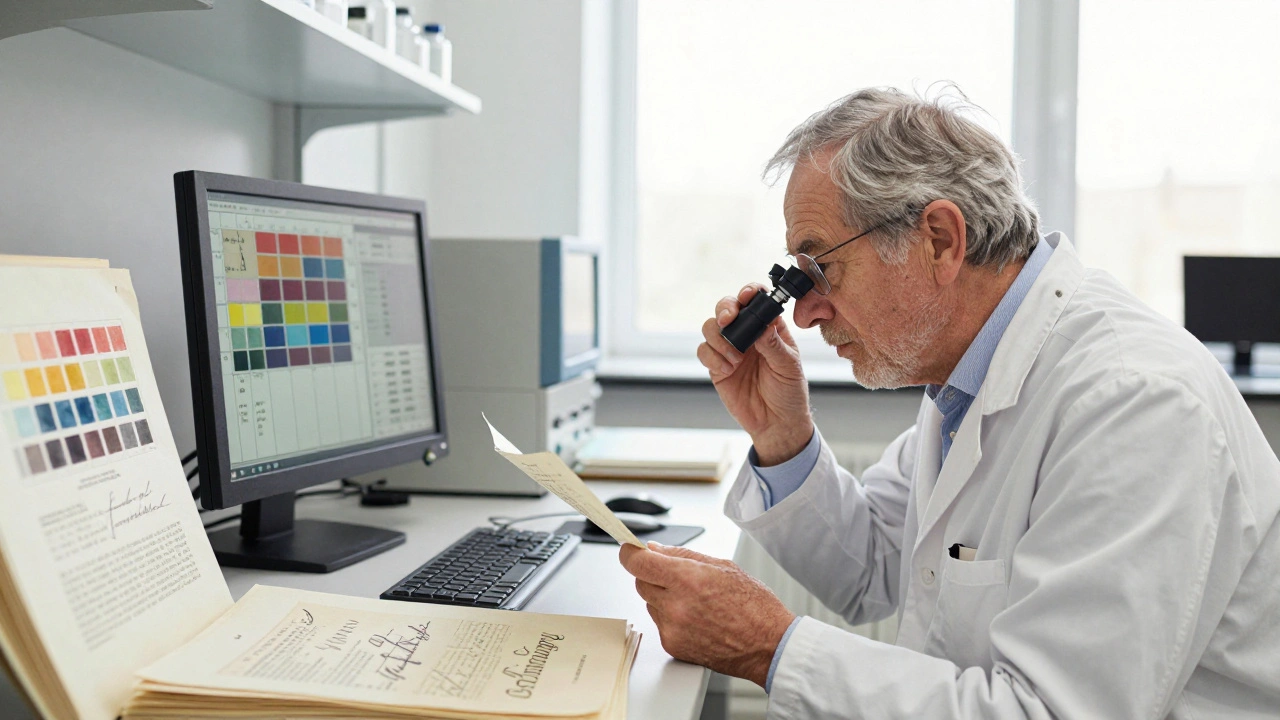
Appraisers help you understand the market value. Authentication experts determine if it's real. You need both. A piece might be a beautiful copy, but if it's not by the artist listed, its value drops by 90% or more. A fake Monet might look like the real thing to an untrained eye, but experts look at brushstroke patterns, pigment chemistry, canvas weave, and even the type of nails used in the stretcher bars. These details change over time. An expert knows what pigments were available in 1887 versus 1920.
You Inherited Art With No Paperwork
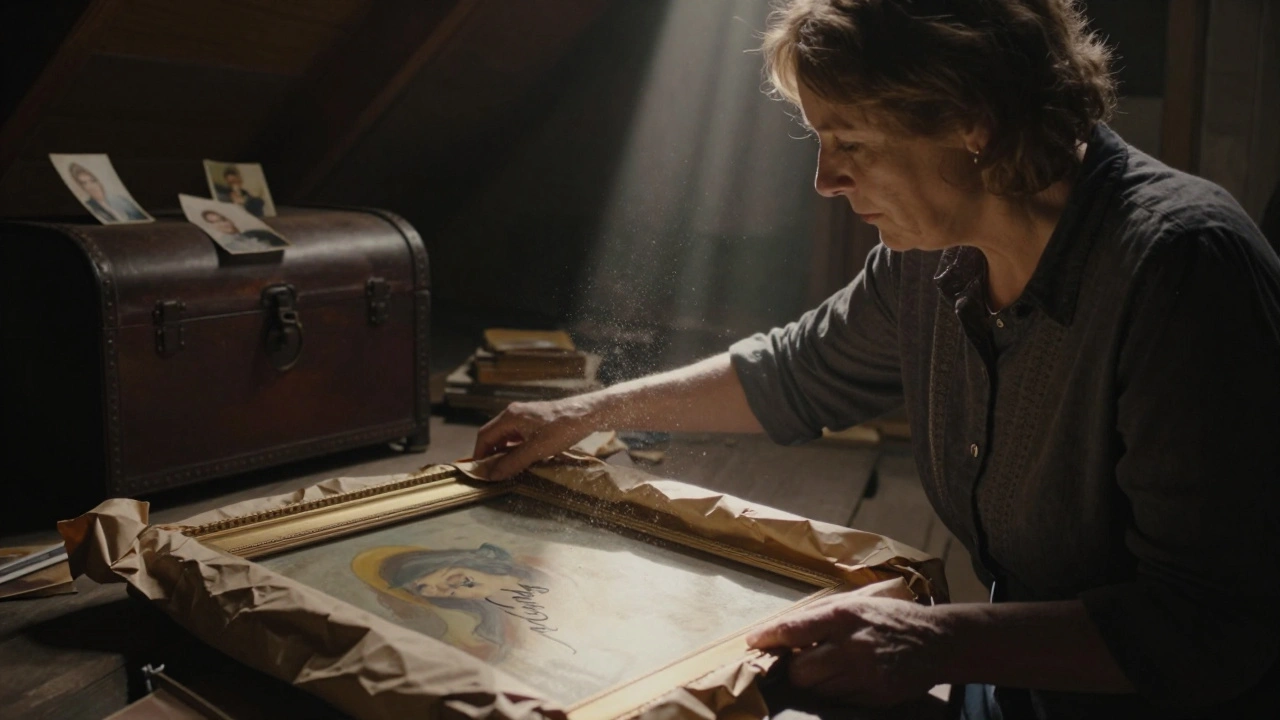
Many people discover valuable art after a relative passes away. Maybe it's hanging in the attic, tucked behind a dusty curtain, or stored in a garage. No labels. No receipts. No letters from the artist. In these cases, authentication isn't optional-it's essential. Without proof of origin, you can't sell it legally, insure it, or even donate it to a museum.
Take the case of a 1950s watercolor found in a Seattle estate. The family thought it was just a nice landscape. An appraiser later identified it as a rare early work by Morris Graves, worth $220,000. The key? The signature matched a known variant used only between 1948 and 1952. The expert also cross-referenced the paper stock with museum archives. That kind of detail doesn't show up in Google Images.
Don't assume the piece is worthless just because it's unlabeled. Many genuine works were never documented, especially by artists who weren't famous during their lifetime. Experts often work with estate archives, gallery records, and private collector databases to trace ownership chains.
You're Insuring or Donating the Art
If you want to insure a piece, your insurance company will demand a written appraisal from a certified appraiser. They won't accept your word or a printout from eBay. Most policies require an updated appraisal every three years, especially for high-value items. The same goes for donations to museums or charities. To claim a tax deduction, the IRS requires a qualified appraisal for items valued over $5,000. For anything over $50,000, you need an independent expert review and a Form 8283.
Authentication is part of this process. An appraiser can't legally assign value without confirming authenticity. A museum won't take a painting unless it's been vetted by at least two recognized authorities in that artist's body of work. Some institutions, like the Getty or the Met, maintain their own authentication committees. They don't just look at style-they test materials, compare with known originals, and check conservation records.
You Suspect a Forgery
Maybe you bought something online and now you're doubting it. Maybe a dealer told you it's real, but something feels off. That gut feeling? Trust it. The number of fake Basquiats, Klimts, and Rothkos circulating in private sales has doubled since 2020. Many are high-quality copies made with modern tools and aged with chemical treatments.
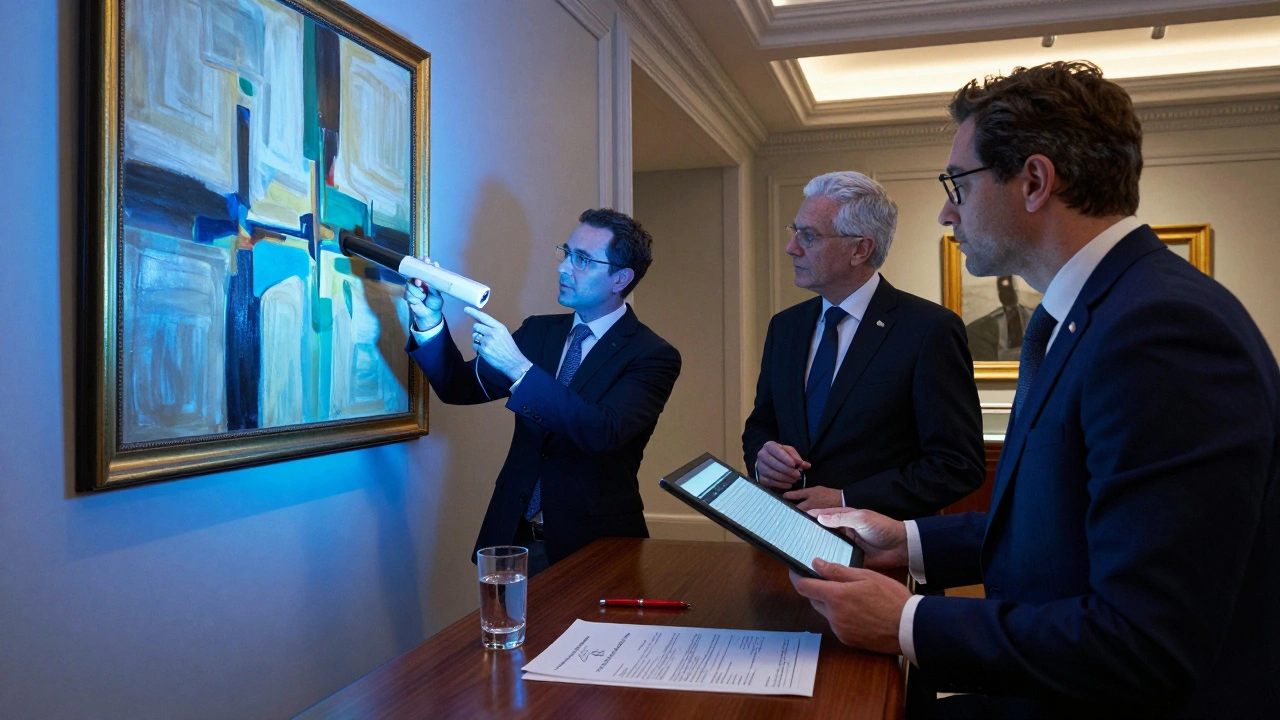
Experts use tools like infrared reflectography to see under layers of paint, X-ray fluorescence to detect modern pigments, and spectroscopy to analyze ink composition. A forgery might use titanium white, which wasn't widely available until the 1920s. If a 1910 painting has it, it's fake. These tests aren't available at your local hardware store. Only accredited labs and authentication boards have access.
Don't wait until you're sued. If you think you've been sold a fake, contact an expert immediately. Some organizations, like the Art Authentication Board in New York, offer preliminary assessments for under $300. It's cheaper than losing $50,000.
You're Selling at Auction
Auction houses like Christie's and Sotheby's don't just accept every piece that walks in the door. They have internal teams of specialists who spend months verifying each item. If your artwork gets rejected, it's not because they're being picky-it's because they can't risk their reputation.
Before you even contact an auction house, get your piece authenticated by an independent expert. Many sellers make the mistake of going straight to an auction house, only to be told the piece isn't eligible. That's a waste of time and money. A pre-auction authentication gives you leverage. If the expert confirms it's real, you can negotiate better terms. If they say it's questionable, you can walk away before spending thousands on photography, cataloging, and shipping.
Some auction houses will even refuse to sell a piece unless it's been authenticated by a specific committee. For example, the Picasso Estate requires all works bearing his signature to go through their own verification process. Same with Warhol, Pollock, and many others.
How to Choose the Right Expert
Not all "art experts" are created equal. Some are hobbyists with blogs. Others are PhDs with decades of fieldwork. Here's how to tell the difference:
- Look for certification from recognized bodies like the Appraisers Association of America or the International Society of Appraisers.
- Check if they're affiliated with major museums or academic institutions.
- Ask if they publish research or have written books on the artist in question.
- Verify they're not also buying or selling art-conflicts of interest are common.
- Request references from past clients, especially ones who went through legal disputes.
Appraisers focus on value. Authentication experts focus on origin. Sometimes, one person does both-but make sure they're qualified for both roles. A certified appraiser might not have the lab access needed to test pigments. An art historian might not know how to value a piece in today's market.
What to Expect in Terms of Cost
Authentication fees vary wildly. For a single painting by a lesser-known artist, you might pay $200-$500. For a major masterwork, it could be $2,000-$10,000. Appraisals usually cost $150-$400 per hour, with a minimum of two hours. Some experts charge flat rates. Others take a percentage of the value-but avoid those. Their incentive should be accuracy, not a higher valuation.
Remember: cheap authentication is dangerous. A $50 "certification" from a website is worthless. Real experts don't issue certificates online. They issue reports-detailed, signed, dated, and backed by evidence.
What Happens After Authentication?
Once your piece is verified, you'll get a written report. This isn't a glossy certificate you hang on the wall. It's a technical document that includes:
- High-resolution images of brushwork and signatures
- Scientific analysis of materials
- Provenance history (ownership trail)
- Comparisons with authenticated works
- Expert's qualifications and contact info
This report becomes part of your legal record. It's what you'll use for insurance, taxes, sales, and inheritance. Keep it in a fireproof safe or digital vault. Some experts now offer blockchain-based registration, where the report is permanently stored on a tamper-proof ledger. That’s becoming more common in Europe and Japan.
If the piece is declared fake, don't panic. You still have options. You can return it, sell it as a period reproduction, or donate it to an educational institution. Many universities use forgeries to teach students how to spot them.
Don't Wait Until It's Too Late
Art authentication isn't a luxury-it's a safeguard. The longer you wait, the harder it gets. Experts retire. Archives get lost. Witnesses die. Provenance records vanish. The window to verify a piece often closes within a few years after the owner passes away.
If you're holding art with any emotional or financial weight, don't assume it's real. Don't rely on a dealer's word. Don't trust a Google search. Hire a qualified expert before you make any decisions. It's the only way to protect your investment-and your peace of mind.