Technical Descriptions for Art: Medium, Size, Materials
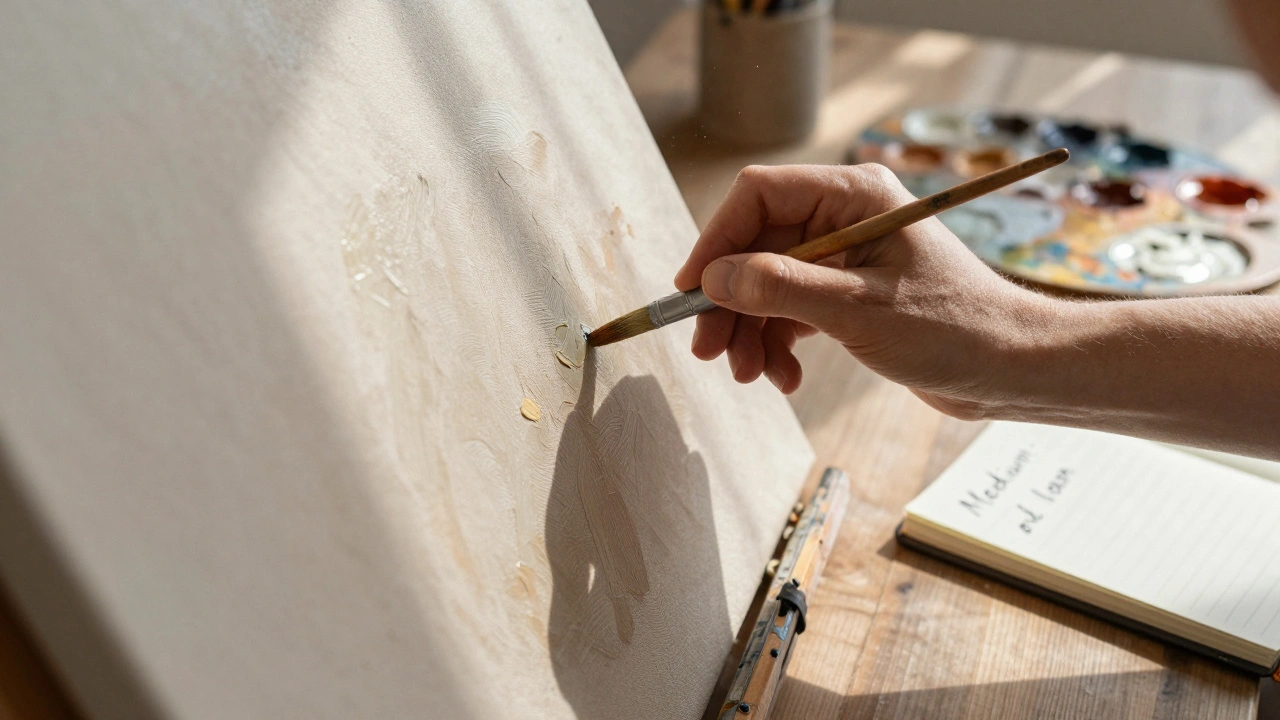
When you look at a painting or sculpture, you might notice the colors, the brushstrokes, or how the light hits the surface. But behind every piece of art is a set of technical details that tell you exactly how it was made-and why those choices matter. These aren’t just footnotes. They’re the foundation of how art is understood, sold, preserved, and collected.
What Is the Medium in Art?
The medium of an artwork is the material or materials used to create it. It’s not just "oil" or "watercolor." It’s the full picture: what the artist chose, why they chose it, and how it affects the final piece. A charcoal drawing on handmade paper behaves differently than one on canvas. A bronze sculpture cast using the lost-wax method has a different texture and history than one made with 3D printing.
Artists pick their medium based on intention. Frida Kahlo used oil on metal because it gave her the precision she needed for detailed self-portraits. Jackson Pollock used enamel paint on unprimed canvas to let the paint soak in and move freely. These aren’t random choices-they’re part of the artwork’s identity.
When documenting an artwork, always name the medium clearly. Don’t just say "painting." Say: oil on linen, acrylic on panel, ink and collage on paper. If multiple materials are used, list them in order of dominance: mixed media: acrylic, charcoal, and found fabric.
Why Size Matters More Than You Think
Size isn’t just about how much wall space it takes up. It’s about presence, scale, and how the viewer interacts with the work. A 6-inch watercolor feels intimate. A 10-foot mural demands attention. The difference isn’t just visual-it’s physical.
Artists think about size early in the process. Louise Bourgeois’ giant spider sculptures aren’t big because they’re flashy. They’re big because they force you to feel small in relation to memory and fear. On the flip side, a tiny ink drawing by Agnes Martin invites you to lean in, to slow down, to focus.
Always measure artwork in centimeters or inches, and specify whether it’s the image size or the overall dimensions including frame. For example:
- Image size: 30 x 40 cm
- Overall size (with frame): 45 x 55 cm
If the piece is unframed, say so. If it’s mounted on a board or stretched on a wooden stretcher, mention that too. This matters for shipping, hanging, and conservation. A canvas stretched over a deep wooden frame needs different support than a thin paper print.
Materials: More Than Just "Paint"
"Materials" is the broadest category, but also the most revealing. It includes everything from the support (the surface) to the binding agents, adhesives, varnishes, and even what’s embedded into the piece.
Take a contemporary mixed-media piece: it might have oil paint, but also dried flowers, fabric scraps, sand, and resin. Each material ages differently. Dried flowers fade and crumble. Sand shifts. Resin yellows over time. Knowing these details helps conservators preserve the work decades later.
Historical pieces rely on material knowledge too. A 17th-century Dutch still life might use lead white pigment, which darkens over time. That’s why some white tablecloths in old paintings now look gray. A modern artist using titanium white won’t have that problem.
When listing materials, be specific:
- Instead of "paper," say: Japanese washi paper
- Instead of "metal," say: stainless steel, brushed finish
- Instead of "glue," say: polyvinyl acetate adhesive
Some institutions require material lists to be standardized using the Getty Art & Architecture Thesaurus. Even if you’re not submitting to a museum, using precise terms helps future buyers, curators, or archivists understand what they’re dealing with.

How to Write a Clear Technical Description
Here’s a simple template you can use for any artwork:
- Medium: What was used to make it? (e.g., oil on canvas)
- Size: Image dimensions first, then overall if framed (e.g., 76 x 102 cm / 91 x 117 cm with frame)
- Materials: All substances involved, including supports and adhesives (e.g., acrylic, graphite, archival paper, wheat starch paste)
- Additional notes: Any special conditions-unframed, mounted, varnished, signed, dated, edition number
Example:
Medium: Oil on linen
Size: 91 x 122 cm (image), 107 x 138 cm (with frame)
Materials: Linseed oil, lead white, earth pigments, cotton duck canvas
Notes: Signed lower right, dated 2023, unvarnished
This format works for galleries, auction houses, insurance appraisals, and personal archives. It’s clear, consistent, and leaves no room for guesswork.
Why This Matters Beyond the Studio
Technical descriptions aren’t just for museums. They’re critical for:
- Insurance: If a painting is damaged, the description helps determine its value and restoration needs.
- Shipping: A fragile glass mosaic needs different packing than a heavy bronze.
- Provenance: If a work changes hands, the materials and size help verify authenticity.
- Conservation: Knowing the original materials helps restorers choose compatible techniques and avoid irreversible damage.
Artists who skip these details often find themselves stuck later. A collector asks, "What kind of varnish did you use?" A gallery says, "We need dimensions for the catalog." A curator can’t restore it because the pigment isn’t documented.
It’s not about being overly technical. It’s about being responsible. Every artwork has a story. The medium, size, and materials are the first lines of that story.

Common Mistakes to Avoid
- Using vague terms like "paint," "canvas," or "wood." Be specific.
- Forgetting to separate image size from overall size.
- Not noting if the piece is unframed, mounted, or laminated.
- Assuming "acrylic" means the same thing everywhere-there are dozens of acrylic formulations.
- Leaving out the date or signature location. These are part of the technical record.
One artist in Portland I know lost a sale because she wrote "oil painting" on her label. The buyer asked for the support type-was it linen? cotton? panel? She didn’t know. The buyer walked away.
Final Tip: Document as You Go
Don’t wait until you sell or exhibit a piece to write its description. Record the details while you’re still working. Take a photo of the back of the canvas. Note the brand of paint you used. Write down the exact measurements before you cut the frame.
Keep a simple spreadsheet: one row per artwork, with columns for medium, size, materials, date, and notes. It takes five minutes per piece. But ten years from now, when someone asks, "What was that piece made of?"-you’ll be glad you did.
Why is the medium listed before the size in art descriptions?
The medium comes first because it defines the nature of the artwork. A watercolor and a sculpture made of steel are fundamentally different kinds of objects. Size is secondary-it tells you how big it is, but the medium tells you what it is. This order follows museum and auction house standards, making descriptions consistent across institutions.
Can I use abbreviations like "acryl" or "oil/canvas"?
No. Abbreviations like "acryl" or "oil/canvas" are unclear and can cause confusion. Always spell out full terms: "acrylic on canvas." In professional contexts, clarity trumps brevity. If space is tight (like on a label), use "acrylic on canvas" instead of "acryl on canvas." Standardized terms are universally understood in the art world.
Do I need to list every single material in a mixed-media piece?
Yes-if they’re visible, intentional, and contribute to the structure or appearance of the work. If you glued a button, a piece of metal, or dried leaves into the piece, they’re part of the materials. Don’t list background elements like the wall behind it, but do list anything physically attached to the artwork. Conservators rely on this list to predict how the piece will age.
What if my artwork doesn’t have a frame? How do I describe the size?
If it’s unframed, just state the image or support dimensions. For example: "76 x 102 cm, unframed." If it’s mounted on a board or stretched on a stretcher, specify that: "76 x 102 cm, stretched on pine stretcher, unframed." This tells handlers how to safely move and hang it.
Is there a standard format for art documentation?
Yes. The Getty Research Institute and major museums follow a format that lists: Medium, Dimensions (with image vs. overall), Materials, and additional notes. This is used globally by auction houses like Sotheby’s and Christie’s, and by institutions like MoMA and Tate. Using this format ensures your work can be properly cataloged and understood anywhere in the world.