Music and Performance in Gallery Settings: Best Practices for Curated Live Experiences
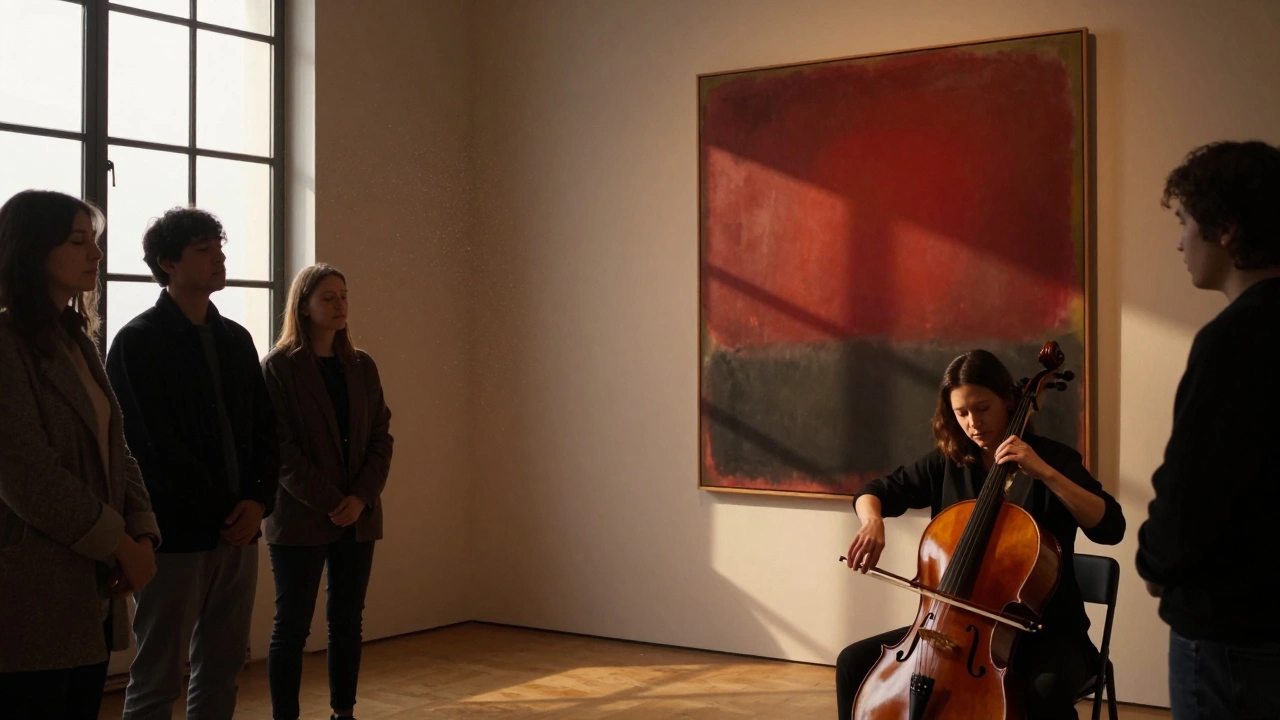
Imagine walking into a quiet gallery, the kind where you’re used to whispering and slow footsteps, and suddenly you’re surrounded by a cello’s low hum vibrating through the floor. A dancer moves in sync with the music, not on a stage, but right beside a Rothko painting. This isn’t a concert hall. It’s a gallery. And it’s working.
More museums and art spaces are ditching the idea that music and live performance belong only in theaters. Instead, they’re weaving sound and movement directly into exhibitions. But it’s not as simple as turning on speakers. When music and performance meet visual art, the result can be magical-or completely distracting. The difference? Best practices.
Start with the Art, Not the Sound
The biggest mistake? Choosing music because it sounds pretty. That’s not how it works. The sound has to serve the artwork, not compete with it.
At the Portland Art Museum in 2024, curators paired a series of minimalist black-and-white photographs by Dorothea Lange with a single, looping field recording of wind across the Oregon high desert. No instruments. No rhythm. Just the raw, shifting air. Visitors reported feeling like they were standing in the same landscape as the subjects of the photos. The sound didn’t explain the images. It deepened them.
Ask yourself: Does the music echo the mood? Does it mirror the texture? Does it challenge the visual narrative? If the answer isn’t clear, it’s not ready.
Sound Design Over Playlist
Don’t just play a Spotify playlist. That’s not curation. That’s background noise.
Effective gallery sound design treats audio like a sculpture. It’s shaped. It has space. It has timing.
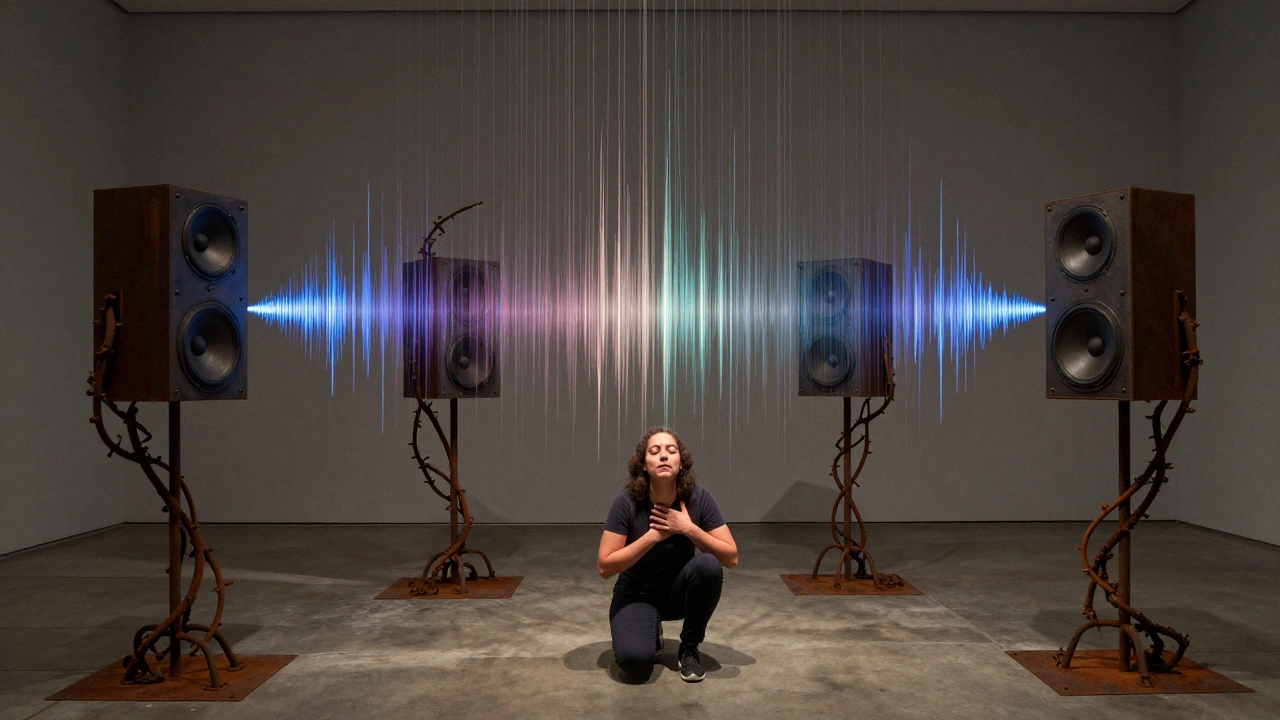
At the Walker Art Center in Minneapolis, a 2025 installation called Still Life in Motion used four hidden speakers placed at different heights around a sculpture of rusted metal vines. The audio changed based on where you stood: low frequencies pulsed near the base, while high harmonics shimmered above. Visitors had to move to hear the full piece. It turned passive listening into active exploration.
Use directional speakers. Limit volume to 55 decibels max-louder than a library, quieter than a café. Avoid sudden transitions. If a piece ends, fade it out over 10 seconds. Let silence breathe.
Performance Is Not a Show-It’s an Encounter
Live performers in galleries aren’t entertainers. They’re part of the exhibit.
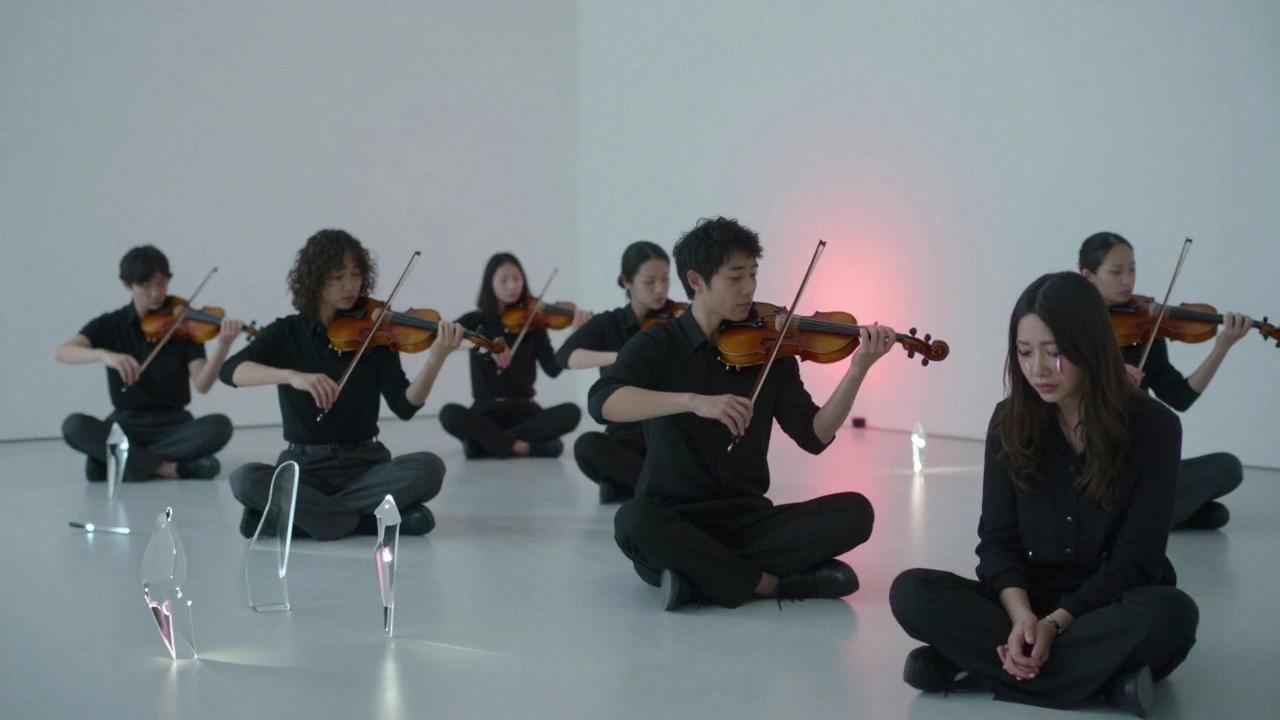
At the San Francisco Museum of Modern Art, a violinist performed for 90 minutes each day inside a room filled with glass sculptures. The musician didn’t look at the audience. Didn’t bow. Didn’t smile. They played the same 30-second phrase, repeating it endlessly, with tiny variations in timing and pressure. People stayed for hours. Some cried. Others sat perfectly still. Why? Because it wasn’t about skill. It was about presence.
When hiring performers, choose people who understand spatial awareness. They should move slowly. Respond to light. Pause when someone stands too close. Their job isn’t to impress. It’s to disappear into the space.
Timing Matters More Than You Think
Playing music all day? You’re diluting the impact.
Best practices suggest limiting performances to 2-3 specific windows per day. In Berlin’s Hamburger Bahnhof, they schedule live string quartets only between 3:00 p.m. and 4:30 p.m. on weekends. Why? That’s when foot traffic slows, and visitors are already settled into the mood of the exhibition. The music becomes a punctuation mark, not a distraction.
Also avoid rush hours. Don’t schedule a solo piano piece during a school field trip. Don’t play ambient drones during a crowded opening night. Let the art have room to be seen.
Engage the Senses, Not Just the Ears
Great gallery performances don’t just ask you to listen. They ask you to feel.
In a 2024 exhibit at the Museum of Contemporary Art in Los Angeles, a percussionist used handmade instruments made from materials found in the surrounding artworks: ceramic shards, woven textiles, recycled metal. Each strike created a unique resonance that matched the texture of nearby sculptures. Visitors were given small wooden blocks to hold while listening. The vibration traveled through their palms. One visitor said, “I didn’t hear the music. I felt it in my bones.”
Think beyond sound. Can the performance involve scent? Temperature? Airflow? Even subtle changes in lighting can sync with musical dynamics. These aren’t gimmicks-they’re extensions of the artwork’s language.
Test Before You Install
Never launch a sound or performance piece without testing it in the actual space.
At the Tate Modern in London, a team spent three days in the Turbine Hall with a prototype setup: speakers, a dancer, a recording of a heartbeat. They watched how people moved. Did they stop? Did they circle around? Did they ignore it? One test revealed that the heartbeat was too loud near the escalators-people thought it was a malfunction. They lowered the volume by 15% and added a visual cue: a faint red glow that pulsed with each beat. Engagement doubled.
Bring in real visitors. Not staff. Not artists. Real people who’ve never seen the exhibit before. Watch. Don’t explain. Just listen.
Document the Experience
Music and performance in galleries are fleeting. That’s part of their power. But they shouldn’t vanish without a trace.
Keep audio recordings. Note visitor reactions. Track how long people stay. Use simple tools: a voice recorder, a notebook, a survey kiosk. The data helps you improve.
At the Whitney Museum, they started a “Sound Log” after a 2023 installation. They found that performances with no visual cues (like a hidden cellist) had 40% higher dwell time than those with performers in plain sight. That insight changed their entire approach to future events.
Don’t treat these moments as one-offs. Treat them as experiments. Record them. Learn from them. Repeat what works.
What Doesn’t Work
Here’s what to avoid:
- Using popular songs just because they’re familiar. They pull attention away from the art.
- Performers who make eye contact or smile at the audience. It breaks the immersion.
- Playing music that’s too long. More than 15 minutes without variation feels like a chore.
- Ignoring acoustics. Hard floors, glass walls, and high ceilings can turn a whisper into a roar.
- Not informing visitors. A simple sign like “Live Sound Installation: Please Move Quietly” sets the tone.
And never, ever use headphones. They isolate. Galleries are about shared experience.
Why This Matters Now
In a world of endless digital noise, galleries that add live, thoughtful sound are offering something rare: presence. Not spectacle. Not distraction. A moment where art doesn’t just sit on the wall-it breathes.
More institutions are realizing this. The Museum of Modern Art in New York added a rotating sound program in 2025. The Guggenheim now trains its docents in audio curation. Even small galleries in Portland and Oakland are experimenting with one-hour performances once a month.
This isn’t about making galleries more like concerts. It’s about making concerts more like art.
Can any type of music work in a gallery?
No. The music must align with the visual work’s mood, texture, and intent. A heavy metal track in a gallery of delicate watercolors will clash. A slow ambient drone might enhance it. The key is resonance-not popularity or genre.
How loud should the music be?
Keep it at 50-55 decibels. That’s about the level of a quiet conversation. Louder than that, and it competes with the art. Softer, and people miss it. Use a sound meter to check. Most phone apps can do this accurately.
Should performers interact with visitors?
No. Interaction breaks the spell. Performers should remain focused on the space, not the audience. Their presence should feel like part of the environment-like a shadow or a breeze-not a person seeking applause.
How do I find performers for gallery events?
Look beyond traditional musicians. Contact experimental sound artists, movement therapists, or local performance collectives. Many are eager to work in non-traditional spaces. Universities with sound design or contemporary art programs are also great resources.
Do I need permission to use copyrighted music?
Yes. Even in a gallery, playing recorded music publicly requires licensing. Use royalty-free compositions, original works, or licensed archival recordings. Many artists and composers now offer non-commercial licenses for museum use. Always verify before installation.