Museum Accessibility Audits: Plan Visits With Disabilities
Planning a museum visit when you have a disability shouldn’t mean guessing whether you can get in, move around, or actually see the art. Too many museums still act like accessibility is an afterthought-ramps tucked behind dumpsters, audio guides that don’t work, or exhibits that require climbing stairs to understand. But it doesn’t have to be this way. A museum accessibility audit isn’t just a checklist for compliance; it’s a roadmap for real inclusion. And if you’re planning a visit, knowing what to look for can save you time, frustration, and even physical strain.
What a museum accessibility audit actually checks
An accessibility audit isn’t about ticking boxes for the law. It’s about asking: Can someone with a mobility device, visual impairment, hearing loss, autism, chronic pain, or cognitive difference fully experience this space? Real audits look at every step of the journey-from parking to the gift shop.
For example, a good audit checks:
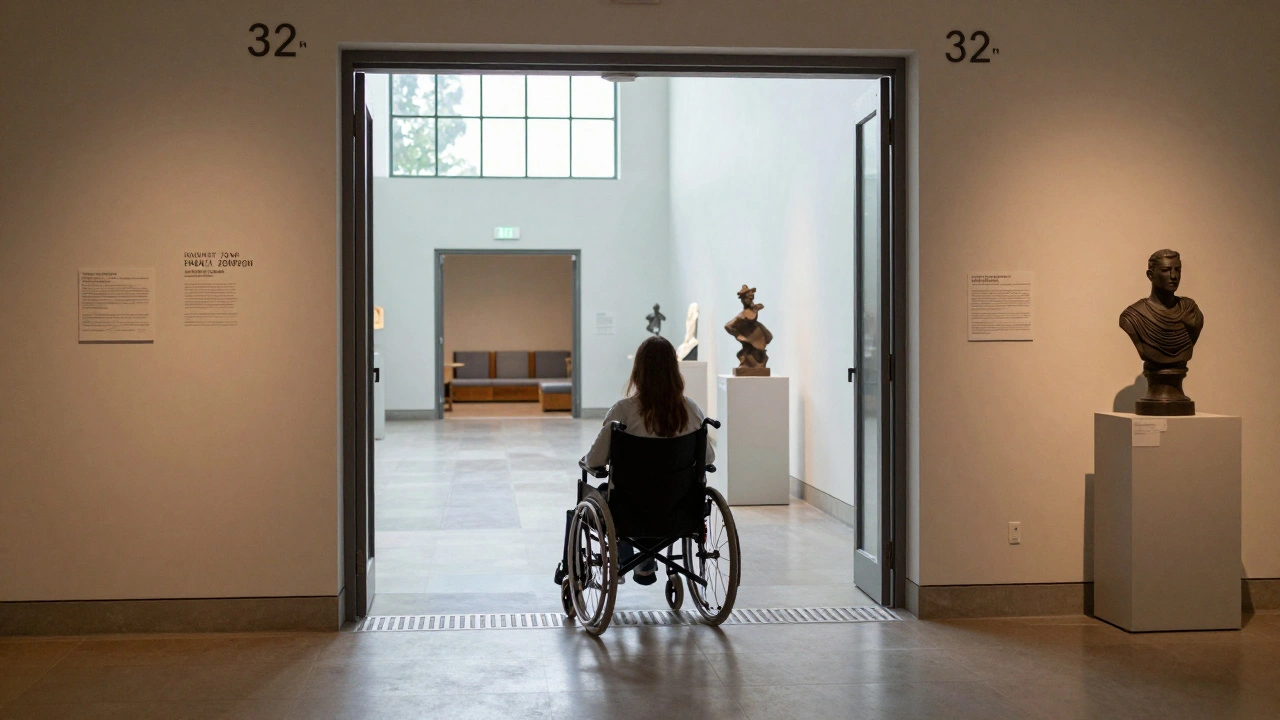
- Door widths: Are they at least 32 inches wide? Many older museums have doors that are barely 28 inches-enough to block a standard wheelchair.
- Ramp slopes: Are they steeper than 1:12? That’s the ADA standard. A 1:8 ramp might look fine, but it’s exhausting to push up in a manual chair.
- Elevator access: Do elevators go to every exhibit floor? Or just the lobby and basement? Some museums hide their best galleries on the third floor with no elevator.
- Restroom accessibility: Are stalls large enough? Are sinks too high? Are grab bars missing or broken? I’ve seen restrooms labeled "accessible" with a stall so narrow a person in a wheelchair couldn’t turn around.
- Lighting and glare: Fluorescent lights and glass cases can create blinding reflections. For someone with low vision or light sensitivity, that’s not just uncomfortable-it’s a barrier.
- Audio and visual content: Are there tactile models? Are captions clear? Do audio descriptions exist for videos? Are there quiet rooms for people who get overwhelmed?
These aren’t theoretical concerns. In 2023, a study by the American Alliance of Museums found that fewer than 40% of U.S. museums offered audio descriptions for their permanent collections. Only 28% had tactile reproductions of key artworks. That means most visitors with vision impairments are left out.
How to use an audit before you visit
Don’t just call the museum and ask, "Are you accessible?" That question gets a polite "yes" 90% of the time. Instead, ask for their accessibility audit report. Many museums now publish these online. Look for:
- Maps with marked accessible routes
- Photos of entrances, elevators, and restrooms
- Descriptions of sensory-friendly hours
- Details on loaner wheelchairs or strollers
- Whether service animals are welcome everywhere
If they don’t have it, ask for a PDF or a video walkthrough. Some museums, like the Portland Art Museum, now offer 360-degree virtual tours labeled with accessibility notes. You can scroll through and see if the path to the Monet exhibit has a curb, or if the bench near the sculpture is sturdy enough to sit on without falling.
Pro tip: Call ahead and ask to speak with the accessibility coordinator-not the front desk. They’re the ones who actually know what’s broken, what’s been fixed, and what’s coming next.
What to expect from a truly accessible museum
Not all museums are equal. The best ones treat accessibility like a core part of their mission-not a legal obligation. Here’s what they get right:
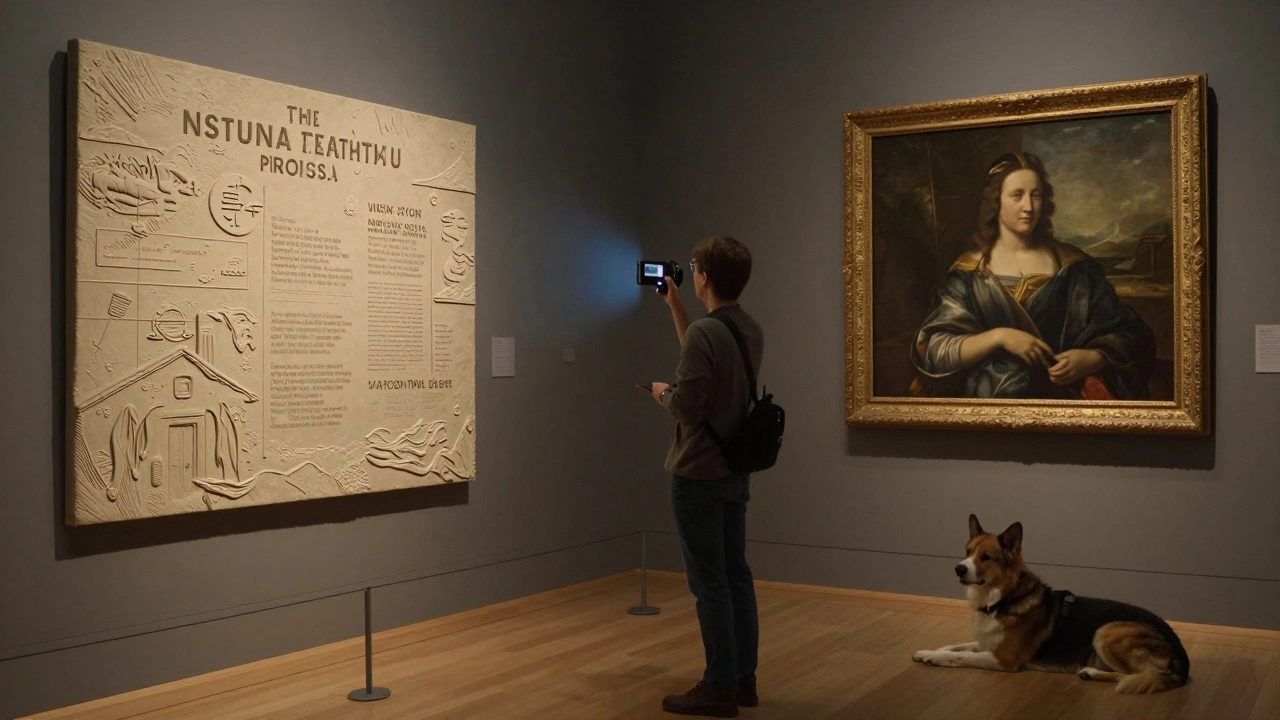
- Multiple ways to engage: A painting isn’t just a canvas. It might have a 3D-printed texture version, a Braille label, an audio description, and a simplified story card for neurodivergent visitors.
- Quiet hours: One hour a week where lights are dimmed, sounds are lowered, and crowds are limited. This isn’t just for autism-it helps people with PTSD, migraines, or anxiety.
- Free admission for companions: Many museums charge extra for personal assistants. The best ones waive that fee. Why? Because someone with a mobility impairment can’t enjoy the art if they’re alone.
- Real-time feedback: They have a system to report issues-like a broken elevator or a missing caption-and fix them within 48 hours.
The Smithsonian’s National Museum of American History does this well. Their website lists every exhibit with its accessibility features. You can filter by need: "wheelchair accessible," "tactile elements," "ASL interpreted." No guessing. No calling. Just clear, up-to-date info.
Red flags that mean you should skip or prepare
Some museums look nice but hide big problems. Watch for:
- "We have ramps" but no photos of them
- "We welcome service animals" but no mention of relief areas
- "We have audio guides" but no info on whether they work with hearing aids
- No mention of sensory rooms or quiet spaces
- Exhibits labeled "hands-on" but with no tactile options
Also, if the website only says "contact us for accommodations," that’s a warning sign. Real accessibility is documented, not requested.
What you can do to make your visit smoother
Even at the best museums, things go wrong. Here’s how to be ready:
- Bring your own seating: A lightweight, foldable stool can save your day if benches are too low or missing.
- Ask for a map ahead of time: Email them and request a PDF with accessible paths highlighted. Most will send it.
- Go during off-hours: Weekday mornings are quieter. Less noise, fewer crowds, easier navigation.
- Bring noise-canceling headphones: Even if you don’t have sensory sensitivities, museum audio can be overwhelming.
- Use the buddy system: If you’re going with someone, assign roles-one handles navigation, the other handles questions.
And if something’s broken? Don’t walk away. Tell staff. Write a note. Email the director. Museums only improve when people speak up.
Why this matters beyond the visit
Accessibility isn’t just about ramps and captions. It’s about dignity. It’s about saying, "Your experience matters as much as anyone else’s." When museums invest in audits, they’re not just fixing doors-they’re changing culture.
Look at the Whitney Museum in New York. After a 2022 audit, they redesigned their entire children’s wing to include multisensory stations, adjustable lighting, and seating with armrests. Result? Visits from families with autistic children jumped by 65% in one year.
That’s the power of real inclusion. It’s not charity. It’s good design. And it’s something every museum can do.
Do museums have to follow accessibility laws?
Yes. In the U.S., museums are public accommodations under the Americans with Disabilities Act (ADA). That means they must make "reasonable modifications" to ensure access. This includes physical changes like ramps and elevators, as well as programmatic changes like offering audio descriptions or sign language tours. But "reasonable" doesn’t mean perfect-and many museums only do the bare minimum. An audit helps you see what they’re actually doing.
Can I bring my own assistive device to a museum?
Absolutely. Whether it’s a wheelchair, walker, cane, hearing aid, or communication device, museums must allow it. They can’t require you to use their equipment if yours works better. Some museums offer loaners, but you’re never required to use them. If staff asks you to leave your device at the front, that’s a violation of ADA rules.
What if a museum says they don’t have audio descriptions?
Ask if they can create one for you. Many museums will record a short audio description on the spot if you call ahead. Some even let you bring a friend with a phone to record it. If they refuse, ask for the name of the accessibility coordinator and follow up in writing. Public institutions are legally required to provide equal access-even if they don’t have it ready.
Are service animals allowed everywhere in museums?
Yes. Under the ADA, service animals must be allowed in all areas open to the public, including galleries, theaters, and gift shops. They can’t be restricted to certain zones or asked to leave because of allergies or discomfort from other visitors. Museums can only ask two questions: (1) Is the animal required because of a disability? (2) What work or task is it trained to do? They can’t ask for proof or documentation.
How do I find museums with good accessibility reviews?
Start with local disability advocacy groups-they often maintain lists of accessible venues. Websites like AccessNow and Wheelmap.org let users rate places by accessibility. You can also search for terms like "museum + accessibility audit + [city name]." Museums that publish their audits publicly usually welcome feedback. If you’ve had a good (or bad) experience, share it. Your review helps others.