Insurance and Conservation: Protect Your Art Investment
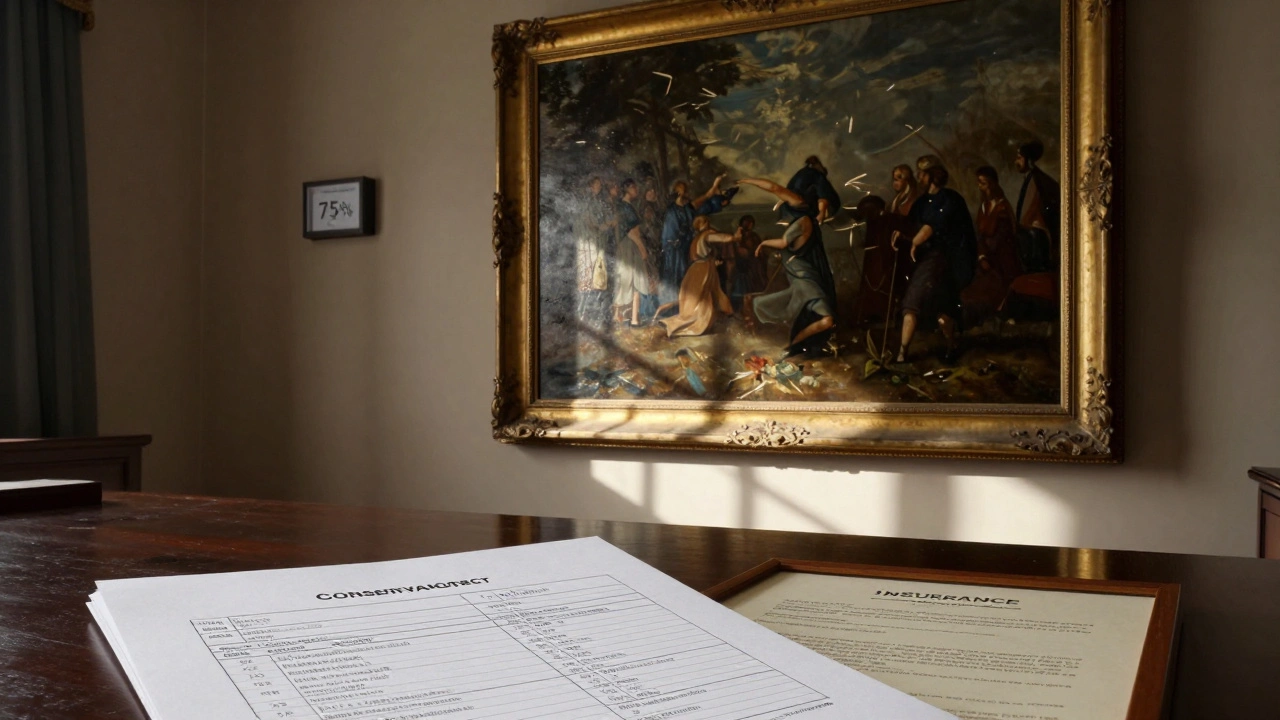
Buying a painting, sculpture, or vintage piece isn’t just about taste-it’s an investment. But unlike stocks or real estate, your art doesn’t sit in a vault with automatic safeguards. It hangs on a wall, gets moved during a renovation, or sits in a storage unit that might flood. Without proper insurance and conservation, even a single accident can wipe out years of value.
Why Art Needs More Than Just a Frame
Most people think insurance is about theft or fire. That’s true-but it’s only half the story. Art is fragile. A humidity spike in your living room can cause canvas to warp. A minor scratch on a 19th-century oil painting can cut its value by 40%. Temperature swings? They make varnish crack. Light exposure? It fades pigments permanently.According to the International Council of Museums, over 60% of art damage comes from environmental factors, not crime. That means if you’re only insured against burglary, you’re leaving your investment exposed to the slow, silent killers.
How Art Conservation Works-And Why It’s Not Just for Museums
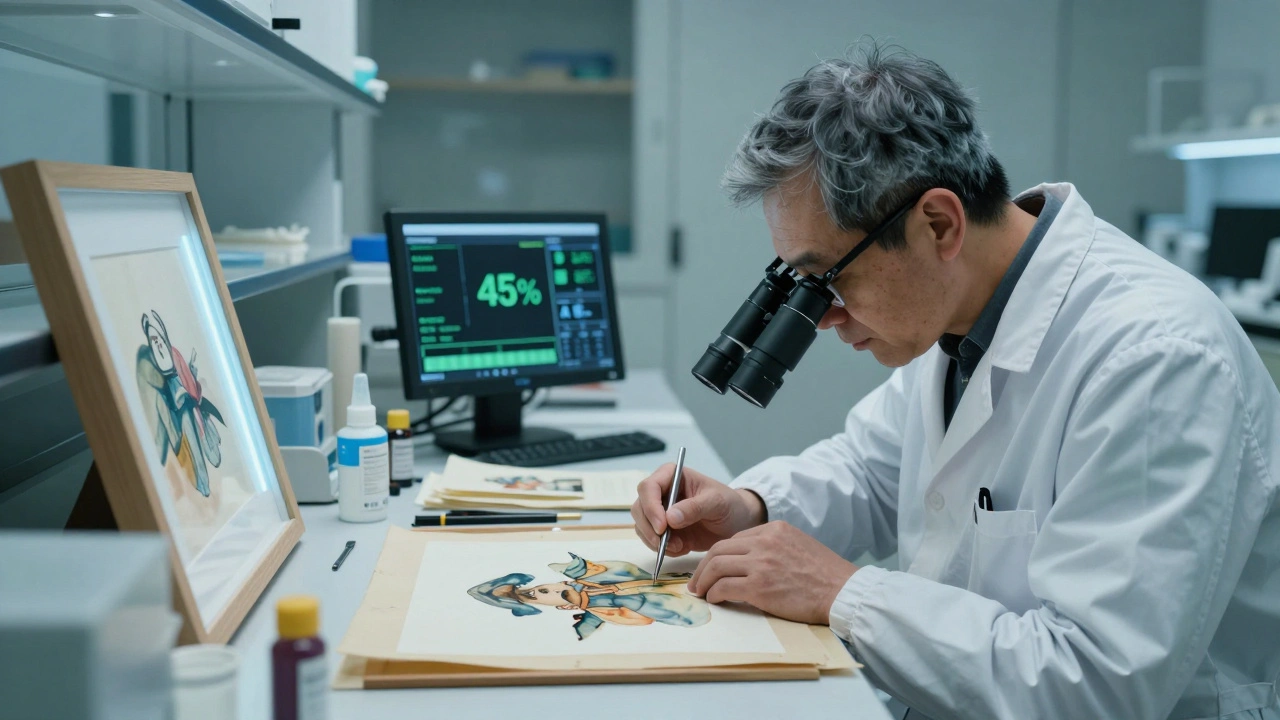
Conservation isn’t about cleaning or polishing. It’s about stabilization. A professional conservator doesn’t try to make a painting look "new." They stop decay. They repair tears with reversible materials. They control moisture levels using microclimate cases. They document every step so future owners know exactly what was done.Take a 1920s watercolor by a lesser-known American artist. It’s worth $18,000 today. But if it’s been hung in direct sunlight for ten years, the colors have faded by 30%. A conservator can stabilize the paper, reduce further fading, and even restore some tone-but they can’t bring back what’s gone. The value drops to $12,000. That’s a $6,000 loss you could’ve prevented with proper lighting and climate control.
Conservation services aren’t just for museums. Private collectors hire them regularly. A good conservator will give you a report: what’s at risk, what to avoid, and how to store or display your piece safely. That report? It’s also your insurance company’s best friend.
What Art Insurance Actually Covers
Standard homeowner’s insurance barely touches fine art. Most policies cap art coverage at $2,500 total-no matter how many pieces you own. That’s useless if you have a $50,000 Hockney or a collection of Japanese woodblock prints.Specialized art insurance policies cover:
- Damage from fire, flood, earthquake, or accidental breakage
- Loss during transit-whether you’re shipping to an auction or moving houses
- Theft, even if it happens while the piece is on loan to a gallery
- Restoration costs up to the insured value
- Global coverage-no geographic limits
Some policies even include “agreed value” coverage. That means if your piece is destroyed, the insurer pays the full amount you insured it for-no appraisal battles. No arguing over "market value." You get the number you agreed on when you signed the policy.
How to Get the Right Policy
You can’t just call your auto insurer and ask for art coverage. You need a specialist. Look for insurers who handle fine art as a core business-not an add-on. Companies like Chubb, Hiscox, and Aon have dedicated fine art divisions.Here’s what they’ll ask for:
- A detailed inventory: title, artist, date, medium, dimensions
- Photos of each piece-front, back, signature, and any damage
- Appraisal from a certified appraiser (not just a gallery receipt)
- Storage and display conditions: humidity levels, lighting, security
Don’t skip the appraisal. Insurance companies require it. And make sure the appraiser is a member of the American Society of Appraisers or the International Society of Appraisers. A generic online estimate won’t cut it.
Conservation + Insurance = A Smart Feedback Loop
Here’s the secret most collectors miss: conservation reports and insurance policies work together.If you hire a conservator to fix a tear in a 1950s abstract, they’ll write a report. That report becomes part of your insurance file. It proves the piece was in good condition before the repair. If something happens later, the insurer knows exactly what was done-and what the value was at the time.
Conversely, your insurance company might require a conservation check every 3-5 years. Why? Because a painting that’s not monitored is a liability. If you skip it, they might deny a claim later. It’s not about distrust-it’s about risk management.
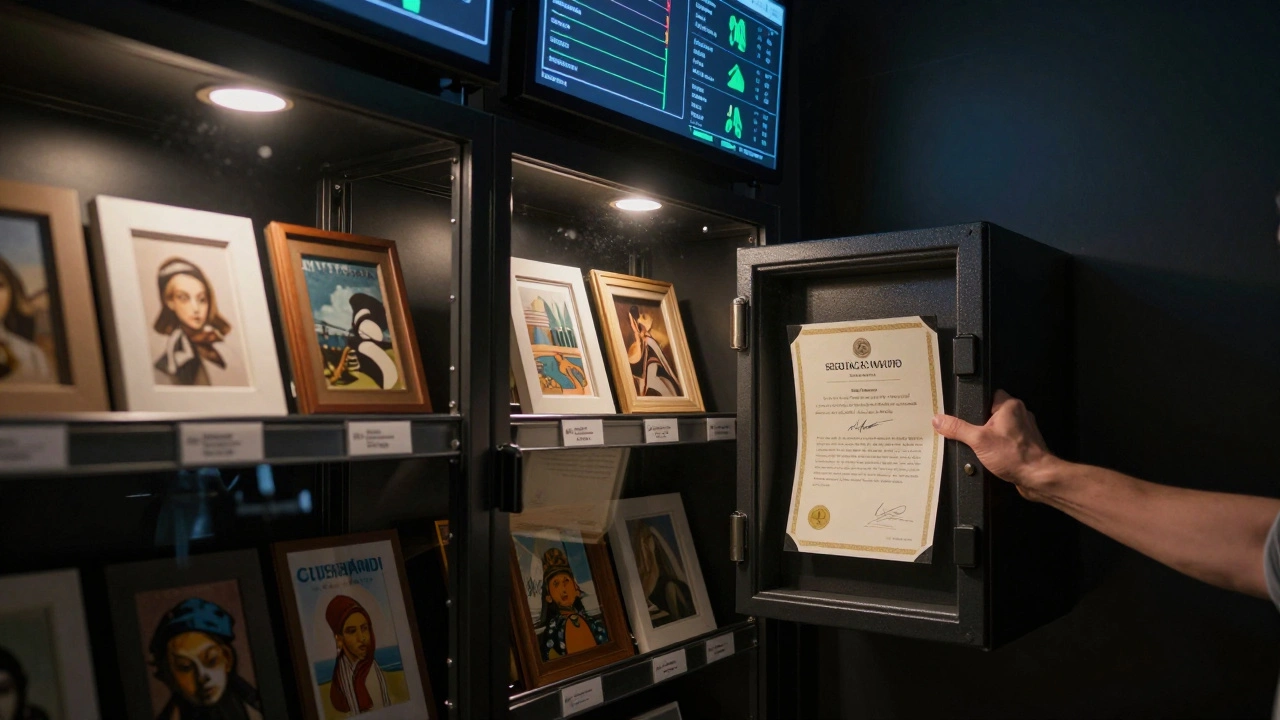
Some policies even offer discounts if you follow conservation guidelines. Install UV-filtering glass? Lower premium. Use climate-controlled storage? Another 5-10% off. It’s not a perk-it’s a system designed to protect your investment.
What Happens If You Don’t Do Either?
A collector in Chicago lost a $120,000 Rothko in 2023. The painting was hanging in a sunlit hallway. The homeowner thought it was fine-until the colors faded to pale gray. The insurance claim was denied because the policy required annual environmental checks. No documentation. No coverage.Another case: a family in Seattle inherited a collection of 19th-century etchings. They stored them in a damp basement. Mold spread. One piece was ruined beyond repair. The insurance company paid only $500 because the collection wasn’t listed separately-and the appraisals were outdated.
These aren’t rare cases. They’re common. And they happen because people assume art is "just" decor. It’s not. It’s a high-value, high-risk asset that needs active care.
Quick Checklist: Protect Your Art Investment
- Get a professional appraisal for each piece over $5,000
- Insure each piece individually-not as part of a "personal property" lump sum
- Choose an insurer with fine art experience-not general coverage
- Document storage conditions: temperature, humidity, light levels
- Use UV-filtering glass or acrylic for display
- Have a conservator inspect pieces every 3 years
- Update appraisals every 2-3 years-values change
- Keep all reports, photos, and receipts in a secure digital backup
What Comes Next?
Art doesn’t just sit there. It breathes. It reacts. It ages. And if you treat it like furniture, you’ll pay for it later.The best time to protect your collection isn’t after something goes wrong. It’s now. Start with one piece. Get it appraised. Talk to an art insurance specialist. Schedule a conservation check. You don’t need to insure your whole collection at once. But you do need to start.
Because the value of art isn’t just in what you paid for it. It’s in what you do to keep it alive.
Do I need separate insurance for each piece of art?
Yes, for pieces worth more than $5,000. Most standard policies cap art coverage at $2,500 total, regardless of how many items you own. To get full protection, each valuable piece should be listed individually with its own appraised value. This ensures you’re covered for the actual worth, not a generic limit.
Can I insure art that’s not in my home?
Yes. Specialized art insurance policies cover your pieces wherever they are-whether in a gallery, on loan to a museum, in storage, or being transported. This is called "all-risk" or "worldwide coverage." Standard homeowner’s insurance usually doesn’t cover art outside the home. Always confirm the geographic scope before signing up.
What’s the difference between restoration and conservation?
Restoration tries to make an artwork look like it did when new-often by repainting or replacing materials. Conservation focuses on halting damage and stabilizing the piece using reversible, non-invasive methods. Conservators document everything and prioritize long-term preservation over aesthetics. Insurance companies prefer conservation because it maintains authenticity and value.
How often should I update my art appraisals?
Every 2-3 years. Art values fluctuate based on market demand, artist reputation, and economic trends. If your appraisal is outdated, your insurance payout may be far less than what you’d need to replace the piece. Some insurers require updated appraisals as a condition of coverage.
Can I save money on art insurance by improving conservation?
Yes. Many insurers offer discounts if you install UV-filtering glass, use climate-controlled storage, or provide documentation of professional conservation checks. Reducing environmental risk lowers the chance of damage-and that’s good for both you and the insurer.