Declared Value vs Agreed Value in Art Insurance: What You Need to Know
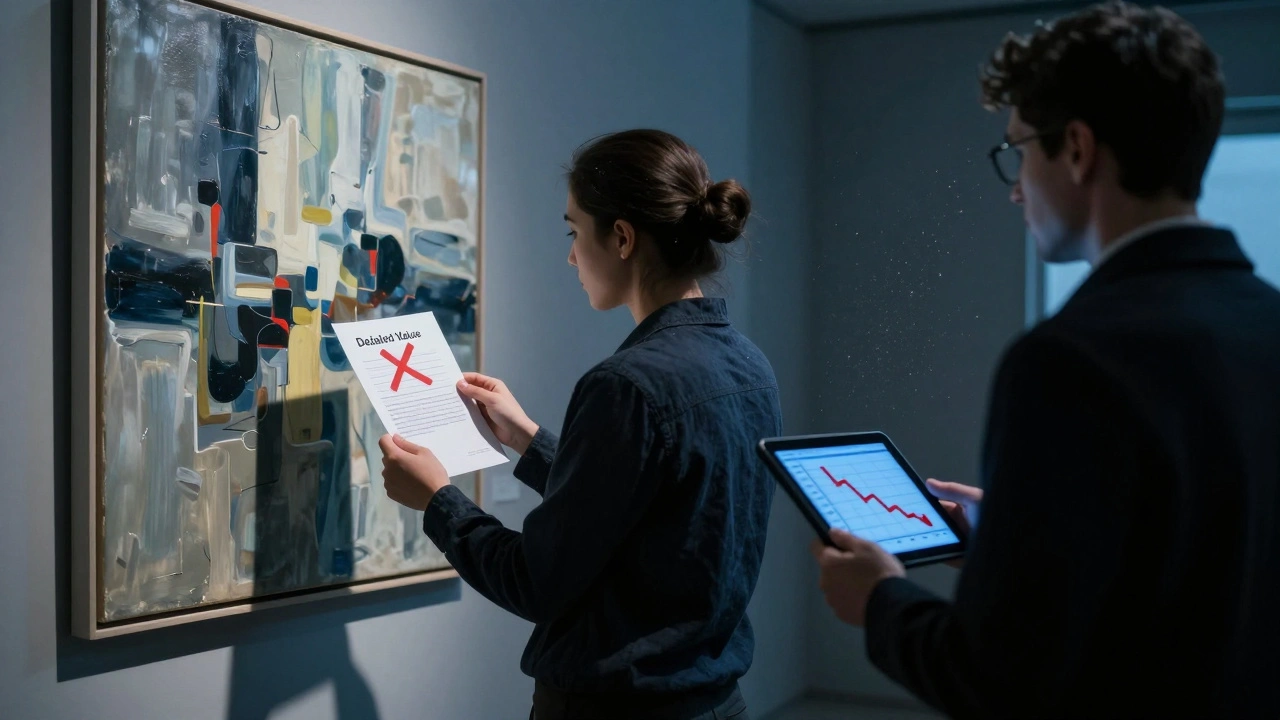
When you insure a piece of art, you’re not just buying coverage-you’re locking in how much you’ll get paid if something goes wrong. But here’s the catch: not all insurance policies are built the same. Two terms you’ll see over and over again are declared value and agreed value. They sound similar, but they mean completely different things when it comes to your payout. Get this wrong, and you could end up with a fraction of what your artwork is actually worth-or worse, nothing at all.
What Is Declared Value?
Declared value is what you tell the insurer your artwork is worth when you first apply for coverage. It’s usually based on an appraisal you provide, a recent auction result, or even your own estimate. Sounds simple, right? But here’s where it gets messy.
Insurance companies don’t always take your declared value as gospel. They might send their own appraiser, check market trends, or compare it to similar sales. If they think you overvalued the piece, they might lower the insured amount. If they think you undervalued it, they might charge you less-but also cap your payout at that lower number.
Let’s say you own a 1960s Helen Frankenthaler painting. You got it for $85,000 in 2020. You declare it at $120,000 because you think it’s appreciated. The insurer reviews recent auction records and sees comparable works sold for $95,000. They approve coverage at $95,000. Now, if the painting is destroyed in a fire, you get $95,000-even if you spent $120,000 replacing it. You’re out $25,000. That’s the risk with declared value: it’s a starting point, not a guarantee.
What Is Agreed Value?
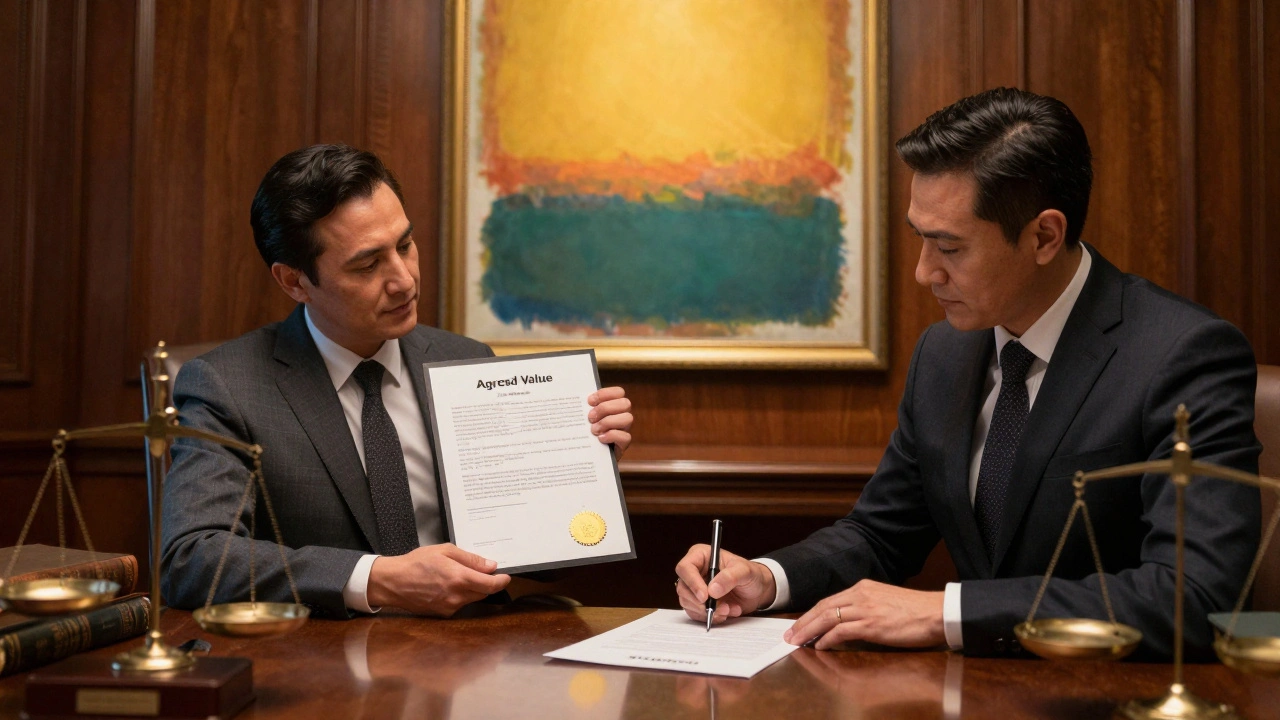
Agreed value is different. It’s a contract. You and the insurer sit down, review appraisals, study market data, and agree on a specific dollar amount that will be paid out if the artwork is lost, stolen, or damaged beyond repair. Once it’s written into the policy, that number is locked in. No surprises. No renegotiation. No arguing over market fluctuations after the fact.
This is the gold standard for high-value art collections. Museums, major collectors, and galleries almost always use agreed value policies. Why? Because when you’re insuring a $2 million Rothko, you don’t want to wait for an appraisal after a flood. You want to know exactly how much you’ll get the moment you file a claim.
Agreed value policies usually require a recent, certified appraisal-typically from a specialist who works with the type of art you own. The insurer will review it, maybe request a second opinion, and then sign off. The whole process can take weeks. But once it’s done, you’re covered for the full agreed amount, no matter what the market does next year.
Why the Difference Matters
Here’s a real scenario: In 2023, a collector in New York lost a Robert Rauschenberg piece in a warehouse fire. The painting was insured under a declared value policy. The collector had declared it at $1.8 million based on a 2021 appraisal. But by the time the claim was processed, auction prices for Rauschenberg had dropped 18% due to a market correction. The insurer paid out $1.48 million. The collector had to cover the $320,000 gap out of pocket.
Two months later, another collector in Chicago lost a similar Rauschenberg under an agreed value policy. The value had been locked in at $1.9 million in 2022. Even though the market dropped, they received the full $1.9 million. No delays. No disputes. No loss.
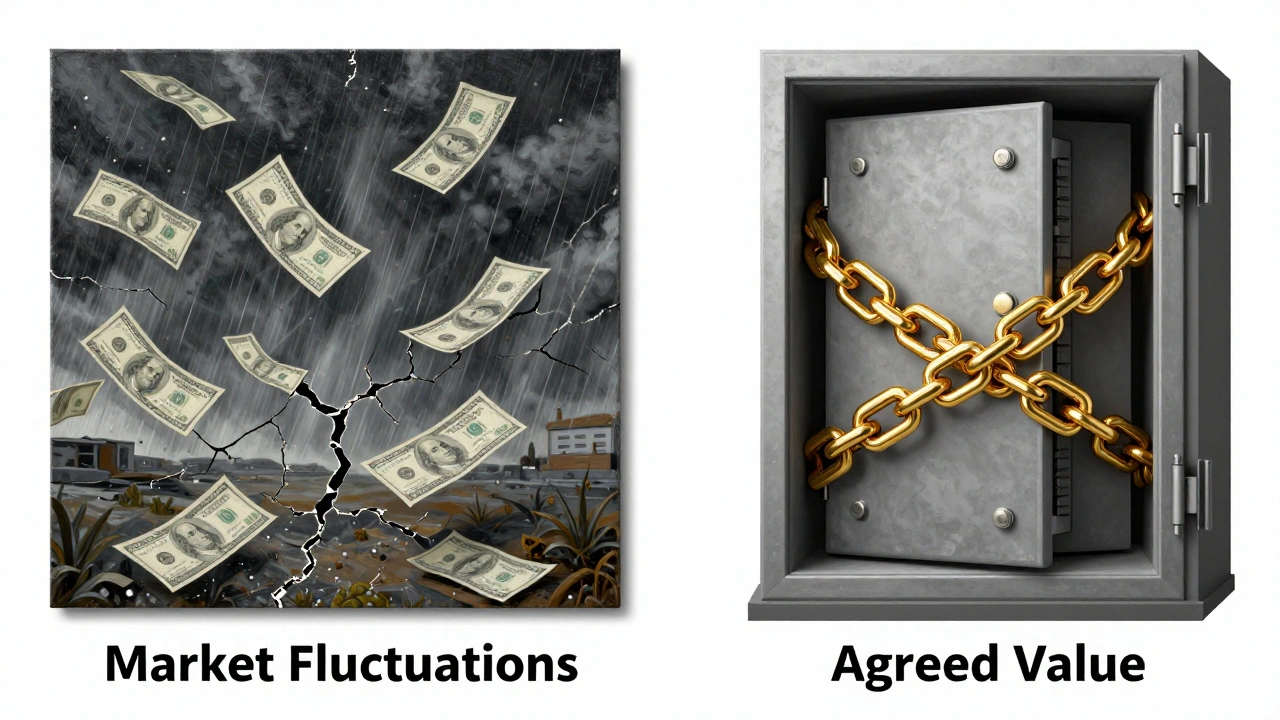
The lesson? Declared value leaves you exposed to market swings. Agreed value protects you from them.
When Declared Value Makes Sense
It’s not all bad. Declared value policies are cheaper. They’re common for collections under $50,000, or for pieces that change value quickly-like contemporary art from emerging artists. If you’re buying a new piece every few months, getting a new appraisal each time isn’t practical.
Some insurers offer “flexible declared value” options. You can adjust the value annually without a full appraisal. You just submit updated documentation. This works if you’re tracking the market closely and updating your records regularly. But if you forget, or if prices spike suddenly, you’re still at risk.
Also, declared value policies often include a coinsurance clause. That means if you insure your art for less than its full value, you’ll have to pay a percentage of the loss. For example: if your painting is worth $100,000 but you only insured it for $70,000, you might only get 70% of the claim-even if the damage was total. That’s a hidden trap.
When Agreed Value Is Non-Negotiable
If you own art worth more than $100,000, especially if it’s a signature piece, historical work, or something rare, agreed value is the only way to go. This includes:
- Works by established modern masters (Picasso, Warhol, Klimt)
- Historical pieces with provenance
- Art that’s part of a curated collection
- Art used as collateral for loans
- Art stored in climate-controlled vaults or private museums
These pieces don’t just lose value-they can vanish from the market entirely. If one goes missing, there’s no time to wait for an appraisal. The insurer needs to pay quickly, and they need to know exactly how much to pay.
Agreed value policies also often include additional protections: coverage for transit, exhibition risks, and even accidental damage during handling. These aren’t usually included in basic declared value plans.
How to Choose
Ask yourself three questions:
- How much is the artwork worth today, based on recent sales?
- How stable is its market? Is it likely to rise, fall, or stay flat?
- Can you afford to take a financial hit if the payout doesn’t match your expectations?
If the answer to any of those is “I can’t risk losing money,” go with agreed value. If you’re insuring a few prints or decorative pieces under $20,000, declared value might be fine.
Don’t wait until you file a claim to find out the difference. Review your policy now. Look for the words “declared value” or “agreed value.” If it’s not clearly stated, call your insurer. Ask: “Is the payout amount guaranteed, or is it subject to market review?”
What Happens If You Don’t Have Either?
Many homeowners’ policies include a tiny bit of art coverage-usually $1,000 to $5,000. That’s fine for a poster or a framed print. But if you own anything with real value, that coverage is meaningless. You’ll be relying on the insurer’s discretion, which often means a lowball offer, a long wait, and a fight.
Some insurers offer “scheduled personal property” riders. These are better than standard coverage, but they still use declared value. You’re not protected unless you get a true agreed value policy.
Art insurance isn’t like car or home insurance. You can’t just pick the cheapest plan. It’s a specialized product. And if you’re serious about your collection, you need a policy that treats your art like the asset it is-not a random household item.
Final Thought
Art isn’t just decoration. It’s wealth. It’s legacy. It’s often the most valuable thing you own. So why treat it like an afterthought? Declared value gives you flexibility. Agreed value gives you peace of mind. For anything you truly care about, peace of mind isn’t optional-it’s essential.