How to Write an Investor Deck for an Art Gallery Startup
Starting an art gallery isn’t just about hanging paintings on walls. It’s about building a business that people will bet money on. If you’re pitching to investors, your deck isn’t a portfolio-it’s a business plan with visuals. Investors don’t care about your favorite artist. They care about your revenue model, your audience, and your path to profitability.
Start with the problem you’re solving
Most art galleries fail because they assume art lovers will naturally show up. They don’t. The real problem? People don’t know where to find new, credible artists. They don’t trust online galleries. They’re tired of the same names in every group show. Your gallery fixes that. You’re not just selling art-you’re curating trust.
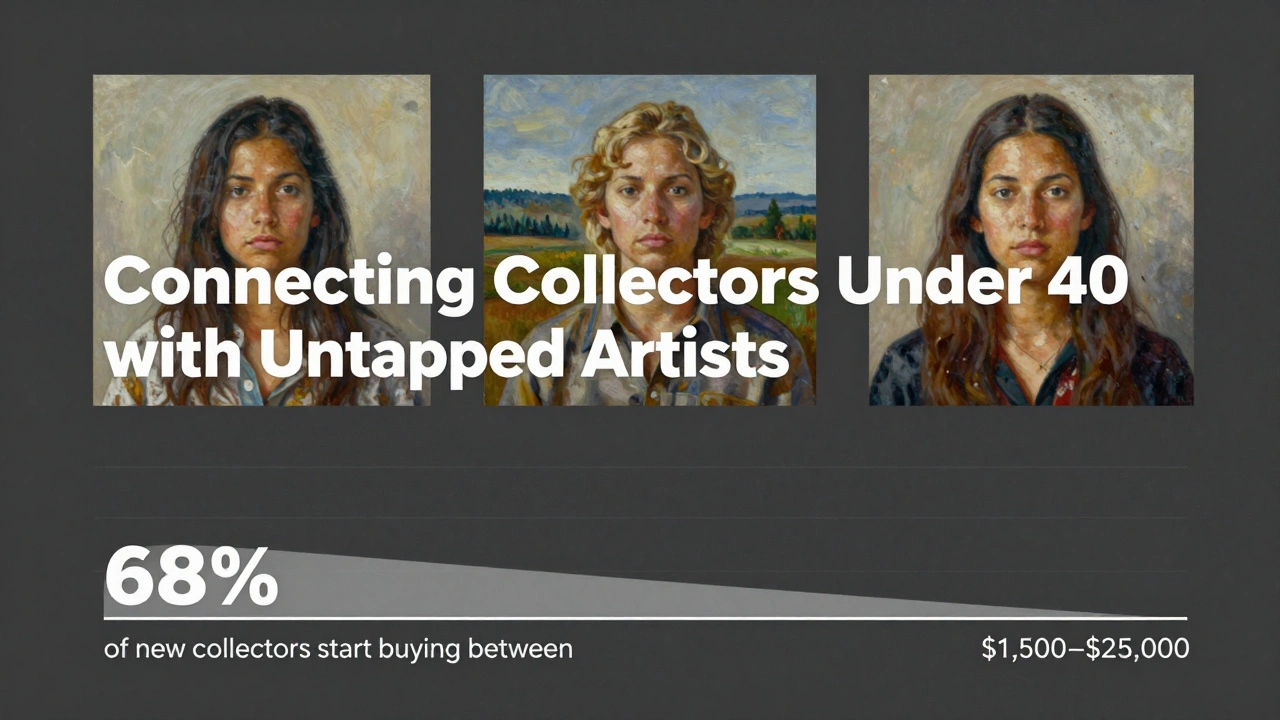
Don’t say, “We love contemporary art.” Say, “We connect collectors under 40 with emerging artists from the Pacific Northwest who have never been shown in a commercial gallery.” Be specific. Name the region. Name the gap. Investors remember details.
Show your market, not just your taste
The U.S. art market was worth $17.2 billion in 2024. That sounds big, but most of it goes to auction houses and blue-chip galleries. The real opportunity is in the middle: galleries that sell work between $1,500 and $25,000. That’s where 68% of new collectors start, according to the 2024 Art Basel & UBS Global Art Market Report.
Map this out visually. Show a chart: top 10 cities for emerging art buyers. Portland, Seattle, Austin, Denver-these aren’t just places you live. They’re markets. Include data: how many collectors under 35 bought art online in 2023? How many said they’d pay more for a gallery with transparent pricing? Use real numbers. Not guesses.
Introduce your artists-not as names, but as assets
Don’t list 15 artists with bios. Pick three. One with a solo show at a university gallery. One with work in two public collections. One with 12K Instagram followers and 8 sales in the last six months. These aren’t “talented” people. They’re revenue engines.
For each, show: current sales price, projected price in 12 months, and how you’ll increase demand. Maybe one artist’s work is being featured in a Portland art fair next fall. That’s not a nice-to-have-it’s a marketing event you’re already locked into. That’s leverage.
Explain your revenue model
Most galleries make money one way: commission on sales. That’s fine. But investors need to know how much, how often, and how you’ll scale it.
Here’s a real example: You plan to show 12 artists in your first year. Each artist produces 8 pieces. You sell 6 per artist at $3,500 average. That’s $252,000 in gross sales. At 50% commission, that’s $126,000 in revenue. You’re not guessing-you’re calculating.
Then add other streams: private viewings ($500/event), art consulting for corporate clients ($150/hour), limited-edition prints (30% margin). Show three revenue streams, not one. Investors want to see you’re not just a storefront-you’re a multi-channel business.
Outline your costs and runway
Don’t hide your expenses. Be brutally honest. Your first-year costs might look like this:
- Lease deposit + buildout: $45,000
- Insurance, utilities, security: $18,000/year
- Marketing (digital ads, print, events): $22,000
- Staff (part-time curator + assistant): $60,000
- Software (CRM, inventory, online store): $5,000
- Contingency: $10,000
Total: $160,000. You’re asking for $200,000. Why? Because you want 4 months of runway after launch. That’s not greed-it’s smart. Most galleries run out of cash before they hit their third show. You’re planning to survive past the honeymoon phase.
Prove you’ve done the work
Investors don’t fund ideas. They fund proof. You’ve already:
- Secured a 12-month lease with a 6-month break clause
- Negotiated a 30% discount on framing from a local studio
- Partnered with a local coffee shop to host monthly artist talks
- Created a waitlist of 87 collectors who signed up for your newsletter
- Had three artists commit to exclusivity for six months
These aren’t side notes. They’re proof you’re not just dreaming. You’ve started building the business already. That’s what makes investors lean in.
End with your ask and your timeline
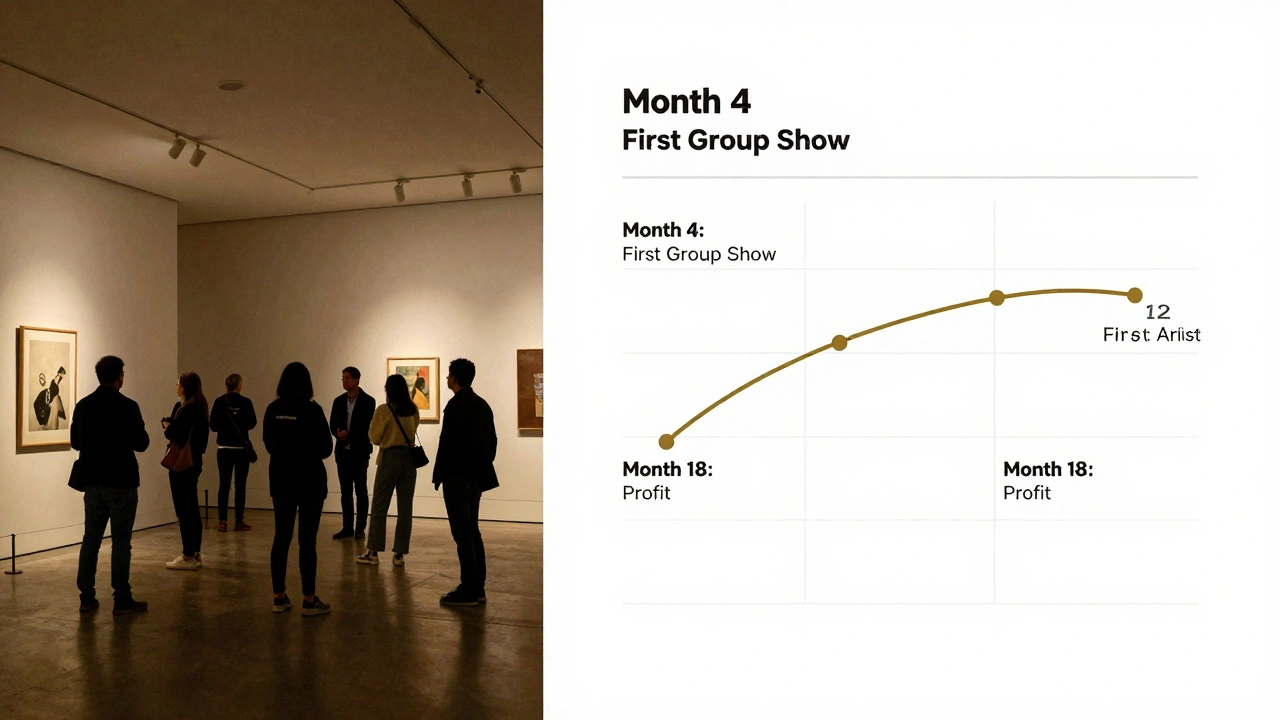
Don’t say, “We’re raising capital.” Say: “We’re seeking $200,000 for 15% equity. This will fund our first 18 months. We expect to break even by month 17. By month 24, we’ll have three new artists signed to exclusive representation and a 20% increase in repeat buyers.”
Include a 12-month roadmap: Month 1-3: Launch. Month 4: First group show. Month 6: First corporate client. Month 9: Launch online store. Month 12: First artist book. Month 18: Profit.
Investors don’t want vague promises. They want milestones. Give them a calendar.

Design matters-but not how you think
Your deck doesn’t need gold leaf or abstract backgrounds. It needs clarity. Use clean fonts. One color palette. High-res images of actual artwork-not stock photos. Every visual should serve a point: here’s who we show, here’s who buys, here’s how we make money.
Include one slide with a quote from a collector: “I bought my first piece from them because they told me exactly how the artist got here. No fluff.” That’s social proof. It’s worth more than ten graphs.
What investors really want to know
They’re not asking, “Is this art good?” They’re asking:
- Can this business make money without you working 80-hour weeks?
- Can it scale beyond one location?
- Do you have a system, or is it all you?
- What happens if one artist leaves?
Your deck answers these before they’re asked. Show that your gallery isn’t a one-person show. It’s a brand. A process. A repeatable model.
Final tip: test it before you pitch
Give your deck to someone who’s never been to an art gallery. Ask them: “What’s the business here? How do they make money? Why should I care?” If they can’t answer in 30 seconds, go back. Cut the fluff. Tighten the story. Investors don’t have time for poetry. They have time for clarity.
How many slides should an investor deck for an art gallery have?
Keep it under 12 slides. Investors expect speed. Cover: problem, market, artists, revenue, costs, traction, ask, timeline. Skip the artist bios. Save those for a separate PDF. Your deck is a business document, not a catalog.
Do I need to show past sales to get funding?
Not necessarily-but you need proof of demand. If you’ve never sold anything, show a waitlist of collectors, pre-orders, or signed letters of intent from buyers. One investor told us, “I’d rather fund a gallery with 15 pre-sales than one with 100 unsold paintings.”
Can I raise money without a physical space?
Yes, but it’s harder. Investors want to see a location because it’s a signal of commitment. If you’re starting online-only, you need stronger traction: 50+ verified buyers, a proven marketing funnel, and a clear plan to open a physical space within 18 months. You’ll need to prove you can build community without walls.
What’s the average funding amount for a new art gallery?
Most early-stage galleries raise between $150,000 and $300,000. This covers 18-24 months of operations. Smaller amounts ($50K-$100K) usually come from friends, family, or local arts grants. Institutional investors expect to see a clear path to $500K+ in annual revenue within three years.
Should I hire a professional designer for my deck?
Only if you’re not confident in design. A clean, simple deck in Canva or Google Slides is better than a flashy one with poor structure. Investors care more about your numbers than your font choice. But if your visuals look amateurish-like low-res images or mismatched colors-it hurts credibility. Hire someone if you can’t do it yourself. It’s worth the $500.