Finding Undervalued Artists: Hidden Gems in Today’s Art Market
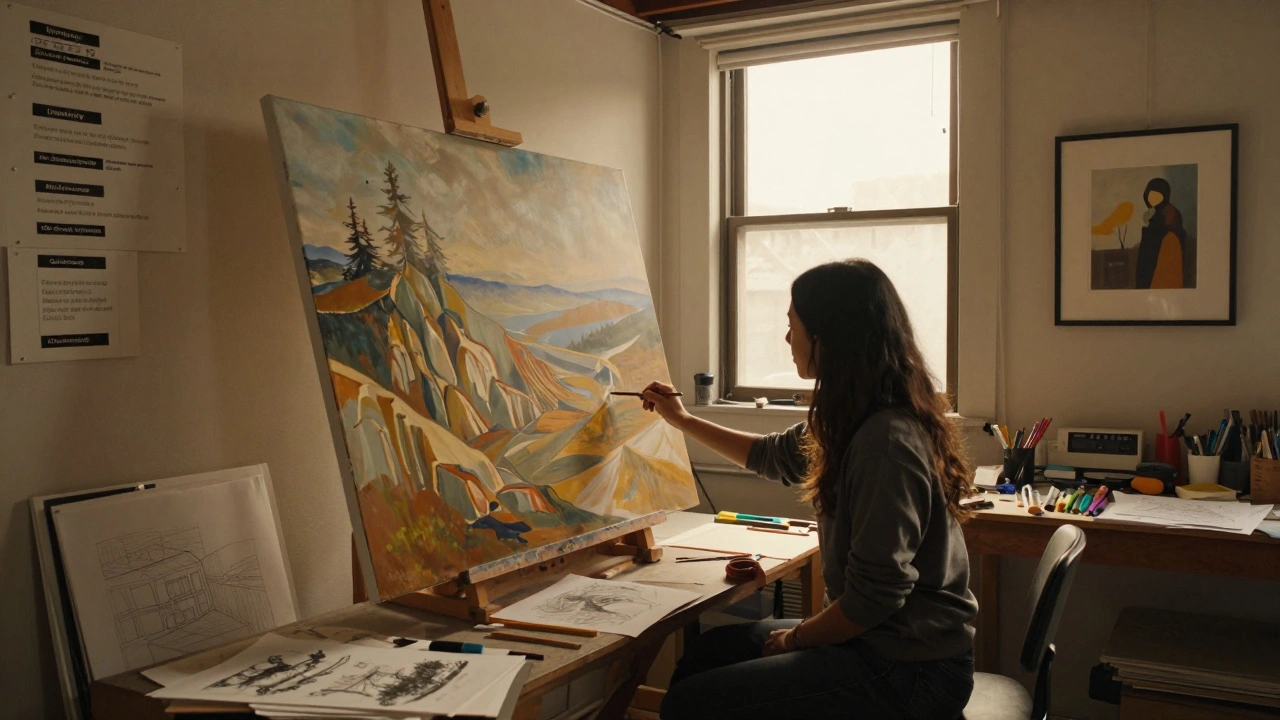
Most people think the art market is all about auction houses, celebrity painters, and six-figure sales. But the real opportunities? They’re hiding in plain sight-in small galleries, studio visits, and Instagram feeds no one’s scrolling through. If you know where to look, you can find artists whose work is worth far more than their current price tag. And right now, in early 2026, the conditions are better than they’ve been in years.
Why Most Artists Stay Under the Radar
There’s no mystery to why great artists go unnoticed. Galleries don’t have infinite space. Collectors stick to names they recognize. Social media rewards consistency over depth. And let’s be honest: most people buy art because it looks good on their wall, not because they understand the artist’s process.
But here’s what’s changing: a new generation of collectors-mostly under 40-isn’t waiting for galleries to hand them the next big name. They’re digging. They’re asking questions. They’re visiting studios in Detroit, Oakland, and Louisville-not just New York and LA. And they’re finding artists who’ve been working for a decade without a single museum show.
Take Maria Chen. She’s been painting abstract landscapes inspired by Pacific Northwest erosion patterns since 2018. Her canvases sell for $1,200-$1,800. She’s had two solo shows. No press. No Instagram fame. But her work has been in three university collections, and two curators from the Portland Art Museum quietly bought pieces last year. She’s not on anyone’s radar. But she should be.
Where to Look Beyond the Big Cities
You don’t need to fly to Basel or Venice to find talent. Some of the most compelling work is happening in places no one writes about.
- Regional art schools: Check out MFA thesis shows at schools like the University of New Mexico, University of Wisconsin-Milwaukee, or the Maryland Institute College of Art. These aren’t just student exhibits-they’re launchpads. Many artists are already producing gallery-ready work.
- Nonprofit artist spaces: Look for places like SPACE a nonprofit artist-run gallery in Portland, Oregon, founded in 1979 that supports experimental and underrepresented artists, or The Armory a historic arts center in Portland that hosts rotating exhibitions by emerging regional artists. These spaces don’t have big budgets, but they take risks.
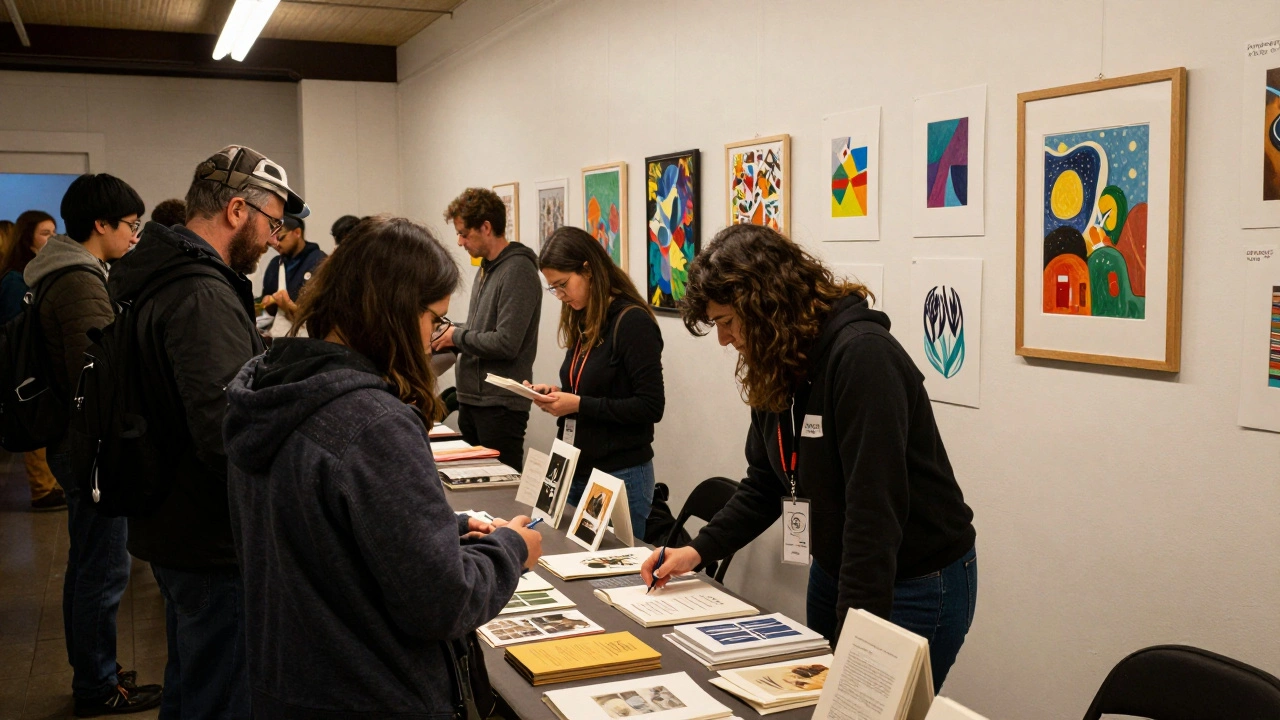
- Local art fairs: Skip the big ones. Go to community-run events like the Northwest Artists Collective Fair an annual, juried event in Portland featuring 80+ local artists, many with no gallery representation. You’ll see work you won’t find anywhere else.
- Artist-run publications: Zines, small-press catalogs, and handmade artist books are goldmines. Look for titles like Low Tide Press or Studio Notes Quarterly. These aren’t marketing tools-they’re honest records of practice.
What Makes an Artist Undervalued?
Not every overlooked artist is worth investing in. You need to know what separates the quiet genius from the just-quiet.
Here’s what to look for:
- Consistency over time: Has this artist been working seriously for 5+ years? Not just posting on Instagram. Have they built a body of work? Look for progression in their portfolio-how their technique, themes, or materials have evolved.
- Technical mastery: Can you see the effort? The precision? The risk? A good artist doesn’t just have an idea-they have the skill to execute it. Look at brushwork, composition, material choice. Does it feel deliberate?
- Contextual relevance: Are they responding to something real? Climate, labor, identity, memory? The best artists don’t just make pretty things-they make sense of the world around them.
- Recognition from insiders: Have they been included in university collections? Been invited to artist residencies? Been reviewed in niche publications like Art Papers or Hyperallergic? These aren’t endorsements from influencers-they’re signals from people who know.
One artist I tracked for two years, Javier Ruiz, was working in a garage in El Paso. His sculptures used recycled industrial parts and local soil. No gallery. No social media. But he was selected for a residency at Artpace a contemporary art space in San Antonio, Texas, known for supporting underrepresented artists in 2024. Within six months, three private collectors bought his pieces. His prices doubled. He still doesn’t have 10K followers.
How to Start Buying Without Risking Everything
You don’t need to buy a $20,000 painting to get in early. The sweet spot? Pieces under $5,000.
Start small:
- Buy a print or small work first-$300 to $1,500. It’s low risk, high learning.
- Ask the artist about their process. If they’re passionate, detailed, and open, that’s a good sign.
- Check if they’ve been in group shows at respected institutions. Even if it’s a community center, it shows they’re being vetted.
- Look at their studio. If they’re organized, have a clear body of work, and keep records of sales, they’re serious.
- Wait six months. If their prices rise, you’re on the right track. If they disappear, maybe they weren’t ready.
There’s no magic formula. But one pattern holds true: artists who stay quiet for years often explode when they hit their mid-30s. That’s when their work matures, their networks grow, and collectors finally notice.
The Shift in the Market
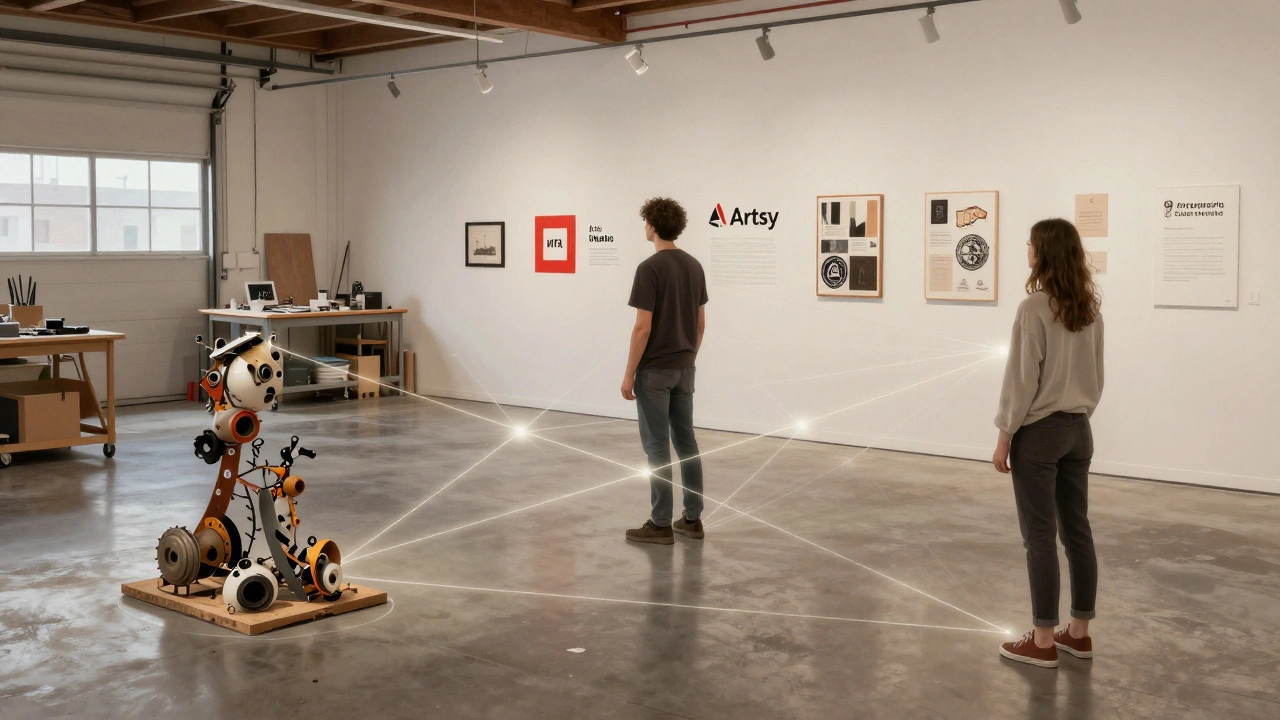
The art market used to be a pyramid: a few stars at the top, everyone else below. Now, it’s becoming a web. Platforms like Artsy an online art marketplace that connects collectors with galleries and independent artists and Artpreneur a platform for emerging artists to sell directly to collectors without gallery commissions are letting artists bypass traditional gatekeepers. And collectors are following.
In 2025, sales of work from artists with no gallery representation increased by 37%-according to the Art Market Report 2025 an annual survey by the Art Market Research Group tracking global art sales and collector behavior. That’s not a fluke. It’s a shift.
What does this mean? The old rules don’t apply. You don’t need to wait for a gallery to say someone is "important." You can decide for yourself.
Where to Start Today
Here’s your simple action plan:
- Find one artist within 200 miles of you. Go to their studio. Ask if you can visit.
- Buy one small piece-something under $1,000. Don’t overthink it.
- Follow them for a year. Watch how they evolve.
- Talk to other collectors. Ask what they’ve found.
- Don’t chase trends. Chase depth.
The next big name in contemporary art isn’t on a magazine cover. They’re probably in a basement studio, working late, not because they want fame-but because they have to create. If you’re willing to look, you’ll find them. And you might just own a piece of their future before anyone else does.
How do I know if an artist is truly undervalued and not just unknown?
An undervalued artist has consistent, high-quality work over time, recognition from institutions (like university collections or residencies), and a clear artistic voice-not just a social media following. If they’ve been working for five years or more without commercial hype, they’re likely a strong candidate.
Is it risky to buy art from emerging artists?
All art buying carries some risk, but buying small works under $1,500 from artists with a solid studio practice reduces risk significantly. Many collectors start with prints or small paintings. The goal isn’t to flip-it’s to support artists whose work resonates with you.
Can I find undervalued artists online?
Yes, but be selective. Platforms like Artsy and Artpreneur list artists without gallery representation. Filter by location, medium, and price. Look for artists who update their portfolios regularly and have documentation of past exhibitions or residencies. Avoid those who only post polished images with no context.
What’s the best way to support an artist without buying?
Attend their shows, share their work on social media, write about them in local blogs or newsletters, and ask galleries to consider them for group exhibitions. Word-of-mouth and institutional recognition often matter more than sales.
Are there any tools or databases to track emerging artists?
The Art Market Report 2025 tracks regional sales trends and collector behavior. Artist residency directories (like ResArtis) and university art department websites are also reliable sources. There’s no single database, but combining these sources gives you a clear picture of who’s gaining momentum.