Emergency Freezing and Drying for Water-Damaged Art: What You Need to Do Now
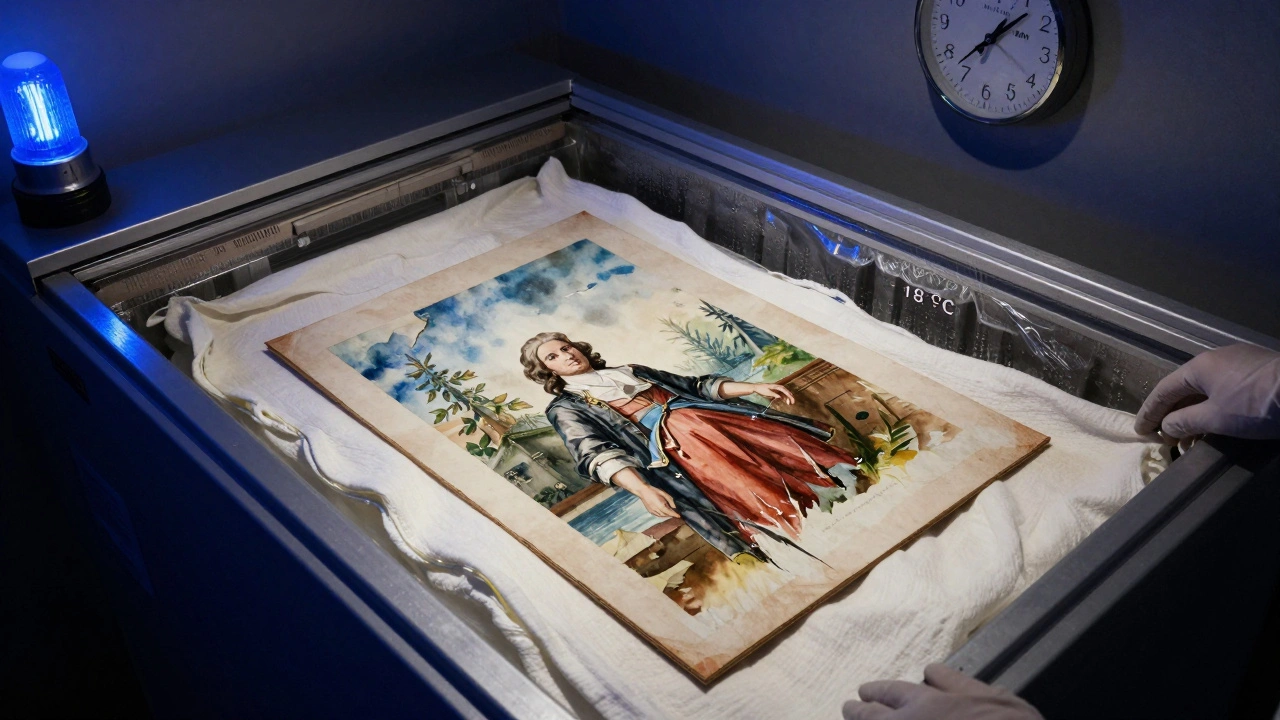
When water hits your artwork-whether from a burst pipe, flood, or leaking roof-it doesn’t just stain the surface. It starts eating away at the fibers, dissolving pigments, swelling canvas, and warping wood. Every minute counts. Waiting even a few hours can turn a salvageable piece into permanent loss. The good news? Emergency freezing and drying can save art that seems beyond repair. But only if you act fast-and correctly.
Why Freezing Is the First Step
Most people think of air-drying or using fans when art gets wet. That’s the worst thing you can do. Moving air over wet paint or paper doesn’t remove moisture-it spreads it unevenly, causes mold to bloom in hours, and forces salts and pigments deeper into the material. The real solution? Get it cold.
Freezing stops damage in its tracks. At temperatures below 0°C (32°F), biological activity halts. Mold spores don’t grow. Bacteria don’t multiply. Water doesn’t migrate. And crucially, the ice that forms locks pigments and fibers in place, preventing further distortion. This isn’t science fiction-it’s standard practice in museum conservation labs. The Getty Conservation Institute has documented cases where 18th-century watercolor paintings, soaked for over 12 hours, were successfully recovered after being frozen within six hours of damage.
You don’t need a professional freezer. Any deep freezer or cold storage unit that can hit -18°C (0°F) or lower will work. The goal isn’t to freeze-dry yet-it’s to pause the damage while you plan the next steps.
How to Freeze Art Properly
Freezing isn’t just tossing art into a chest freezer. Do it wrong, and you risk more damage. Here’s how to do it right:
- **Don’t try to dry it first.** No towels, no hairdryers, no sunlight. Just leave it alone.
- **Lay flat or hang vertically.** For paintings on canvas or panel, lay them face-up on a clean, flat surface. For works on paper, place them between acid-free boards and keep them flat. If the piece is too large to lay flat, hang it vertically with clean, non-stick straps-never use tape or clips.
- **Use barrier layers.** Place clean, unprinted, unbleached cotton sheets or polyester film (like Mylar) between the artwork and any surface it touches. Never use paper towels, newspaper, or cardboard-they stick, bleed ink, and leave fibers.
- **Wrap in plastic.** Cover the entire piece with a heavy-duty polyethylene sheet. Seal the edges with masking tape, but leave one small vent to allow moisture to escape slowly. This prevents condensation buildup while keeping dirt and pests out.
- **Move it fast.** Get the artwork into the freezer within 24 hours. The sooner, the better. After 48 hours, irreversible damage often sets in.
Don’t worry about the frame. Remove it if possible. If you can’t, freeze it with the frame. Metal frames won’t rust at low temps, and wood will stabilize.
What Happens After Freezing?
Freezing buys you time. Now comes the critical phase: controlled drying. This is where most DIY attempts fail. You can’t just pull the art out and set it near a radiator. That causes cracking, flaking, and warping.
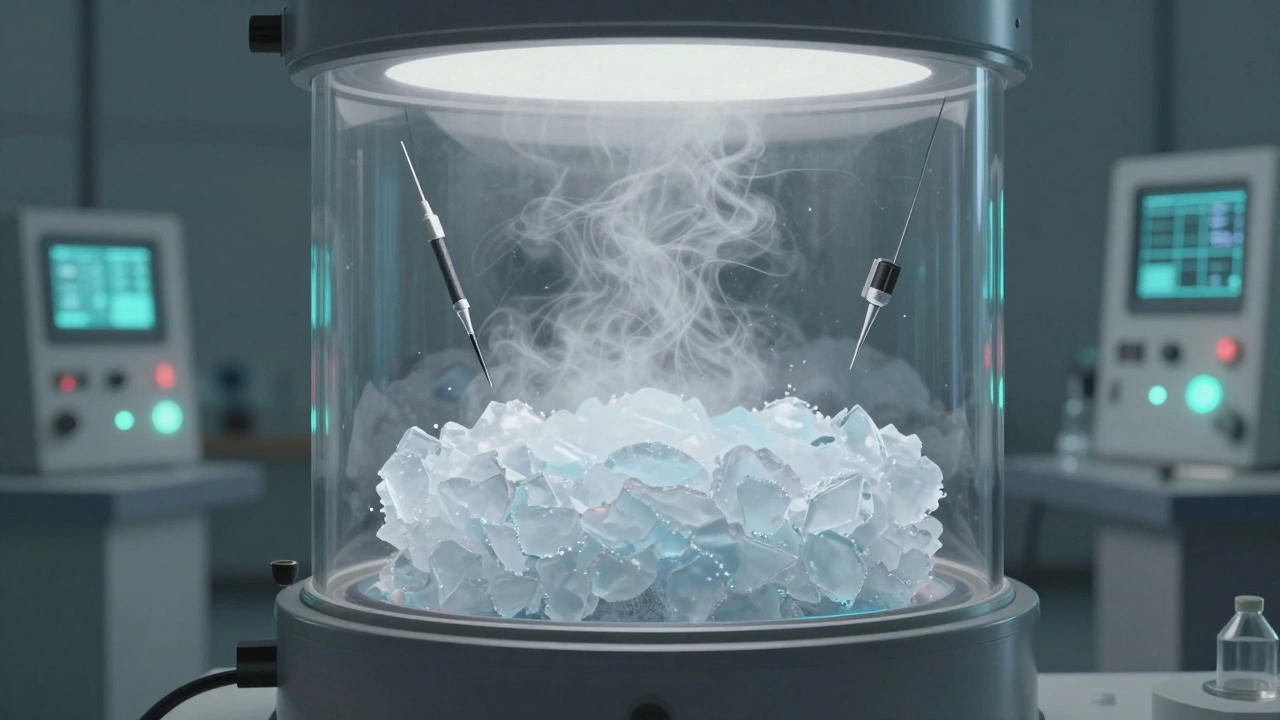
The gold standard is freeze-drying-also called lyophilization. It works by turning ice directly into vapor without passing through the liquid phase. This avoids the re-wetting that happens during thawing. Professional conservators use vacuum chambers that slowly reduce pressure while maintaining low temperatures. The result? Water leaves the fibers without disturbing their structure.
For small items-watercolor paintings, prints, photographs-home freeze-drying is possible with a specialized freeze-dryer, but these cost thousands. Most people don’t have access. So what’s the alternative?
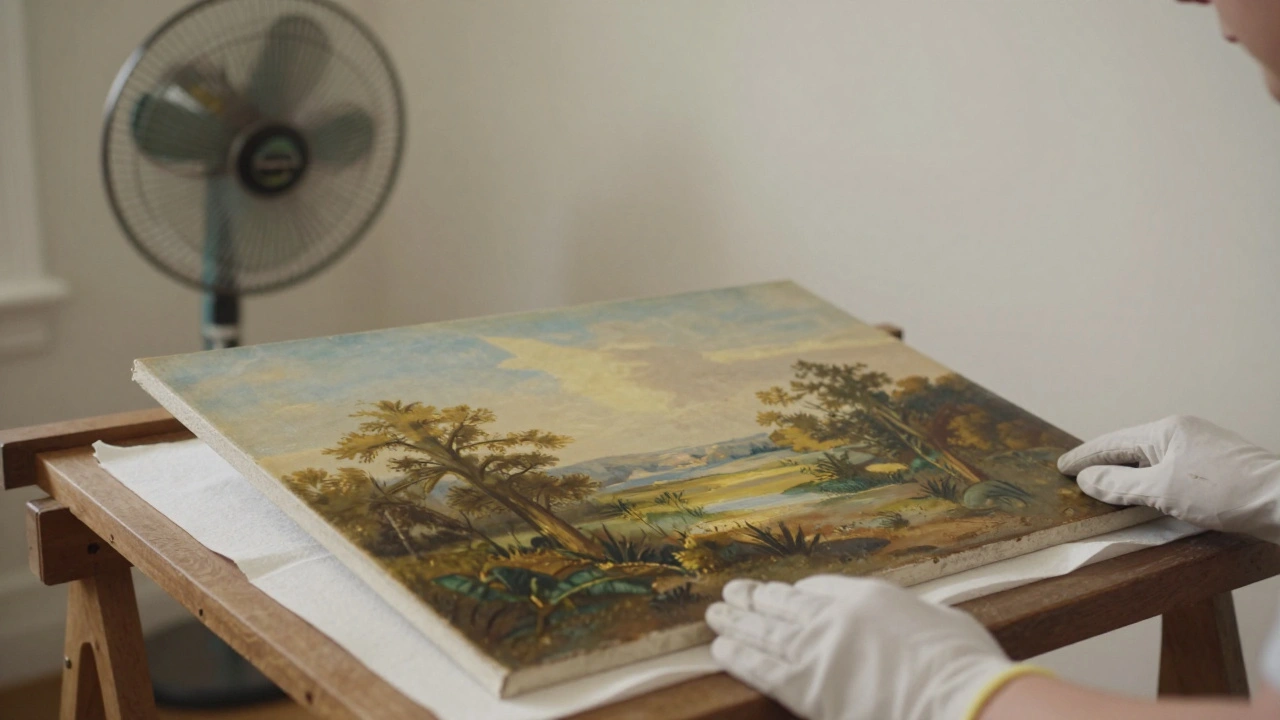
For non-professionals, the best option is **passive drying in a climate-controlled environment**. After freezing, transfer the artwork to a room with:
- Temperature: 18-21°C (65-70°F)
- Humidity: 40-50%
- Airflow: Gentle, circulating air (use a fan on low, pointed at the wall, not the art)
- No direct sunlight or heat sources
Place the frozen artwork on a raised, flat surface. Use clean, dry blotting paper or polyester mesh underneath. Replace the blotting paper every 12-24 hours as it absorbs moisture. This process can take days to weeks, depending on thickness and material. A thick oil painting on wood panel may take 3-4 weeks. A thin watercolor on paper might dry in 5-7 days.
What Not to Do
People make the same mistakes over and over. Here are the top five things that ruin water-damaged art:
- Using a hairdryer or heat gun. Heat causes paint to blister and paper to curl permanently.
- Putting it in the sun. UV light bleaches pigments and weakens paper fibers.
- Flipping it over. If paint is loose, it will stick to the back and peel off.
- Trying to clean it with water or cleaners. Even distilled water can dissolve historic pigments like ultramarine or vermilion.
- Waiting to call a conservator. If you think it’s too late, you’re wrong. Conservators have successfully restored art frozen 72 hours after damage.
When to Call a Professional
You don’t need a conservator for every water-damaged piece. But you absolutely should if:
- The artwork is valuable (over $500 in market value)
- It’s made of fragile materials: parchment, vellum, silk, or historic paper
- It has layered media: gilding, mixed media, or varnished surfaces
- It’s part of a collection or has provenance (documentation of origin)
- You see mold, staining, or swelling after freezing
Conservators use tools most people never see: microscopes, vacuum suction tables, pH-neutral gels, and controlled humidity chambers. They can re-adhere flaking paint, remove salt deposits, and stabilize ink without touching the surface. Many institutions offer emergency response services. The American Institute for Conservation (AIC) maintains a directory of certified conservators who specialize in emergency recovery.
Real-World Example: The 2024 New Orleans Flood
In April 2024, Hurricane Francine flooded a private gallery in New Orleans, submerging over 300 works. Volunteers froze 272 pieces within 10 hours. Over the next six weeks, 218 of them were fully restored. The rest were documented for archival purposes. One painting-a 19th-century Louisiana landscape-had been underwater for 18 hours. Its canvas was swollen, the varnish cracked, and the sky was a muddy blur. After freeze-drying and micro-suction cleaning, conservators were able to lift the original pigment layer and re-adhere it. The painting now hangs in the Louisiana State Museum. No one thought it could be saved.
Prevention Is Always Better
After recovery, ask: how did this happen? Most water damage is preventable. Install water sensors near art storage areas. Keep art off basement floors. Use climate-controlled storage if you’re not displaying pieces. If you’re storing art long-term, seal it in archival boxes with silica gel packs. Keep humidity between 40-50% and temperature steady. Art doesn’t need to be in a museum to need museum-level care.
Final Thought: Speed, Not Perfection
You don’t need to be an expert to save art. You just need to act quickly and avoid the common traps. Freezing is the single most effective step anyone can take. It doesn’t fix the damage-it stops it from getting worse. And that’s enough to give professionals the chance to do their job. The difference between saving a piece and losing it forever often comes down to a single decision: freeze it now, or wait until tomorrow.
Can I use a regular home freezer to freeze water-damaged art?
Yes, as long as it can reach -18°C (0°F) or lower. Most home freezers can. Avoid frost-free models-they cycle temperature, which can cause ice crystals to form unevenly. Use a standalone chest freezer if possible. Make sure it’s clean and free of food odors. Wrap the artwork in clean cotton or polyester film before placing it inside.
How long can I leave art in the freezer before drying?
Art can stay frozen indefinitely without harm. Freezing halts all biological and chemical activity. You can keep it frozen for weeks or even months while you arrange professional help. The key is to avoid thawing it until you’re ready to begin the controlled drying process.
What if the artwork is already moldy?
Freezing stops mold growth immediately. Do not try to wipe or scrub mold off-that spreads spores and damages the surface. Keep the artwork frozen and contact a conservator. They can use controlled humidity and vacuum techniques to remove mold without touching the artwork. Never use bleach, alcohol, or vinegar-they destroy pigments and paper.
Can I freeze framed artwork?
Yes, but remove the glass if possible. Glass can trap moisture and cause condensation. If you can’t remove it, freeze the piece as-is. Metal frames are fine. Wood frames may warp slightly, but that’s better than letting the artwork rot. After drying, a conservator can reframe or repair the frame.
Is freeze-drying the same as air-drying?
No. Air-drying lets water evaporate slowly, but it often leaves behind salts, stains, and warping. Freeze-drying removes water as vapor while the material stays frozen, preventing re-wetting. It’s a controlled process that preserves structure. For valuable pieces, freeze-drying is the only method that ensures full recovery. For less valuable items, passive drying after freezing can still work well.