Best Practices for Art Storage: Organize and Protect Your Collection
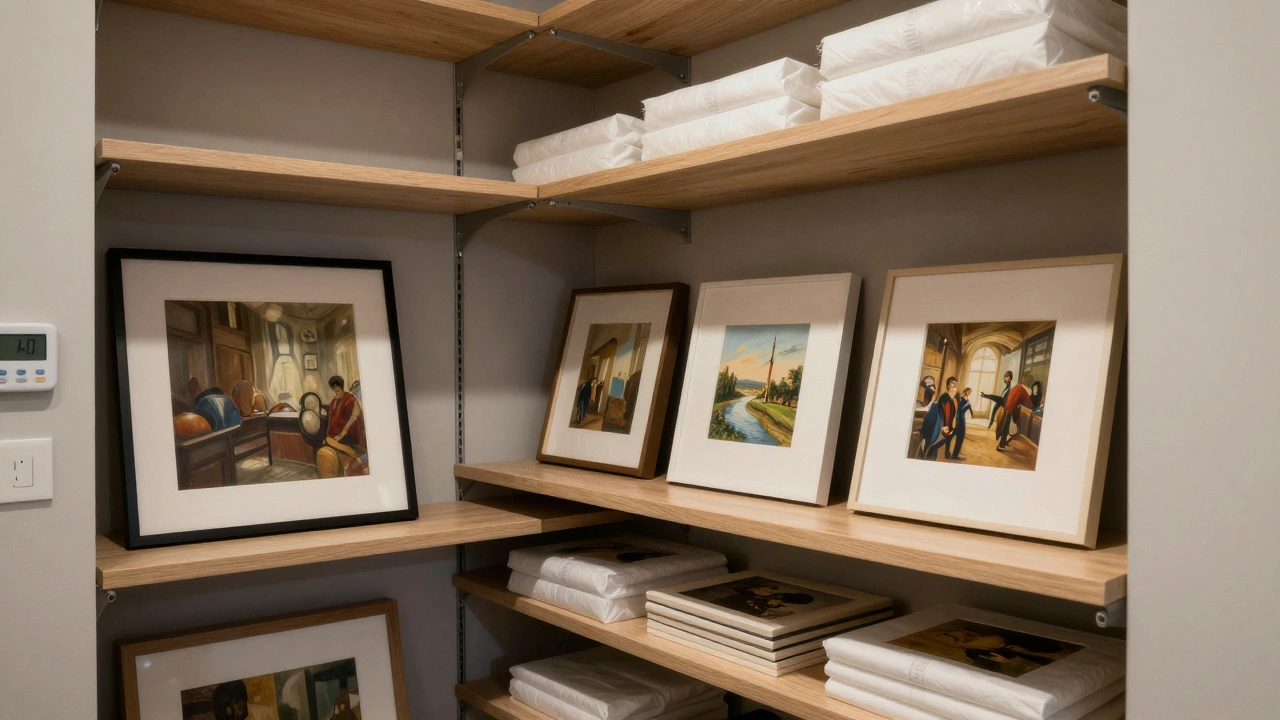
Storing art isn’t just about putting paintings on a wall or stacking sculptures in a corner. If you own valuable or sentimental pieces-whether it’s a family heirloom, a local artist’s work, or a collectible print-how you store it can make the difference between preserving it for decades or losing it to damage in just a few years. Many people don’t realize that temperature, humidity, light, and even the type of box they use can cause irreversible harm. The good news? With a few practical steps, you can keep your art safe without spending a fortune.
Control Temperature and Humidity
Art is sensitive to its environment. Paper, canvas, wood, and even metal expand and contract with changes in heat and moisture. The ideal storage climate for most artworks is 68-72°F (20-22°C) with 40-50% relative humidity. Too dry, and paper cracks or becomes brittle. Too humid, and mold grows, pigments bleed, and wood warps. In Portland, where damp winters are common, this is especially important. Avoid basements and attics-they’re notorious for temperature swings and moisture buildup. Instead, pick a climate-controlled room, like a closet inside your home’s main living area. If you don’t have built-in climate control, use a small dehumidifier and a digital hygrometer to monitor conditions. Check it weekly.
Use Acid-Free Materials
Don’t store art in regular cardboard boxes, newspaper, or plastic wrap. These materials contain acids that yellow paper, fade pigments, and eat away at fibers over time. Instead, use acid-free tissue paper, archival-quality boxes, and polyethylene or polypropylene sleeves. These are chemically stable and won’t degrade your artwork. For framed pieces, wrap them in acid-free paper before placing them in a box. For unframed works, slide them between sheets of acid-free board or in a flat file drawer designed for art. Avoid foam core unless it’s labeled museum-grade-some foams off-gas and stain surfaces. If you’re unsure, look for the Archival or Conservation label on packaging.
Store Art Horizontally or Vertically-But Correctly
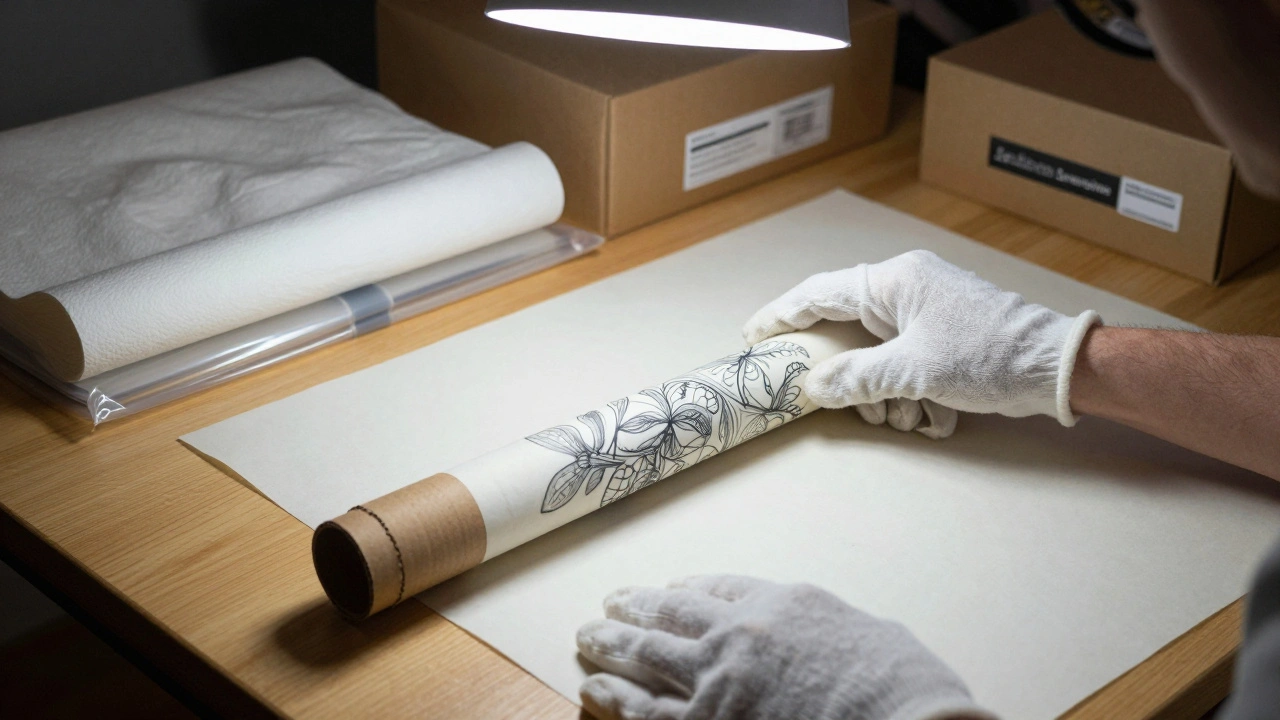
How you position your art matters. Large, flat works like canvases or drawings should be stored vertically, like books on a shelf, with spacers between them to prevent scratching. Never stack them face-to-face. If you must stack, use rigid, acid-free boards between each piece. Rolled works-like large drawings or tapestries-should be rolled around a large-diameter tube (at least 3 inches wide) made of acid-free cardboard or metal. Never use PVC pipes; they release plasticizers that stain artwork. Wrap the roll in acid-free tissue, then slip it into a tube with end caps. Label the tube clearly so you don’t accidentally roll it the wrong way later.
Keep Light Out
Light-especially UV light-is one of the fastest destroyers of color. Even indirect daylight can fade watercolors, textiles, and ink drawings over time. Store art in dark rooms or use blackout curtains. If you’re using storage shelves, avoid placing them near windows. LED lights are fine if they’re low-heat and have no UV emission, but turn them off when you’re not checking on your collection. For long-term storage, cover everything with breathable, opaque fabric like cotton muslin. Avoid plastic sheeting-it traps moisture and can cause condensation.
Handle Art with Clean Hands or Gloves
Your skin has natural oils, sweat, and dirt. Even after washing, traces remain. These can transfer onto surfaces and leave permanent marks. Always handle artwork with clean, dry hands. For delicate surfaces like pastels, charcoal, or unvarnished paintings, wear lint-free cotton gloves. Nitrile gloves are okay too, but avoid latex-they can leave residue. Never wear jewelry when handling art. Rings, bracelets, and watches can scratch surfaces. Move pieces slowly and support them fully. Never grab a painting by its frame edges-lift from the bottom or use two hands on the back.
Label Everything Clearly
Labeling might seem like a small thing, but it’s critical for long-term organization. Use pencil on the back of the frame or on the edge of the support-not on the front. Ink bleeds, and tape can leave adhesive residue. Write the artist’s name, title, date, and your contact info. If you have multiple pieces, create a simple inventory list with photos and storage locations. A spreadsheet works fine. This helps you track what’s where and makes insurance claims easier if something happens. Don’t assume you’ll remember where you put that 1972 lithograph five years from now.
Avoid Common Mistakes
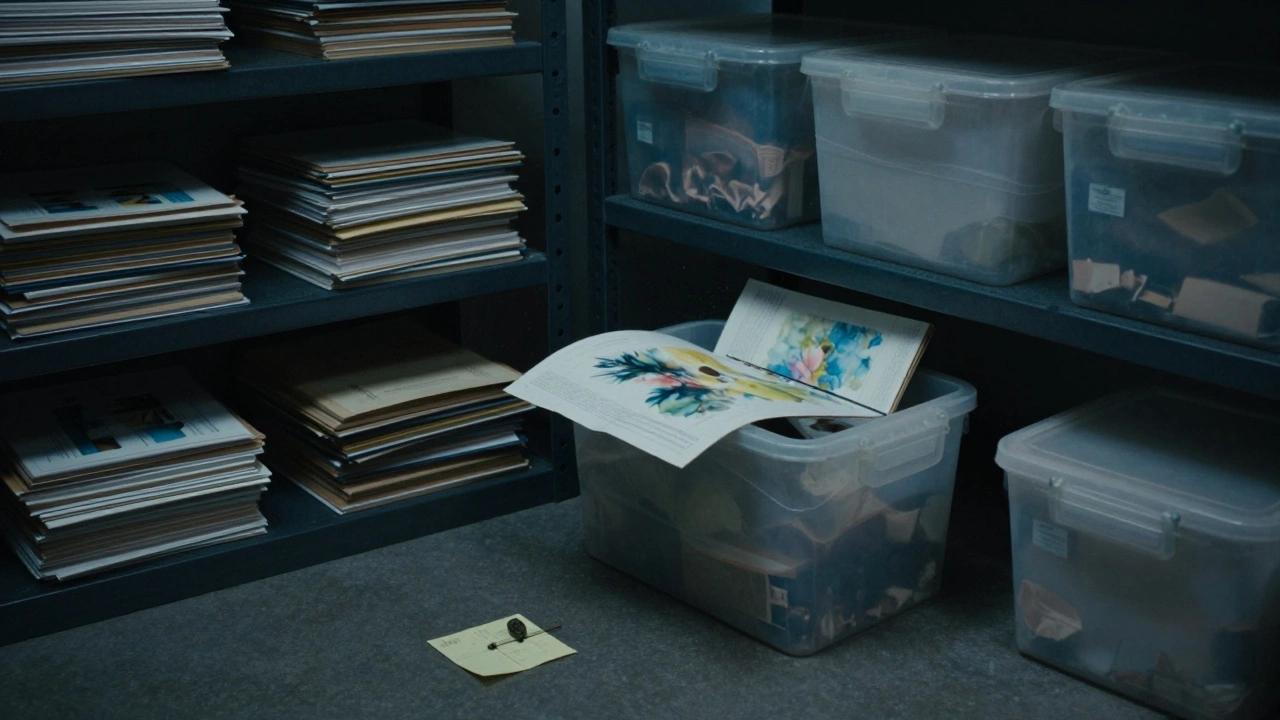
People make the same mistakes over and over. Here are the top five to avoid:
- Storing art near heating vents or radiators-heat dries out materials and causes cracking.
- Using rubber bands, duct tape, or staples-they degrade and stain.
- Leaving art in transit boxes-shipping boxes are not designed for long-term storage.
- Placing art directly on concrete floors-moisture rises and soaks into the bottom.
- Keeping art in garages or sheds-even if they’re insulated, they’re not climate-stable.
When to Call a Professional
Some pieces need more than DIY care. If you have oil paintings with flaking paint, fragile paper with tears, or historical works with varnish discoloration, consult a conservator. Don’t try to fix it yourself. A professional can stabilize damage, clean surfaces safely, and advise on custom storage solutions. Many museums and art schools offer referral lists. In Portland, organizations like the Oregon Historical Society and Portland Art Museum can connect you with trained conservators. It’s worth the cost-repairing damage later is far more expensive.
Check Your Storage Twice a Year
Set a reminder: every spring and fall, spend an hour reviewing your art storage. Look for signs of mold, insect damage, fading, or warping. Check humidity levels. Dust the boxes lightly with a soft brush. Rearrange if needed. This isn’t a chore-it’s a ritual that keeps your collection alive. Treat your art like a living thing. It doesn’t need water or sunlight, but it does need care.
Can I store art in a storage unit?
Yes, but only if it’s climate-controlled. Standard self-storage units often have extreme temperature swings and high humidity, which can ruin art. Look for units with HVAC systems, humidity monitors, and security. Ask for the facility’s temperature and humidity logs before signing a lease. Never store valuable pieces in a unit without climate control.
What’s the best way to store watercolor paintings?
Watercolors are especially vulnerable to moisture and light. Store them flat in acid-free portfolios or drawers, with sheets of glassine paper between each piece. Keep them away from windows and humidity sources. Never frame them with regular glass-use UV-filtering acrylic instead. If you’re not displaying them, keep them in a dark, cool cabinet with silica gel packets to absorb excess moisture.
Is it okay to store art in plastic bins?
Only if the bins are made of polypropylene or polyethylene and are labeled archival-safe. Avoid PVC or polystyrene containers-they release chemicals that yellow paper and damage pigments. Line plastic bins with acid-free tissue paper to create a buffer. Always leave a small gap for air circulation, and never seal the bin tightly.
How do I protect artwork from pests?
Insects like silverfish, termites, and carpet beetles love paper, canvas, and wood. Keep storage areas clean and dry. Use sticky traps to monitor for pests. Avoid storing art near food, wood piles, or old books. If you notice holes or frass (insect droppings), stop handling the piece and consult a conservator immediately. Do not use mothballs or chemical sprays-they can contaminate artwork.
Should I insure my art collection?
If your collection has sentimental or monetary value, yes. Standard homeowner’s insurance often has low limits for art. Consider scheduling high-value pieces individually with an art-specific policy. Keep receipts, appraisals, and photos in a secure digital backup. Update your inventory every year. Insurance won’t prevent damage, but it can help recover costs if something goes wrong.