Curating Online Exhibitions: How to Create Powerful Shows in Virtual Spaces
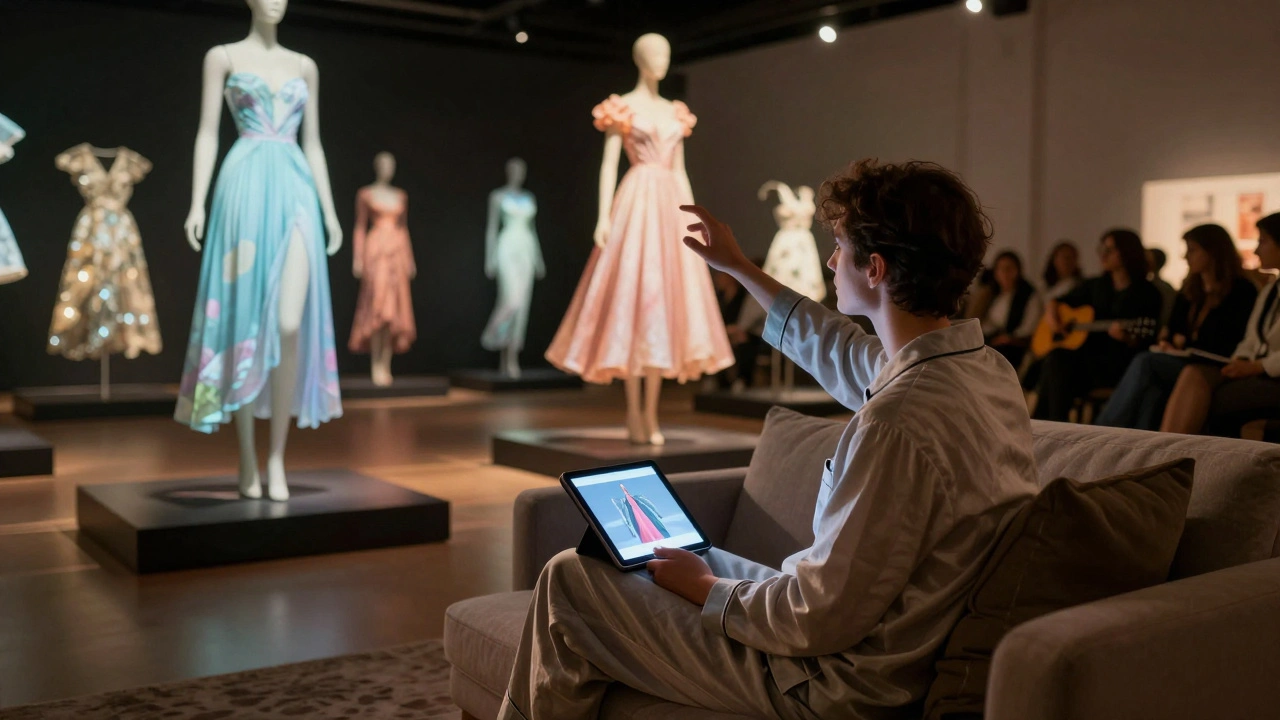
More people are visiting art online than ever before. In 2025, over 120 million unique visitors explored virtual exhibitions, according to the Global Digital Art Report. That’s more than the total attendance of all physical museums in North America combined. But creating a compelling online exhibition isn’t just about uploading images to a website. It’s about designing an experience that draws people in, keeps them engaged, and makes them feel something-even when they’re sitting on their couch in pajamas.
What Makes a Virtual Exhibition Work?
Most online art shows fail because they treat digital spaces like digital brochures. They slap up a few high-res photos, add a wall label, and call it done. But a real virtual exhibition needs rhythm, movement, and atmosphere. Think of it like a film, not a photo album. The best ones guide you from one moment to the next, using space, sound, and interaction to build meaning.
Take the Victoria and Albert Museum’s 2024 exhibition on digital fashion. Visitors didn’t just see 3D-rendered dresses. They could walk through a virtual runway, hear the designer’s voice explaining each piece, and even change the lighting to see how fabric reacted under different conditions. That’s not a gallery-it’s a sensory journey.
Start With a Clear Story
Every great exhibition, physical or digital, begins with a story. What are you trying to say? Are you showing how street art evolved during the pandemic? Are you revealing hidden techniques from Renaissance painters using AI-enhanced scans? Don’t just list objects-build a narrative.
For example, the Metropolitan Museum of Art’s "The Art of the Loom" exhibition didn’t just display textiles. It traced the journey of a single thread-from a farmer in rural India, through a loom in Kyoto, to a modern designer in Brooklyn. Each stop had audio interviews, time-lapse videos of weaving, and interactive maps showing global trade routes. Visitors didn’t just see fabric-they followed a human story across continents.
Design the Space Like a Real Gallery
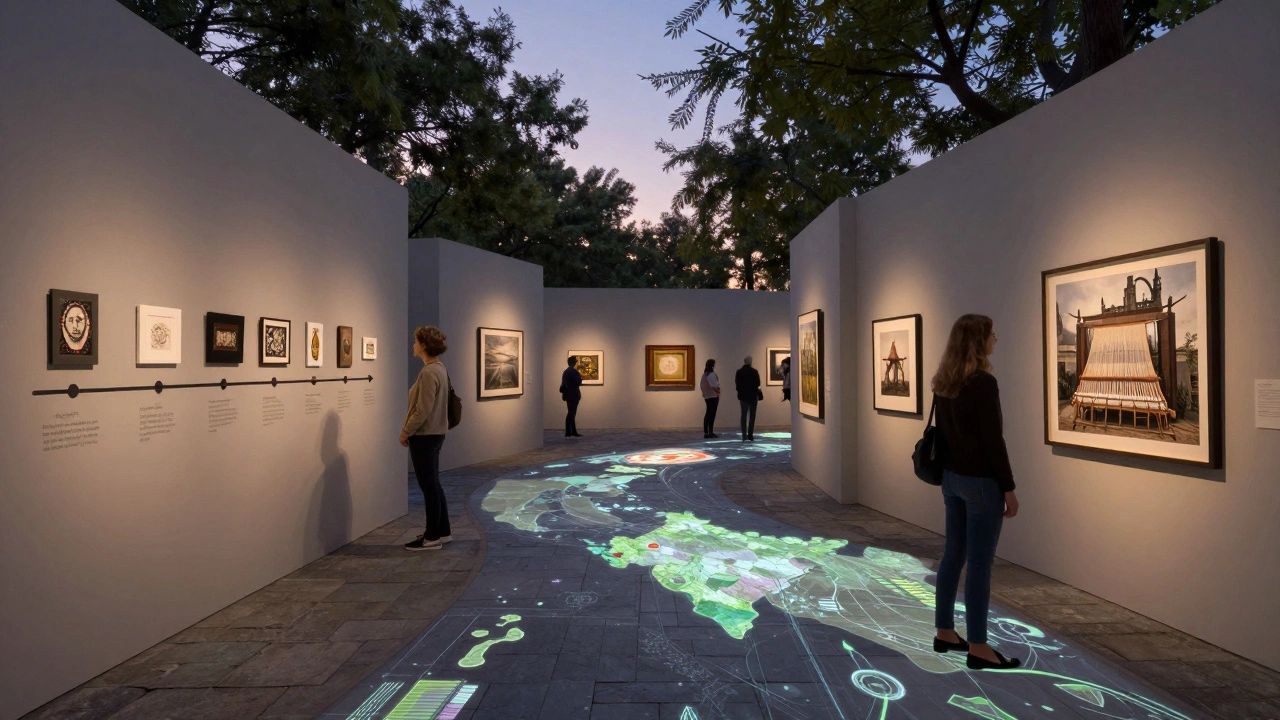
Virtual spaces don’t need to mimic real galleries, but they do need structure. People get lost in flat, endless rooms. You need walls, lighting, pathways, and pacing.
- Use rooms or zones to separate themes-like wings in a museum.
- Limit how many pieces are visible at once. Too many overwhelm. Too few feel empty.
- Add subtle ambient sounds: footsteps on stone, distant chatter, wind through trees. These cues make the space feel alive.
- Let visitors pause. Don’t auto-play videos or force navigation. Let them choose when to move on.
The Google Arts & Culture "Van Gogh: The Immersive Experience" used this well. You didn’t just scroll through paintings-you walked through a reconstructed studio, with swirling brushstrokes projected onto walls around you. The space itself became part of the art.
Use Technology That Enhances, Not Distracts
You don’t need VR headsets or blockchain tokens to make a great online show. But you do need thoughtful tools.
- Zoom and detail views: Let users click to see brushstrokes, signatures, or hidden layers. The Rembrandt House Museum "X-Ray the Master" project let people compare infrared scans of paintings with the final result.
- Audio guides: A curator’s voice explaining context is more powerful than a wall text. Keep it short-under 90 seconds per piece.
- Interactive timelines: Show how a style changed over decades. The MoMA "Designing Modern Women" exhibit let users drag a slider to see how female designers influenced architecture from 1920 to 1970.
- Community layers: Allow visitors to leave comments or tag objects they recognize. The Smithsonian’s "African American Art: Hidden Stories" project crowdsourced family histories tied to objects, adding layers of meaning no curator could have written.
Make It Accessible to Everyone
Online exhibitions can reach people who can’t travel-people with disabilities, those in remote areas, or those who can’t afford tickets. But if your site is hard to use, you’re excluding them.
- Always include alt text for images. Don’t just say "painting of a woman." Say: "A 19th-century oil portrait of a Black woman in a white lace dress, holding a book, painted by Edmonia Lewis."
- Offer transcripts for all audio and video.
- Use high-contrast colors and resizable text. Test your site with a screen reader.
- Provide a simplified version for mobile users. Many will visit on phones.
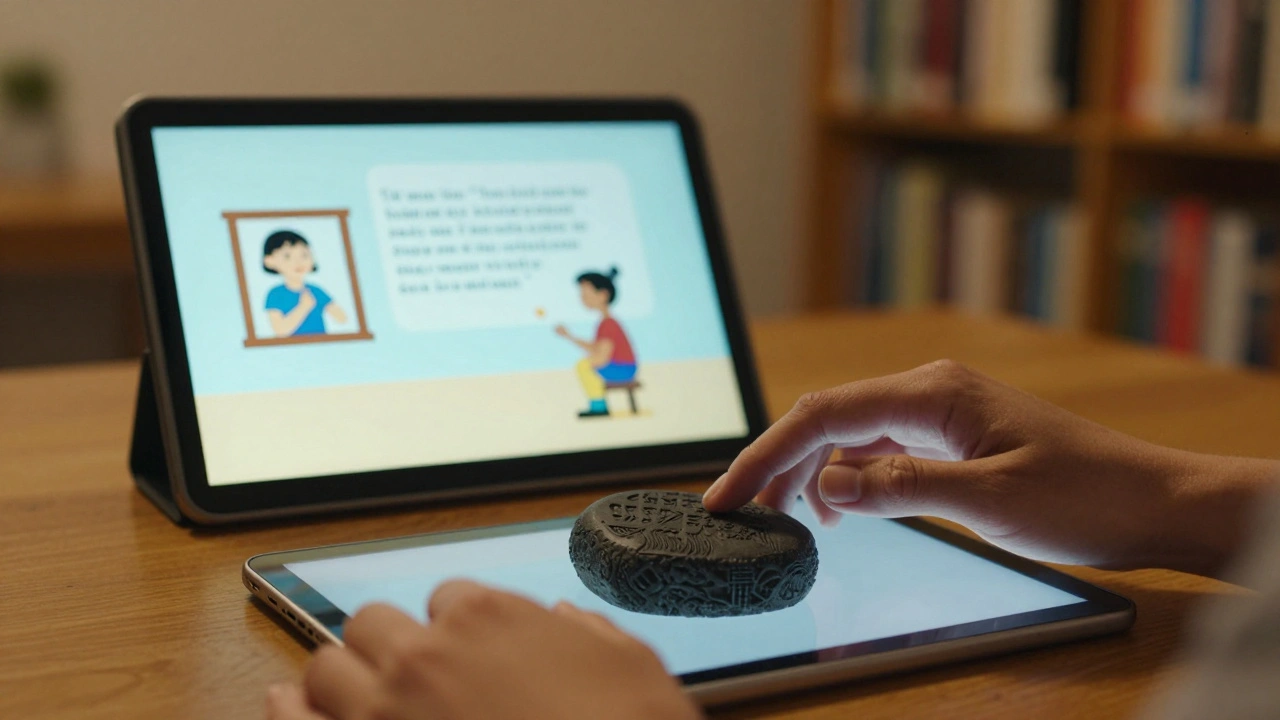
The British Museum "The Rosetta Stone: Decoded" site didn’t just show the artifact-it offered a tactile 3D model you could rotate with your finger, a sign language video explaining its history, and a simplified version for children. That’s inclusion, not an afterthought.
Measure What Matters
Don’t just count visits. Ask: Did people stay longer than 3 minutes? Did they click on 3 or more objects? Did they share the exhibit? Did they come back?
The Uffizi Gallery "Botticelli Reimagined" tracked engagement by mapping how visitors moved through the show. They found that users spent 67% more time when they could compare Botticelli’s original sketches with digital restorations. That insight led them to add a "Sketch to Master" toggle on every painting.
Build for the Long Term
Most online exhibitions disappear after 6 weeks. But the best ones become living archives. Use platforms that let you update content, add new voices, or layer in fresh research years later.
The Smithsonian National Museum of African American History and Culture "Slavery and Freedom" exhibit started in 2016. Since then, it’s added oral histories from descendants, new scholarship, and interactive maps of Underground Railroad routes. It’s no longer a static show-it’s a growing conversation.
Final Thought: It’s Not About the Tech. It’s About the Feeling.
Online exhibitions don’t need to be flashy. They need to be human. A single voice recording of an artist describing their grief while painting after losing a child. A 12-second video of hands repairing a centuries-old tapestry. A quiet moment where the viewer realizes they’re not alone in what they’re feeling-that’s what sticks.
People don’t visit virtual galleries to see art. They visit to feel something. To connect. To understand. If your exhibition does that-even for one person-it’s already a success.
Can I curate an online exhibition without a big budget?
Yes. Many successful virtual exhibitions were made with free tools like Google Arts & Culture, Artsteps, or even WordPress with a custom theme. Focus on storytelling, not tech. A well-edited audio guide and 10 carefully selected pieces can be more powerful than a $50,000 VR experience with 500 low-quality images.
Do I need permission to show artwork online?
Always. Even if the artwork is old, copyright may still apply-especially for reproductions, photographs, or digital scans. Contact the rights holder (often the artist’s estate, museum, or gallery). Many institutions now offer free licenses for educational or non-commercial use. Check their website or email their digital team directly.
How long should an online exhibition run?
Three to six months is ideal. Too short, and you don’t build momentum. Too long, and people forget about it. Plan a launch event-live stream a curator talk, invite local artists to comment, or host a virtual Q&A. That first week sets the tone.
What’s the best platform for hosting an online exhibition?
It depends. For beginners: Artsteps is easy and free. For museums with technical teams: Unity or Unreal Engine offer full control. For storytelling-heavy shows: Squarespace or Webflow with embedded media work well. Avoid generic gallery plugins-they rarely support navigation or audio.
Can online exhibitions make money?
Not directly, usually. But they can lead to sales. Many galleries now use virtual exhibitions to build interest in physical works or limited-edition prints. Others partner with museums for grant funding or offer paid digital tours. The real value? Audience growth. A strong online show can double your email list, increase social followers, and open doors to future funding.