Acoustic Design for Art Galleries: How to Manage Sound and Quiet
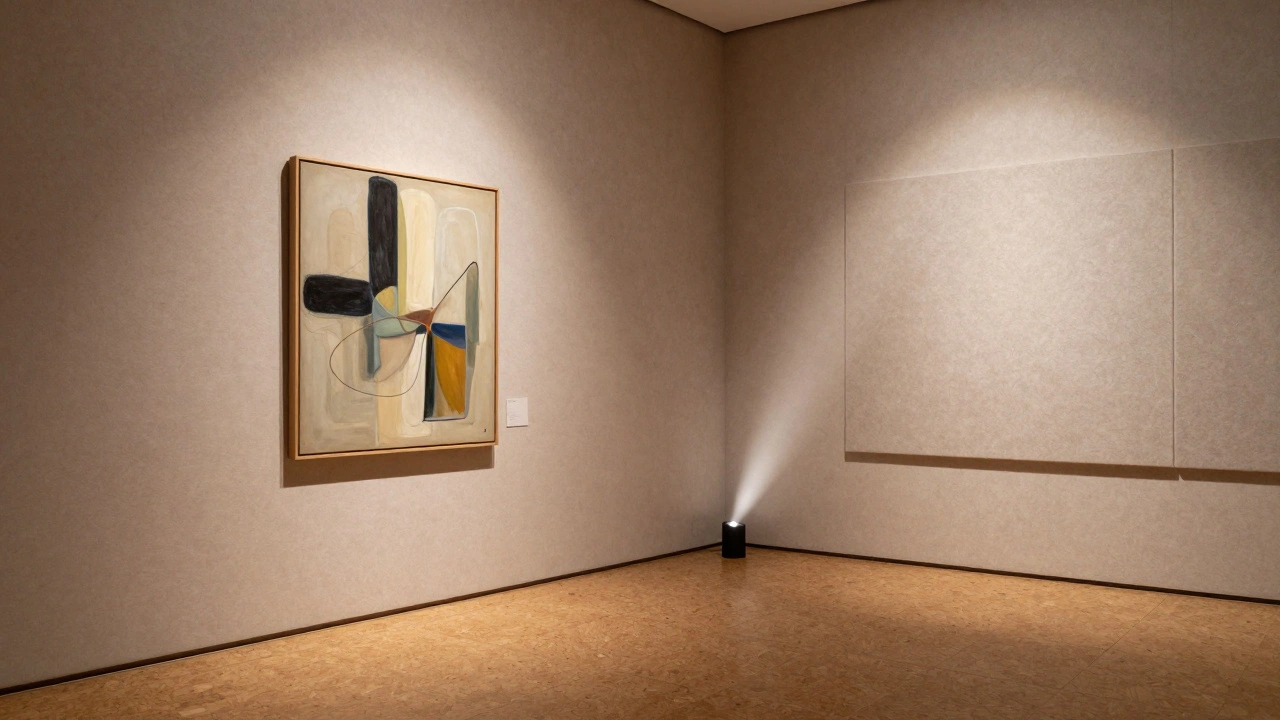
Walk into a quiet art gallery and you feel it immediately-the hush isn’t just polite. It’s engineered. Every footstep, every whisper, every echo has been carefully shaped so that the art speaks louder than the space around it. But get it wrong, and the hum of HVAC, the clatter of heels on tile, or the reverberation of a group tour can shatter the experience. Acoustic design in art galleries isn’t about silence. It’s about control.
Why Sound Matters More Than You Think
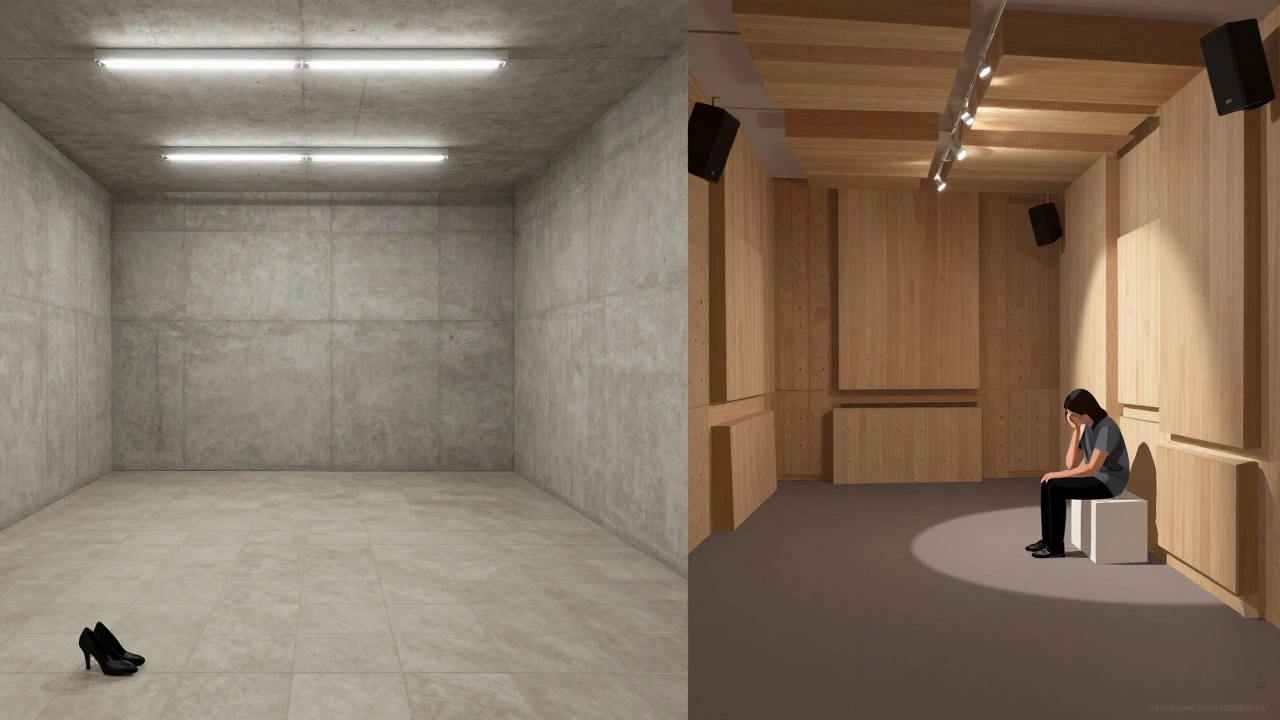
Most people assume galleries are naturally quiet. They’re not. Hard surfaces-concrete floors, glass display cases, polished marble walls-are great for reflecting light, but terrible for absorbing sound. A 2023 study by the Acoustical Society of America found that in untreated gallery spaces, background noise levels often exceed 55 decibels during peak hours. That’s the level of a normal conversation. For a visitor trying to focus on a single brushstroke or the subtle texture of a bronze sculpture, that’s noise pollution.
Sound doesn’t just distract. It changes how we perceive art. A 2021 experiment at the Tate Modern showed that visitors spent 37% less time in front of minimalist pieces when ambient noise was above 50 dB. The brain can’t quiet down enough to engage with subtlety. That’s why acoustic design isn’t an afterthought-it’s part of the curation.
The Three Rules of Gallery Acoustics
Good acoustic design follows three simple rules, no matter the size or style of the gallery:
- Absorb the wrong sounds
- Block the outside noise
- Direct the right sounds where they belong
Let’s break them down.
1. Absorb the Wrong Sounds
Hard surfaces reflect sound like mirrors reflect light. In a gallery, that means footsteps, voices, and even the hum of lights bounce around until they blur into a constant buzz. The fix? Strategic absorption.
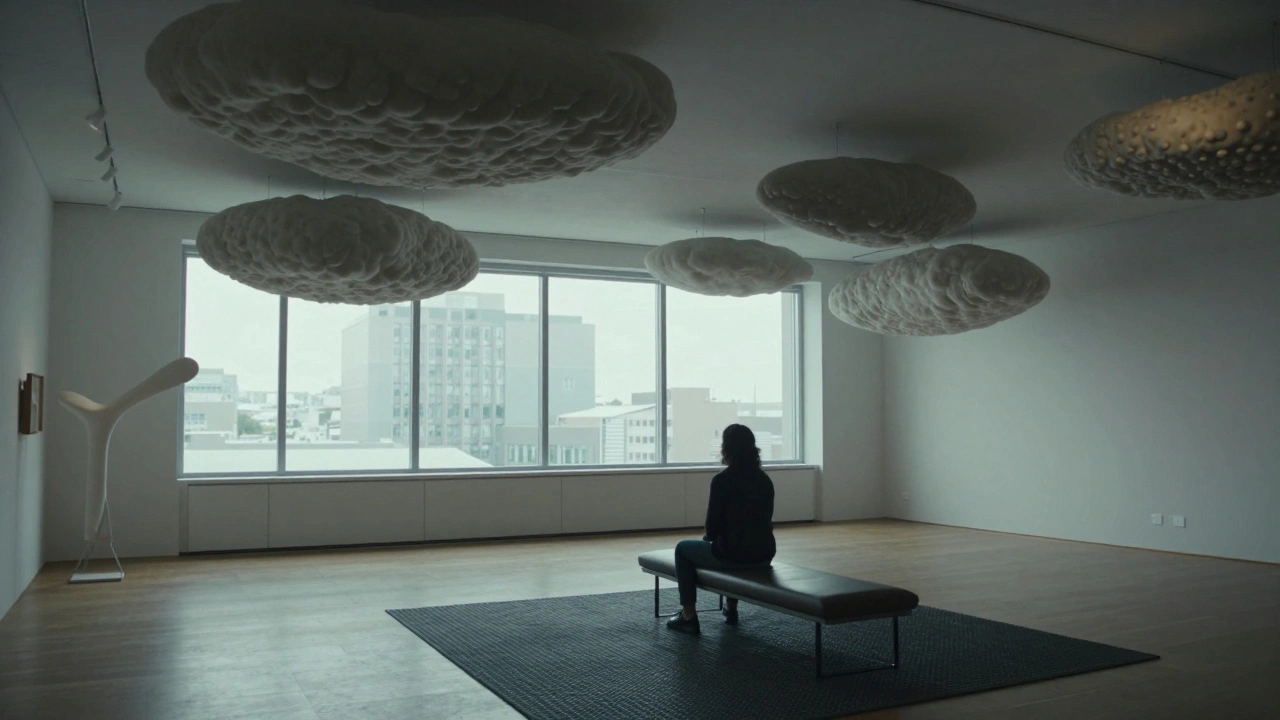
Acoustic panels aren’t just for recording studios. In galleries, they’re hidden in plain sight. Textured wall coverings made from recycled wool felt, perforated wood panels, or suspended ceiling clouds made from mineral fiber can cut reverberation without looking out of place. The key is placement: focus on walls opposite entrances, above walkways, and behind seating areas. A 2024 retrofit at the Portland Art Museum used 40% less material than traditional treatments by placing panels only where sound waves naturally hit-no guesswork.
Don’t forget the floor. Rubber-backed rugs under benches, or cork tiles in high-traffic zones, cut footfall noise by up to 70%. Even small changes make a big difference.
2. Block the Outside Noise
External noise-traffic, construction, even the city’s general hum-seeps in through windows, doors, and poorly sealed walls. A gallery next to a street or train line needs more than curtains.
Double-glazed windows with laminated glass reduce outside noise by 40-50 decibels. Sealing gaps around doors with acoustic gaskets (not just weatherstripping) is critical. Walls need insulation between studs-mineral wool or fiberglass-not just drywall. At the Walker Art Center in Minneapolis, after adding 6 inches of insulation and new window seals, noise levels dropped from 62 dB to 41 dB. That’s the difference between a busy café and a library.
Even ventilation systems matter. HVAC ducts can carry noise like pipes carry water. Installing silencers in ducts and using flexible connections to isolate vibrations cuts mechanical noise by half. It’s not glamorous, but it’s necessary.
3. Direct the Right Sounds
Not all sound is bad. Sometimes, you want sound-like an audio guide, or a quiet ambient score for an immersive installation. The trick is making sure it doesn’t leak into other rooms.
Directional speakers, mounted low and aimed only at specific artworks, focus sound like a spotlight. These are different from regular speakers. They use beamforming technology to project sound in a narrow cone, so you hear it clearly from one spot, but someone two feet away hears almost nothing. The Museum of Contemporary Art in Los Angeles uses these for its video installations. Visitors report feeling like the art is speaking directly to them.
Sound zones also help. By using floor materials, ceiling height, and wall treatments differently in each room, you create natural barriers. A room with low ceilings and thick fabric absorbs sound, while a high-ceilinged room with polished wood reflects it-perfect for interactive exhibits that need energy.
What Not to Do
Many galleries make the same mistakes. Here’s what to avoid:
- Using carpet everywhere. It muffles sound but looks cheap and traps dust. Use it only in high-traffic zones.
- Ignoring the ceiling. Most noise bounces off the ceiling first. Don’t leave it bare.
- Over-relying on plants. A potted fern won’t stop a 60-decibel crowd.
- Choosing aesthetics over function. A beautiful wood panel that doesn’t absorb sound is just decoration.
- Forgetting maintenance. Acoustic materials collect dust. Clean them quarterly, or they lose effectiveness.
Real-World Examples That Work
The Guggenheim in Bilbao uses curved concrete walls that naturally diffuse sound instead of reflecting it. The result? A spacious, open feel without echo.
The Hirshhorn Museum in Washington, D.C., installed a series of ceiling baffles shaped like floating clouds. They look like art, but they’re engineered to absorb frequencies that interfere with audio tours.
Even small galleries benefit. A private gallery in Portland replaced its vinyl flooring with cork and added 12 acoustic panels behind the main display wall. Visitors stayed 40% longer. Staff noticed fewer complaints about noise and more comments like, “I felt like I was inside the painting.”
How to Start
You don’t need a million-dollar budget. Start here:
- Measure your noise. Use a free app like Decibel X to record levels during peak hours. Note where it’s loudest.
- Identify your biggest sound source. Is it footsteps? HVAC? Visitors talking? Fix one thing at a time.
- Start with low-cost fixes. Add rugs under benches, seal door gaps, install a few panels near the entrance.
- Test. Bring in five visitors. Ask them to sit quietly for five minutes. Do they feel distracted? Annoyed? Calm?
- Scale up. Once you see the difference, invest in windows, insulation, or directional speakers.
There’s no single solution. Every gallery has its own rhythm. But the goal is the same: let the art breathe. Let the quiet be intentional. Let the visitor feel like they’re not just looking at something-but experiencing it.
Can I use regular soundproofing materials in an art gallery?
Not usually. Regular soundproofing materials like thick foam or mass-loaded vinyl are too bulky, unattractive, and often reflect light poorly. Art galleries need materials that absorb sound without clashing visually. Acoustic panels made from wool felt, perforated wood, or mineral fiber are designed to blend in. They’re thin, customizable in color and texture, and often look like wall art themselves.
Do I need to hire an acoustic engineer?
For a small gallery, no. Many improvements can be done with off-the-shelf products and simple measurements. But if you’re renovating a large space, adding new wings, or installing complex audio installations, an acoustic consultant can save you money long-term. They’ll use software to model sound behavior and recommend exact placements-avoiding trial and error. For most galleries, a one-time consultation ($500-$1,500) is worth it.
What’s the ideal noise level for an art gallery?
Between 35 and 45 decibels. That’s roughly the sound of a quiet library or a refrigerator humming. At this level, visitors can hear their own thoughts, whispers, and audio guides clearly without strain. Anything above 50 dB starts to interfere with concentration. Below 30 dB can feel unnaturally silent-almost eerie. The goal is calm, not complete silence.
How do I handle noise from guided tours?
Use directional speakers and timed audio. Instead of a guide shouting over a crowd, give each visitor a small wireless earpiece with a pre-recorded tour. Or use low-volume directional speakers placed near each artwork, aimed only at the viewing spot. This keeps sound contained and lets visitors move at their own pace. The Museum of Modern Art in New York switched to this system and saw visitor satisfaction rise by 68%.
Can lighting affect acoustics?
Indirectly, yes. Bright, focused lighting draws attention and can make people speak louder. Soft, ambient lighting encourages quiet reflection. Also, recessed lighting fixtures can create hollow spaces behind ceilings that act as echo chambers. Always check what’s behind your lights. Adding insulation or acoustic barriers behind light housings can prevent unexpected noise buildup.