Writing Artist Statements for Gallery Proposals: A Clear, Honest Guide

Most artists spend months perfecting their work-painting, sculpting, photographing, building-but when it comes time to submit to a gallery, they freeze up at the artist statement. Why? Because they’ve been told it needs to sound smart, deep, or academic. The truth? Gallery directors don’t want jargon. They want to understand your work, your intention, and whether you’re serious about your practice. A strong artist statement isn’t a poem. It’s a conversation.
What a gallery actually looks for
Gallery directors review dozens of submissions each month. They’re not art historians. They’re curators, salespeople, and sometimes sole operators running a small space. They need to answer three questions fast:
- What is this artist making?
- Why does it matter?
- Can I explain this to a buyer in 30 seconds?
That’s it. No need for references to Foucault or post-structuralist theory unless your work actually engages with those ideas. Most submissions fail because they’re either too vague ("I explore the human condition") or too dense ("My practice interrogates the phenomenological rupture of neoliberal temporality through performative materiality").
Start with what you make
Describe your work like you’re telling a friend who’s never been to an art gallery. Use plain language. Be specific. Instead of:
"My work investigates the liminal space between memory and identity."
Try:
"I make ceramic sculptures that look like old family photos, but they’re cracked, melted, or covered in dirt. They’re based on photographs I found in my grandmother’s house after she passed. Some of them are missing faces. I’m trying to understand what gets lost when memory fades."
That version tells you what the object is, where it comes from, and why it matters emotionally. It’s concrete. It’s human.
Connect your process to your meaning
Gallery people care about how you make things as much as what you make. If you’re using recycled plastic bottles to build a tower that references ocean pollution, say that. If you hand-stitch every piece because it reminds you of your grandmother’s quilting, mention it. Process is proof of intention.
Don’t just say "I use natural materials." Say:
"I gather fallen branches from the forests near my home in Oregon. I sand them smooth, then burn them with a torch to leave dark, charcoal lines. Each piece holds the shape of the branch as it fell-no two are alike. I do this because I want viewers to feel the quiet weight of something that was once alive, now still."
That’s not just description. It’s a story. And stories stick.
What not to say
Here are the phrases that make gallery directors sigh:
- "My work explores the universal human experience." (Too broad. What experience? Which human?)
- "I’m influenced by many artists." (Name one or two if it’s true, and explain how.)
- "This piece is open to interpretation." (If it’s truly open, why are you making it? What’s your angle?)
- "I use color to evoke emotion." (All artists do. Which color? Which emotion? Why?)
- "It’s about the subconscious." (That’s not a reason. That’s a buzzword.)
These aren’t wrong ideas-they’re just empty. Replace them with specifics.
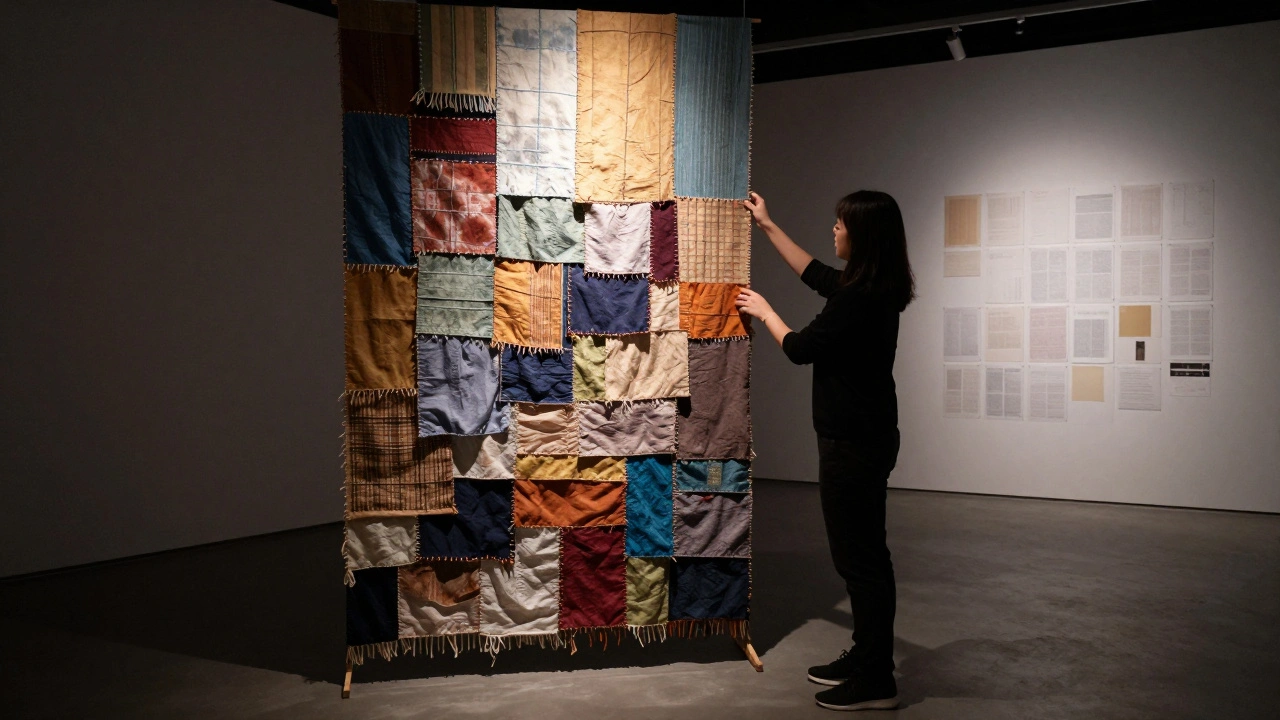
Structure your statement like a letter
You don’t need five paragraphs. Three work better:
- What you make: Describe the work plainly. Include materials, scale, format.
- Why you make it: What’s the personal, emotional, or cultural reason behind it?
- What you hope viewers experience: Not what they should think-but how you want them to feel, notice, or react.
Example:
I create large-scale textile installations using hand-dyed fabric scraps from secondhand clothing stores. Each piece is stitched together without a pattern, letting the shapes and colors of discarded garments guide the form. I started this work after realizing how little we value what’s been worn and loved. My goal isn’t to make beautiful objects-it’s to make people pause and wonder: Who wore this? What did they carry? What did they leave behind?
That’s 87 words. Clear. Human. Memorable.
Keep it short
Most galleries ask for 150-300 words. Stick to it. If you’re over 400, you’re probably trying too hard. Cut the fluff. Delete every sentence that doesn’t answer: What? Why? So what?
One of the most successful submissions I’ve seen was 112 words. It read:
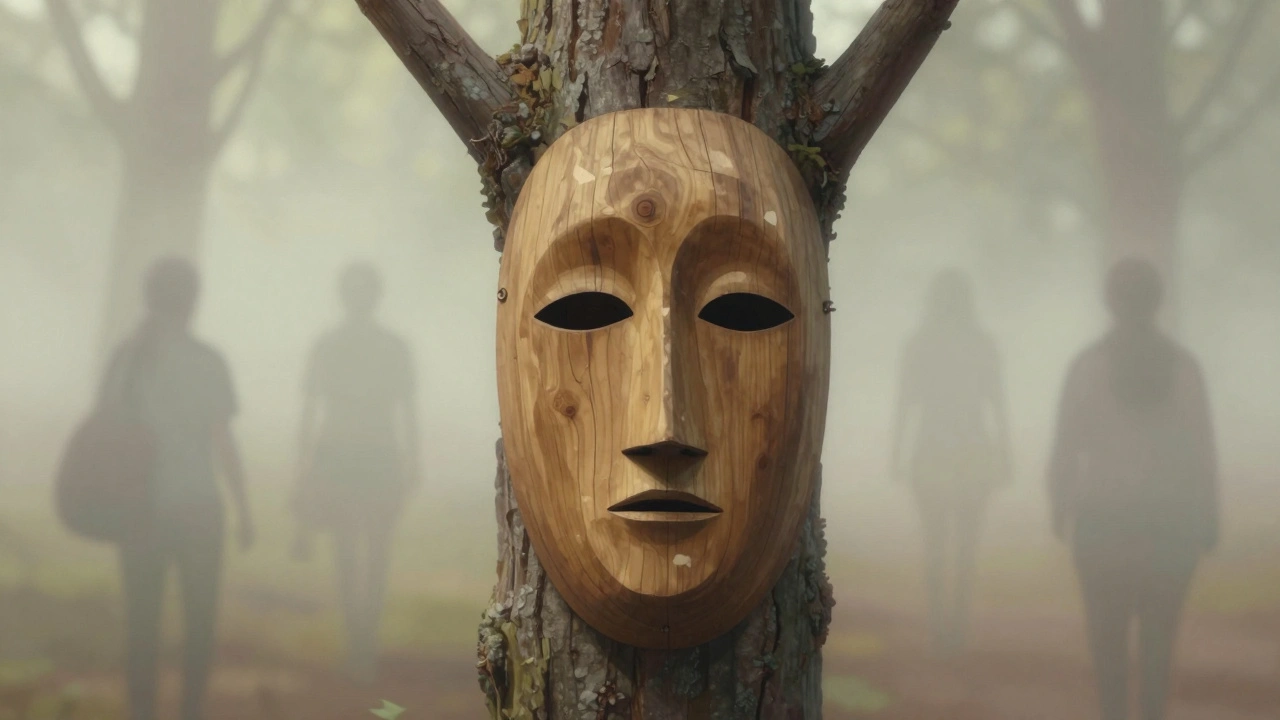
I carve wooden masks from fallen trees in the Columbia River Gorge. Each mask is shaped by the natural grain of the wood-no two are the same. I don’t paint them. I let the scars and knots show. I make them because I want to honor the life the tree lived, even after it fell. People often ask if they’re meant to be worn. They’re not. They’re meant to be looked at. Like a tree that falls in the forest, they’re still speaking.
That’s it. No theory. No jargon. Just truth.
Proofread like a professional
Typos and grammar mistakes don’t mean you’re a bad artist. But they do make you look careless. Read your statement aloud. If it sounds like something you’d say in a coffee shop, you’re on track. If it sounds like a textbook, rewrite it.
Ask a friend who doesn’t know art to read it. If they say, "I still don’t get it," go back. If they say, "Oh, I get why you did that," you’re done.
Update it every time
Your artist statement isn’t a one-time document. It evolves with your work. If you started making ceramics last year and now you’re doing mixed-media installations, your statement should reflect that. Don’t recycle the same one from 2021. Gallery directors notice.
Every time you submit, ask yourself: Does this still sound like me? If not, rewrite it.
Real examples from real artists
Here’s another real submission that got accepted into a Portland gallery last year:
I photograph abandoned storefronts in rural towns across the Pacific Northwest. I wait until after rain to take the pictures-the wet pavement reflects the broken signs like mirrors. I don’t edit the photos. I don’t add light. I want viewers to feel the silence of these places. These aren’t ruins. They’re waiting rooms. For what? I don’t know. But people used to be here. Now they’re not.
Notice how it doesn’t explain the meaning. It invites the viewer to sit with it. That’s powerful.
Final tip: Be honest, not impressive
Gallery directors aren’t looking for the most polished artist. They’re looking for the most honest one. If your work comes from grief, say that. If it comes from joy, boredom, anger, or curiosity-say that too. You don’t need to sound like an academic. You just need to sound like yourself.
Your voice matters more than your vocabulary.
How long should an artist statement be for a gallery proposal?
Most galleries ask for 150 to 300 words. Some may allow up to 400, but anything longer than that is usually overkill. The goal is clarity, not length. A tight, focused statement that answers what you make, why you make it, and what you hope viewers feel will always outperform a long, vague one.
Should I mention my education or exhibitions in the artist statement?
No. Your education and past exhibitions belong in your CV or bio section. The artist statement is about your work-not your resume. If you’re applying to a competitive gallery, they’ll look at your CV separately. Keep your statement focused on the art itself.
Can I use the same artist statement for every gallery I apply to?
You can, but you shouldn’t. Each gallery has its own vibe, focus, and audience. A statement that works for a downtown Portland experimental space might feel off for a rural gallery that shows traditional ceramics. Tailor the last sentence or two to reflect the gallery’s mission or past exhibitions. A small tweak shows you’ve done your homework.
What if I don’t know why I make my art?
That’s okay. You don’t need to have all the answers. Many artists work intuitively. Instead of forcing a deep reason, describe what you notice: "I keep returning to this shape because it feels familiar," or "I’m drawn to this color even though I can’t explain why." Honesty about uncertainty is more compelling than fake profundity. The mystery can be part of the work.
Is it okay to write in first person?
Yes, absolutely. In fact, it’s preferred. Artist statements are personal by nature. Writing in first person ("I," "my") makes your voice clear and authentic. Avoid passive voice like "It is believed that..." or "One might say..."-it distances you from your own work. Own your perspective.