Word Counts and Deadlines: How Art Critics Manage Their Workflow

Art critics don’t just write about paintings or sculptures-they juggle tight deadlines, strict word counts, and the pressure to sound insightful while staying accurate. It’s not enough to have a strong opinion. You need to deliver it on time, in the right length, and with enough depth to matter. If you’ve ever sat there staring at a blank screen with a deadline breathing down your neck, you know how brutal this job can be. But there’s a system that works. And it’s not about working harder. It’s about working smarter.
Why Word Counts Matter More Than You Think
Word counts aren’t arbitrary. They’re shaped by the publication’s audience, layout, and even ad space. A magazine like Artforum might require 1,200 words for a gallery review because that’s what fits between full-page ads. A blog like Hyperallergic might allow 2,500 words because their readers expect deeper dives. A newspaper critic? Often 500 words or less. Get it wrong, and your piece gets chopped, delayed, or rejected.
Here’s what actually happens: editors don’t have time to rewrite you. If you submit 1,800 words for a 1,000-word slot, they’ll trim it. And they won’t tell you they did it. They’ll just publish the edited version and move on. That’s why knowing your word count limits before you start writing isn’t optional-it’s survival.
Most experienced critics build their drafts with a hard target in mind. Not a range. Not “around 1,000.” Exactly 1,000. Why? Because once you hit that number, you’ve already made tough choices. You’ve cut the fluff. You’ve sharpened your argument. You’ve forced yourself to say what matters.
Deadlines Are Non-Negotiable-Here’s How to Meet Them
Deadlines in art criticism aren’t suggestions. They’re locked in weeks ahead, tied to print cycles, online publishing schedules, and exhibition openings. Miss one, and you lose credibility. Miss two, and you lose your gig.
Take the typical gallery review cycle. A show opens on a Friday. The critic needs to see it, write it, submit it, and get it edited before the next Tuesday. That’s six days. Sounds generous? It’s not. Here’s what eats up that time:
- Day 1: Visit the gallery. Take notes. Photograph details. Talk to the artist if possible.
- Day 2: Review your notes. Watch interviews or read the press release. Start drafting.
- Day 3: Finish the first draft. Let it sit overnight.
- Day 4: Revise. Cut 20%. Tighten sentences. Kill your favorite lines if they don’t serve the point.
- Day 5: Send to editor. Wait for feedback.
- Day 6: Make final edits. Submit.
That’s the ideal. Most critics skip Day 4. They send the draft too early. Then they get back a response like: “This reads like a press release. Where’s your voice?”
The trick? Build in buffer time. Always assume you’ll need an extra day. If the deadline is Tuesday, aim to submit by Monday afternoon. That gives the editor room to breathe-and you room to fix mistakes.
The 3-Step Drafting Method That Keeps Critics on Track
There’s no magic formula for writing great criticism. But there is a reliable process. Most top critics use a version of this:
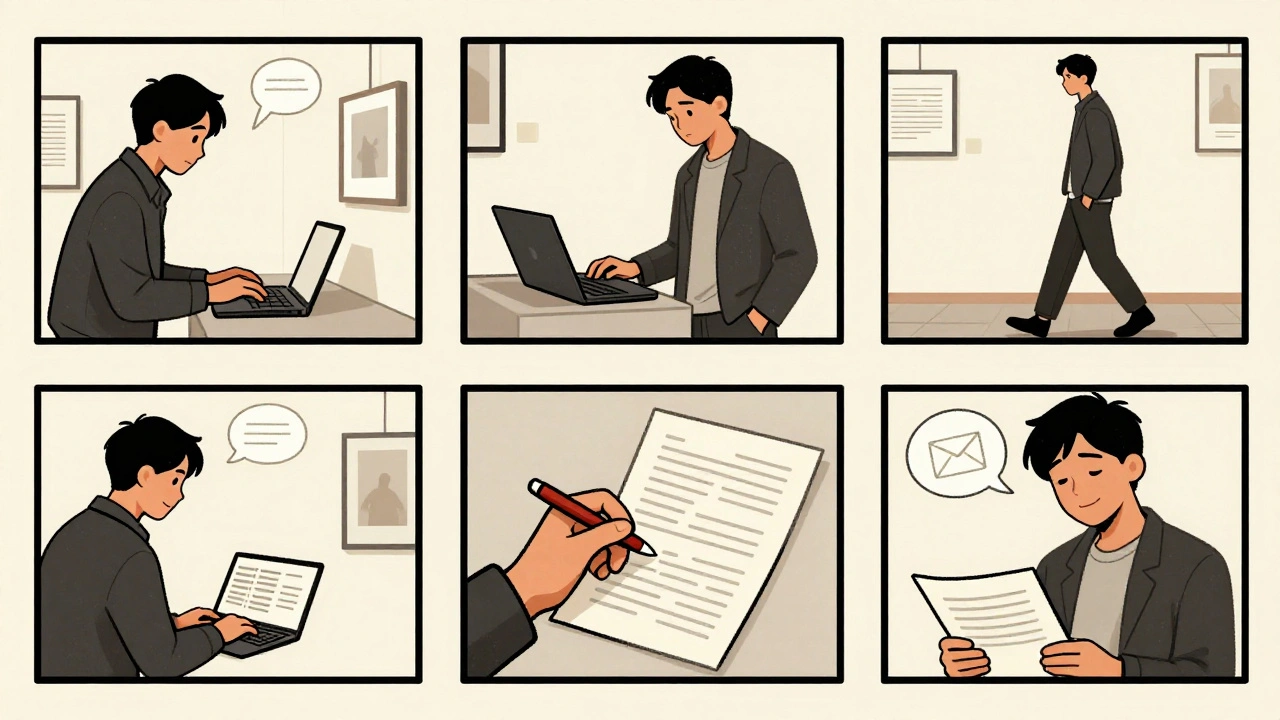
- Notes First - Before you write a single sentence, dump everything you saw, felt, and thought into a raw document. No structure. Just fragments. “The red brushstroke here feels angry.” “The lighting makes the sculpture look like it’s melting.” “The artist’s Instagram says this is about grief, but the piece feels like control.”
- Structure Second - Now, organize those fragments. What’s the main idea? Is it about the artist’s intent? The cultural moment? The technical execution? Pick one. Build three supporting points around it. That’s your outline. No more than three. Anything more confuses the reader.
- Write Third - Now, fill in the outline. Don’t worry about sounding smart. Worry about being clear. Use short sentences. Cut adjectives. Let the art speak. Your job isn’t to impress. It’s to help someone else see what you saw.
This method cuts drafting time in half. And it prevents the most common mistake: trying to write everything at once. You’re not writing an essay. You’re writing a lens. A focused, narrow, useful lens.
Tools That Actually Help (Not Just Apps)
Yes, there are apps. But the best tools aren’t digital.
Here’s what works:
- A physical notebook - For sketching compositions, jotting down overheard gallery comments, or noting the exact time a visitor paused in front of a piece. Paper doesn’t distract. It remembers.
- A timer - Set 45 minutes for drafting. No edits. No research. Just write. Then take a 15-minute walk. Come back and edit. This prevents burnout and forces clarity.
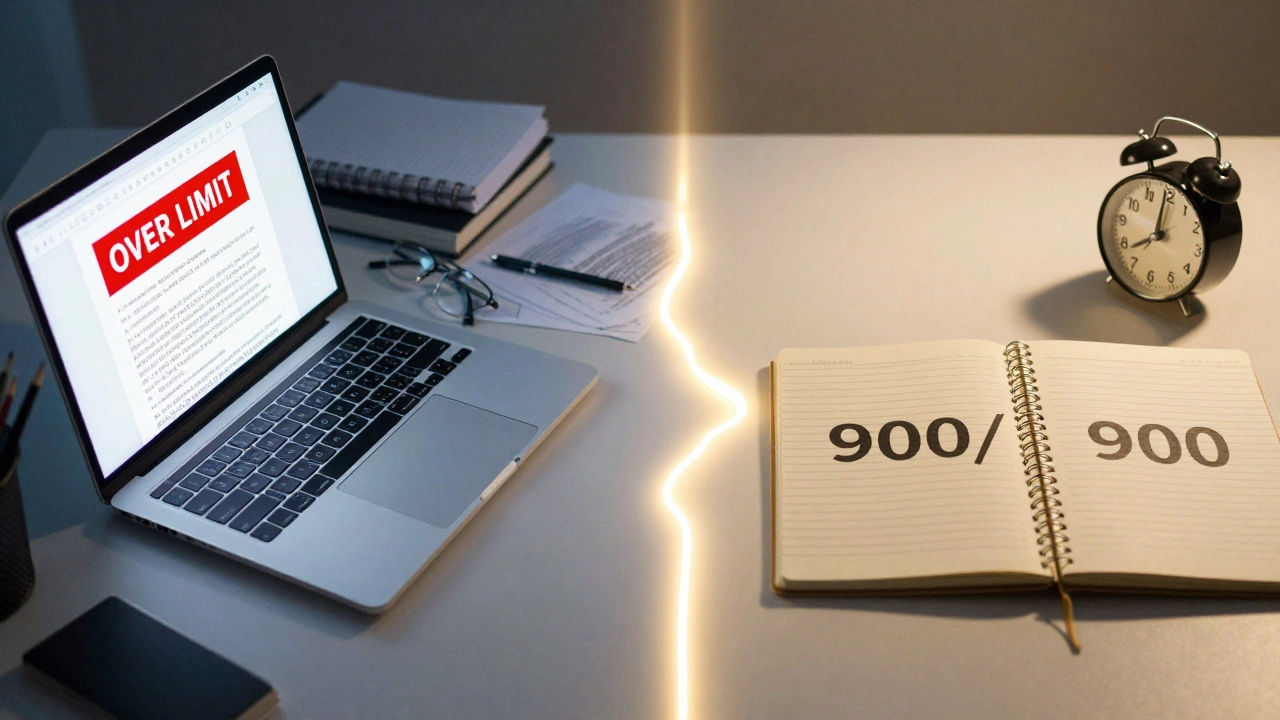
- A word counter - Not just the one in Word. Use a standalone tool like WordCounter or Grammarly that shows real-time progress. Seeing “872/1000” tells you more than “almost done.”
- A feedback buddy - One other critic you trust. Not your partner. Not your roommate. Someone who’s been in the trenches. Swap drafts every other week. Ask: “Where did you lose interest?” That question is worth more than ten editing passes.
These aren’t luxury tools. They’re survival tools. The ones who last in this field aren’t the ones with the fanciest software. They’re the ones who build habits.
What Happens When You Ignore the System
Let’s say you skip the notes. You rush to write after seeing a show. You don’t set a word count. You write 2,200 words. You submit it Sunday night, two hours before the deadline. The editor replies: “Too long. Cut 700 words. And the tone feels detached. Can you add more personal reaction?”
You spend Monday night cutting. You lose your voice. You miss the real insight. The piece publishes, but it’s flat. No one talks about it. The artist doesn’t respond. The gallery doesn’t mention it on social media.
That’s not an accident. That’s what happens when you treat criticism like a chore instead of a craft.
On the flip side, critics who stick to the system? They get called back. They get assigned bigger shows. They’re quoted in catalogs. They’re invited to panel discussions. Why? Because they’re reliable. They deliver. And they make editors look good.
Real Examples from Real Critics
Take Sarah Lin, who writes for Modern Art Review. She works with a 900-word limit. Her process:
- Sees the show on Thursday.
- Writes raw notes in a Moleskine that evening.
- Types up a 1,100-word draft Friday morning.
- Edits down to exactly 900 by Friday night.
- Sends it Saturday morning.
She’s never missed a deadline in three years.
Or James Rivera, who writes for Art in America. His word count is 2,000. He writes in two sittings: 1,000 words on Tuesday, 1,000 on Wednesday. Why? Because he needs time to reread the artist’s old interviews. He can’t do that in one sitting. His method is slower-but his pieces get reprinted.
There’s no single right way. But there’s a right process. And it’s always structured.
How to Build Your Own Workflow
Start small. Pick one show. Set a word count before you go. Write notes on paper. Draft in one sitting. Edit the next day. Submit two days before the deadline. Do that three times. Then adjust.
Here’s a simple checklist to start with:
- ☐ Know the word count before you enter the gallery
- ☐ Bring a notebook and pen (not just your phone)
- ☐ Spend 10 minutes observing, not photographing
- ☐ Draft within 24 hours of seeing the show
- ☐ Edit with a timer (45 minutes max)
- ☐ Submit 48 hours before the deadline
That’s it. No app needed. No special training. Just discipline.
The best art critics aren’t the most eloquent. They’re the most consistent. They show up. They meet deadlines. They write what they mean. And they do it again, next week, and the week after that.
Why do art critics need strict word counts?
Word counts are dictated by the publication’s format, audience, and layout. Magazines have limited space for ads and images, so every word must earn its place. A 500-word newspaper review and a 2,500-word online essay serve different purposes. Exceeding the limit means your piece gets cut, delayed, or rejected-often without your knowledge. Knowing the limit upfront lets you write with purpose, not filler.
What’s the best time to write an art review after seeing a show?
The sweet spot is within 24 hours. Your memory of the visual details is still sharp, but you’ve had time to process your emotional reaction. Waiting too long means you forget key moments. Writing immediately risks an unfiltered, emotional response. The next-day draft balances immediacy with clarity.
Can I use AI tools to help write art criticism?
AI can help summarize press releases or check grammar, but it can’t replace your voice. Art criticism is about your unique perception-your bias, your context, your emotional response. AI generates safe, generic observations. Readers can tell. Editors can tell. The best criticism comes from your own eyes and mind, shaped by discipline, not automation.
How do I handle feedback that says my writing is too subjective?
Subjectivity is the point. But it needs grounding. Instead of saying “I felt this was boring,” say “The composition felt static because the focal point was off-center, and the color palette lacked contrast-this made it hard to engage with.” Anchor your feeling to what’s visible. That’s how you turn opinion into insight.
Do I need to interview the artist to write a good review?
Not always. Many artists avoid interviews or give vague answers. Your job is to respond to the work, not the artist’s explanation. Use the press release for context, but trust your own experience. The strongest reviews come from close looking-not from asking questions.