Waste and Recycling Plans for Art Galleries: A Practical Guide
Most people think of art galleries as quiet spaces filled with beauty. They don't think about the trash behind the scenes. But if you run a gallery, you know the truth. You deal with packing foam, plastic wrap, cardboard crates, and chemical solvents every single day. In 2026, ignoring this waste is not just bad for the planet; it's bad for your business. Visitors care about sustainability. Local councils are tightening regulations on commercial waste. And frankly, throwing away good materials costs money.
Creating a solid waste and recycling plan isn't about being perfect. It's about being intentional. It means looking at what comes into your space, how it's used, and where it goes when the show ends. This guide breaks down exactly how to build that plan, from the loading dock to the back office.
The Hidden Waste Stream in Galleries
Before you can fix the problem, you have to see it. Most galleries treat all trash as one big black bag. That’s the first mistake. The waste stream in an art venue is actually three distinct categories, each requiring different handling.
First, there is packaging waste. This is the bulk of your volume. Think bubble wrap, styrofoam peanuts, wooden crates, and heavy-duty cardboard boxes. Artists ship work in these materials, and they leave after installation. Second, there is installation debris. This includes drywall scraps, paint cans, tape residue, and broken fixtures. Finally, there is operational waste. Coffee cups, paper receipts, light bulbs, and electronics from the front desk. Mixing these together contaminates recyclables. If you put a greasy coffee cup in the paper bin, the whole batch gets rejected by the recycler. Separation at the source is non-negotiable.
Auditing Your Current Habits
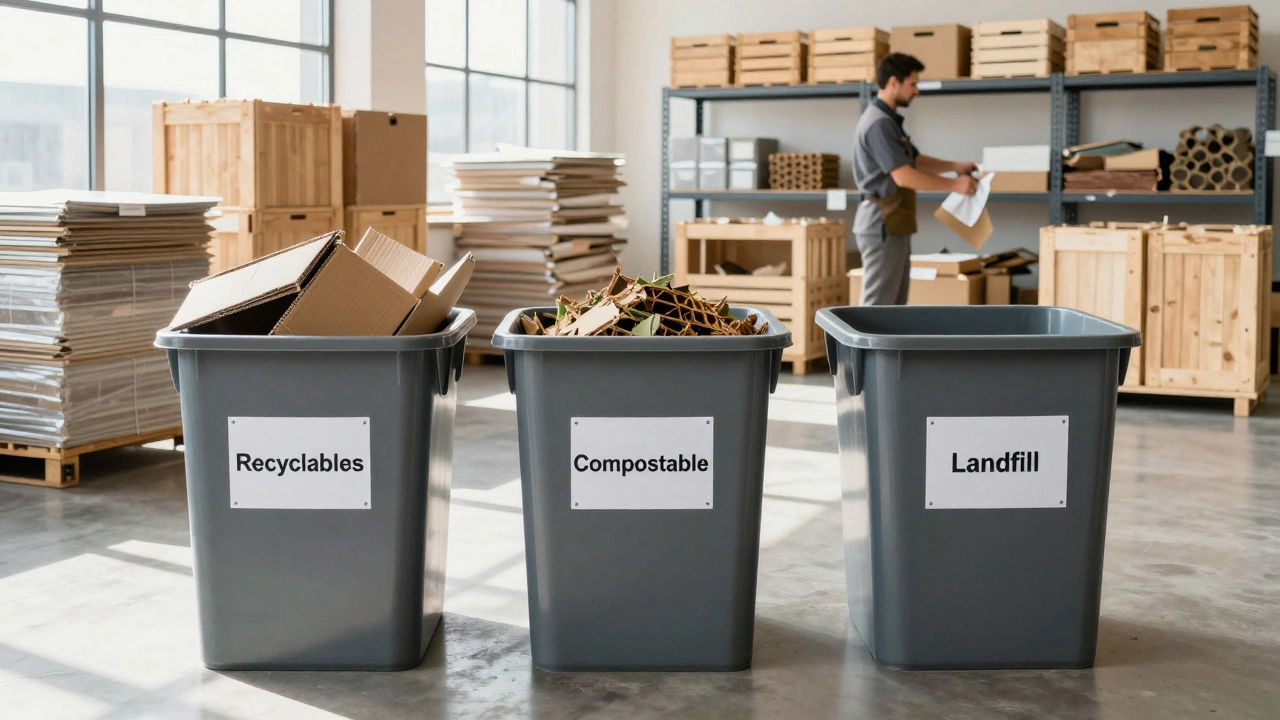
You can't manage what you don't measure. Start with a simple two-week audit. Place clear bins labeled "Recyclable," "Compostable," and "Landfill" in your storage room or loading area. Ask your staff and any visiting artists to sort their waste as they go. At the end of two weeks, weigh each bin. I bet you’ll find that over 70% of your waste is technically recyclable or reusable, but it’s currently going to the landfill because it was mixed with dirty trash.
Look closely at the "Landfill" bin. What’s inside? Often, it’s clean cardboard that got crumpled up with garbage bags. Or plastic film that could be returned to a store drop-off program. Identify the top three contaminants. These are your quick wins. Fixing these errors will drastically reduce your hauling fees and improve your recovery rate.
Tackling Packaging: The Big Volume Driver
Packaging is the biggest headache for galleries. Artists need protection, but they often use excessive materials. Here is how to change that dynamic without risking the artwork.
- Negotiate Return Policies: When you hire an artist or accept consignment, include a clause about packaging. Ask them to return sturdy wooden crates and high-quality foam blocks. Offer to store them securely for their next show. Many artists are happy to do this if you make it easy.
- Ban Expanded Polystyrene (EPS): Also known as Styrofoam, this material is nearly impossible to recycle in most municipal systems. It breaks into tiny beads that clog sorting machines. Tell your artists upfront: no EPS. Provide alternatives like honeycomb paper wrap or corrugated air pillows, which break down easily and recycle well.
- Create a "Packaging Library": Keep a stock of clean, flattened cardboard boxes and reusable plastic wrap. When a new shipment arrives, reuse the outer box for outgoing mail or local deliveries. Flatten the inner boxes for future use. This reduces your need to buy new supplies and cuts down on incoming waste.

Managing Installation and Exhibition Debris
Installation days are chaotic. Boxes get torn open, tape gets ripped off walls, and mistakes happen. To keep this process clean, set up a "debris station" near the work area. Use clearly marked bins for wood, metal, and general trash. If you’re hanging heavy pieces, ask your rigger to separate drill dust and wood shavings. These can often be composted or recycled, depending on local rules.
Paint and solvents are hazardous. Never throw paint cans in the regular trash unless they are completely empty and dried out. Most cities have specific drop-off days for household hazardous waste. Check your local environmental agency’s schedule. For oil-based paints, look for specialized collection programs. Water-based acrylics can usually be dried out and disposed of with regular trash, but check your local guidelines first. Getting this wrong can result in hefty fines.
Office and Operational Waste
The front desk and administrative areas generate steady, low-volume waste. This is easy to control. Switch to digital invoices and contracts wherever possible. If you must print, use double-sided printing and recycle the paper. Buy cleaning supplies in concentrated forms to reduce plastic bottle waste. Replace disposable coffee cups with reusable mugs for staff. Encourage visitors to bring their own water bottles by providing a filtered water tap near the entrance.
Electronics are another growing concern. Old computers, printers, and lighting fixtures contain valuable metals and toxic components. Do not toss them in the dumpster. Partner with an e-waste recycler. Many companies offer free pickup for small businesses. This keeps harmful substances out of soil and groundwater, and it might even earn you a small credit for the recovered materials.

Engaging Artists and Staff
A plan only works if people follow it. You need to communicate your expectations clearly. Create a simple one-page guide titled "Gallery Green Standards." Hand it to every artist during the contract signing phase. Include photos of acceptable and unacceptable packaging. Make it visual and easy to understand.
Train your staff regularly. New hires should learn where every bin goes on their first day. Hold monthly five-minute meetings to discuss what’s working and what’s slipping. Celebrate wins. If you reduced landfill waste by 20% last quarter, share that success. People want to do the right thing when they feel part of a team effort.
| Material | Disposal Method | Notes |
|---|---|---|
| Cardboard | Recycle | Must be clean and dry. Remove tape if possible. |
| Bubble Wrap | Store Drop-off | Not curbside recyclable. Return to retailers who accept film. |
| Styrofoam (EPS) | Landfill / Special Recycler | Avoid using entirely. Ban from shipments. |
| Wood Crates | Reuse / Donate | High value for reuse. Store for returning artists. |
| Paint Cans | bsp;Hazardous Waste | Dry out latex paint. Take oil-based to special collection. |
Measuring Success and Staying Compliant
Set goals based on your audit data. Aim to divert 50% of waste from landfills within six months. Track your progress monthly. Review your waste bills. If your hauling weight drops, your plan is working. If it rises, investigate why. Did a new artist bring in banned materials? Did staff get lazy?
Stay updated on local regulations. Waste laws change frequently. In many cities, commercial entities are now required to provide composting services. Check if your municipality offers organic waste pickup for businesses. If so, start collecting food scraps from the kitchen and plant matter from any indoor gardens. This reduces methane emissions from landfills and creates nutrient-rich soil.
Finally, be transparent. Share your sustainability efforts with your community. Post updates on social media. Mention your green practices in exhibition catalogs. Visitors appreciate authenticity. It shows you care about more than just selling art. It builds trust and loyalty. In today’s market, that’s worth something.
How much does a waste audit cost for a small gallery?
A basic internal waste audit costs nothing but time. You just need scales and labeled bins. If you hire a professional consultant, expect to pay between $500 and $1,500 depending on the size of your facility and the depth of the report. For most small galleries, doing it in-house is sufficient to identify major issues.
Can I recycle bubble wrap through my city's curbside program?
In most cases, no. Bubble wrap is considered flexible plastic film, which jams sorting machinery. Instead, look for retail drop-off locations. Many large grocery stores and hardware chains have bins specifically for plastic films and bags. Check with your local waste hauler for specific instructions.
What should I do with old wooden shipping crates?
Wooden crates are highly reusable. Store them in a dry area for returning artists. If they are damaged beyond repair, check if local woodworking schools or theater groups want them for projects. Avoid burning them, especially if they were treated with chemicals or painted.
Is it legal to throw paint cans in the trash?
It depends on the type of paint and your local laws. Latex (water-based) paint cans can often be thrown in the trash if the paint is completely dried out. Oil-based paints are hazardous waste and must never go in the regular trash. Always check with your local environmental health department for specific disposal protocols.
How can I convince artists to use less packaging?
Communication is key. Explain that you have limited storage space and that excessive packaging increases your carbon footprint. Offer incentives, such as priority scheduling or featured promotion, for artists who use minimal, eco-friendly packaging. Providing alternative materials like honeycomb paper can also help ease the transition.