Using CRM Automation in Art Gallery Sales
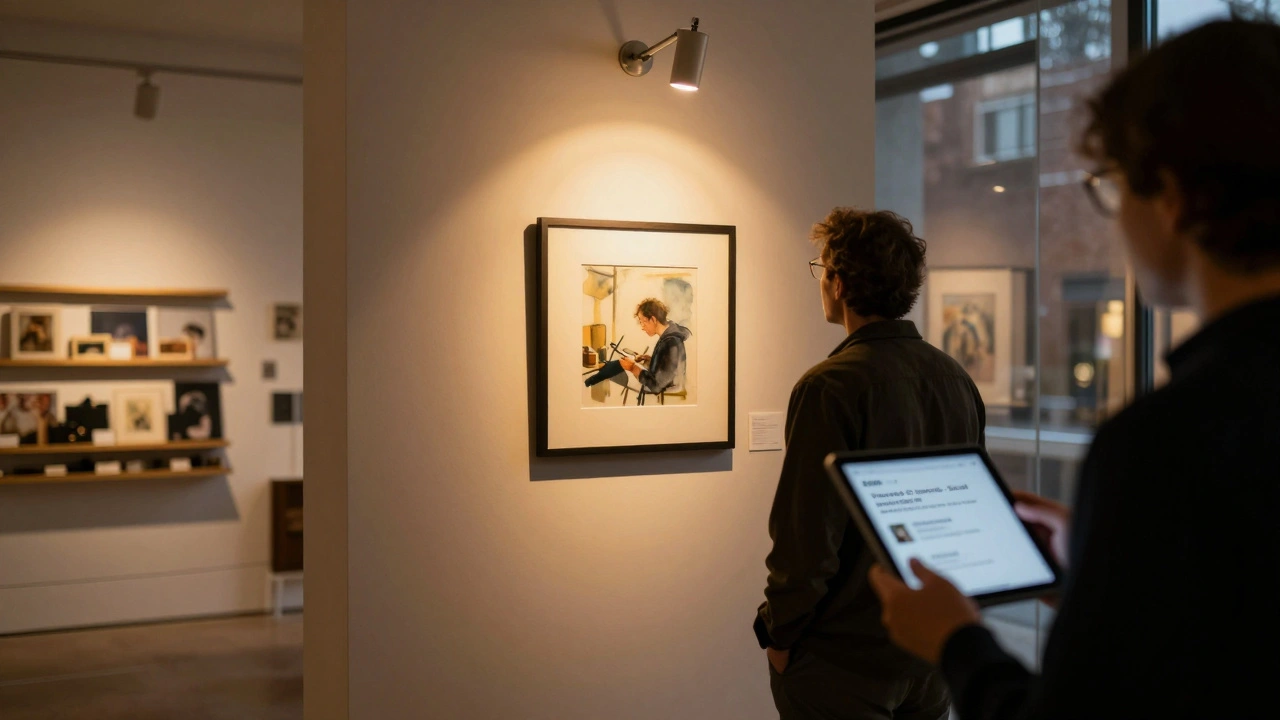
Art galleries don’t just sell paintings-they sell experiences, stories, and emotions. But behind every sale, there’s a human connection that’s hard to scale. That’s where CRM automation comes in. It’s not about replacing the personal touch. It’s about giving gallery owners more time to build it.
Imagine this: A collector visits your gallery in Portland, falls for a small watercolor by a local artist, and walks out without buying. Three weeks later, they get an email with a high-res photo of that same piece, a short video of the artist at work, and an invitation to a private preview of the next show. They buy it the next day. That’s not magic. That’s CRM automation working quietly in the background.
Why Art Galleries Need CRM Automation
Most galleries still rely on paper ledgers, Excel sheets, or basic contact lists. That’s fine for a handful of clients. But when you’re tracking 500+ collectors, 120+ artists, and dozens of private viewings each year, you’re drowning in data. CRM automation turns that chaos into clarity.
Here’s what happens without it: You forget a collector’s birthday. You miss a follow-up after an auction. You send the same newsletter to someone who just bought a $15,000 piece and someone who only browses. You lose trust. You lose sales.
CRM automation fixes this by automating the routine stuff so you can focus on what matters: relationships.
How CRM Automation Works for Art Sales
At its core, CRM automation for galleries is built around three actions: track, trigger, and personalize.
- Track every interaction: visits, emails, bids, likes on social posts, even time spent in front of a piece.
- Trigger automated messages based on behavior: if someone views a sculpture online three times, send them a curator’s note about it.
- Personalize every touchpoint: use names, past purchases, and preferences-not just "Dear Valued Customer."
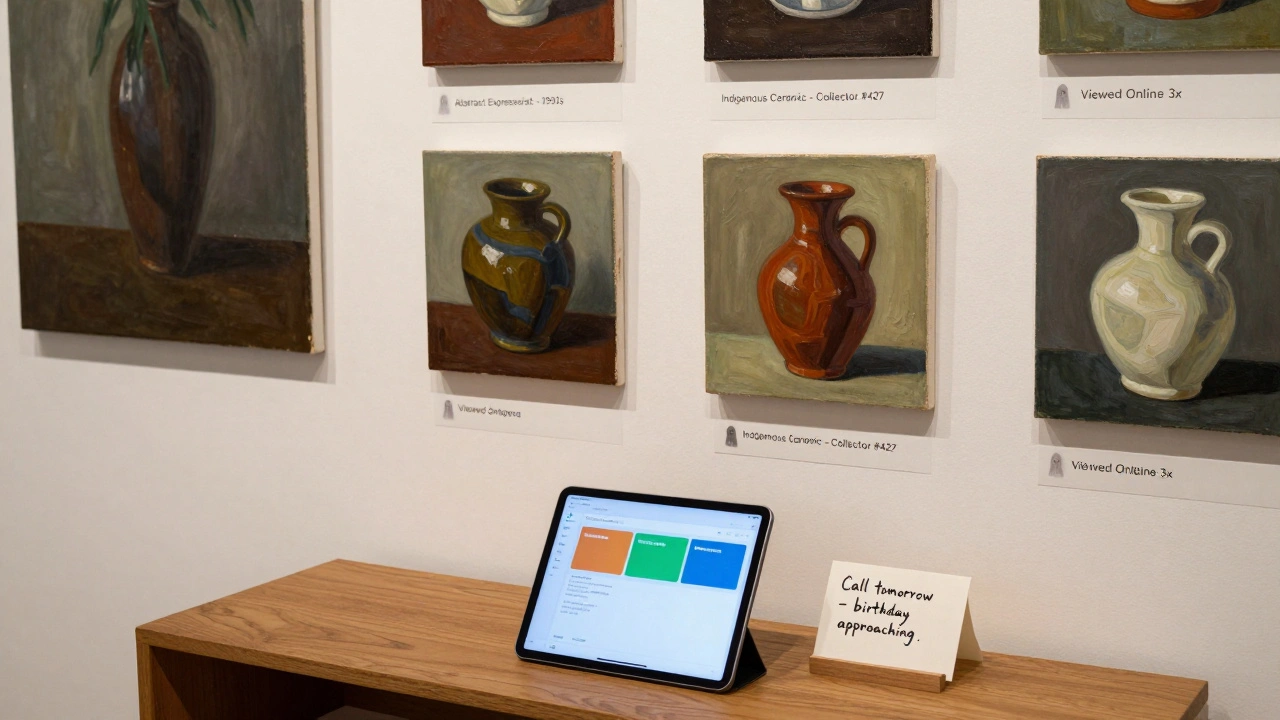
For example, a gallery in Santa Fe uses CRM automation to tag collectors based on their taste. One client buys only abstract expressionist works from the 1950s. Another collects contemporary Indigenous ceramics. The system automatically sends each person relevant updates, exclusive previews, and artist interviews-no manual work needed.
Key Features That Actually Matter
Not all CRM tools are built for art. You don’t need sales pipelines for SaaS subscriptions. You need features that fit the rhythm of gallery life.
- Artist and artwork tracking - Link each sale to the artist, medium, exhibition, and acquisition date. This helps you spot trends: Are buyers shifting from oil to mixed media? Are younger collectors favoring digital prints?
- Event automation - Automatically invite past buyers to openings, send reminders for private viewings, and follow up with a thank-you note and high-res image after the event.
- Segmentation by buying behavior - Group clients as "serious collectors," "first-time buyers," or "window shoppers." Tailor your messaging accordingly.
- Integration with gallery websites and online stores - If someone browses a piece online, the CRM logs it. If they add it to cart but don’t check out? Send a gentle nudge.
- Mobile access - Gallery staff should be able to log interactions on the floor using a tablet. No more scribbling on sticky notes.
A gallery in Chicago cut their follow-up time from 10 days to 48 hours after implementing these features. Their repeat buyer rate jumped 37% in six months.
Real-World Example: The Portland Studio Collective
Just down the street from my office, the Portland Studio Collective used to lose 60% of leads after a visit. They didn’t have a system. Staff remembered names, but not preferences. They’d forget to send follow-ups. Sales were unpredictable.
They switched to a lightweight CRM built for galleries-no fancy AI, just smart automation. Now:
- Every visitor gets tagged by the artist they liked most.
- Anyone who spends more than 90 seconds looking at a piece gets an email within 24 hours with a video of the artist talking about that work.
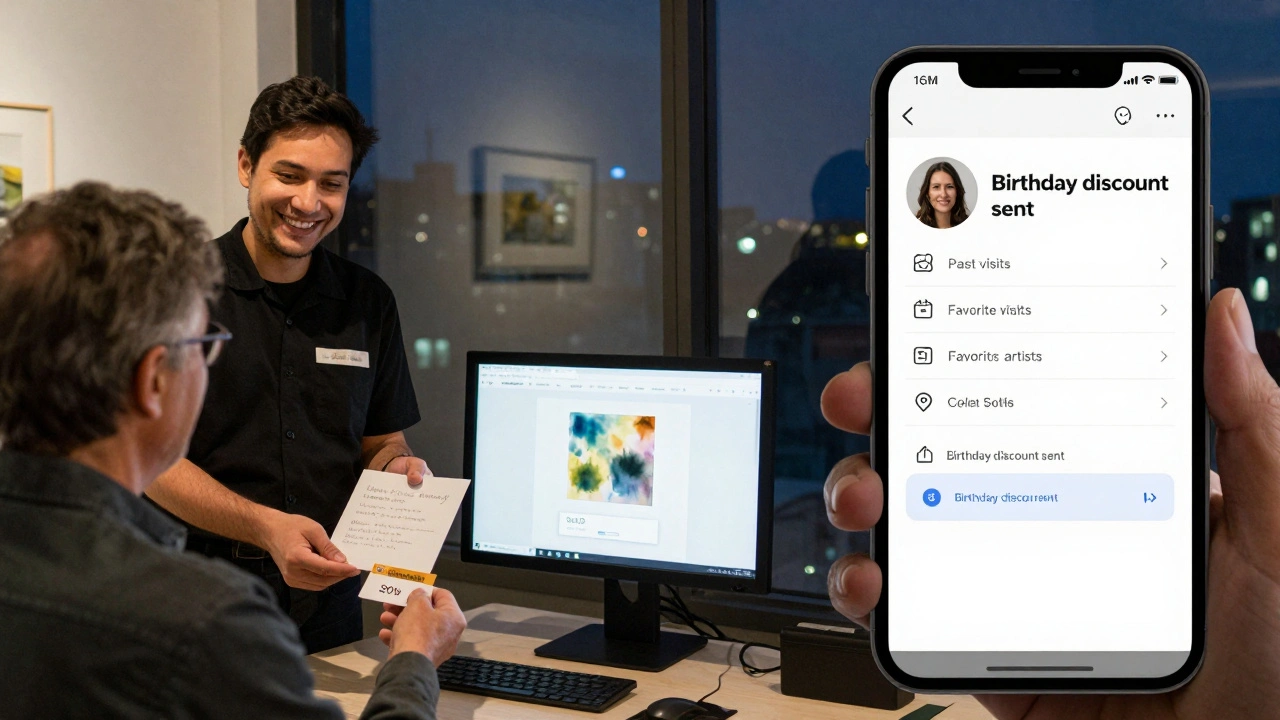
- Birthdays trigger a handwritten note and a 10% discount on their next purchase.
Within a year, their online sales grew by 52%. Their top 10 collectors now account for 40% of annual revenue-up from 22%.
What CRM Automation Won’t Do
Let’s be clear: Automation doesn’t replace the human element. It enhances it.
You can’t automate trust. You can’t automate the moment when a collector sees a piece and says, "I need this in my home." That still happens face-to-face, over coffee, in the gallery.
But automation makes sure you’re ready for that moment. It remembers what they loved last year. It reminds you to call them before the new show opens. It keeps your best clients from slipping through the cracks.
Think of it like a concierge who never sleeps. They don’t make the sale-they just make sure you’re always one step ahead.
Getting Started: 3 Simple Steps
You don’t need a big budget or a tech team. Start small.
- Choose the right tool - Look for platforms designed for galleries: Artlogic, Artwork Archive, or even a customized HubSpot setup. Avoid generic CRMs that force you into sales funnels that don’t fit art.
- Start with one automation - Pick the most annoying, repetitive task. Maybe it’s sending thank-you emails after purchases. Automate that first. Test it. Refine it.
- Train your team - Everyone who talks to a client should know how to log interactions. Make it part of the closing routine: "Did you note what they said about the sculpture?"
Most galleries see results within 60 days. The key is consistency, not complexity.
Common Mistakes to Avoid
- Over-automating - Sending too many emails feels spammy. One thoughtful message per quarter is better than five rushed ones.
- Ignoring data hygiene - If your contact list has 300 "John Smith" entries with no details, automation won’t help. Clean your data first.
- Not tracking offline interactions - A collector who says, "I’m thinking of buying two pieces," at a gallery opening is gold. Log it. Don’t assume they’ll email you.
- Forgetting the artist - CRM isn’t just for buyers. Use it to track artist relationships, commissions, and exhibition history. Happy artists = better work = more sales.
What’s Next? The Future of Art Sales
CRM automation is becoming standard-not optional. By 2027, galleries using automation will outsell those without it by 3:1, according to a 2025 survey of 400+ U.S. galleries.
The next wave? AI-driven predictions. Systems that say, "This collector is 80% likely to buy a large abstract piece in the next 60 days." Or, "The artist you just sold to has a new series coming. They’d love to see it first."
But even then, the magic stays the same: knowing your client. CRM automation just helps you do it at scale.
Do I need to buy expensive software to use CRM automation for my gallery?
No. There are affordable, gallery-specific tools like Artlogic and Artwork Archive that start under $100/month. Even HubSpot offers a free CRM tier that works well if you’re just starting. You don’t need enterprise software-you need something that fits how art is sold: personally, slowly, and with deep context.
Can CRM automation help me sell art online too?
Absolutely. Online buyers are often harder to connect with, but CRM automation bridges that gap. Track which pieces they view, how long they look, and what they’ve bought before. Send them curated selections-not generic newsletters. Many galleries now get 40% or more of sales from online channels, and automation is what makes that sustainable.
How do I convince my staff to use CRM automation?
Show them the payoff. If they’re spending hours writing follow-ups or chasing down lost leads, automation frees them up for real conversations. One gallery manager told her team, "You’ll spend 20% less time on admin and 20% more time with collectors." They signed on immediately. People don’t resist tools-they resist wasted effort.
What if I don’t have time to set this up?
Start with one thing. Automate your post-purchase thank-you email. Then add one more: a birthday note. In two weeks, you’ll have two automated touchpoints that make clients feel seen. You don’t need to do everything at once. Progress beats perfection.
Is CRM automation only for big galleries?
No. In fact, small galleries benefit the most. Without automation, they lose clients to bigger galleries with better systems. A solo operator with 50 loyal collectors can outperform a large gallery with 500 scattered ones-if they know those 50 people well. Automation helps you do that without burning out.