Sketching in Museums: What You Need to Know About Etiquette and Supplies
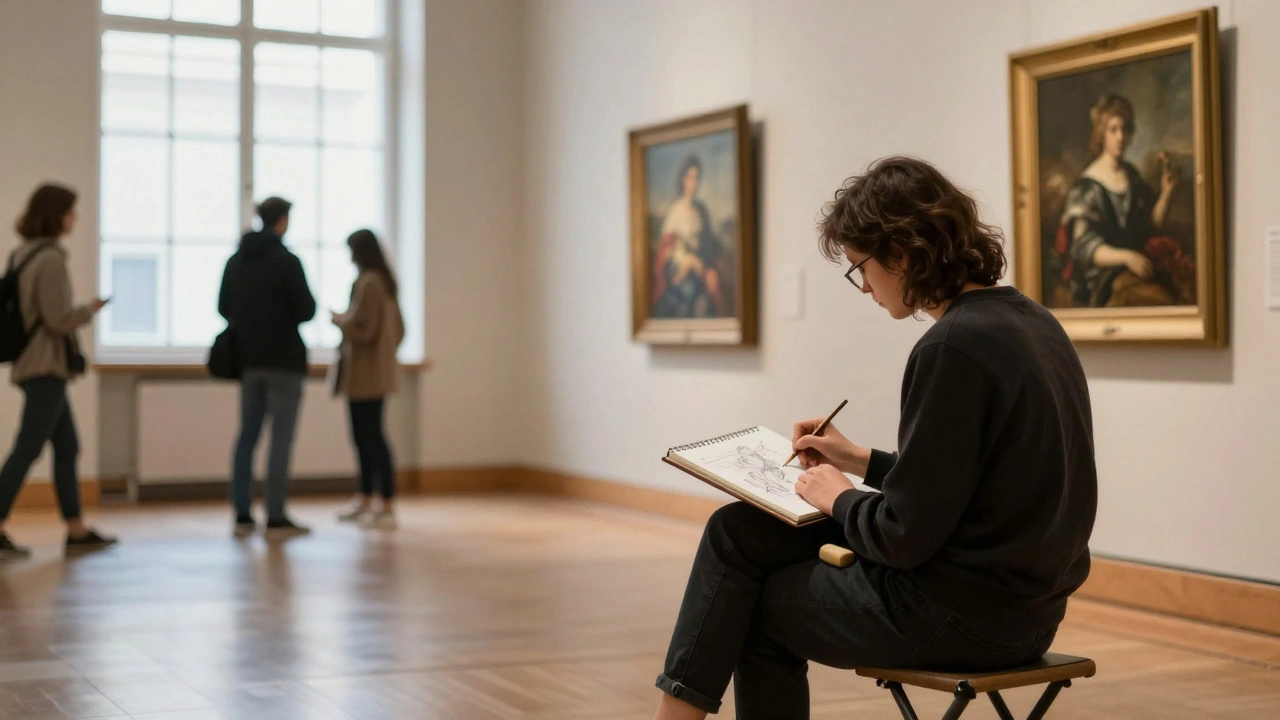
Ever walked into a museum, saw a painting that stopped you in your tracks, and just wanted to grab a pencil and capture it? You’re not alone. Sketching in museums is one of the most personal ways to connect with art. But before you pull out your sketchbook, there are rules-unwritten ones-that most visitors don’t know. And if you show up with the wrong supplies, you might end up getting asked to leave.
Why Sketching in Museums Matters
Sketching isn’t just about making art. It’s about seeing. Studies from the Getty Museum show that people who sketch a piece spend, on average, 11 times longer looking at it than those who just take a photo. Your eyes notice details you’d otherwise miss: the brushstroke thickness, how light hits a shoulder, the way fabric folds. It turns a quick glance into a lasting memory.Many museums encourage sketching because it deepens engagement. The Louvre even offers free sketching workshops on weekends. But not every gallery is the same. Some have strict rules. Others barely notice. Knowing the difference keeps you from accidentally breaking rules-or worse, offending someone.
What You Can and Can’t Sketch
Not every artwork is fair game. Some pieces are too fragile, too crowded, or too sensitive to be drawn. Here’s what to look for:- Don’t sketch near guardrails or ropes. These often mark fragile or high-value pieces. If there’s a barrier, assume sketching is off-limits.
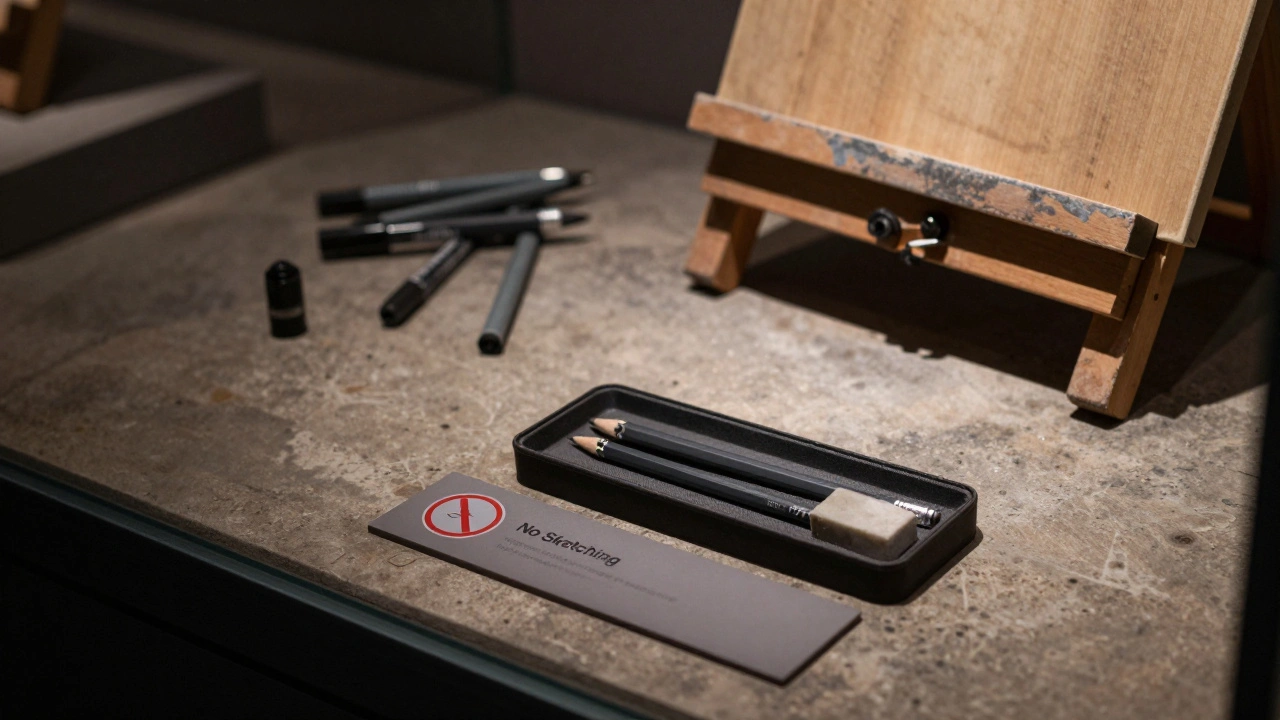
- Check for signs. Look for small plaques near exhibits. Many museums now label works as "No Sketching" or "Photography Only."
- Avoid sketching modern installations. Some interactive or video art pieces have copyright or privacy rules. Even if it looks like a painting, it might be protected.
- Ask if you’re unsure. A quick question to a docent or security guard saves you from embarrassment. Most staff will appreciate your respect.
There are exceptions. Many museums allow sketching in permanent collections but ban it in temporary exhibits. The Met in New York, for example, lets you sketch in the European Paintings wing but not in the modern art galleries during special shows. Always check the museum’s website before you go.
What Supplies to Bring (and What to Leave at Home)
Your gear matters more than you think. A bulky sketchbook or noisy pencil sharpener can ruin someone’s experience. Here’s what works:- Small sketchbook. A5 size or smaller. Big books take up space and make it hard to move around.
- Hard lead pencils. 2H to 4H. They don’t smudge, don’t leave marks on floors, and are quiet. Avoid charcoal or soft graphite-it’s messy and often banned.
- A kneaded eraser. It lifts graphite without scratching paper or leaving crumbs. No plastic erasers-they shred and scatter.
- A pencil case. Keep everything contained. No loose pencils rolling across the floor.
- A lightweight folding stool. If you plan to sit, bring one that folds flat. Many museums now allow portable stools, but only if they’re under 12 inches high.
Leave these at home:
- Charcoal, pastels, or ink pens
- Large easels or tripods
- Highlighters, markers, or glitter pens
- Anything that requires water or solvents
Why? These materials can damage floors, stain carpets, or create fumes. The Smithsonian Institution explicitly bans all liquid-based media. Even a drop of watercolor can trigger a cleaning emergency-and a security alert.
Where to Sit and How to Move
Location matters. You can’t just plop down in front of the Mona Lisa and start drawing. Here’s how to find your spot:- Look for designated sketching zones. Many museums have quiet corners or benches near popular works. The Tate Modern in London has marked areas with tables and lighting for sketchers.
- Stay at least 3 feet from the artwork. Even if you’re not touching it, leaning too close can trigger motion sensors or make others nervous.
- Don’t block walkways. If people have to walk around you, you’re in the way. Move if someone approaches.
- Keep your bag on the floor, not on a bench. Bags can be mistaken for security threats. Place them beside you, not in front.
- Be quiet. No talking loudly, no phone calls, no music. Sketching is a silent practice for a reason.
Pro tip: Go early. Most museums are quietest in the first hour after opening. That’s when you’ll get the best light, the most space, and the calmest vibe.
What to Do If You’re Asked to Stop
Sometimes, even if you’re following all the rules, someone will ask you to stop. Maybe the artwork is being moved. Maybe lighting changed. Maybe someone complained about your stool.Here’s what to do:
- Stop immediately. No arguing.
- Thank them. Most staff are just doing their job.
- Move to another spot. Ask where else you can sketch.
- If you’re told you can’t sketch at all, accept it. Some museums are just too crowded or too fragile for it.
Don’t take it personally. A guard isn’t targeting you-they’re protecting the art. And if you respond with patience, they might even point you to a better spot.
What Happens If You Break the Rules?
Most museums won’t kick you out for one mistake. But repeated violations? They’ll escalate.- First offense: A polite request to stop. Often followed by a printed handout on sketching rules.
- Second offense: A warning. You might be asked to leave the gallery.
- Third offense: You could be asked to leave the building. Some museums, like the National Gallery in Washington, D.C., will ban repeat offenders for 30 days.
There’s no fine, but there’s a record. And if you’re caught sketching with charcoal or a tripod, staff may call security. It’s rare, but it happens.
Best Museums for Sketching in 2026
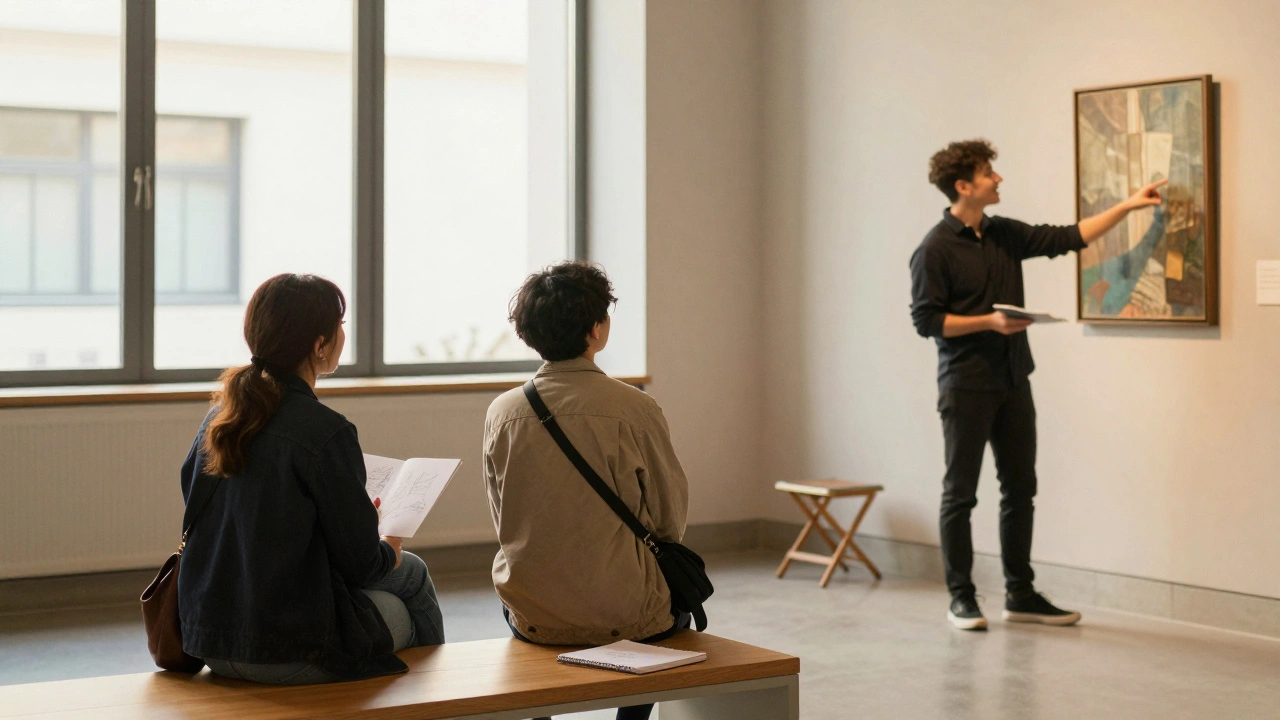
Not all museums treat sketchers the same. Here are a few that are especially welcoming:- The Louvre (Paris): Allows sketching in most permanent galleries. Offers free sketching kits at the entrance. The British Museum (London): No restrictions on pencils or small sketchbooks. Quiet corners near Egyptian artifacts.
- The Met (New York): Permits sketching in over 80% of galleries. Has dedicated sketching days on weekends.
- The Getty Center (Los Angeles): Free sketching workshops, outdoor benches, and natural light.
- The National Gallery (London): Welcomes sketchers with clear signage and quiet zones.
These places don’t just tolerate sketching-they celebrate it. Some even host monthly sketch nights with live models or artist talks.
Common Mistakes Sketchers Make
Even experienced sketchers mess up. Here are the top five mistakes-and how to avoid them:- Using a large sketchbook. Too big = too obtrusive. Stick to A5 or smaller.
- Sketching too close. Always keep at least 3 feet away. Use a ruler if you’re unsure.
- Not asking permission. If you’re in a temporary exhibit, assume it’s banned until proven otherwise.
- Bringing noisy supplies. Pencil sharpeners, eraser crumbs, metal clips-all can be loud. Use a kneaded eraser and keep pencils in a case.
- Staying too long in one spot. If a group gathers behind you, move. You’re not there to claim space.
One sketcher in Portland told me she once sat in front of a Van Gogh for 45 minutes. A guard came over and said, "You’re the only one who’s actually seen this painting." That’s the goal.
Can I sketch any artwork in a museum?
No. Some artworks are off-limits due to fragility, copyright, or loan agreements. Always check signs or ask staff. Temporary exhibits often ban sketching, even if the permanent collection allows it.
What’s the best pencil for museum sketching?
A 2H to 4H hard lead pencil is ideal. It glides smoothly, doesn’t smudge, and leaves no marks on floors or benches. Avoid soft pencils like 6B-they’re messy and often banned.
Can I use a tripod or easel?
Almost never. Tripods and full-size easels are banned in nearly all museums. They block walkways, create safety hazards, and are seen as commercial equipment. Stick to handheld sketchbooks and folding stools under 12 inches high.
Is it okay to take photos while sketching?
Yes, if the museum allows photography. But don’t rely on photos as a substitute for sketching. The point is to look closely and learn by hand. Many artists take photos after sketching, not during.
Do I need a permit to sketch in a museum?
No, for casual sketching. But if you’re sketching for commercial purposes-like selling your drawings or filming a tutorial-you’ll need a permit. Most museums require a separate application for professional artists or media crews.
Next Steps: Start Sketching the Right Way
Pick one museum near you. Check their website for sketching policies. Pack a small sketchbook, a 2H pencil, and a kneaded eraser. Go early. Find a quiet corner. Sit. Look. Draw. Don’t worry about making it perfect. Just make it yours.Art doesn’t live in frames. It lives in the way you see it. And sketching? That’s how you learn to see.