Shared Building Amenities for Galleries: Freight, Elevators, Docks
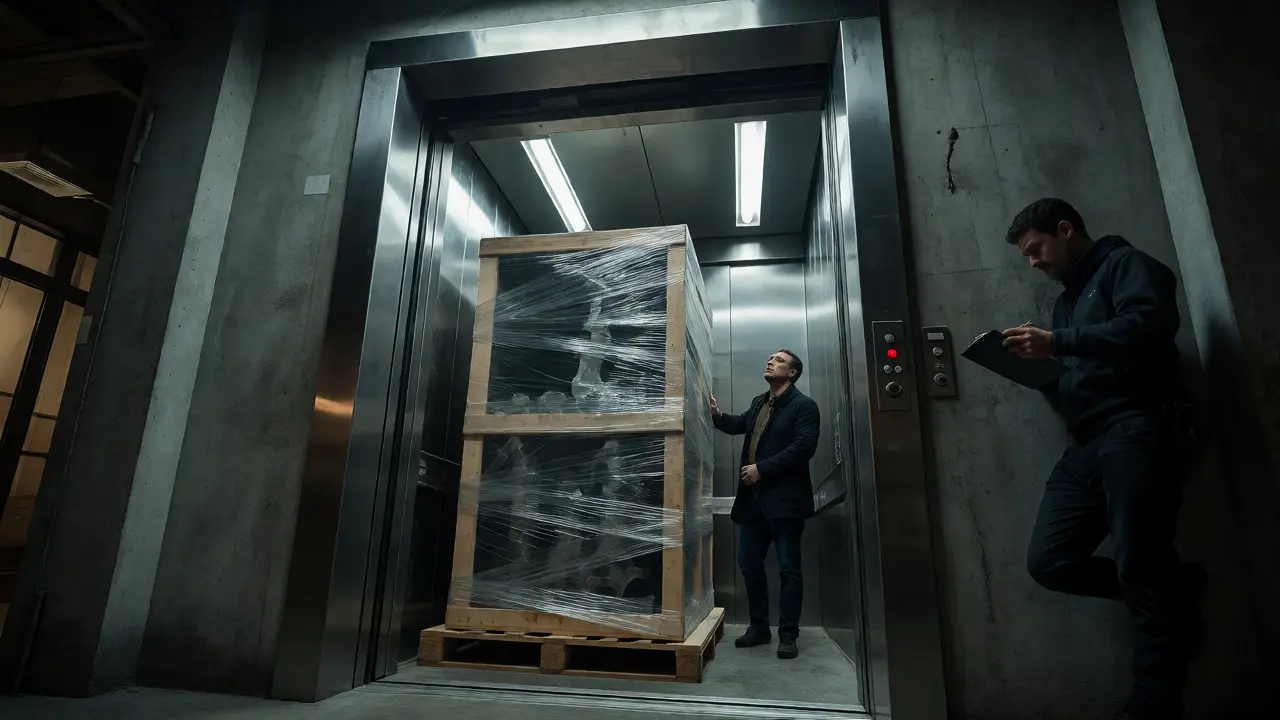
You just signed the lease. The natural light is perfect. The floor plans are open. You’re ready to hang your first show. Then the first delivery arrives. It’s a 10-foot steel sculpture from Berlin. The driver looks at your front door, then at you, and asks where he’s supposed to put it. That moment-when the logistical reality hits the artistic vision-is where most gallery owners realize that shared building amenities aren’t just nice-to-haves; they are the backbone of your operation.
If you’re looking at gallery real estate, you’re not just buying square footage. You’re buying access. Specifically, you’re buying access to three critical pieces of infrastructure: freight elevators, loading docks, and secure storage. In cities like Portland, New York, or Los Angeles, where historic buildings often house modern galleries, these features can make or break your ability to operate efficiently. Let’s break down what you actually need to look for before you sign on the dotted line.
The Freight Elevator: Your Gallery’s Lifeline
A standard passenger elevator is useless for an art gallery. You cannot fit a crate containing a large canvas through doors designed for people in suits. You need a freight elevator. But here’s the catch: not all freight elevators are created equal. When touring a space, don’t just ask if one exists. Ask about its dimensions and weight capacity.
I’ve seen too many deals fall apart because the elevator car was six inches too narrow for a standard shipping crate. A good rule of thumb? Measure the largest piece you expect to handle regularly. Add ten percent for padding and handling equipment. If your elevator car is smaller than that, you’ll be hiring cranes to hoist art up the side of the building-a costly and risky maneuver.
- Weight Capacity: Most older buildings have elevators rated for 2,000-3,000 pounds. Modern installations might go up to 5,000+. If you deal in heavy sculpture or bronze, check this number twice.
- Door Width and Height: Standard passenger doors are often 36 inches wide. You likely need 48 inches or more. Check if the doors are manual or automatic; manual sliding doors can be a nightmare when you’re trying to back a pallet jack into a tight cab.
- Schedule Restrictions: This is the silent killer. Many shared buildings restrict freight elevator use to specific hours (e.g., 9 AM to 5 PM) or require reservations weeks in advance. If you’re hosting an opening night and need to move a display stand at 7 PM, will you be stuck?
Pro tip: Test the ride. Go down to the lobby, call the freight elevator, and try to simulate moving a large object. Does it shake? Is there a ramp inside the car? These small details add up over years of operations.
Loading Docks: The First Point of Contact
If your gallery is on the ground floor, you might think you’re safe. But do you have a dedicated loading dock? Or worse, do you have street parking only?
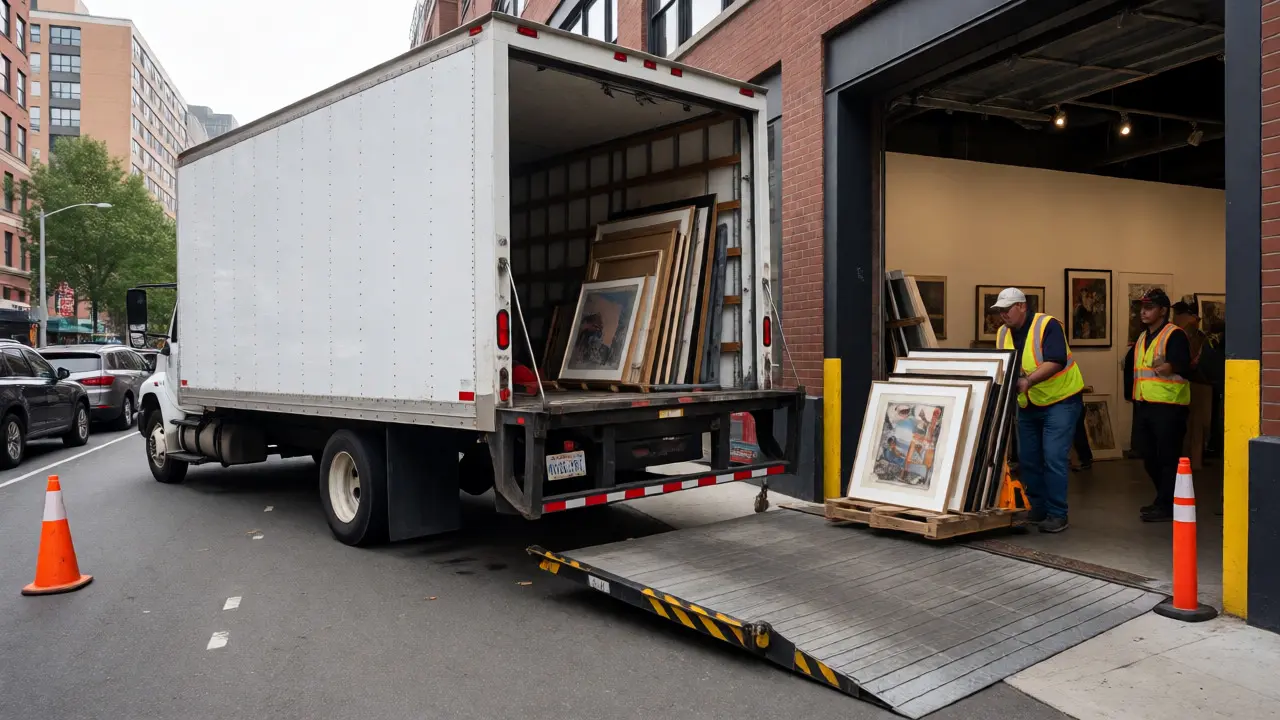
In dense urban areas, street parking for trucks is a logistical disaster. It requires permits, blocks traffic, and invites fines. A proper loading dock allows a truck to back in, level out with the building floor, and unload directly into your receiving area. Without this, you’re relying on hand trucks navigating curbs and sidewalks. Rain, snow, or uneven pavement can damage artwork instantly.
| Feature | Ideal Scenario | Common Reality | Risk Level |
|---|---|---|---|
| Dedicated Dock Space | Private, reserved for tenants | First-come, first-served | Low |
| Dock Leveler | Hydraulic, smooth transition | Manual plates or ramps | Medium |
| Truck Clearance | Accommodates 26ft box trucks | Only fits vans/pickups | High |
| Security Gate | Controlled access via fob/key | Open alleyway | High |
When I toured a potential space in the Pearl District last year, the landlord touted "easy loading." What he meant was that there was a wide sidewalk. We ended up negotiating for a temporary permit zone, but it was a headache every single time we received inventory. Always clarify who controls the dock schedule. Is it managed by the property manager? Do you need to book slots? Can other tenants block your access?
Shared Storage and Climate Control
Galleries rarely have enough wall space for everything they hold. You need off-site or on-site storage for works in transit, archived pieces, or backup stock. In a shared building, this often means accessing a communal basement or a separate warehouse unit within the same complex.
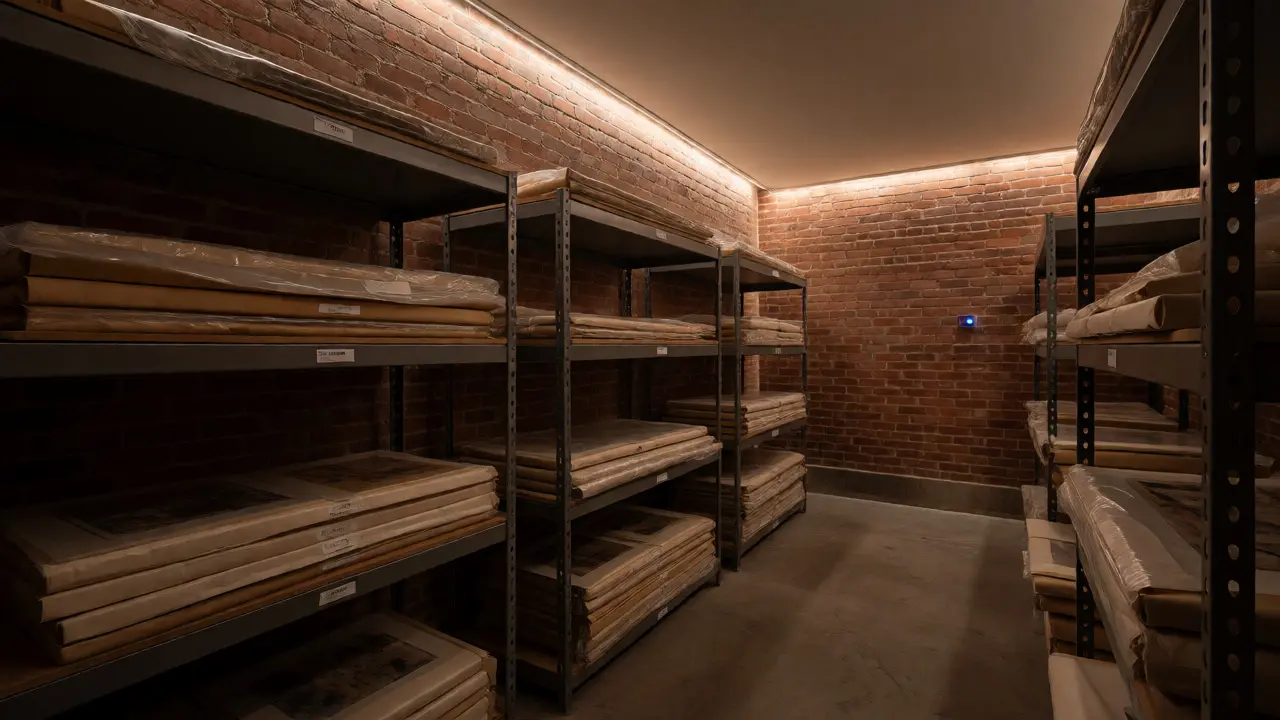
Here’s where things get tricky: climate control. Art hates fluctuating humidity and temperature. Paper warps, wood cracks, and varnish yellows. If your storage area is in the basement of an old brick building, is it dehumidified? Is it heated? I once visited a gallery whose "storage" was a concrete room in the sub-basement. In November, the humidity spiked to 70%. By February, they had mold issues on three unframed prints. It cost them thousands in restoration.
Ask specifically about:
- HVAC Systems: Are they independent or shared? If shared, does the system shut off on weekends? (Many office buildings do, which is bad news for art stored over a long holiday weekend.)
- Access Security: Who else has keys? Is there CCTV? For high-value collections, shared access can feel risky.
- Pest Control: Old buildings attract mice and insects. Ensure the management company has a proactive, not reactive, pest control plan.
Building Hours and Access Protocols
This is the part of the lease nobody reads closely until they’re locked out at 10 PM. Shared buildings often have strict security protocols. If your gallery hosts evening events, can guests enter freely after 6 PM? Or do they need a code? Can you leave a piece of art in the lobby overnight if you miss the freight elevator cutoff?
In some mixed-use buildings, residential tenants complain about noise. If you’re hosting a vernissage with music and crowds, are there sound restrictions? Conversely, if you’re in a pure commercial building, is the building fully closed on Sundays? If you want to offer private viewings on weekends, you need to know if you can even get into the building without paying overtime fees for a security guard to let you in.
Insurance and Liability in Shared Spaces
Who pays when the freight elevator breaks while carrying your $50,000 painting? Who covers the cost if a delivery truck damages the loading dock ramp?
Standard commercial leases usually place liability on the tenant for their own goods, but infrastructure failures are gray areas. Read the fine print regarding "common area maintenance" (CAM). If the elevator goes down for two weeks due to mechanical failure, do you get rent abatement? Probably not, unless you negotiate it upfront. Get a rider in your lease that specifies response times for essential services like elevators and HVAC.
Also, consider your insurance policy. Insurers will ask about building security. If the loading dock is unlocked at night, your premium might go up. Some insurers require specific alarm systems for art in transit or storage. Align your building’s capabilities with your insurance requirements before you move in.
Evaluating the Property Manager
Amenities are only as good as the people managing them. A pristine loading dock is useless if the gate is always broken. A spacious freight elevator is a burden if it’s constantly out of service for poor maintenance.
Talk to current tenants. Not the ones the landlord shows you-the ones hanging around the coffee machine. Ask them:
- How long does it take to get a repair request fixed?
- Is the freight elevator reliable?
- Do they respect gallery hours?
In my experience, responsive property managers are worth paying a slightly higher rent for. They understand that art logistics are time-sensitive. A manager who treats your shipment like a package delivery from Amazon will frustrate you daily. One who understands that a delayed crane lift costs you reputation and money will be your best ally.
Checklist Before Signing
Before you commit, run through this quick audit. If you can’t answer "yes" to these questions, keep looking or negotiate hard.
- Can a 26-foot box truck physically access the loading area?
- Does the freight elevator accommodate your largest anticipated crate dimensions?
- Are there clear, written rules for booking freight elevator time?
- Is the storage area climate-controlled and monitored?
- Do you have 24/7 access to the building for emergencies?
- Has the building recently upgraded its electrical capacity? (Lighting rigs draw power.)
Finding the right space is a balance between aesthetics and utility. The white walls matter, but so does the width of the hallway. Don’t let the romance of the location blind you to the mechanics of moving art. Because eventually, the art has to move.
What is the minimum size for a gallery freight elevator?
There is no universal minimum, but for most contemporary galleries, a car width of at least 48 inches and a height of 7 feet is recommended. However, you must measure based on your specific inventory. If you handle large sculptures, you may need industrial-sized elevators common in warehouses rather than standard commercial buildings.
Do I need a dedicated loading dock for a small gallery?
Not necessarily, but it significantly reduces risk and labor costs. If you rely on street parking, ensure the city allows commercial vehicle stops in front of your address. In many downtown zones, this requires expensive permits and limits delivery windows, which can disrupt installation schedules.
Who is responsible for elevator maintenance in a shared building?
Typically, the landlord or property management company is responsible for structural and mechanical maintenance of common areas, including elevators. However, tenants are often liable for damage caused by misuse. Clarify this in your lease to avoid disputes over repair costs after a heavy shipment.
Can I install my own climate control in shared storage?
Usually not independently. Shared spaces typically rely on central building HVAC. If the central system doesn't meet your needs, you may need to negotiate permission to install portable units or pay for supplemental cooling/heating. Check local fire codes, as adding electrical equipment to basements often requires inspection.
How do I handle deliveries if the building closes early?
You have three options: 1) Negotiate 24/7 key card access in your lease. 2) Hire a third-party logistics provider that handles after-hours delivery. 3) Schedule deliveries strictly during business hours. Option 1 is ideal but rare in older buildings; option 2 adds cost but ensures flexibility.