Risk Management for Gallery Events: Insurance and Waivers Explained

Hosting a gallery event sounds glamorous-art lovers, champagne, curated lighting, and quiet murmurs over abstract paintings. But behind the scenes, there’s a quiet storm of risk. A guest slips on a wet floor. A priceless sculpture gets bumped and cracks. Someone sues because they felt offended by a piece. These aren’t movie scenes. They’re real, documented incidents that have shut down galleries, drained budgets, and ruined reputations. If you’re organizing an art show, exhibit, or pop-up installation, skipping risk management isn’t bold-it’s reckless.
Why Gallery Events Are Riskier Than You Think
Most people assume galleries are low-risk because there’s no food, no loud music, and no crowds like at a music festival. But that’s the trap. Art events have unique dangers you won’t find elsewhere.- High-value items: A single painting can be worth more than a luxury car. A sculpture might cost $200,000. If it breaks, who pays?
- Delicate environments: Lighting, humidity, and temperature control are critical. A power outage or HVAC failure can ruin decades-old canvases.
- Public access: Unlike private collections, gallery events invite strangers. Kids run. Tourists lean. Volunteers misplace keys.
- Controversial content: Art that challenges norms can spark protests, vandalism, or legal claims of emotional distress.
- Third-party vendors: You’re not just hosting art-you’re hosting caterers, tech crews, security, and transport companies. Their mistakes become your liability.
A 2023 report from the American Alliance of Museums found that 37% of small galleries experienced at least one incident requiring financial compensation in the past two years. Half of those didn’t have insurance. The average payout? $42,000.
Insurance: What You Actually Need
Generic business insurance won’t cut it. You need policies built for art and public gatherings.Event Liability Insurance is your first line of defense. It covers bodily injury and property damage caused by your event. If someone trips over a cable and breaks their wrist, this pays their medical bills. If a guest knocks over a vase worth $15,000, it covers the replacement.
Artworks-in-Transit Insurance is non-negotiable if you’re borrowing or shipping pieces. Most lenders (private collectors, museums) require this. It covers damage or loss during transport, setup, and display-even if it’s your fault.
Professional Liability (Errors & Omissions) matters if you’re curating. If someone claims your exhibition misrepresents an artist’s intent or violates copyright, this policy defends you legally.
Umbrella Insurance kicks in when your primary policies max out. A $1 million liability policy might seem enough-until a lawsuit hits $2.5 million. Umbrella adds another $1-$5 million in coverage for under $500/year.
Don’t assume your venue’s insurance covers you. Most venues only protect their own property and structure. If you’re renting a warehouse, a church basement, or a pop-up space, you’re likely on your own.
Waivers: More Than Just a Signature
A waiver is not a magic shield. It’s a legal tool-and if done wrong, it’s worthless.Here’s what a real gallery waiver should include:
- Clear description of risks: Not just “you might get hurt.” List actual dangers: slippery floors, low-hanging wires, fragile objects, flashing lights, loud sounds, confined spaces.
- Voluntary participation: The signer must acknowledge they’re choosing to enter, not forced by a friend or employer.
- Release of liability for negligence: This is tricky. In most states, you can’t waive liability for gross negligence (like leaving a ladder unsecured). But you can waive it for ordinary risks-like a visitor bumping into a display.
- Consent to photography: Many galleries take photos for promotion. Include a line that guests agree to being photographed.
- Age and capacity: If minors attend, you need a parent or guardian’s signature. No exceptions.
Use a digital waiver system like Docusign a digital signature platform used by galleries to collect legally enforceable waivers before entry or SignNow a mobile-friendly e-signature service that allows galleries to collect waivers on tablets at the door. Paper waivers get lost. Digital ones are timestamped, stored securely, and can be pulled up in court.
And here’s the hard truth: waivers don’t stop lawsuits. They make them harder to win. If someone sues anyway, your waiver gives you a strong defense. Without it? You’re negotiating from zero.
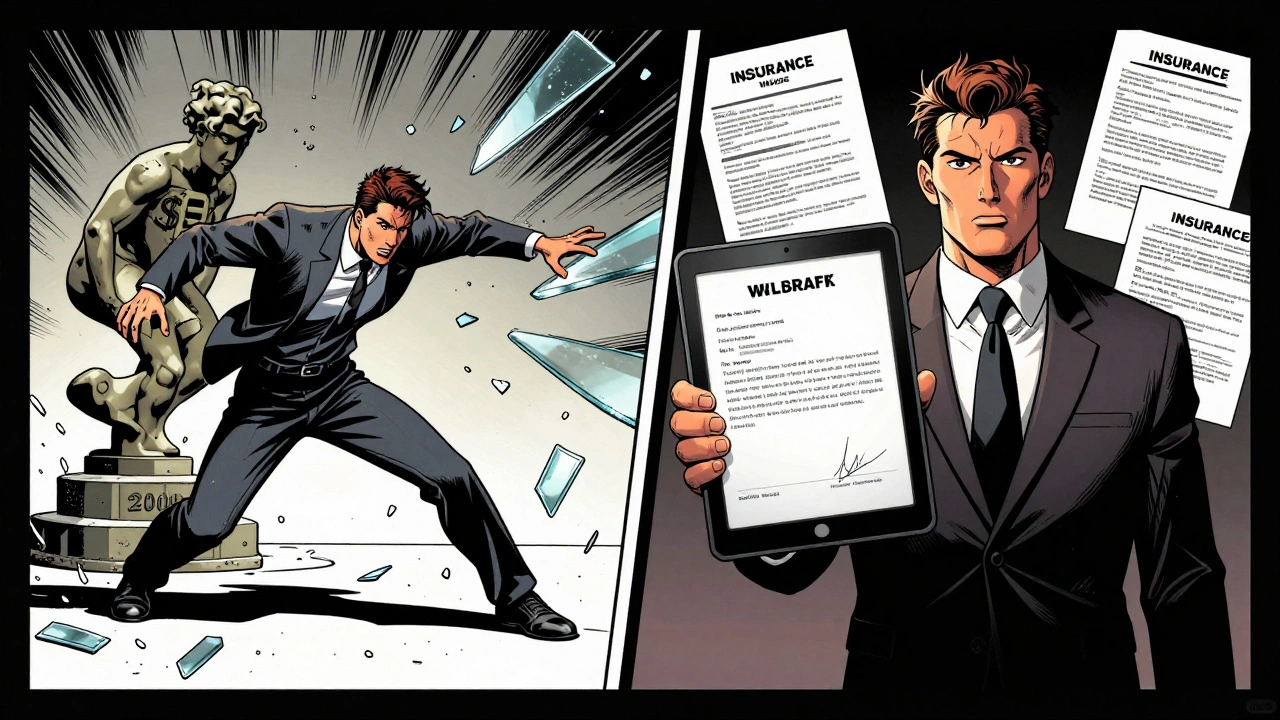
Real-World Scenarios: What Went Wrong
In 2024, a Portland gallery hosted a night-time exhibit using strobe lights. A visitor with undiagnosed epilepsy had a seizure and fell, breaking her arm. The gallery had liability insurance but no waiver. The insurance paid $68,000 in medical costs and legal fees. The gallery lost its next three funding grants because the incident made headlines. Another case: A collector lent a 19th-century watercolor to a pop-up gallery. The gallery didn’t have transit insurance. During setup, a staffer accidentally spilled water on it. The painting warped. The collector sued for $110,000. The gallery had to sell its entire inventory to cover it. These aren’t outliers. They’re textbook failures.What You Can Do Today
You don’t need a legal team. But you do need a checklist.- Get event liability insurance at least 30 days before opening. Shop through Arts Council a nonprofit organization that offers specialized insurance packages for galleries and cultural events or Hiscox a commercial insurer that provides tailored coverage for art exhibitions and cultural events.
- Create a waiver using a template from the Art Dealers Association of America a professional association that provides legal templates and guidelines for galleries hosting public events. Customize it for your event’s specific risks.
- Train staff to spot hazards: wet floors, overcrowded zones, unsecured displays. Assign one person as the safety lead.
- Document everything: Take photos of the space before setup. Record the condition of every artwork. Keep logs of who moved what.
- Require vendors to provide proof of their own insurance. Don’t accept a verbal promise.

Common Mistakes (And How to Avoid Them)
- Using a generic waiver from the internet. Templates don’t account for your specific venue, art, or audience. Always customize.
- Assuming your venue’s insurance covers you. Read the fine print. If it doesn’t mention “third-party events,” you’re not covered.
- Skipping transit insurance. Art moves more than you think. Even a 10-minute drive between storage and display can cause damage.
- Not training volunteers. A well-meaning volunteer can cause $50,000 in damage in five seconds. Brief them. Show them. Practice.
- Forgetting minors. If kids attend-even with parents-you need a signed waiver from a guardian. No waiver? No entry.
When Insurance Isn’t Enough
Sometimes, no policy can cover everything. That’s why proactive risk reduction matters more than paperwork.Install non-slip flooring near entrances. Use weighted bases for sculptures. Limit crowd density with timed entry. Keep emergency contact numbers posted. Have a first-aid kit. Train staff in basic trauma response.
Art is fragile. People are unpredictable. But your event doesn’t have to be.
Do I need insurance if my gallery event is free?
Yes. Even free events attract crowds, and accidents still happen. Liability insurance protects you from lawsuits, not just ticket sales. A guest slipping on a wet floor doesn’t care if admission was free. They still file a claim.
Can I use the same waiver for every event?
No. Each event has different risks. A candlelit poetry reading has different hazards than a high-tech VR art installation. Update your waiver for each show-change the risk list, adjust the language, and make sure it matches your setup.
What if a visitor damages an artwork on purpose?
A waiver won’t protect you from intentional acts. But it does help prove the visitor was warned about the risks. You’ll need to involve law enforcement. Your insurance may cover the damage, but you’ll likely have to pursue legal action against the individual to recover costs.
How much does gallery event insurance cost?
For a small event with under $100,000 in artwork and 100 guests, expect to pay between $300 and $800. Larger events with high-value pieces or outdoor venues can cost $2,000+. Always get quotes from at least two providers-prices vary widely.
Are waivers legally binding in all states?
Most states enforce waivers, but some, like Illinois and Louisiana, have stricter rules. Always have your waiver reviewed by a local attorney who understands your state’s laws. A waiver that works in Oregon might be unenforceable in New York.