Reviewing Performance Art: Capturing Ephemerality and Documentation
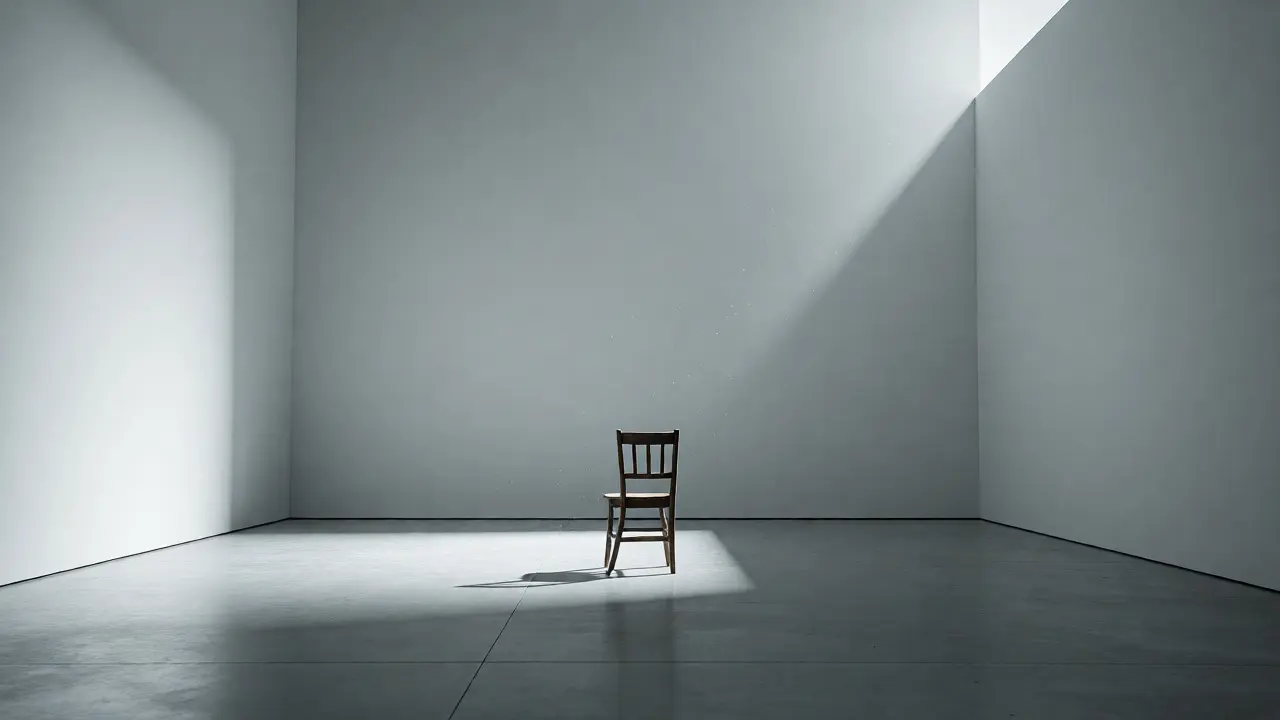
You are standing in a cold gallery space. The artist has been sitting on a wooden chair for four hours. They haven't moved. They haven't blinked. Your feet hurt, your phone is dead, and you’re wondering if this is profound or just boring. Then, suddenly, the artist stands up, walks out, and the piece ends. There is no object to buy, no canvas to hang, and no sculpture to photograph for your Instagram story. So, how do you write about it? How do you critique something that literally does not exist anymore?
Performance art is an artistic practice where the artist’s body and actions constitute the artwork itself, often occurring in real-time and disappearing once the action ceases. Unlike painting or sculpture, which leave behind tangible artifacts, performance art lives only in memory and record. This ephemerality creates a unique crisis for critics. You aren’t reviewing an object; you are reviewing an event. And events are slippery things.
The Crisis of Presence vs. Record
Here is the fundamental problem: most people who read your review will never see the performance. They weren’t there. They rely entirely on your words and whatever images or videos survive. This puts an immense burden on the critic. If you say the piece was "transcendent," but the video shows someone just standing there looking bored, your reader feels cheated. Who is lying? You or the camera?
Consider Marina Abramović's work, such as The Artist is Present, where she sat silently across from strangers for 736 hours at MoMA. The photographs show intense eye contact and tears. But they don’t capture the exhaustion, the smell of the crowd, the awkward silence, or the subtle shifts in energy over weeks. A photo is a snapshot; performance is a duration. When you review performance art, you have to bridge that gap. You have to explain why the time spent mattered more than the visual result.
This isn’t just about nostalgia. It’s about ontology. What *is* the artwork? Is it the script? The body? The audience reaction? Or the documentation? Most contemporary theorists argue that the documentation is a separate entity from the performance. The video is an artifact of the event, not the event itself. Your job is to help the reader understand what they missed by being absent, while acknowledging that their primary access point is the record.
Decoding the Ephemeral: What Are You Actually Reviewing?
When you sit down to write, stop asking "Was it good?" Start asking "What did it do?" Performance art is rarely about aesthetic beauty in the traditional sense. It’s about presence, risk, and interaction. To review it effectively, you need to break down the components that make up the experience.
- Duration: Did the length serve the concept? Was ten minutes enough, or did the fifth hour change the meaning entirely?
- Risk: Was there physical danger or emotional vulnerability? Did the artist push themselves to a breaking point?
- Audience Role: Were spectators passive observers or active participants? Did the crowd shape the outcome?
- Site Specificity: Did the location matter? Would this piece have worked in a white cube gallery, or did it require a subway station or a forest?
Take, for example, Tehching Hsieh's One Year Performance, where he lived inside a cage for 365 days. You can’t review the cage alone. You have to review the year. The documentation consists of one photograph taken every day at noon. These photos look nearly identical. But the accumulation of them tells a story of endurance, isolation, and the passage of time. If you only looked at one photo, you’d miss the point completely. Your review must convey the weight of that accumulation.
The Ethics of Documentation
Who gets to decide how a performance is remembered? Usually, it’s the institution hosting it. Museums like the Tate Modern or MoMA invest heavily in recording performances. They hire professional videographers, set up lighting, and curate the angle. But this sanitizes the chaos. Real life is messy. Cameras are static.
There is a growing debate about whether high-quality documentation kills the spirit of performance art. Some artists refuse to allow photography during their shows. They want the experience to remain unrepeatable. Others embrace the digital age, posting clips on TikTok or Instagram Reels. This democratizes access but fragments the narrative. A 15-second clip of a screaming match might go viral, but it loses the context of the preceding three hours of silence.
As a critic, you should be skeptical of official records. Ask yourself: Whose perspective is this video taking? Is it shot from the back of the room, showing the scale? Or is it a close-up, focusing on facial expressions? The choice of lens dictates the interpretation. If the artist wanted to emphasize community, but the video focuses on individual reactions, the documentation has betrayed the intent. Point this out in your review.
Writing Techniques for Invisible Art
So, how do you write sentences that make a reader feel the heat of a stage light or the sting of a slap? You need sensory language. Avoid abstract adjectives like "interesting" or "powerful." Instead, describe the mechanics.
Don’t say: "The performance was intense." Do say: "The artist held their breath until their face turned purple, creating a vacuum of sound so deep I could hear my own heartbeat accelerating."
Use verbs that imply movement and change. Performance art is kinetic. Even when nothing moves, the tension shifts. Describe the air pressure, the temperature, the discomfort of the floor. Bring the reader into their body. If the artist was naked, don’t just mention nudity; describe the vulnerability of skin against cold air. If they were shouting, describe the strain in their voice cracking.
Also, acknowledge your own bias. You are part of the audience. Your discomfort, your boredom, your confusion-these are data points. In participatory pieces, the audience’s reaction is often part of the artwork. If everyone else laughed and you felt uneasy, that contrast is worth exploring. Did the piece succeed in making you uncomfortable? That might be the goal.
Comparing Documentation Methods
Not all records are created equal. Understanding the strengths and weaknesses of different documentation types helps you evaluate the legacy of a piece.
| Method | Strengths | Weaknesses | Best For |
|---|---|---|---|
| Video Recording | Captures audio, movement, and sequence | Lacks spatial depth; fixed perspective | Narrative-driven pieces with clear beginnings and ends |
| Photography | Highlights key moments; easy to share | Freezes time; removes context and sound | Visual spectacle or iconic poses |
| Written Score/Script | Preserves intent and instructions | Abstract; requires imagination to visualize | Conceptual or repeatable works (e.g., Fluxus) |
| Audience Testimony | Multiple perspectives; captures subjective impact | Unreliable memory; biased | Participatory or chaotic events |
Notice how each method distorts reality in a specific way. Video gives you time but takes away space. Photos give you clarity but take away duration. As a reviewer, you should ideally consult multiple sources. Watch the video, read the artist statement, and talk to other attendees. Synthesize these views to build a fuller picture.
The Future of Archiving Live Art
We are moving toward an era of digital permanence. Virtual Reality (VR) recordings are starting to allow viewers to "stand" in the middle of a recorded performance. Imagine putting on a headset and seeing the artist walk right past you. Does this solve the problem of ephemerality? Not quite. VR is still a mediated experience. It lacks the shared social pressure of being in a room with strangers.
Moreover, digital files rot. Hard drives fail. Formats become obsolete. We lose more digital art history than we preserve. Physical archives-costumes, props, scripts-survive better, but they are expensive to maintain. Institutions like the Perec Archive in France or the Live Art Development Agency in London are fighting this battle daily.
For the critic, this means your review becomes part of the archive. Your words are one of the few things that will last longer than the hard drive containing the video. Write with care. Be precise. Capture the nuance that the camera misses. Because fifty years from now, when the servers crash and the tapes degrade, your paragraph describing the smell of sweat and the sound of applause might be the only thing left to prove it happened.
Why is documenting performance art considered controversial?
Documentation is controversial because it transforms a living, breathing event into a static object. Many artists believe that recording a performance changes its nature, removing the element of risk and uniqueness. Once a performance is documented, it can be consumed repeatedly, losing the urgency of the "now." Additionally, the person controlling the camera chooses what is seen, potentially altering the artist's intended message.
Can a photograph fully represent a performance art piece?
No, a photograph cannot fully represent a performance art piece. Photography freezes a single moment, stripping away the duration, sound, smell, and spatial context that are crucial to the experience. While a photo can capture a powerful visual symbol, it fails to convey the temporal progression or the emotional arc of the performance. It serves as evidence that the event occurred, rather than a replica of the experience itself.
How should a critic handle a performance that relies on audience participation?
A critic should analyze the dynamic between the artist and the audience. Since the audience shapes the outcome, the critic must describe how the crowd reacted, how the artist responded to those reactions, and whether the participation felt forced or organic. It is important to distinguish between the artist's intent and the actual collective behavior, noting any improvisations or unexpected interactions that defined the specific instance of the performance.
Is video documentation better than written scores for performance art?
Neither is inherently better; they serve different purposes. Video documentation preserves the sensory details, timing, and atmosphere, making it useful for understanding the experiential aspect. Written scores preserve the conceptual framework and instructions, allowing for reinterpretation and recreation by other artists. A comprehensive archive often needs both to provide a complete historical record of the work.
Does the quality of documentation affect the value of performance art?
Yes, high-quality documentation can significantly increase the visibility and perceived value of performance art. Since the original work is gone, the documentation acts as the primary commodity for museums, collectors, and historians. Well-produced videos and professional photographs make the work more accessible to institutions and audiences, thereby enhancing the artist's legacy and marketability, even though the documentation is technically distinct from the artwork.