Relational Aesthetics: How Social Interaction Became Contemporary Art
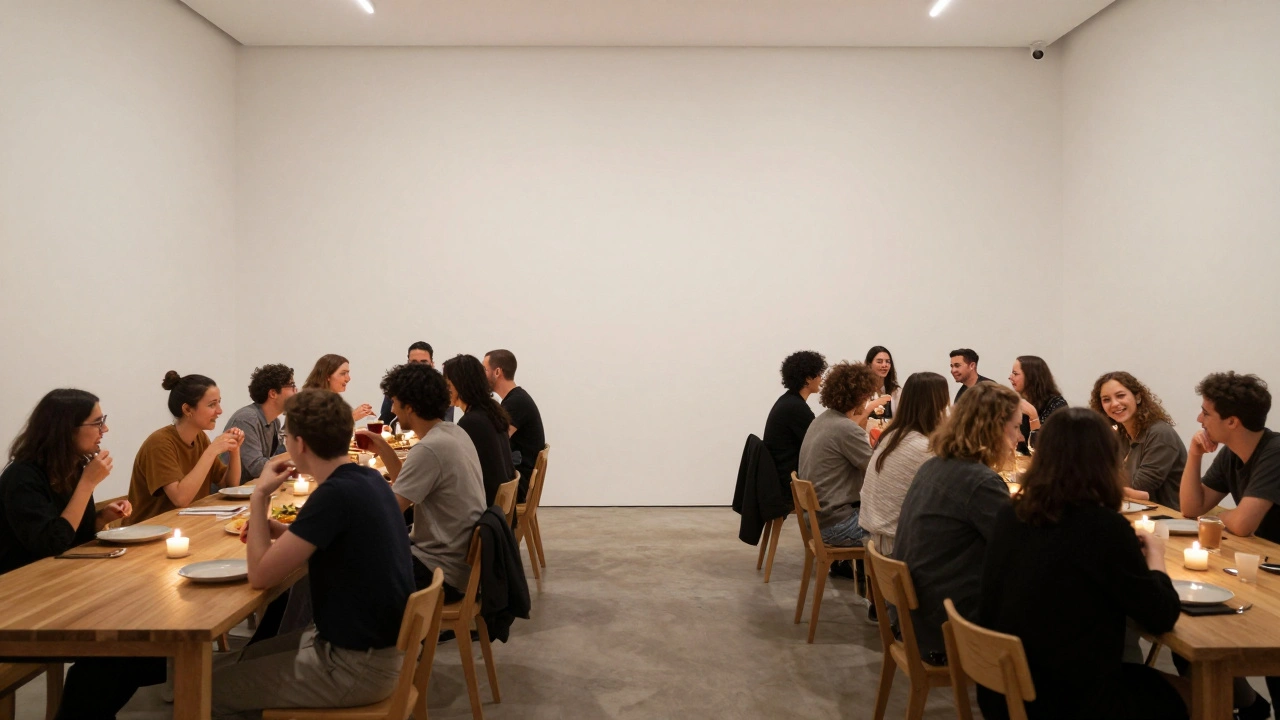
You walk into a gallery. There are no paintings on the walls. No sculptures on pedestals. Instead, you find people sharing a meal, playing chess, or talking in circles. It feels less like an exhibition and more like a community center. This isn't a mistake. It's Relational Aesthetics, a movement that argues art is not about objects, but about the human connections we create.
In the early 1990s, the art world was obsessed with market value and static objects. Then came a shift. Critics and artists began asking: What if the artwork wasn't the thing you look at, but the experience you live through? This question sparked a revolution that changed how we understand museums, galleries, and even our own social habits.
The Origin Story: From Paris to the World
To understand where this comes from, we have to look back at 1998. French curator Nicolas Bourriaud coined the term "Relational Aesthetics" in his seminal essay of the same name. He wasn't just describing a style; he was defining a new logic for art. Bourriaud argued that contemporary art should be judged by its interpersonal relations and their social context, rather than by its independent and private display.
Bourriaud’s idea was simple but radical. He said art is no longer a model of the world, but a real fragment of society, complete with all the questions and doubts it contains. Think about it. Most traditional art asks you to step back and observe. Relational art asks you to step in and participate. You become part of the work. Your conversation, your laugh, your awkward silence-these are the brushstrokes.
This theory emerged during a time when globalization was accelerating. People were feeling isolated despite being more connected than ever. Artists started creating spaces where genuine interaction could happen, offering a temporary escape from the pressures of the capitalist workplace. These weren't just parties; they were political acts disguised as social gatherings.
Key Principles of Relational Art
If you want to spot relational art, you need to look for specific traits. It doesn't always look like "art" in the traditional sense. Here is what defines it:
- Interactivity: The viewer must do something. Passive observation is not enough.
- Social Context: The work exists within a specific social environment, often addressing issues like isolation, community, or labor.
- Temporality: The art happens in real-time. Once the event ends, the art changes or disappears.
- Micro-utopias: Bourriaud described these works as creating small, idealized societies within the gallery walls.
The goal isn't to produce a commodity you can buy and hang on your wall. The goal is to produce a moment of connection. If you leave the room feeling slightly more connected to the person next to you, the artist has succeeded. This shifts the power dynamic entirely. The audience is no longer a consumer; they are a co-creator.
Iconic Examples That Defined the Movement
Theory is one thing, but seeing it in action makes it click. Several artists became central figures in this movement, creating works that are now studied in art schools worldwide.
Consider Rirkrit Tiravanija. In 1992, he set up a long table in a New York gallery and cooked Thai food for visitors. He didn't paint a picture of rice and curry. He served it. For hours, strangers sat together, ate, and talked. The artwork wasn't the food; it was the atmosphere of hospitality and the relationships formed around that table. Tiravanija showed us that cooking could be a high-art performance if it fostered genuine human contact.
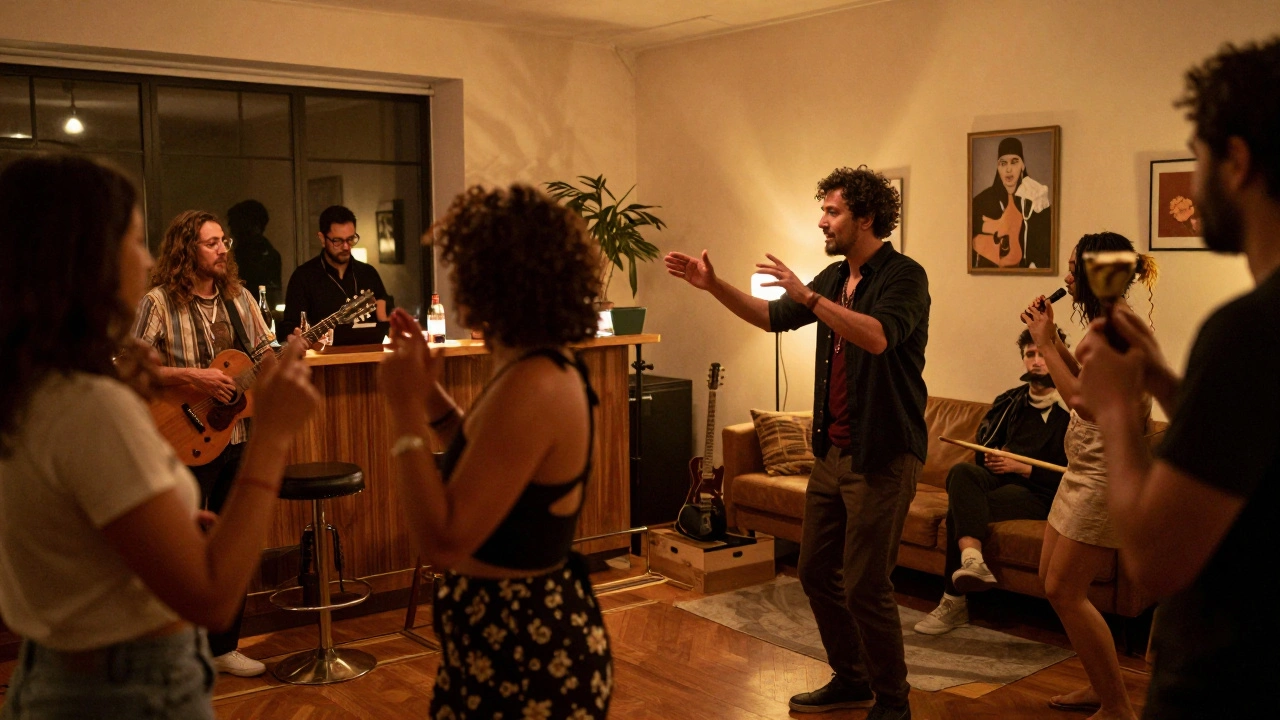
Then there is Lia Prunier and her project Le Chat Noir. She created a space where visitors could play music, drink, and dance. It functioned like a cabaret, blurring the line between a nightclub and an art installation. The rules were loose, but the presence of the artist as a host was crucial. She facilitated the social glue that held the experience together.
Philippe Descola also contributed significantly, though perhaps less visibly to the public eye. His work often involved creating environments that forced viewers to confront their relationship with nature and each other. By removing the barriers between observer and observed, these artists challenged the elitism of the traditional museum.
| Feature | Traditional Art | Relational Art |
|---|---|---|
| Primary Focus | Visual object (painting, sculpture) | Human interaction and experience |
| Viewer Role | Passive observer | Active participant/co-creator |
| Duration | Permanent (static) | Temporary (ephemeral) |
| Value Source | Aesthetic beauty, rarity | Social utility, emotional impact |
| Space | White cube gallery | Community hub, domestic setting |
Criticism and Controversy
Not everyone loved this idea. In fact, some critics argued that Relational Aesthetics was naive. They pointed out that these "micro-utopias" were still funded by wealthy institutions and attended by mostly privileged audiences. Could a shared meal really solve the deep structural problems of society?
Cultural theorist Claire Bishop offered a sharp critique. She argued that many relational works prioritized harmony over conflict. By focusing on pleasant interactions, artists might be ignoring the difficult, messy realities of political life. She suggested that art should sometimes provoke discomfort rather than just comfort. This debate forced the movement to evolve. Later iterations of social practice art became more critical, addressing issues like inequality, migration, and environmental crisis head-on.
Another criticism focused on documentation. If the art is an ephemeral experience, how do you sell it? Galleries and collectors struggled with this. You can't put a conversation in a frame. This led to a rise in video documentation, photographs, and textual records, which themselves became collectible artifacts. But does recording the party capture the spirit of the gathering? Many argue it misses the point entirely.

Relational Aesthetics in the Digital Age
Fast forward to today. We live in a world dominated by screens. Social media promises connection, but often delivers isolation. Does Relational Aesthetics still hold up? Absolutely. In fact, it's more relevant than ever.
Contemporary artists are adapting the principles of Bourriaud to the digital realm. Think about online communities, virtual reality spaces, and collaborative apps. Artists like Hito Steyerl explore how digital circulation affects our perception of truth and community. While the medium has changed, the core desire remains the same: to find genuine human contact in a fragmented world.
We see this in interactive web projects where users contribute content to build a collective narrative. Or in augmented reality installations that require multiple people to collaborate to unlock experiences. The "white cube" gallery is no longer the only stage. The internet itself has become a vast, chaotic relational space. Artists are learning to curate attention and interaction in this noisy environment, turning algorithms into tools for social engagement.
However, the challenge is deeper now. Online interactions can be performative and superficial. Relational art in the digital age must fight against the tendency toward "likes" and metrics. It strives for depth, requiring users to invest time and vulnerability, much like the dinner parties of the 1990s.
Why It Matters to You
You don't need to be an art critic to appreciate Relational Aesthetics. It speaks to a basic human need: the desire to connect. In a city like Portland, where community gardens and local cooperatives thrive, you can see the spirit of this movement outside the gallery walls. It’s about reclaiming public space for human interaction.
When you attend an open mic night, join a book club, or simply strike up a conversation with a stranger, you are engaging in the same impulse that drives relational artists. The difference is intentionality. Relational art makes the act of connecting visible and valuable. It reminds us that our relationships are not just background noise to our lives; they are the main event.
This perspective changes how we consume culture. We start looking for experiences that engage us, not just entertain us. We seek out spaces that allow for dialogue, collaboration, and empathy. In doing so, we support a kind of art that is alive, breathing, and deeply human.
Who invented Relational Aesthetics?
The term was coined by French curator and theorist Nicolas Bourriaud in 1998. However, the practices themselves were already emerging among various artists in the late 1980s and early 1990s, including Rirkrit Tiravanija and Liam Gillick.
Is Relational Aesthetics still relevant today?
Yes, it is highly relevant. In an increasingly digital and isolated world, the emphasis on genuine human connection resonates strongly. Contemporary artists continue to use these principles to address social issues, often integrating digital tools to facilitate interaction.
What is the difference between Relational Aesthetics and Performance Art?
Performance art typically focuses on the actions of the artist as the primary subject. Relational Aesthetics focuses on the interactions between the participants. In relational art, the artist often acts as a facilitator or host, while the audience creates the meaning through their social exchanges.
Can Relational Art be sold?
It is difficult because the core experience is ephemeral. Galleries often sell documentation, such as videos, photographs, or scripts, along with certificates of authenticity. Some collectors purchase the materials used in the installation, but the true "value" lies in the social experience, which cannot be owned.
What are some famous examples of Relational Art?
Key examples include Rirkrit Tiravanija's cooking performances, Liam Gillick's abstract social structures, and Philippe Descola's participatory installations. These works prioritize dialogue, shared meals, and collaborative decision-making over visual spectacle.