Red Flags When Buying Art Online: How to Spot and Avoid Scams
Quick Guide to Avoiding Art Scams
- Urgency is a trap: If a seller pressures you to pay "now" before someone else grabs it, walk away.
- Verify the Provenance: Always ask for the paper trail of ownership.
- Avoid Unusual Payments: Never use wire transfers, crypto, or "friends and family" payments for high-value art.
- Reverse Image Search: Check if the artwork appears on other sites under different names.
- Request Raw Photos: Ask for a photo of the art next to a piece of paper with today's date and your name.
The Danger of the "Too Good to Be True" Price
Price is the first and most obvious red flag. In the art world, value is driven by scarcity, artist reputation, and demand. When you see a piece that normally sells for $10,000 listed for $1,500, your internal alarm should go off. Scammers use low prices to trigger an emotional response, making you feel like you've found a hidden gem. This "bargain hunter's high" often blinds buyers to other warning signs. Real galleries and reputable dealers rarely slash prices by 80% without a very specific, documented reason-like a massive estate liquidation or a damaged piece. If the price is drastically lower than the market average on sites like Artnet or Sotheby's, you aren't finding a deal; you're likely looking at a forgery or a non-existent item. High-end art doesn't behave like fast fashion. There are no "flash sales" on authentic masterpieces.The Provenance Gap and Authentication Lies
One of the most critical concepts in collecting is Provenance, which is the documented history of an artwork's ownership from the moment it left the artist's studio to the present day. It is the art world's version of a title for a car. If a seller cannot provide a clear chain of ownership, the piece is a gamble.
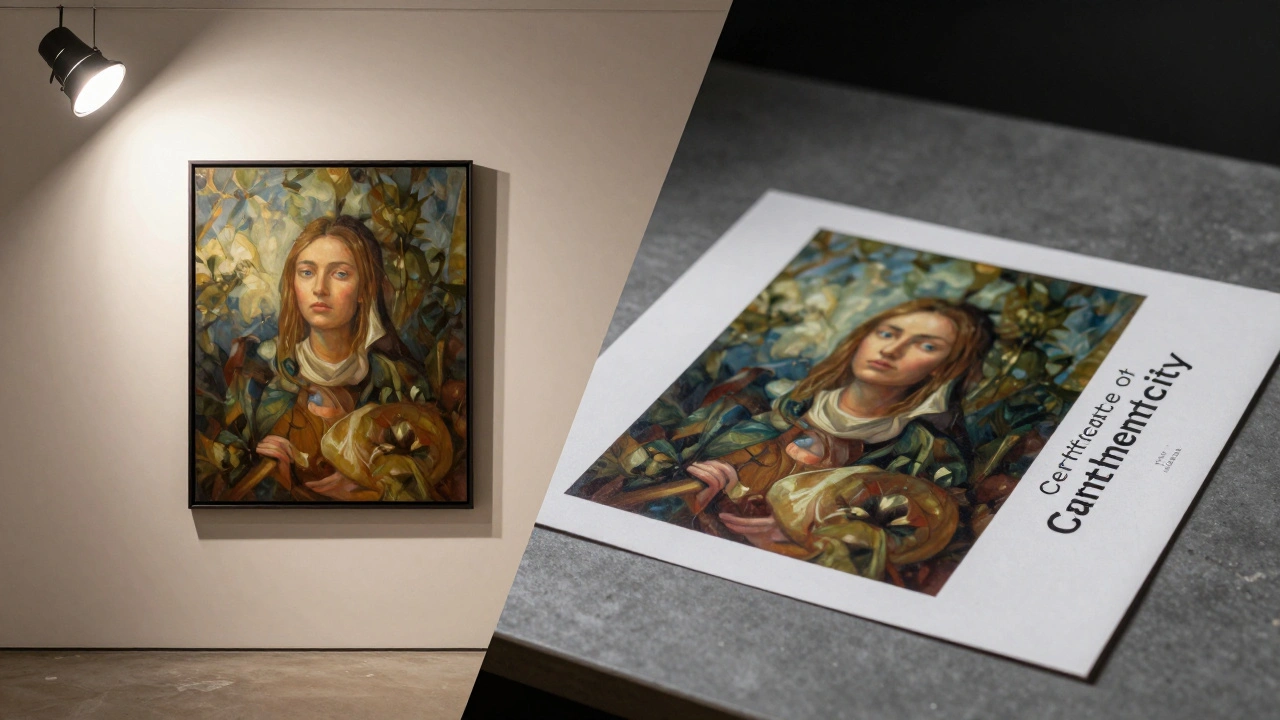
Scammers often use vague language to hand-wave away a lack of documentation. Watch out for phrases like "from a private collection in Europe" or "inherited from a distant relative" without any accompanying bills of sale, exhibition catalogs, or gallery stickers on the back of the frame. A legitimate seller knows that provenance is everything. They will be proud to show you the paperwork because it adds value to the piece. Be wary of "Certificates of Authenticity" (COA) that look like they were made in Microsoft Word. A COA is only as good as the person signing it. If the certificate comes from a company you've never heard of, or if the "expert" listed doesn't have a verifiable track record in that specific artist's work, the piece of paper is essentially scrap.Analyzing the Seller's Digital Footprint
Before sending a dime, investigate the entity selling the work. Whether it's a Online Art Gallery or an independent artist on Instagram, their digital presence should be consistent. Check their social media for "engagement pods"-where a thousand bots leave generic comments like "Amazing!" or "Love this!" but no real conversations are happening.
Look for a physical address. A gallery that only has a PO Box or a generic contact form without a location is a major red flag. Use Google Street View to see if the address they provide actually looks like a gallery or just a residential apartment complex. If they claim to be a prestigious gallery in New York but their website was created three weeks ago using a free template, you are likely dealing with a shell site designed to harvest payments.| Feature | Reputable Seller | Red Flag Seller |
|---|---|---|
| Payment Method | Credit Card, Escrow, Bank Transfer | Zelle, Crypto, Western Union |
| Communication | Patient, detailed, professional | Aggressive, urgent, pushy |
| Documentation | Detailed provenance, verified COA | Vague claims, generic certificates |
| Image Quality | Multiple angles, high-res, detail shots | Only one or two stock-like photos |
| History | Years of searchable presence | Account created recently |
Payment Traps and the "Insurance' Scam
Payment is where the scam actually happens. Legitimate businesses use payment processors that offer some level of protection. If a seller insists on Wire Transfers or platforms like Zelle and Venmo (using the "Friends and Family" option), you have zero recourse once the money is gone. These methods are essentially sending cash in an envelope; once it's sent, it's gone. A common advanced tactic is the "Shipping Insurance Scam." After you've agreed to the price, the seller tells you the art is too valuable for standard shipping. They claim you need to pay an extra $500 for a "specialized art insurance policy" or a "custom crate." They will tell you this fee is refundable upon delivery. This is a lie. They are simply milking you for more money before they disappear entirely. Always insist on using a service with buyer protection. If the seller refuses to use a secure platform because of "high fees," remind them that the security of the transaction is more important than a 3% processing fee. If they still refuse, stop talking to them.The Technical Side: Spotting Digital Forgeries
In the age of AI and high-quality printing, "original" art can be faked convincingly. One of the best tools at your disposal is the Reverse Image Search. Upload the artwork's photo to Google Images or TinEye. If the same painting appears on five different websites, each claiming to be the sole owner of the piece, you've found a scam. Often, fraudsters steal images from legitimate galleries in Europe or Asia and list them as their own in the US. Another trick is to request "contextual photos." Ask the seller to send a photo of the painting with a handwritten note next to it containing your name and today's date. If they make excuses-saying the painting is already packed or they are out of the office-they probably don't actually have the artwork. A real seller will spend 30 seconds taking a photo to secure a multi-thousand dollar sale.
Dealing with "Art Flippers" and Market Manipulation
Beyond outright scams, there is the risk of buying into a manufactured bubble. Some sellers engage in "shill bidding" or art flipping, where they artificially inflate the price of a mediocre artist by pretending there is huge demand. While not a criminal scam in the same sense as theft, it can lead you to overpay for work that has no actual resale value. To avoid this, look for the artist's work in Museum Collections or reputable public galleries. If an artist is "the next big thing" but has never been exhibited in a physical space or reviewed by a professional critic, be cautious. True value in art is usually validated by a network of curators, historians, and established collectors, not just a high follower count on Instagram.How can I tell if a Certificate of Authenticity is fake?
Check who issued the certificate. If it's from a generic "Authentication Board" without a physical address or a known expert's signature, it's likely worthless. A real COA usually includes a detailed description of the work, a high-resolution photo of the piece, and is signed by the artist, their estate, or a recognized authority on that specific artist's oeuvre.
Is it safe to buy art through Instagram or TikTok?
It can be, but the risk is much higher. These platforms are not marketplaces and offer no buyer protection. Only buy from artists you have researched thoroughly. Always move the transaction to a secure payment processor (like Shopify or PayPal Goods & Services) and never send money via wire transfer or app-based "friends" payments.
What should I do if I think I've been scammed?
Immediately contact your bank or credit card company to dispute the charge. Report the seller to the platform where you found them (e.g., Instagram, eBay). File a report with the IC3 (Internet Crime Complaint Center) if you are in the US, and keep all screenshots of your conversations and the original listing as evidence.
Why is provenance so important in art collecting?
Provenance proves that the work is authentic and was acquired legally. Without it, you might accidentally buy stolen art or a forgery. A strong provenance history increases the work's market value and makes it easier to sell in the future through reputable auction houses.
Can a reverse image search actually prove an artwork is a scam?
Often, yes. If you find the exact same image on a different site with a different seller's name, it's a clear sign the seller is using stolen imagery. While it doesn't prove the art is a fake (they might just be an unauthorized dealer), it proves the seller is dishonest about their relationship with the piece.