Quarterly and Annual Gallery Performance Reviews: How to Measure Success and Track Growth

Running an art gallery isn’t just about hanging paintings and pouring wine at openings. If you’re not measuring what matters, you’re guessing. And guessing won’t keep your gallery open next year. That’s where quarterly and annual gallery performance reviews come in. These aren’t fancy boardroom exercises. They’re practical check-ins that tell you what’s working, what’s not, and where to put your next dollar.
Why Performance Reviews Matter More Than You Think
Most galleries track sales. That’s it. But sales alone don’t tell the whole story. A $50,000 sale might look great, but if it came from one buyer who never returns, and you spent $12,000 on marketing to get them there, you’re burning cash. Meanwhile, a $12,000 sale from a collector who buys twice a year and refers two friends? That’s a real asset.
Without structured reviews, you’re flying blind. You might think your summer show was a hit because 200 people showed up. But if only 12 bought anything, and 8 of them were friends of the artist, you didn’t build an audience-you threw a party.
Quarterly reviews help you catch problems early. Annual reviews help you plan for the future. Together, they turn guesswork into strategy.
What to Track: The 7 Core Metrics
You don’t need a dozen spreadsheets. Just seven numbers. Track these every quarter, then compare them year-over-year.
- Sales revenue - Total from all sales, including commissions and private placements. Don’t include donations or event fees.
- Average transaction value - Total sales divided by number of transactions. If this drops, you’re selling more low-priced items or losing high-end buyers.
- Customer retention rate - How many buyers returned to purchase again within 12 months? If it’s below 35%, your collector base isn’t sticking.
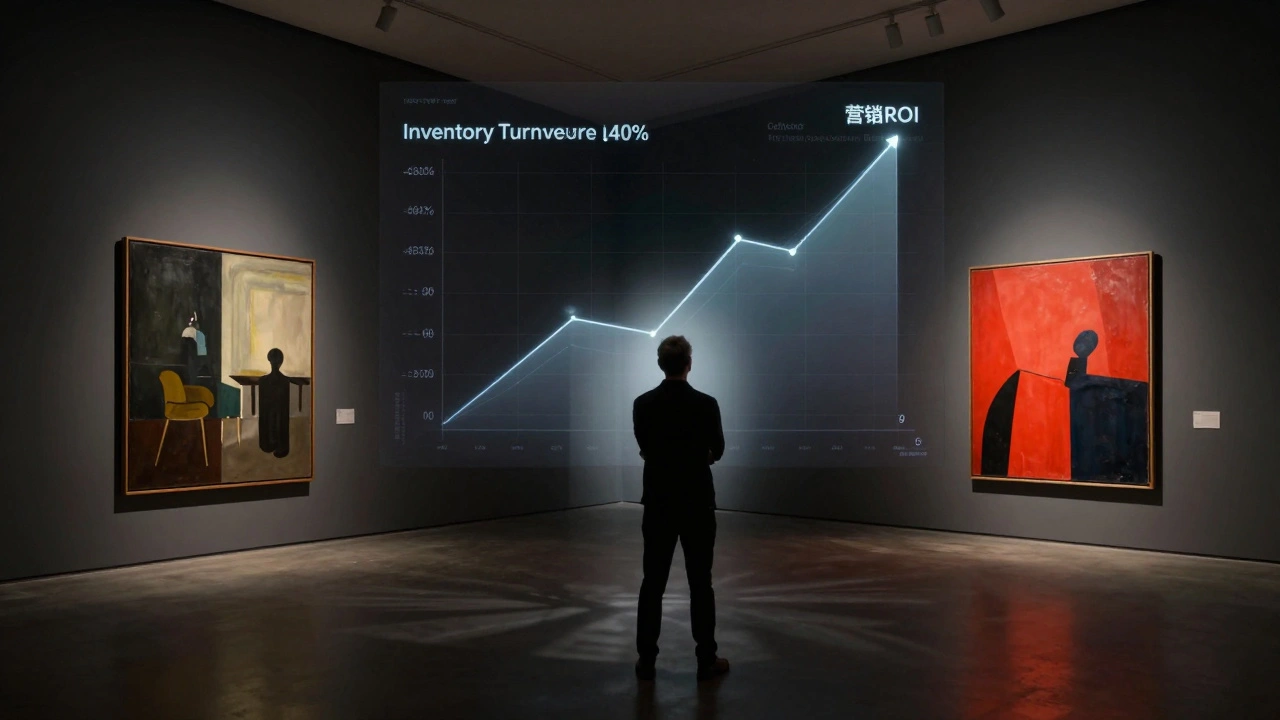
- Inventory turnover rate - How many months does it take to sell 80% of your active inventory? Above 8 months? You’re overstocked. Below 3? You’re understocked.
- Marketing ROI - (Revenue from a campaign - cost of campaign) / cost of campaign. If your Instagram ad cost $2,000 and brought in $3,500 in sales, your ROI is 75%. Anything under 50% needs rethinking.
- Foot traffic vs. conversion - How many visitors came through the door? How many bought? A 5% conversion rate is solid. Below 2%? Your display, pricing, or staff training needs work.
- Artist retention rate - How many artists you represented last year are still with you? If you lose more than 20% annually, your relationship model is broken.
These aren’t vanity metrics. They’re survival metrics. One gallery in Portland cut their inventory turnover from 9 months to 4 months in a year by using just these numbers. They stopped buying art they couldn’t sell in six months. Revenue went up 40%.
How to Run a Quarterly Review
Quarterly reviews are quick. No more than 90 minutes. Do them right after the end of each quarter. Here’s how:
- Gather data - Pull sales reports, email open rates, social media engagement, and visitor logs. Use your CRM or even a simple Google Sheet.
- Compare to last quarter - What changed? Did sales dip? Did foot traffic spike? Why?
- Ask three questions:
- What did we do well this quarter?
- What didn’t work?
- What’s one thing we’ll change next quarter?
- Assign one action - Don’t make a list of ten. Pick one. Example: "Switch from Facebook ads to targeted Instagram Reels for under-40 collectors."
That’s it. No slides. No jargon. Just clarity.

Annual Review: The Big Picture
Annual reviews are where you decide if you’re growing-or just surviving. This is your strategic reset.
Start with the same seven metrics, but look at year-over-year trends. Then add three deeper dives:
- Artist performance - Which artists sold the most? Which had the highest resale value? Which didn’t sell a single piece? Don’t be polite. If an artist hasn’t moved inventory in 18 months, it’s time to part ways.
- Collector segmentation - Group buyers by purchase frequency and value. Are you relying on 5% of your buyers for 60% of revenue? That’s risky. Start building a middle tier.
- Operational costs - Rent, insurance, staff salaries, utilities, marketing. Did costs rise faster than revenue? If so, you need to adjust pricing, reduce overhead, or both.
One gallery in Chicago used their annual review to realize they were spending $18,000 a year on art shipping alone-mostly for artists who rarely sold. They cut 11 artists and redirected that money into local collector events. Sales from new buyers increased by 31% the next year.
Tools That Actually Work
You don’t need expensive software. But you do need something reliable.
- Airtable - Great for tracking inventory, sales, and artist contracts in one place. Free plan works for small galleries.
- Google Sheets + Data Studio - Build your own dashboard. Connect sales data, social metrics, and email campaigns. It’s free and customizable.
- CRM for galleries - Tools like Artlogic or Gallery Systems track buyer history, preferences, and communication. Worth it if you have over 50 active collectors.
One thing to avoid: trying to track everything. If you’re spending more time entering data than making decisions, you’ve gone too far.
Common Mistakes (And How to Avoid Them)
- Only looking at sales numbers - Sales are a symptom, not the disease. Look at why sales changed.
- Waiting until year-end - Waiting 12 months to fix a problem means you’ve already lost money.
- Ignoring artist feedback - Artists know their buyers. Talk to them. They’ll tell you what’s working.
- Comparing to other galleries - Every gallery is different. Focus on your own trends.
- Doing reviews alone - Bring in your sales lead, your artist liaison, even your front desk person. They see things you miss.
What Success Looks Like
After six months of consistent quarterly reviews, a gallery should see:
- Inventory turnover drop by at least 20%
- Customer retention rise above 40%
- Marketing ROI consistently above 60%
- Artist retention above 80%
After a year? You should be able to say: "We know who our buyers are. We know which artists sell. We know where our money goes. And we’re not guessing anymore."
That’s not luck. That’s discipline.