Power, HVAC, and Load Limits: What Gallery Spaces Really Need
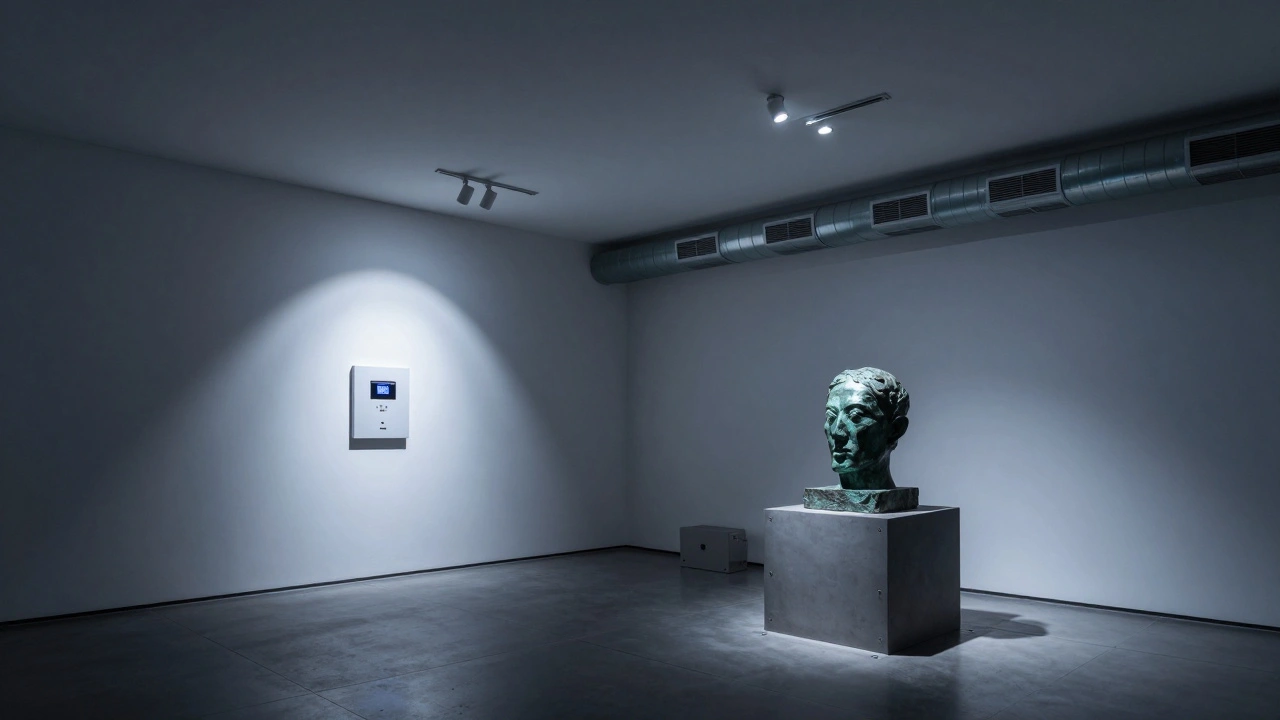
Running a gallery isn’t just about hanging paintings. It’s about keeping them alive. A single Monet or Warhol can be worth millions, but it only takes a 5-degree temperature swing or a power surge to damage it forever. That’s why gallery infrastructure isn’t an afterthought-it’s the foundation. Most people think galleries just need good lighting and walls. The truth? They need industrial-grade power, precision climate control, and strict load limits just to stay safe.
Why Power Isn’t Just About Lights
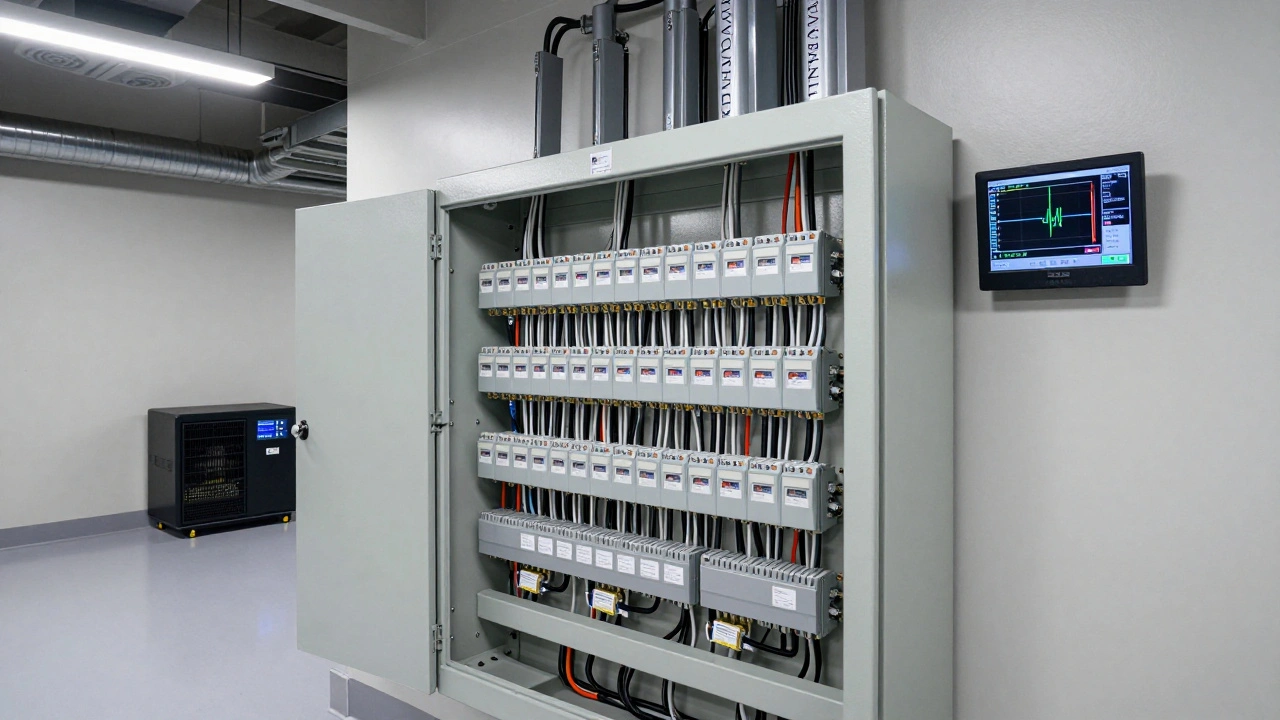
Art galleries don’t run on standard office circuits. A typical commercial building uses 120V/20A circuits for outlets and lighting. Galleries need way more. Large LED display systems, UV-filtering glass, security systems, and climate sensors all draw continuous power. Add in high-end cameras for inventory tracking, automated climate monitors, and backup generators, and you’re looking at 30-40% more load than a retail space of the same size.
Many older galleries operate on outdated wiring-1980s-era panels with 100-amp service. That’s not enough. Modern galleries need at least 200-400 amps per floor, with dedicated circuits for each critical system. A single HVAC unit can pull 30 amps just to maintain 70°F and 50% humidity. If you’re running three of them plus lighting and security, you’re already at 120 amps before you even plug in a laptop.
Power quality matters too. Voltage spikes from nearby construction or grid fluctuations can fry sensitive electronics. Most professional galleries install UPS systems and line conditioners. It’s not optional. In 2023, a Portland gallery lost three pieces worth over $2M when a lightning strike took out their climate controller. They didn’t have surge protection. That’s the kind of mistake you don’t make twice.
HVAC: The Silent Guardian of Art
Art doesn’t just need to be cool-it needs to be stable. Humidity swings of more than 5% in a day can crack paint, warp canvases, or cause mold on paper. Temperature changes above 2°F per hour can cause materials to expand and contract, leading to delamination or flaking. That’s why gallery HVAC isn’t like your home system. It’s precision-engineered.
Most galleries use VRF (Variable Refrigerant Flow) systems or dedicated chilled beam systems. These aren’t your average split units. They offer ±0.5°F temperature control and ±3% humidity control. They’re also silent-no humming fans near a quiet gallery space. The airflow is designed to avoid direct drafts on artwork. Air doesn’t blow on the paintings; it flows around them.
Filtering is another big deal. Dust, VOCs from cleaning products, even pollen from outside can settle on surfaces and degrade pigments over time. High-efficiency particulate air (HEPA) filters are standard. Some galleries use activated carbon filters to scrub out ozone and sulfur compounds from traffic or industrial air.
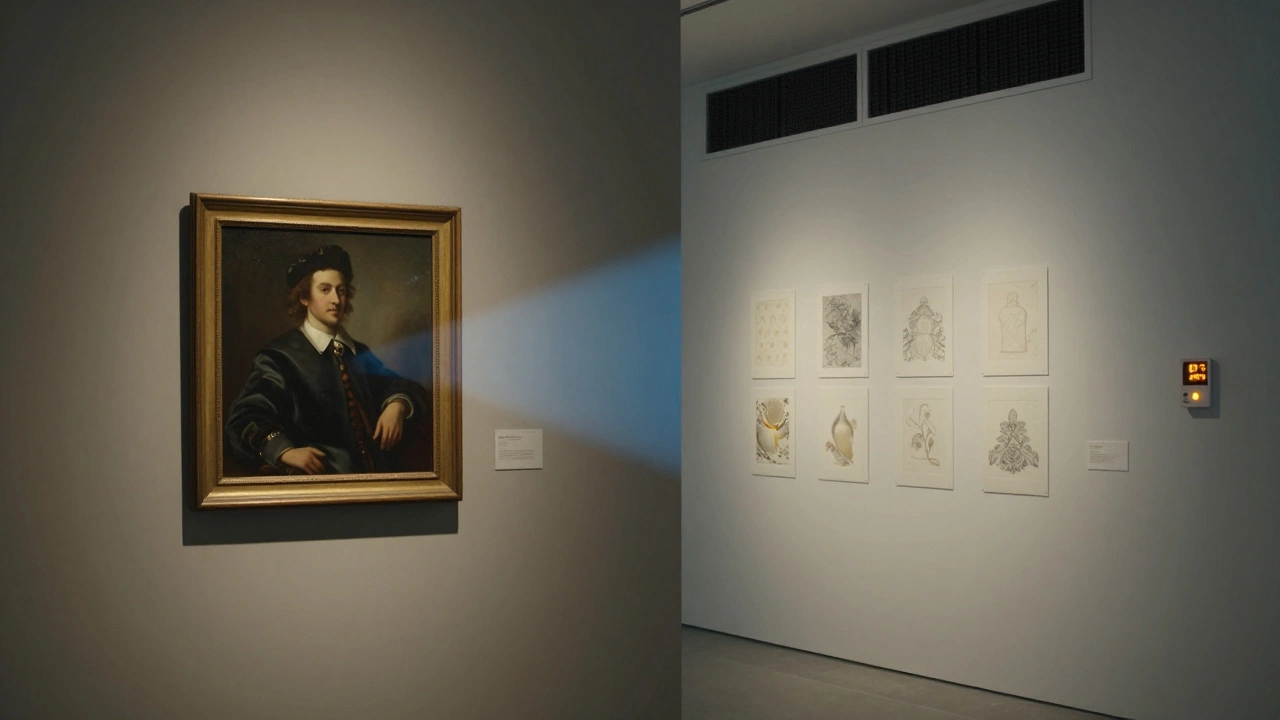
And don’t forget zoning. A gallery with 10 rooms needs 10 separate climate zones. A 17th-century oil painting needs different conditions than a contemporary digital screen. One room might be set to 68°F and 48% RH, while another-housing sensitive paper works-needs 65°F and 45% RH. All this has to be monitored 24/7 with alarms that text the conservator if something goes off.
Load Limits: The Hidden Rule No One Talks About
Load limits aren’t just about electricity. They’re about weight, heat, and airflow. Galleries often sit in historic buildings with original wood floors and timber beams. Those floors weren’t built to hold 500-pound sculptures, 300-pound display cases, or stacks of crates. The average floor load rating for a commercial building is 50 psf (pounds per square foot). Art galleries need 100-150 psf.
Heavy sculptures? Concrete pedestals? Glass vitrines filled with artifacts? Each adds up. A single 800-pound bronze statue on a 4x4-foot base equals 50 psf just from that one object. Add a display case with lighting and climate controls, and you’re over 100 psf. That’s why structural engineers are brought in before renovations. They don’t just check beams-they check joist spacing, floor deflection, and foundation load transfer.
Heat load is another hidden issue. LED lights run cooler than old halogens, but when you’ve got 50 of them in one room, the heat adds up. Add a server rack for digital archives, and you’re generating 2-3 kW of heat in a small space. That heat has to be removed, which means your HVAC has to work harder. If you don’t account for it, you’ll end up with a room that’s too warm for the art-even if the thermostat says otherwise.
Even airflow has limits. You can’t just blast air around the room. Too much air movement can cause vibrations that damage delicate works. The airflow velocity in gallery spaces is typically kept under 50 feet per minute. That’s slower than a gentle breeze. Engineers use computational fluid dynamics to simulate how air moves around each piece. It sounds overkill-but it’s the difference between preserving art and accidentally destroying it.
What Happens When You Skip the Infrastructure
There’s a reason the best galleries spend 20-30% of their renovation budget on infrastructure. Cutting corners doesn’t save money-it creates risk.
A gallery in Chicago lost a major Rothko in 2024 because their HVAC filter wasn’t changed for 18 months. Dust built up, the system overheated, and the humidity spiked to 70%. The paint cracked. The insurance didn’t cover it-the policy required proof of maintenance logs. They didn’t have them.
Another gallery in San Francisco installed a new lighting system without checking the power draw. The circuit tripped every time they turned on the display lights. They kept resetting it. One night, the overload caused a spark. The fire alarm went off, but the sprinklers didn’t activate because the water pressure was too low. The building had old plumbing. The damage? $4.2M.
These aren’t rare events. They’re predictable. Every year, the American Alliance of Museums reports over 200 incidents of climate or power-related damage to collections. Most were preventable.
The Checklist No Gallery Should Skip
If you’re setting up or upgrading a gallery, here’s what you need:
- Electrical: 200-400 amp service minimum, dedicated circuits for HVAC, lighting, and security, UPS + surge protection on all critical systems
- HVAC: VRF or chilled beam system, ±0.5°F and ±3% RH control, HEPA + carbon filtration, 10+ climate zones
- Load capacity: Floor rated for 100-150 psf, structural engineer review before heavy installations
- Monitoring: 24/7 environmental sensors with remote alerts, automated logs for insurance compliance
- Backup: Generator with 72-hour fuel supply, battery-powered climate controllers as fail-safes
These aren’t luxury upgrades. They’re baseline requirements. Museums like MoMA and the Tate have been doing this for decades. Smaller galleries can’t afford to wait until something breaks.
What Comes Next
The next wave of gallery infrastructure is smart integration. Systems that talk to each other-HVAC adjusting based on room occupancy, lights dimming when no one’s around, sensors alerting conservators before humidity rises. It’s not sci-fi. It’s already in use at 12 major U.S. galleries.
If you’re planning a new space or retrofitting an old one, don’t start with the art. Start with the walls, the wires, and the airflow. The paintings will thank you.
Do galleries need special electrical panels?
Yes. Standard commercial panels are not designed for the continuous, high-demand load of gallery systems. Galleries need dedicated sub-panels with circuit breakers sized for HVAC units, LED displays, security systems, and climate sensors. Most require 200-400 amps total, with separate circuits for each major system to prevent overload and ensure redundancy.
Can I use a regular HVAC system for an art gallery?
No. Regular HVAC systems can’t maintain the tight temperature and humidity controls needed for art. They typically fluctuate by ±3°F and ±10% RH, which is unsafe for sensitive materials. Art galleries require precision systems like VRF or chilled beams that hold ±0.5°F and ±3% RH, with advanced filtration and zoning for different display areas.
How much weight can a gallery floor hold?
Most commercial floors are built for 50 pounds per square foot (psf). Art galleries need 100-150 psf to safely support heavy sculptures, display cases, and storage crates. Older buildings often require structural reinforcement-steel beams, reinforced joists, or load-transfer plates-to meet this standard. A structural engineer must evaluate the building before installing heavy exhibits.
Why do galleries need separate climate zones?
Different artworks need different conditions. Oil paintings on canvas perform best at 68°F and 48% RH, while paper works require 65°F and 45% RH to prevent brittleness. Digital screens generate heat and need different cooling than traditional art. Separate zones allow precise control for each type of exhibit, preventing damage from mismatched environments.
Is backup power necessary for a gallery?
Yes. A power outage lasting more than 2 hours can cause irreversible damage to art if climate control fails. Backup generators with 72-hour fuel reserves are standard for professional galleries. Many also use battery-powered climate controllers that kick in immediately during outages to maintain critical conditions until the generator starts.