Opening Reception Planning: Logistics and Guest Experience for Exhibitions
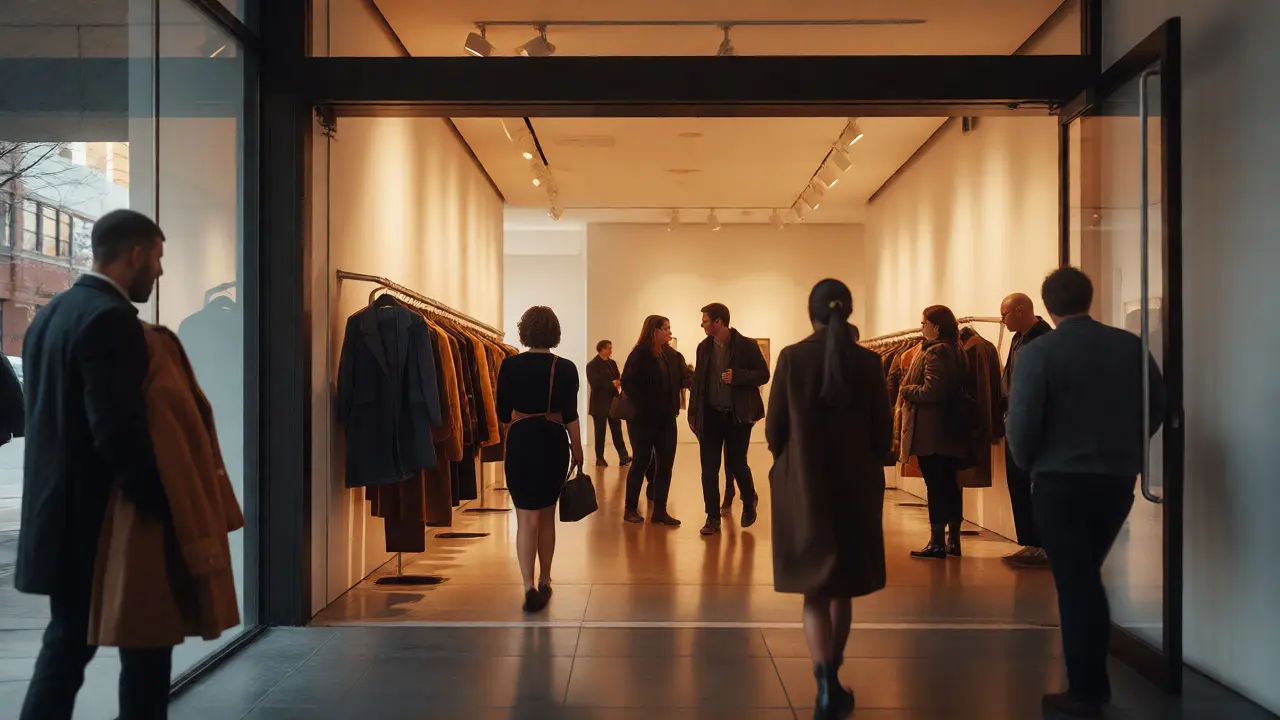
You’ve spent months curating the perfect show. The lighting is dialed in, the labels are proofread, and the installation team just left. But here’s the hard truth: most visitors won’t remember the subtle brushwork on canvas number four. They’ll remember how they felt when they walked in. Did they feel welcome? Were they confused about where to get a drink? Did they stand awkwardly holding a warm glass of wine while searching for a place to set it down?
Opening Reception Planning is the strategic coordination of logistical operations and hospitality elements designed to maximize visitor engagement during an exhibition launch. It’s not just about throwing a party; it’s about engineering an environment where art can be seen without friction. In Portland, where the arts scene is vibrant but often underfunded, getting this right means the difference between a quiet night with three sales and a buzz that lasts all week.
The First Five Minutes Matter Most
Guests form their opinion of your event before they even see the first piece of art. This is known as the "arrival friction" problem. If there’s a bottleneck at the door, or if guests have to wait ten minutes to check coats because you only hired one volunteer, their mood drops instantly. You want them relaxed, curious, and ready to engage.
Start by mapping the flow. Where do people enter? Do they go straight into the gallery space, or is there a transition zone? A small buffer area-perhaps a vestibule or a foyer-allows guests to adjust to the temperature, remove heavy coats, and orient themselves. If you don’t have a physical buffer, create a psychological one. Have greeters who don’t just say “hi” but actively guide traffic away from the entrance to prevent clustering.
Consider the sensory details. Is the music too loud? Can you hear the artist speaking? Is the lighting harsh or inviting? These micro-decisions shape the Guest Experience far more than the catering menu does. People forgive bad food if the vibe is good. They rarely forgive a chaotic entry.
Logistics That Don’t Look Like Logistics
Good Exhibition Logistics are invisible. When done right, no one notices the power cords taped down, the restrooms being cleaned every thirty minutes, or the fact that the bar staff knows exactly when to refill the water pitchers. When done wrong, everything falls apart.
Here’s a checklist for the day-of execution:
- Power and Tech: Ensure all AV equipment (projectors, speakers) has been tested two hours prior. Have backup batteries for wireless mics. Nothing kills momentum like feedback screech during an artist talk.
- Crowd Control: Assign specific roles. One person manages the front door, one watches the artwork (to prevent accidental bumps), and one roams to answer questions. Don’t let the curator play bartender.
- Restroom Strategy: Keep them spotless. Stock them with high-quality soap and paper towels. Run out of supplies early, and you look unprofessional. Place a small sign directing guests if the restrooms aren’t immediately visible.
- Climate Control: Galleries can get cold due to HVAC systems required for art preservation. Guests wearing light summer clothes will leave early if they’re freezing. Have throw blankets available or adjust the thermostat slightly warmer for the evening.
In Portland, many venues are older buildings with quirky electrical grids. Always bring extension cords and power strips. Assume nothing works until you plug something in yourself.
Designing the Flow of Movement
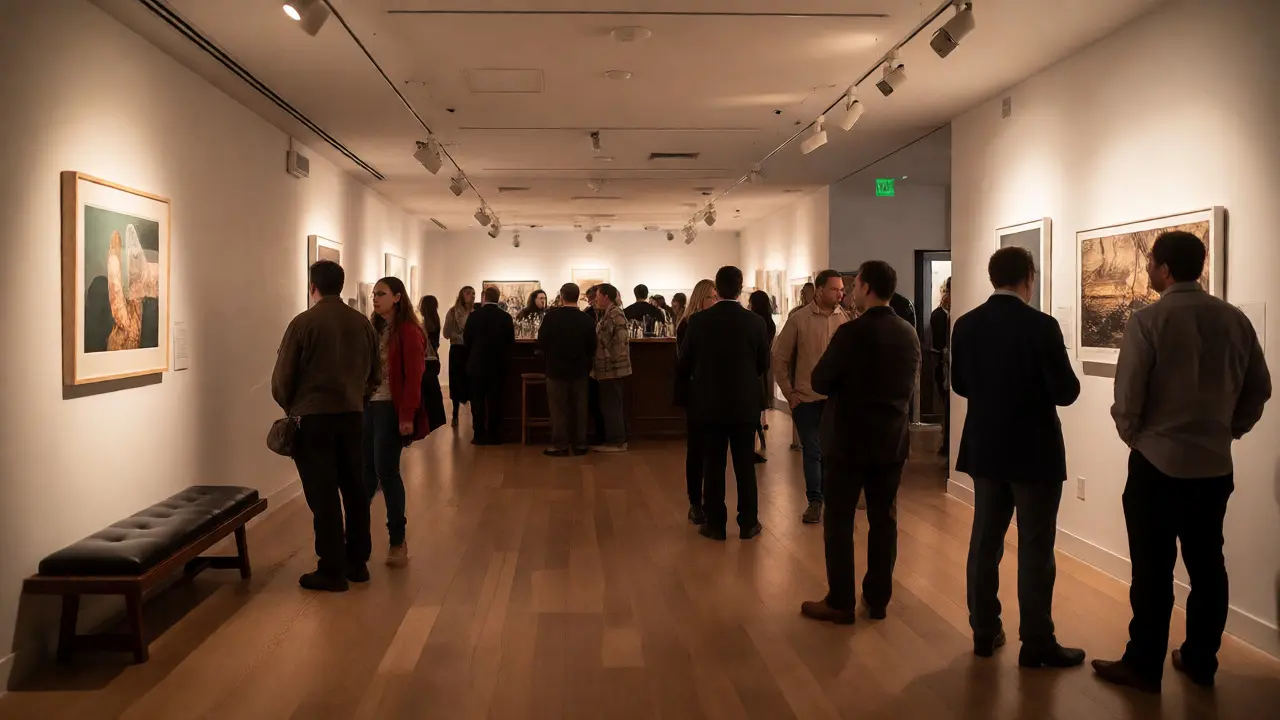
Most exhibitions fail to guide the eye. Guests wander aimlessly, missing key pieces. Your layout should encourage movement through the entire space. Use furniture placement strategically. A large sofa in the middle of a room stops traffic; a low bench along a wall invites pausing without blocking pathways.
Think about sightlines. Can someone standing near the entrance see the focal point of the main gallery? If not, use signage or staff positioning to draw attention inward. Avoid creating dead zones-corners where people cluster but don’t move forward. Place popular amenities, like the bar or coat check, deep within the venue to pull guests through the exhibit.
This technique, often called "pulling power," ensures that even late arrivals traverse the full collection. It also distributes crowd density evenly, preventing the feeling of overcrowding in smaller spaces.
Food and Beverage: Less Is More
Let’s be honest: nobody comes to an art opening for the shrimp cocktail. They come for the art and the social capital. Yet, poor food service ruins conversations. Guests hate holding a plate while trying to view delicate sculptures. They hate spilling red wine on white walls.
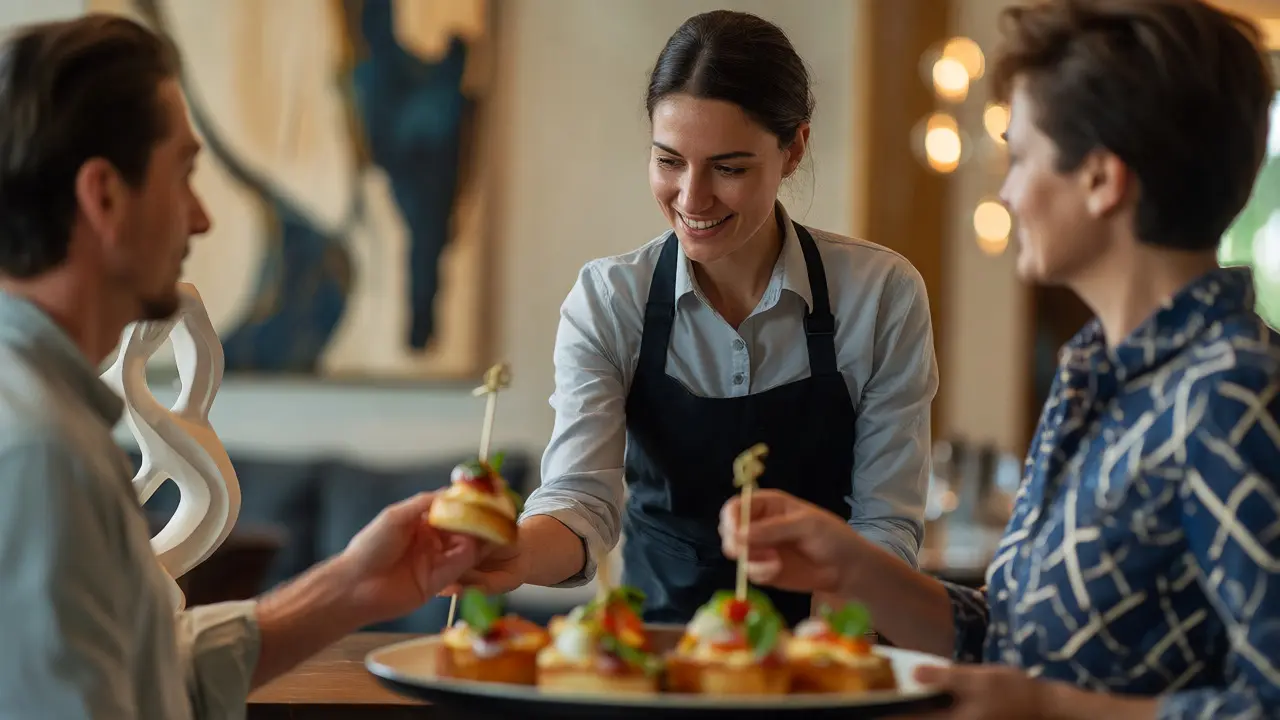
Opt for one-handed foods. Skewers, bruschetta, or bite-sized pastries work best. Avoid anything requiring a knife and fork. If you must serve plated food, provide napkins and ensure there are plenty of small side tables or high-top stands so guests can put plates down easily.
Beverage selection matters too. Offer non-alcoholic options prominently. Many collectors and artists prefer soda water or tea over wine. Label drinks clearly. If you’re serving wine, know which pairings complement the local palette-Portlandites appreciate craft beer and natural wines over generic house pours.
| Service Style | Pros | Cons | Best For |
|---|---|---|---|
| Plated Dinner | Formal, structured | High cost, requires seating, slows circulation | VIP pre-openings |
| Cocktail Hour (Passed Apps) | Encourages mingling, flexible timing | Can get crowded, servers need training | General public openings |
| Self-Serve Buffet | Cost-effective, easy setup | Long lines, waste potential, less elegant | Large community events |
The Human Element: Staff Training
Your staff are the face of the exhibition. Hire people who understand art-not necessarily experts, but enthusiasts who can speak confidently about the work. Train them on three things: the artist’s name, the title of the main piece, and how to politely redirect guests who are talking too loudly.
A common mistake is hiring random temp workers who haven’t seen the show. They end up saying, “I think it’s abstract,” which undermines the authority of the curation. Spend an hour walking them through the exhibit beforehand. Give them a cheat sheet with fun facts or stories about the artist. This empowers them to engage rather than just watch.
Also, define boundaries. Staff should protect the art but not hover like security guards. Teach them the "two-step rule": stay close enough to assist, but far enough to allow privacy. If a guest asks a question they can’t answer, direct them to the curator or a QR code link, rather than guessing.
Post-Event Follow-Up
The experience doesn’t end when the last guest leaves. Capture leads ethically. Use a digital sign-in sheet or a simple card drop for raffles. Send a thank-you email within 48 hours. Include photos from the night and a link to purchase prints or schedule studio visits.
Analyze what worked. Did people linger in Room B? Was the bar line too long? Note these observations for the next show. Continuous improvement turns a one-time event into a brand reputation.
How many staff members do I need for a small gallery opening?
For a typical small gallery opening with 50-100 guests, you generally need at least three to four staff members. One should manage the entrance and greeting, one should monitor the artwork and assist viewers, and one or two should handle beverage service and general inquiries. If you have a larger space or expect higher foot traffic, add another floater to help with restroom checks and crowd dynamics.
What is the ideal duration for an opening reception?
Two hours is usually the sweet spot. Start around 6:00 PM or 7:00 PM to accommodate after-work crowds. Ending at 9:00 PM allows guests to enjoy dinner afterward or head home before fatigue sets in. Anything longer tends to result in diminishing returns, with the remaining guests becoming increasingly tired and less engaged with the art.
Should I hire professional caterers or DIY the food?
If your budget allows, hire professionals. Caterers handle cleanup, presentation, and safety compliance, letting you focus on networking. However, for tight budgets, DIY can work if you choose simple, low-prep items like cheese boards, crackers, and fruit. Just ensure you have enough volunteers to manage replenishment and cleanup, otherwise, you’ll spend the whole event washing dishes instead of meeting collectors.
How do I handle unexpected crowding?
Have a plan for overflow. Designate a secondary area, such as a lobby or outdoor patio, where guests can wait or take breaks. Encourage staff to gently guide groups deeper into the gallery to distribute density. If the space becomes uncomfortably packed, consider limiting new entries temporarily or announcing that refreshments are moving to the back to disperse the crowd.
Is background music necessary for an art opening?
Yes, but keep it low and instrumental. Silence can make conversation feel forced, while lyrics can distract from viewing art. Choose ambient, jazz, or classical tracks that fill the acoustic space without competing with voices. Adjust volume dynamically; lower it during any speeches or artist talks, then raise it slightly once the formal portion ends.