Online Art Payment Processing: Secure Transactions
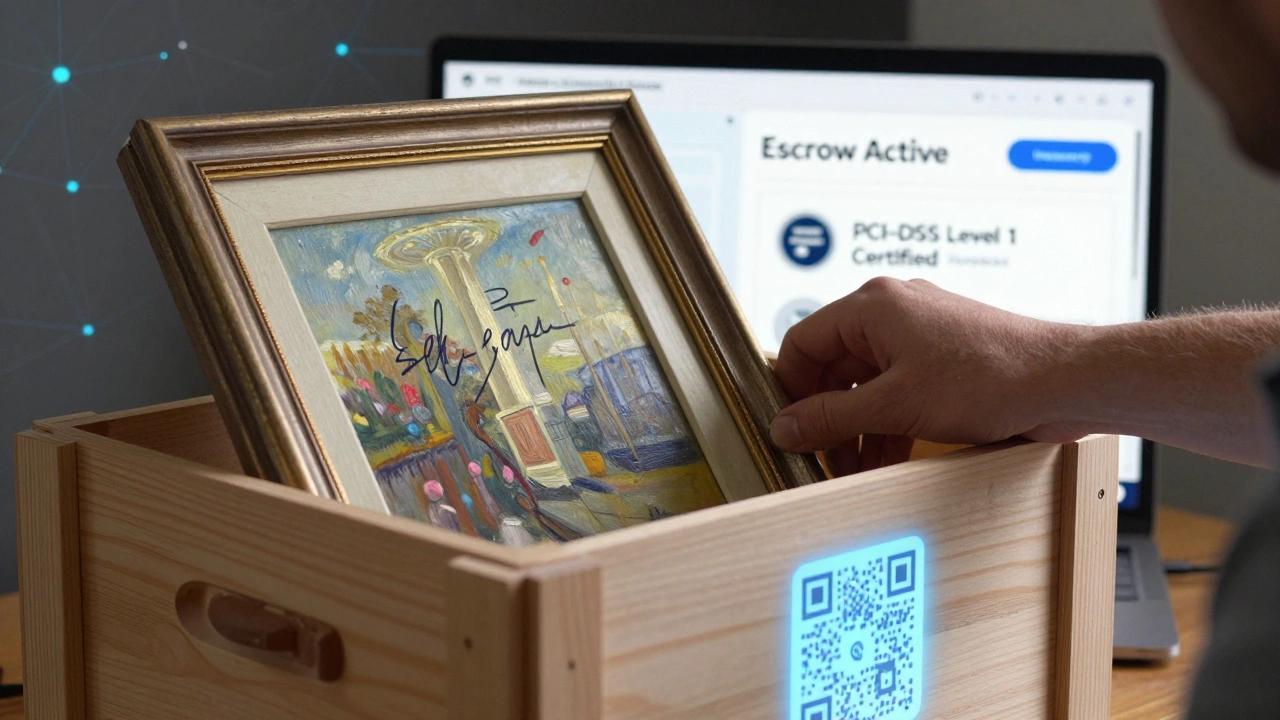
Buying art online shouldn’t feel risky. Yet too many artists and buyers still hesitate because they don’t trust how payments work. If you’re selling paintings, sculptures, or digital prints online, your payment system isn’t just a tool-it’s the foundation of your credibility. A single failed transaction or security breach can cost you more than money; it can break a customer’s trust forever.
Let’s cut through the noise. This isn’t about fancy tech jargon or complex integrations. It’s about making sure when someone clicks "Buy Now," their money moves safely, quickly, and transparently-and you get paid without delays or surprises.
Why Art Sales Need Special Payment Handling
Art isn’t a t-shirt or a book. It’s unique. High-value. Often handmade. And buyers know it. That’s why they’re more cautious. They’re not just paying for an item-they’re investing in something irreplaceable. A $3,000 oil painting doesn’t come with a 30-day return policy like a pair of headphones. So when a buyer hands over their credit card, they need to know:
- Is this seller legitimate?
- Will my payment be protected if something goes wrong?
- Will the artwork arrive as described?
Standard e-commerce platforms like Shopify or Etsy handle mass-produced goods. They’re built for volume, not authenticity. But artists need systems that treat each sale like a private transaction between two trusted parties. That means:
- Escrow services that hold funds until delivery is confirmed
- Verification of buyer and seller identities
- Integration with art-specific insurance and shipping partners
Without these, you’re leaving money-and relationships-on the table.
What Makes a Payment System Secure for Art?
Security isn’t just encryption and SSL certificates. For art sales, it’s layered. Here’s what actually works:
- Two-factor authentication for both buyer and seller - Not just a password. A code sent to a phone or email, verified before any transaction goes through.
- Escrow-based holding - Funds are held by a trusted third party until the buyer confirms receipt and condition of the artwork. This isn’t optional anymore. Buyers expect it.
- Real-time fraud detection - Systems that flag unusual patterns: sudden large purchases, mismatched billing addresses, or multiple failed attempts.
- PCI-DSS Level 1 compliance - The highest standard for payment processors. If your gateway isn’t certified at this level, you’re at risk.
- Transparent fee structure - No hidden charges. Artists need to know exactly how much they’ll net after fees. No surprises.
Platforms like Artory and Saatchi Art built their reputation on these exact features. They don’t just take a cut-they build trust.
Top Payment Gateways for Artists in 2026
Not all gateways are made equal. Here’s what’s working right now:
| Gateway | Art-Specific Features | Fees | Escrow? | Integration Ease |
|---|---|---|---|---|
| Stripe | Customizable checkout, supports multi-currency | 2.9% + $0.30 per transaction | No (requires third-party) | High |
| PayPal | Buyer protection, dispute resolution | 3.49% + $0.49 per transaction | Yes (via PayPal Vault) | Medium |
| Artory Pay | Escrow, provenance tracking, blockchain verification | 5% flat fee (includes verification) | Yes (built-in) | Low (dedicated platform) |
| Square | In-person + online, invoicing tools | 2.6% + $0.10 per transaction | No | High |
| Crypto (Ethereum/USDC) | Instant settlement, global reach, no chargebacks | 0.5% - 1.5% (gas fees vary) | Optional (smart contracts) | Low (requires wallet setup) |
Artory Pay stands out because it ties payment to digital provenance. Every sale gets a tamper-proof record linked to the artwork’s history. Buyers can verify authenticity before paying. That’s the gold standard now.

How to Set Up Secure Art Payments in 3 Steps
You don’t need a tech team. Here’s how to get started:
- Choose your gateway - If you sell under $10,000 per piece, Stripe or PayPal work fine. If you sell high-value or limited editions, go with Artory Pay or a platform that includes blockchain verification.
- Enable escrow - Even if your gateway doesn’t offer it, use a service like Escrow.com. It costs extra, but it eliminates buyer hesitation. You’ll close more sales.
- Display trust signals - Add icons for PCI-DSS compliance, verified seller status, and escrow protection on your checkout page. Buyers look for these. If they’re not there, they leave.
One painter in Portland, Maria Chen, switched from PayPal to Artory Pay last year. Her conversion rate jumped from 18% to 41%. Why? Her customers saw the provenance badge. They knew the piece was real. And they knew their money was safe until the painting arrived.
Common Mistakes Artists Make
Even experienced sellers mess this up. Here are the top three:
- Using personal PayPal accounts - Business accounts have better dispute tools. Personal ones can get frozen without warning.
- Accepting bank transfers - They’re irreversible. If a buyer claims they didn’t receive the art, you’re stuck.
- Not documenting condition - Always take timestamped photos before shipping. Include a signed condition report. It’s your proof if a dispute arises.
One artist lost $8,000 last year because they shipped a sculpture without photos. The buyer claimed it arrived damaged. No proof. No refund. No recourse.
What’s Next? The Future of Art Payments
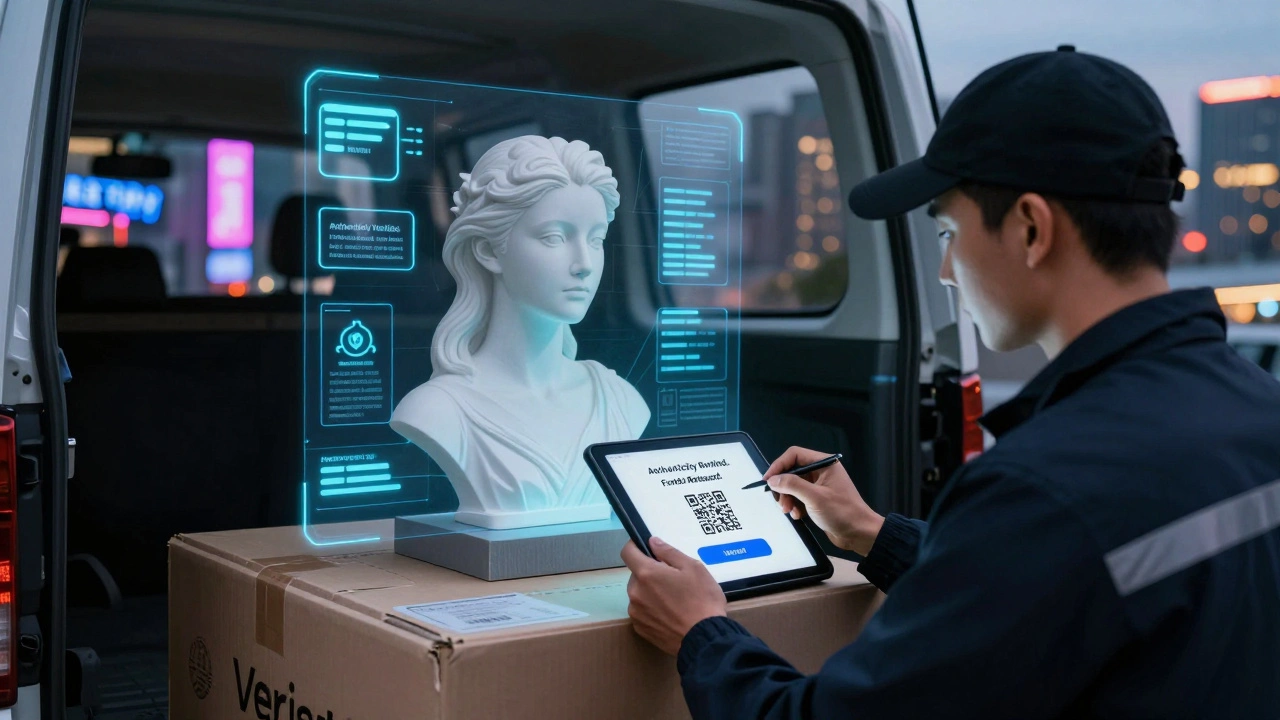
By 2027, blockchain-based payments will be standard for art over $5,000. Smart contracts will auto-release funds when a digital certificate of authenticity is scanned upon delivery. NFTs aren’t the future-they’re already here, but not as collectibles. As proof.
Platforms like Verisart and Artory are already partnering with courier services to scan QR codes on delivery. If the artwork’s digital twin matches the physical one, payment clears. No waiting. No arguing.
And yes, crypto is growing. Artists in Berlin, Tokyo, and New York are now accepting USDC (a stablecoin) as payment. No chargebacks. No bank delays. Instant settlement. The downside? Buyers need a wallet. But that’s changing fast. Wallets are now built into phones.
The bottom line: the tools exist. The standards are clear. The buyers are ready. If your payment system still feels like it’s from 2015, you’re not just behind-you’re leaving money to competitors who’ve already upgraded.
Final Checklist: Is Your Art Payment System Secure?
- Do you use a PCI-DSS Level 1 processor?
- Is escrow enabled or required for all sales over $1,000?
- Do you verify buyer identity before processing payment?
- Do you capture and store photos of the artwork before shipping?
- Do you provide a digital certificate of authenticity with every sale?
- Do you clearly state your refund and return policy?
If you answered "no" to any of these, fix it this week. Your next sale depends on it.
Can I use PayPal for selling art online?
Yes, but only if you use a PayPal Business account. Personal accounts lack buyer-seller protection for high-value items and can be frozen without warning. Always enable PayPal’s "Goods and Services" option, not "Friends and Family." Also, pair it with escrow services like Escrow.com for sales over $1,000.
Do I need to accept cryptocurrency for art sales?
No, but it’s becoming a competitive advantage. Crypto payments (especially USDC) eliminate chargebacks and offer instant settlement. Buyers in Europe and Asia prefer it. You can accept crypto without holding it-services like Coinbase Commerce convert it to USD automatically. Start by offering it as an option, not a requirement.
What’s the safest way to ship high-value artwork?
Use specialized art shippers like U.S. Art Transport or Brinks Fine Art. Standard carriers (FedEx, UPS) don’t cover fine art properly. Always require signature confirmation, insurance for full value, and real-time tracking. Pair this with a digital certificate of authenticity delivered via email or QR code at delivery.
How do I prove my artwork is authentic?
Use a digital provenance platform like Verisart or Artory. They issue tamper-proof certificates linked to blockchain. Include a photo of the artwork, your signature, date of sale, and a unique QR code. Buyers scan it to verify everything. This isn’t optional anymore-it’s expected.
Can I use Shopify for selling art?
Yes, but only with the right add-ons. Shopify’s default payment system doesn’t include escrow or provenance tracking. You’ll need apps like Artory Connect or Escrow.com to add those layers. Without them, you’re just another online store. Add the trust elements, and you become a trusted art dealer.