Negotiating Gallery Commission Rates: A Guide for Artists
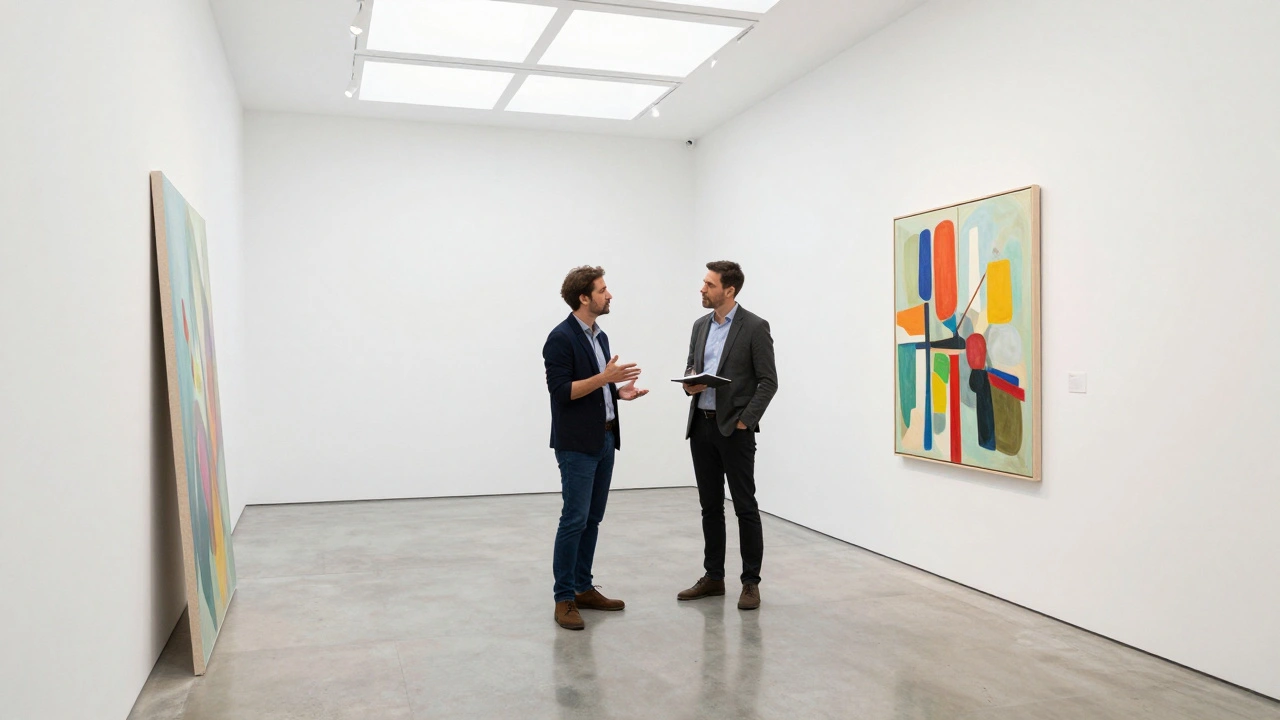
Quick Takeaways
- The industry standard is often 50/50, but this isn't a law.
- Your leverage increases as your demand and social following grow.
- Commission isn't just about the split; it's about who pays for shipping, framing, and marketing.
- Always get the agreed-upon rates in a written contract to avoid 'payment surprises.'
When we talk about gallery commission rates is the percentage of a sale price that a gallery keeps as payment for representing an artist and facilitating the sale of their work. Commonly referred to as the "gallery split," this fee covers the overhead of the physical space, the staff, and the gallery's network of collectors. While a 50% commission is the most cited figure in the art world, it is rarely the only option on the table.
Understanding the Standard Split and Why It Exists
Why does a gallery take half your check? At first glance, it feels steep. But a reputable gallery provides more than just four white walls. They offer curation is the professional selection and organization of artworks to create a cohesive exhibition, which elevates your perceived value. They handle the grueling logistics of sales prospecting, meaning they spend their days calling wealthy collectors who wouldn't find your studio on their own.
However, not all galleries provide the same level of service. A "vanity gallery" that asks you to pay a monthly fee AND takes a commission is a red flag. A true partnership is based on a percentage of sales. If the gallery is doing 90% of the legwork-marketing, shipping, and hosting opening nights-a 50% split is fair. If you are bringing in your own collectors and doing your own PR, that split should shift in your favor.

When You Have the Leverage to Negotiate
Negotiation isn't about being aggressive; it's about leverage. You have leverage when the gallery needs you more than you need them. If you have a waiting list of collectors or a massive following on social media that drives foot traffic into their space, you are no longer just an artist-you are a marketing asset. In these cases, asking for a 60/40 split (60% to the artist) is completely reasonable.
Consider a scenario where an artist has just won a prestigious residency or been featured in a major publication like Artforum. The gallery knows that the artist's market value is about to spike. This is the ideal moment to revisit the representation agreement, which is a legal contract between an artist and a gallery detailing the terms of their professional relationship. If the gallery is eager to lock you in before your prices double, you can negotiate a sliding scale: perhaps 50% for the first few sales, moving to 60% once a certain revenue threshold is hit.
| Structure Type | Typical Split (Artist/Gallery) | Who It's Best For | Key Trade-off |
|---|---|---|---|
| Standard Partnership | 50% / 50% | Emerging artists | High support, lower profit per piece |
| Established Artist | 60% / 40% | Artists with high demand | Less gallery effort, higher profit |
| Tiered/Sliding Scale | Variable (e.g., 40% to 60%) | Rapidly growing careers | Complex accounting, rewards growth |
| Consignment Only | 30% - 40% (Gallery) | Short-term pop-ups | No long-term marketing support |
The Hidden Costs: Beyond the Percentage
The commission percentage is the most visible number, but the "invisible" costs are where artists often lose money. You need to define who pays for framing, which can cost hundreds of dollars per piece, and shipping and insurance. If a gallery takes 50% but requires you to pay for professional crating and insured transport both ways, your actual take-home pay might be closer to 35%.
A professional negotiation involves deciding these specifics. For example, you might agree to a 50/50 split on the condition that the gallery covers the cost of the opening reception and the promotional catalog. Or, you might agree to pay for framing in exchange for a lower commission rate. When you look at the total cost of doing business, the percentage becomes less important than the net profit.

Handling the 'Existing Client' Dilemma
One of the biggest points of contention in art deals is the "house client." What happens if a collector who has bought from you for years walks into the gallery and buys a piece? Should the gallery still take 50%? This is a common sticking point. Many artists negotiate a "reduced commission" for existing clients-perhaps 20% or 30%-since the gallery didn't actually do the work of finding the buyer.
To make this work, you must provide the gallery with a clear list of your existing collectors. This prevents arguments later on. If the gallery refuses this, it's a sign they view their brand as the primary driver of the sale, regardless of your personal relationship with the buyer. Decide if that's a trade-off you're willing to make for the prestige of their space.
Step-by-Step Guide to the Negotiation Meeting
Walking into a gallery to talk money can feel awkward. Use this approach to keep it professional and objective:
- Do your homework: Find out what other artists at the gallery are likely getting. While galleries won't tell you, artists often share this info in peer groups.
- Prepare your 'Value Stack': List everything you bring to the table. Do you have a 10k follower Instagram? A sold-out show in another city? A unique technique that's trending?
- Ask first, offer second: Let the gallery state their terms first. If they offer 50%, don't say yes immediately. Say, "That's a common starting point. Given my current trajectory and the amount of my own marketing I do, I was thinking closer to 60/40. How can we make that work?"
- Negotiate the periphery: If they won't budge on the 50%, move to the expenses. "I can accept 50% if the gallery handles all shipping and insurance for the works."
- Get it in writing: No matter how much you trust the gallerist, a verbal agreement is useless. Ensure the split, payment terms (e.g., payment within 30 days of sale), and expense responsibilities are in the contract.

Avoiding Common Pitfalls
A major mistake artists make is agreeing to a exclusive contract without a performance clause. An exclusive deal means you cannot sell work anywhere else-not even from your own studio-without paying the gallery a commission. If you sign this, ensure there is a "out clause" if the gallery fails to hit a certain number of sales per year. You don't want to be tied to a gallery that isn't actually selling your work while you're forbidden from selling it yourself.
Another trap is the "discounting' game. Galleries often give collectors a 10% to 20% discount to close a deal. Who takes that hit? In a fair agreement, the discount is shared proportionally. If the gallery gives a 10% discount on a $1,000 piece, the sale price becomes $900, and you both split that $900. If the gallery takes the discount entirely out of the artist's share, you are effectively paying a higher commission than agreed.
Is a 50% commission really the industry standard?
Yes, for most mid-level and emerging galleries, 50/50 is the benchmark. This is because the gallery takes on the financial risk of the space, staffing, and marketing. However, this is a starting point for negotiation, not a rule. High-demand artists often move toward 60/40 or 70/30.
Should I pay a gallery to represent me?
Generally, no. A legitimate gallery makes money by selling your work. If a gallery asks for an upfront "membership fee," "application fee," or monthly rent for wall space, they are likely a vanity gallery. Avoid these, as they are often more interested in your money than your art.
What happens if I sell a piece directly to a collector while under contract?
This depends entirely on your contract. If you have an exclusive agreement, you typically owe the gallery a commission even on studio sales. If you have a non-exclusive agreement, you keep 100%. Always clarify this before signing to avoid legal disputes.
How do I handle the shipping costs for a gallery show?
The most common arrangement is that the artist pays to get the work to the gallery, and the gallery pays to return unsold work. However, this is negotiable. In higher-end partnerships, the gallery may cover all logistics as part of their investment in the artist.
When is the best time to ask for a higher percentage?
The best time is after a major success: a sold-out exhibition, a significant press mention, or when you are approached by another gallery. Use this increased market value as the reason for updating your terms.
Next Steps for Your Career
If you are currently without representation, start by building a consistent portfolio and a documented track record of sales. Collect data on who is buying your work and at what price point. This data is your greatest weapon during negotiations. If you can show a gallery that you have a consistent buyer base and an increasing price trend, you move from being a "risk" to an "investment." Once you have that data, you can approach galleries not as someone asking for a favor, but as a business partner offering a valuable product.