Mystery Shopping Your Gallery: A Practical Guide to Service Audits

Walk into your own gallery. Look at the lighting. Check if the reception desk is cluttered. Notice how long it takes for someone to acknowledge a stranger. If you haven't done this recently, you're flying blind. Mystery shopping is a covert evaluation method where trained observers simulate real customers to assess service quality, staff behavior, and operational efficiency. It’s not just for coffee shops or car dealerships. For art galleries, where the sale is often high-touch, relationship-based, and expensive, the gap between "good vibes" and "professional execution" can make or break a sale.
Many gallery owners assume that because they love art, their visitors will automatically have a great experience. But passion doesn't always translate to process. A mystery shop audit reveals the friction points your team sees every day but has stopped noticing. It turns subjective feelings into objective data.
Why Galleries Need Objective Service Data
In the art world, we talk a lot about "curation" and "aesthetic." We rarely talk about Customer Experience (CX) metrics. Yet, when a collector walks in with a $50,000 budget, they aren't just buying a canvas; they are buying trust. They are evaluating whether you understand logistics, insurance, provenance, and installation.
Without audits, you rely on anecdotal evidence. "The last guy said the Wi-Fi was slow." "That one lady complained about the parking." These are fragments. A structured Service Audit provides a baseline. It answers specific questions:
- Did the staff greet the visitor within 30 seconds?
- Was the pricing information accessible without asking?
- Did the staff demonstrate knowledge of the artist's background?
- Was the checkout process seamless or confusing?
When you quantify these interactions, you stop guessing what needs fixing. You start solving specific problems.
Designing Your Mystery Shop Protocol
You don't need a massive agency to run effective audits. You can build a robust system using internal staff or external volunteers. The key is consistency. If Person A visits on a Tuesday morning and Person B visits on a Friday evening, the conditions differ. Try to standardize the variables as much as possible.
Start by defining the persona. Who is the typical buyer? Is it a first-time collector, a seasoned investor, or a corporate procurement officer? Each group interacts differently with staff. A first-timer might need more hand-holding; an investor wants concise facts and availability checks.
Create a standardized scorecard. Don't just use "Yes/No" questions. Use a scale from 1 to 5 for behavioral aspects. For example:
- Greeting Timeliness: 1 = No greeting, 5 = Greeted within 15 seconds with eye contact.
- Product Knowledge: 1 = Staff unsure of price/artist, 5 = Staff provided context on medium, size, and edition status.
- Closing Attempt: 1 = Visitor left without offer, 5 = Staff offered business card and follow-up email.
Include open-ended notes sections. Numbers tell you *what* happened; notes tell you *why*. Did the staff member seem rushed? Was the floor plan obstructive? These nuances matter.

Key Areas to Evaluate in an Art Gallery
Not all retail metrics apply to galleries. High-volume stores care about lines and speed. Galleries care about atmosphere and depth of interaction. Here are the critical pillars for your audit checklist.
| Metric Category | Standard Retail Focus | Gallery Specific Focus |
|---|---|---|
| Staff Interaction | Speed of service, transaction completion | Depth of conversation, educational value, respect for browsing time |
| Environment | Cleanliness, stock availability | Lighting accuracy, wall spacing, acoustic comfort, scent control |
| Information Access | Price tags, digital kiosks | Artist bios, provenance documentation, shipping/insurance policies |
| Follow-Up | Loyalty program enrollment | Personalized outreach, viewings scheduling, private tour offers |
The Environment Factor
Lighting is non-negotiable. If the spotlights are too harsh, they create glare that obscures texture. If they are too dim, colors shift. In your audit, note if the lighting matches the artist's intent. Also, check the physical space. Are the walls crowded? Art needs breathing room. If pieces are hung too close together, the visitor feels overwhelmed rather than inspired.
Staff Competence
Your staff are the brand. Do they know the difference between a limited edition print and an open edition? Can they explain why a particular piece is priced at $12,000 versus $4,000? During the audit, ask the shopper to pose difficult questions. "Is this original paint?" "Do you handle international shipping?" "Can I see the certificate of authenticity?" Observe if the staff panics or provides confident, accurate answers.
Executing the Audit: Step-by-Step
Here is a practical workflow for implementing your first mystery shop cycle.
- Select Observers: Choose people who do not work in the gallery. Friends, family, or even local artists who don't buy from you are ideal. Their fresh eyes catch things insiders miss.
- Brief the Observer: Give them the persona and the scorecard. Tell them exactly what to look for. Do not let them improvise the mission.
- Conduct the Visit: The observer acts naturally. They browse, they ask questions, they maybe pretend to consider a purchase. They should stay for at least 15-20 minutes to allow for a full interaction cycle.
- Submit the Report: Immediately after leaving, the observer fills out the digital form. Memory fades quickly. Capture details while they are fresh.
- Review with Staff: This is the most delicate part. Share the results anonymously. Focus on behaviors, not personalities. "The greeting took 4 minutes" is better than "Sarah was late to her post."
- Implement Changes: Pick one or two major issues to fix immediately. Don't try to overhaul everything at once. If lighting is the issue, adjust the fixtures. If product knowledge is low, schedule a training session.
Repeat this process quarterly. Service standards drift over time. New hires dilute culture. Regular audits keep the ship steady.
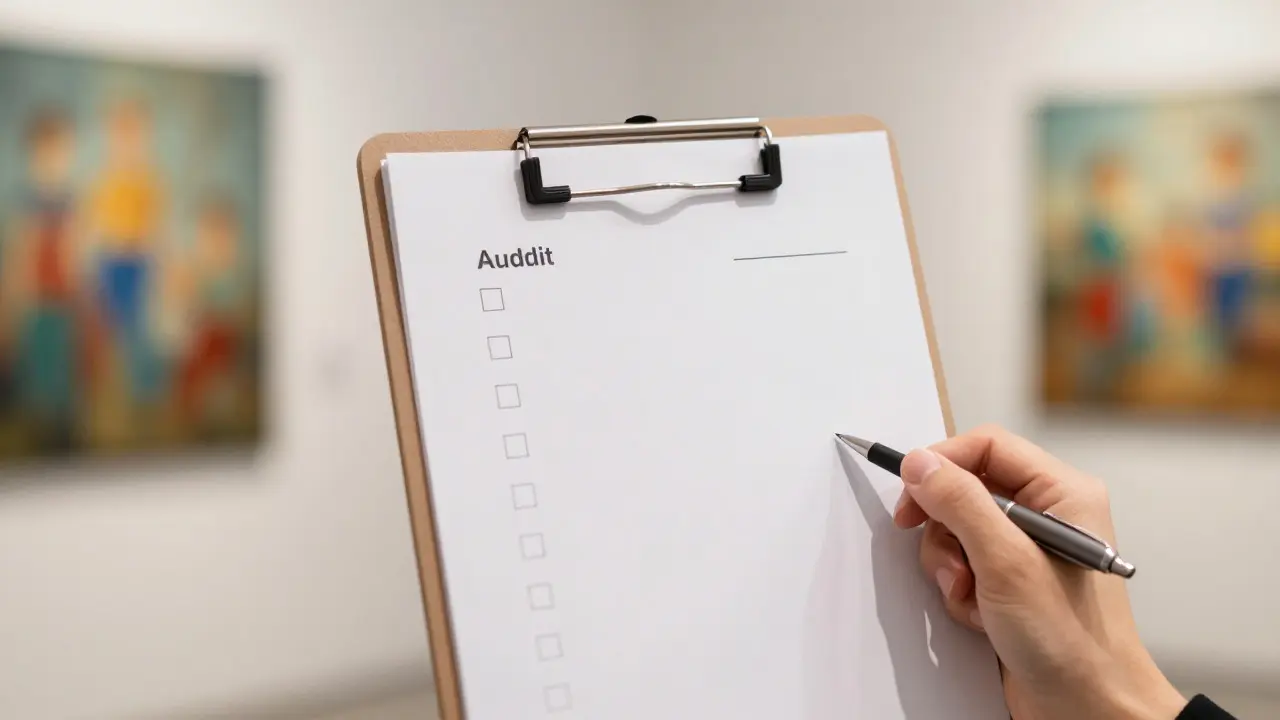
Common Pitfalls to Avoid
Even well-intentioned audits can fail if you make common mistakes.
- The Halo Effect: If the observer likes the art, they may rate the service higher than it deserves. Remind them to separate aesthetic judgment from service evaluation.
- One-Off Sampling: One visit isn't enough. Aim for at least three visits per quarter to get a reliable average.
- Punitive Feedback: If staff feel audited to be fired, they will perform poorly or game the system. Frame audits as coaching tools.
- Ignoring Digital Touchpoints: Does the website match the in-person experience? If the site says "Call for Price" but the phone line rings out, that's a failure point. Include digital checks in your broader CX strategy.
Turning Data into Action
Data without action is just noise. Once you have your scores, create a dashboard. Track trends over time. Is the "Greeting Timeliness" score improving? Is "Product Knowledge" stagnating?
Use the insights to refine your hiring process. If new hires consistently struggle with closing attempts, add role-playing exercises to your onboarding. If the environment scores drop during peak hours, consider adjusting staffing levels.
Finally, communicate the wins. When a mystery shop reveals that your staff successfully explained complex provenance to a confused visitor, celebrate that. Positive reinforcement drives better performance than criticism.
Auditing your gallery isn't about catching bad employees. It's about ensuring that every visitor feels valued, informed, and respected. In the art market, reputation is currency. Protect it with consistent, measurable excellence.
How often should a gallery conduct mystery shopping audits?
Quarterly is the standard recommendation. This frequency allows you to track seasonal changes in traffic and staff performance without becoming intrusive. If you are undergoing significant changes like a new location or new management, monthly audits may be necessary initially.
Who should perform the mystery shopping?
External observers are preferred to avoid bias. However, cross-training internal staff from different departments (e.g., having the accountant visit as a shopper) can also be effective. The key is that the observer should not be directly involved in the sales process being evaluated.
What is the difference between a mystery shop and a standard customer survey?
A mystery shop is proactive and controlled; you define the scenario and observe behavior in real-time. A customer survey is reactive; it relies on the customer's memory and willingness to respond. Mystery shops provide objective behavioral data, while surveys provide subjective sentiment data. Both are valuable, but they measure different things.
How do you handle negative feedback from a mystery shop?
Approach it as a coaching opportunity. Review the specific incident with the staff member involved. Ask for their perspective. Often, there is context the observer missed. Agree on a specific improvement plan and re-evaluate in the next cycle. Avoid public shaming or immediate disciplinary action based on a single data point.
Does mystery shopping work for small galleries with low foot traffic?
Yes, arguably even more so. In small galleries, every interaction matters. A single bad experience can ruin a potential long-term client relationship. Since volume is lower, the cost of acquiring a new client is higher, making service precision critical. Small galleries can run simpler, less frequent audits focused on high-value touchpoints.