Museum Gift Shop Buying: Support the Institution Smartly

Ever walked out of a museum feeling inspired, only to realize you left without buying anything-and immediately felt guilty? You’re not alone. Museums don’t just preserve history; they survive because of people like you who choose to spend a little extra at the gift shop. But buying something just because it’s there doesn’t help anyone. Smart shopping means knowing what actually supports the museum’s mission-and what’s just overpriced plastic.
What Your Purchase Actually Funds
When you buy a postcard of Van Gogh’s Starry Night at the MoMA gift shop, you’re not just getting a keepsake. You’re helping pay for the climate control system keeping that painting safe. You’re helping fund the education programs that bring 5th graders from underfunded schools to see art for the first time. You’re helping cover the salary of the conservator who spends 40 hours repairing a 200-year-old textile.
Most museums get less than 15% of their operating budget from government grants. The rest? Ticket sales, donations, and yes-gift shop revenue. A 2023 study by the American Alliance of Museums found that gift shop sales contribute an average of 12% to annual operating budgets. For smaller institutions, that number can jump to over 30%. That’s not pocket change. That’s the difference between keeping the lights on or closing for the season.
What to Look For (and What to Skip)
Not all museum merchandise is created equal. Some items are designed to educate. Others are just mass-produced clutter. Here’s how to tell the difference:
- Buy: Items made by local artists or artisans featured in the museum’s exhibits. A ceramic mug shaped like a Neolithic pot from the museum’s own archaeological collection? That’s direct support.
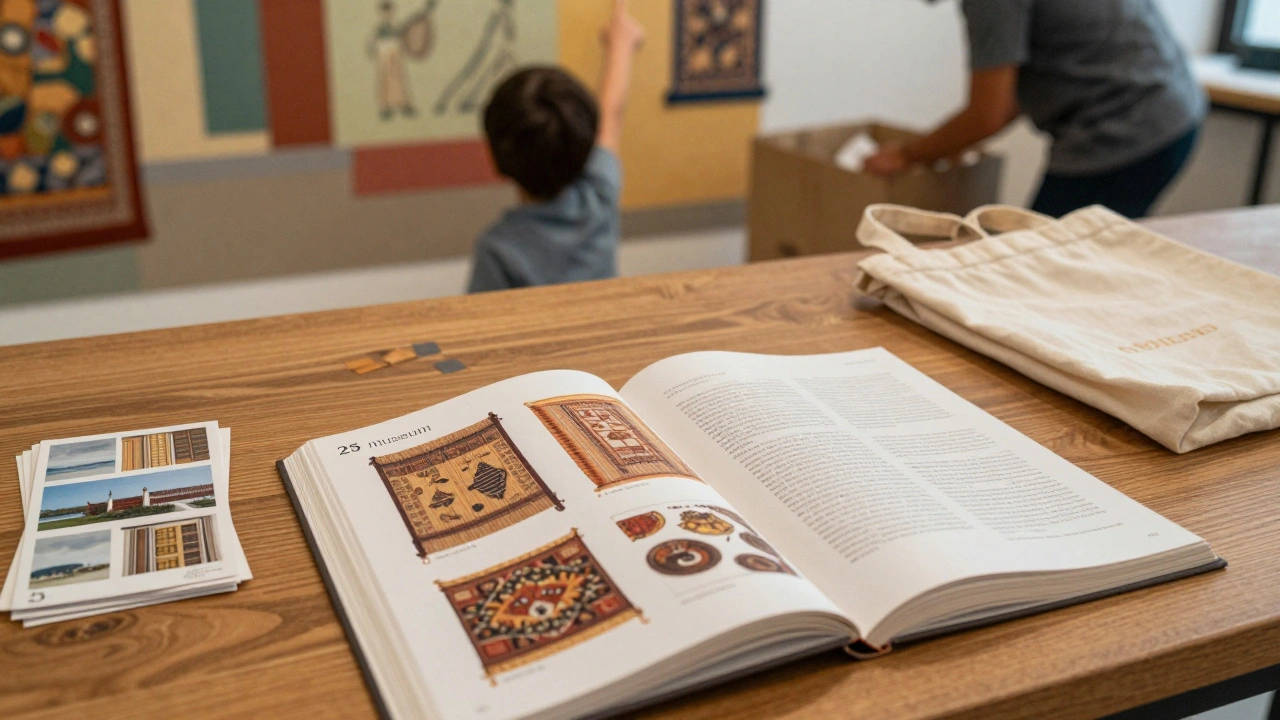
- Buy: Books written by the museum’s curators or scholars. These often include unpublished research, photos, or analysis you won’t find online.
- Buy: Reproductions of artwork printed on sustainable paper with archival inks. Look for labels like “museum-grade reproduction” or “limited edition.”
- Avoid: Cheap plastic toys with the museum logo. These are usually imported, low-margin items that don’t benefit local economies or the museum’s mission.
- Avoid: Overpriced t-shirts with generic quotes like “I ❤️ Art.” These cost $3 to make and sell for $25. The museum barely breaks even.
One rule of thumb: If the item is something you could find at any airport gift shop or Walmart, it’s probably not helping. If it’s unique, handmade, or directly tied to an exhibit, you’re making a smart choice.
How to Shop Without Overspending
You don’t need to spend $50 to make a difference. A $12 reproduction print, a $7 catalog, or a $5 set of postcards adds up. Here’s how to stretch your gift shop dollars:
- Check if the museum has a “Buy One, Give One” program. Some institutions donate a copy of a children’s book to a local school for every one sold.
- Look for member discounts. Even if you’re not a member, asking if one exists might surprise you. Many museums offer 10-20% off for students, seniors, or veterans.
- Wait for museum membership drives. Around tax season, many institutions run gift shop promotions where a portion of sales goes toward free membership.
- Buy digital. Many museums now sell high-res digital downloads of artwork for $5-$15. You can print them yourself, frame them, or use them as wallpaper. No shipping, no plastic, no waste.
Why Quality Matters More Than Quantity
One well-chosen item can do more than five cheap ones. A hand-thrown vase made by a ceramicist who worked with the museum’s ancient pottery collection isn’t just a decoration-it’s a bridge between past and present. That vase likely cost $80. But here’s what that $80 does:
- $30 goes to the artist, who lives in the same city as the museum.
- $25 covers materials and studio time.
- $15 supports the museum’s education department.
- $10 covers packaging and inventory.
Compare that to a $15 keychain with the museum’s logo printed in China. Only $2 goes to the museum. The rest? Shipping, marketing, and profit for a third-party vendor.
Smart shoppers don’t buy more. They buy better.
Support Beyond the Gift Shop
But here’s the truth: You don’t have to buy anything to support the museum. You can still be a powerful ally.
- Volunteer. Even two hours a month helps with docent training, exhibit setup, or event coordination.
- Donate your time. If you’re good with social media, offer to help caption a photo collection. If you’re a writer, help edit exhibit labels.
- Advocate. Tell your city council member that museums need funding. Write a letter to your local paper. Talk to your friends about why the museum matters.
- Visit often. Free admission days? Show up. Members-only previews? Bring a friend. The more people walk through those doors, the harder it is for funders to ignore them.
Buying at the gift shop is one way to help. But showing up, speaking up, and staying engaged? That’s how you make sure the museum lasts.

What’s the Real Value?
Let’s say you buy a $25 museum catalog. It’s beautifully printed, full of essays, and includes images you can’t find online. You’ll keep it for years. You’ll flip through it when you’re stressed. You’ll lend it to a friend. You’ll bring it up in conversation.
That catalog doesn’t just fund conservation. It spreads ideas. It sparks curiosity. It turns a casual visitor into a lifelong advocate.
That’s the real return on investment.
Final Thought: Buy With Purpose
The next time you walk into a museum gift shop, pause. Look around. Ask yourself: Does this connect me to what I just saw? Does it honor the story? Does it help the people who made it possible?
If yes-buy it. Not because you have to. Not because it’s cute. But because you believe in what this place stands for.
And if you don’t buy anything? That’s okay too. Just say thank you. Walk out with your head higher. And come back next month.
Are museum gift shops just trying to make money?
Most museum gift shops operate as nonprofit departments, not profit centers. Their goal isn’t to maximize sales-it’s to fund the museum’s mission. Revenue from gift shops typically goes toward education, conservation, and staff salaries. A 2023 report from the American Alliance of Museums showed that 87% of gift shop profits directly support public programs, not administrative overhead.
Can I support a museum without spending money?
Absolutely. Volunteering, attending free events, sharing exhibits on social media, writing reviews, or even just telling friends about the museum all help. Museums rely on public engagement as much as they do on sales. A visitor who comes back three times a year is more valuable than one who buys a $50 item and never returns.
Why do museum items cost so much?
Many museum products are made in small batches, often by local artisans or in collaboration with the museum’s curators. They use high-quality, sustainable materials and include detailed research or historical context. A $40 reproduction print might be printed on acid-free paper with archival ink, hand-numbered, and packaged with a fact sheet-costs that add up. Compare that to a $10 Walmart print made from recycled plastic and shipped from overseas.
Is it better to buy online or in person?
Buying in person usually benefits the museum more. Online sales often involve third-party retailers, shipping fees, and marketing costs that eat into profits. When you buy at the museum, nearly all of the revenue goes directly to the institution. Plus, you’re more likely to find exclusive items only available on-site.
Do museums profit from licensing their artwork?
Yes, but it’s complicated. Museums license images of artworks in their collection for use on products like cards, apparel, or home goods. However, they usually only license works in the public domain (like Rembrandt or Monet). For modern or living artists, they must get permission from the estate or copyright holder. Revenue from licensing is often shared, and the museum’s cut is usually small-sometimes under 10%. That’s why original, museum-made items are a better way to support them.