Museum Dress Code: What to Wear to Galleries
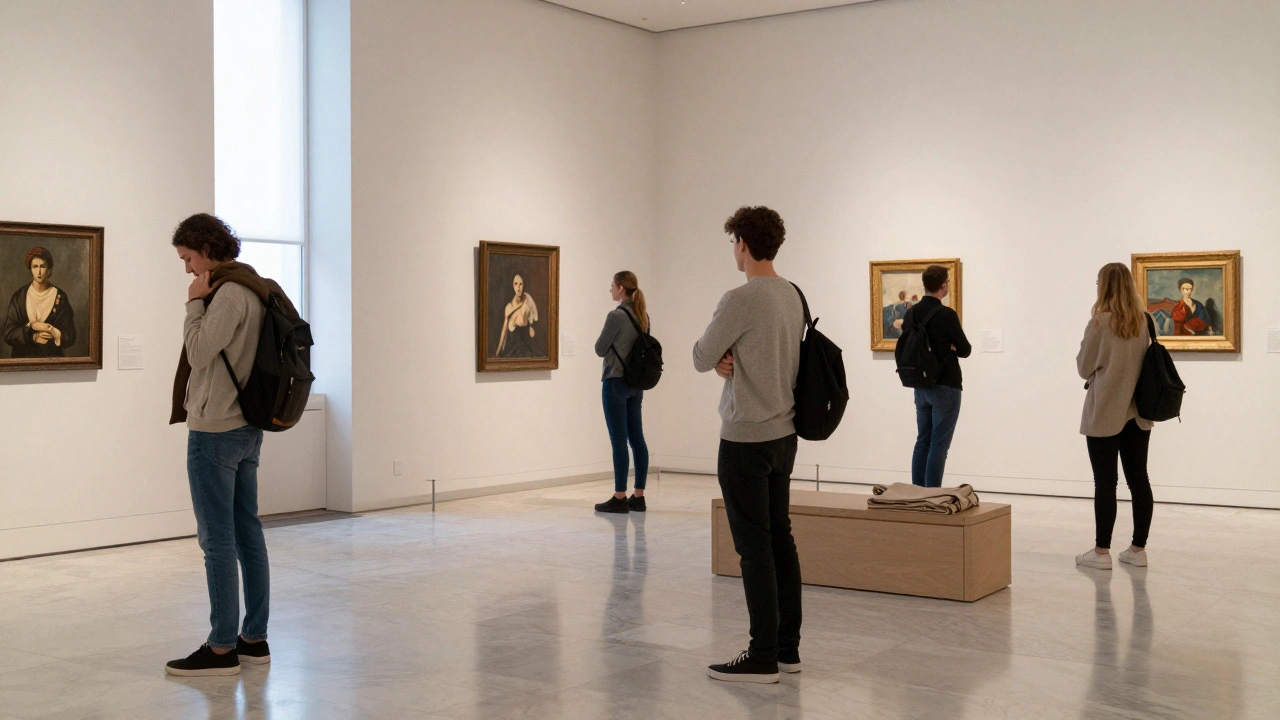
Walking into a museum shouldn’t feel like showing up to a job interview. But you’ve probably seen someone in flip-flops, a tank top, or sweatpants and wondered-is this okay? The truth? Most museums don’t have strict rules. But there’s a difference between allowed and appropriate. And if you want to enjoy your visit without drawing unwanted attention-or worse, getting asked to leave-you need to know what works.
There’s No Universal Rule
Museums aren’t like airports or courtrooms. There’s no federal dress code. The Smithsonian in Washington, D.C., doesn’t list any clothing restrictions on its website. The Metropolitan Museum of Art in New York says visitors should be “respectfully dressed,” but never defines what that means. The Louvre? Same thing. No uniform policy. So why do people still get nervous? It’s not about rules. It’s about context. Think of a museum like a public library. You wouldn’t show up in pajamas and a bathrobe, right? Same logic applies here. Museums are quiet, thoughtful spaces. People come to look, reflect, learn. When someone’s wearing a shirt that says “I Survived Spring Break,” or a pair of shorts that look like they’ve been through three hikes, it breaks the mood. Not because it’s illegal. Because it’s jarring.What Actually Works
Here’s what most visitors-and staff-agree on:- Comfortable shoes - You’ll walk 5 to 10 miles in a single day. Flat, supportive sneakers or walking shoes are your best friend. No flip-flops. They’re unstable on marble floors and make you look like you’re just passing through.
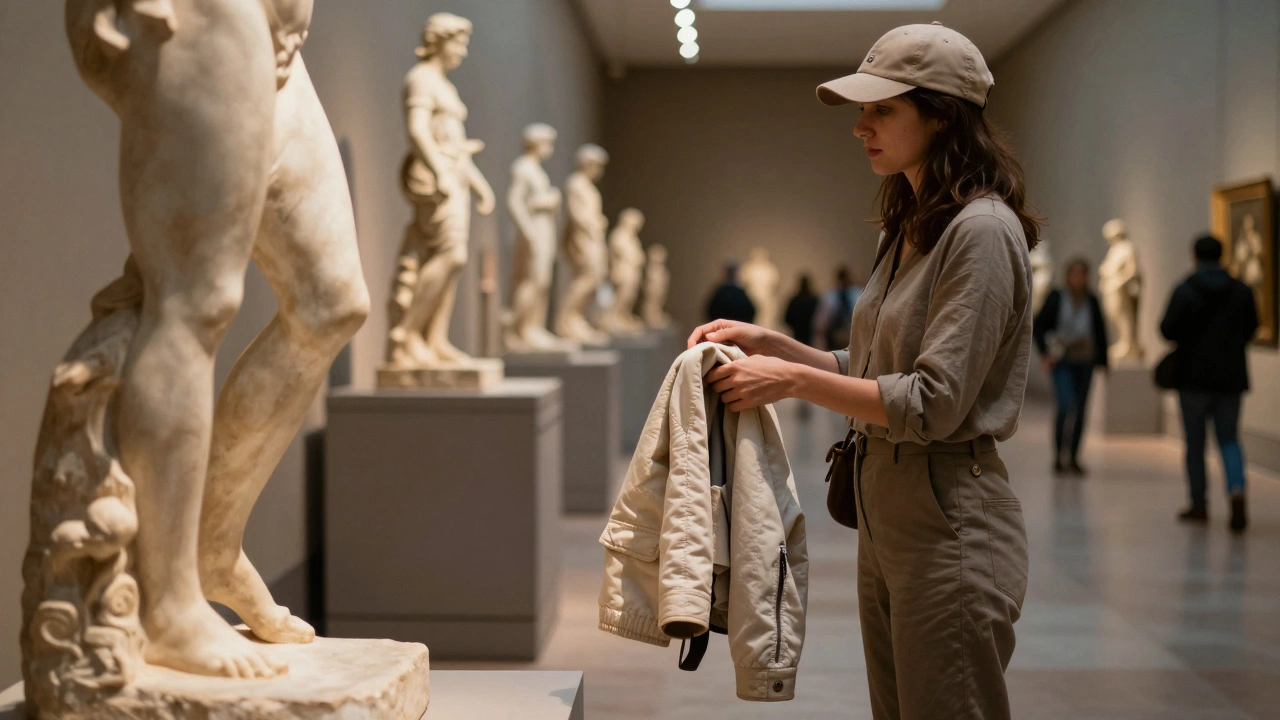
- Layered clothing - Museum air conditioning runs cold. Even in summer. A light sweater, cardigan, or jacket you can take off is essential. I’ve seen people shivering in front of Van Goghs because they wore a tank top and assumed it was summer.
- Mid-length pants or skirts - Not because they’re required, but because they’re practical. You’ll sit on benches, crouch near displays, and sometimes climb stairs. Avoid overly tight or short clothing. It’s not about modesty-it’s about mobility.
- Simple, neutral tones - Bright neon, loud logos, or graphic tees with slogans can distract others. You’re not there to be the center of attention. Neutral colors like gray, navy, beige, or black help you blend in. And yes, that includes hats. Baseball caps are fine. Hats with brims that block views? Not cool.
What to Avoid
Some things are just asking for trouble:- Flip-flops or sandals - Too many people slip on smooth floors. Museums have had to install warning signs just because of this.
- Revealing clothing - Bare midriffs, extremely short shorts, or low-cut tops. It’s not about censorship. It’s about respect. Other visitors are here for art, not distractions.
- Heavy backpacks - If it’s bigger than a tote bag, check it. Most museums have free coat and bag check. If you don’t, you’ll be shoving it into narrow hallways and nearly knocking over a sculpture. I’ve seen it happen. Twice.
- Strong perfume or cologne - Art conservators are allergic to this. Fragrances can damage delicate materials. One museum in Boston actually banned scented products after a 17th-century tapestry started deteriorating. You don’t want to be the reason a 400-year-old painting gets moved to storage.
- Costumes - No, your Harry Potter robe doesn’t belong here. Unless it’s a themed event (and they’ll tell you), costumes are a no-go. It confuses staff, disrupts other visitors, and sometimes triggers security alarms.
Regional Differences Matter
A museum in Paris won’t care if you wear jeans. A museum in Tokyo might. Why? Culture. In Europe, especially in historic cities like Rome or Vienna, museums are part of daily life. People go there after work, in regular clothes. You’ll see locals in well-worn sneakers and linen shirts. No one bats an eye. In the U.S., some institutions-especially those in conservative cities or those with religious ties-expect slightly more formal attire. The Getty Center in Los Angeles? Casual is fine. The Kimball Art Museum in Fort Worth? They’ve had staff quietly ask people to cover up if they’re in tank tops. It’s not written down. But it happens. If you’re unsure, check the museum’s website. Look for a “Plan Your Visit” or “Visitor Guidelines” page. If it says “business casual,” they mean slacks or knee-length skirts-not yoga pants. If it says “casual,” then jeans and a t-shirt are fine.Special Exhibits Have Their Own Rules
Not all galleries are the same. A modern art exhibit might welcome bold outfits. A temple artifact exhibit? Not so much. Some museums require you to remove hats or cover shoulders when entering sacred or religious collections. The British Museum does this for certain Egyptian and Buddhist galleries. The Museum of Fine Arts in Boston asks visitors to cover their heads in the Islamic art wing. It’s not about religion-it’s about cultural sensitivity. If you’re visiting a special exhibit-like a royal crown display or a religious relic show-look for signs. They’ll often say: “Please cover shoulders” or “No hats.” Follow them. It’s not a suggestion. It’s part of preserving respect.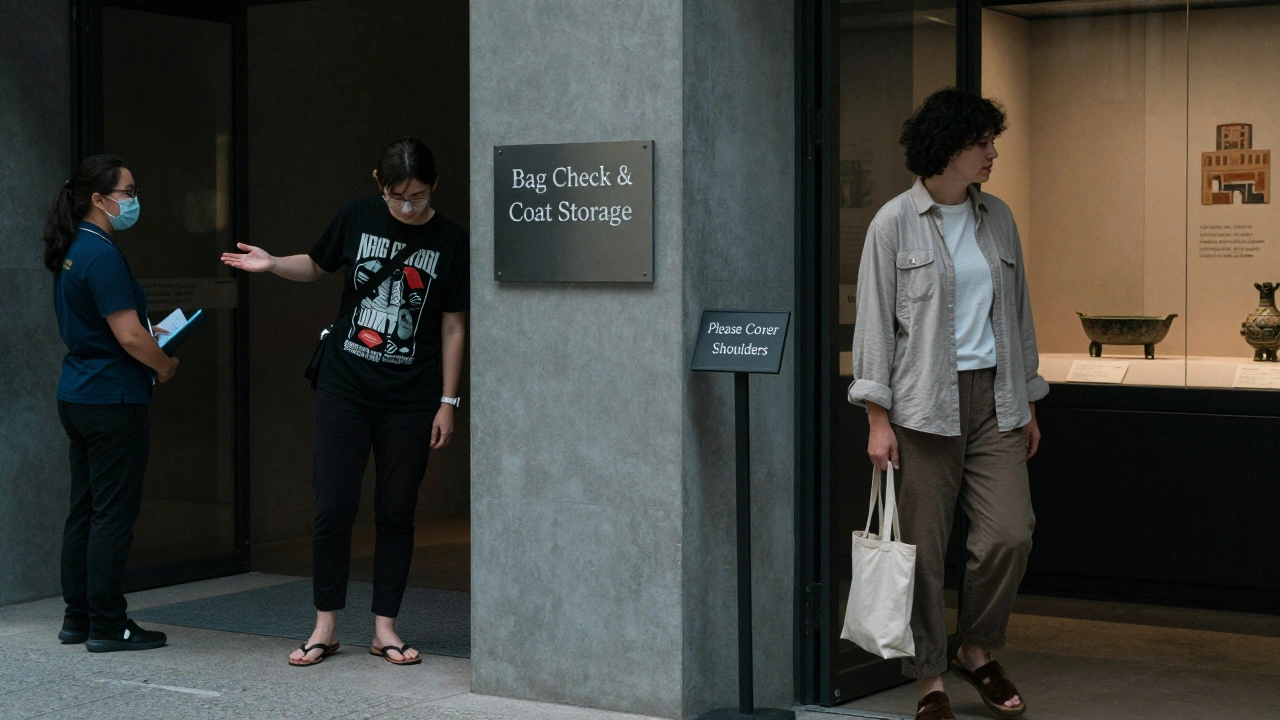
What About Kids?
Yes, kids are allowed. But they still need to dress appropriately. Don’t let your toddler wear a onesie with a cartoon character on it. It’s cute at home. In front of a $10 million painting? Not so much. Pick out simple, solid-colored clothes. Closed-toe shoes. No oversized hoodies that block views. And yes, bring a light jacket. Kids get cold faster than adults. If you’re bringing a stroller, check if the museum allows them inside. Some older buildings have narrow halls. Others require you to leave strollers at the entrance. Always call ahead if you’re unsure.Why This Matters More Than You Think
This isn’t just about looking good. It’s about protecting art. Every year, museums lose thousands of dollars to damage caused by visitors. A stray backpack knocks over a display. A perfume spray settles on a textile. A child touches a painting because they’re wearing gloves that shed lint. These aren’t accidents. They’re preventable. Wearing the right clothes helps keep art safe. It also helps keep the space calm. Imagine walking into a room full of silent masterpieces, and the person next to you is loudly talking on their phone while wearing a shirt that says “I’m Here for the Snacks.” You wouldn’t do that in a cathedral. Don’t do it in a museum.Final Checklist
Before you leave the house:- Wear comfortable walking shoes - no heels, no flip-flops.
- Bring a light jacket or sweater - museums are always cold.
- Choose neutral, non-distracting clothing - no loud logos.
- Wear pants or knee-length skirts - avoid shorts unless it’s a very casual museum.
- Leave large bags at the coat check.
- Skip perfume, cologne, and strong scents.
- Check the museum’s website for special exhibit rules.
Simple. Practical. Respectful.
Can I wear jeans to a museum?
Yes, jeans are perfectly fine at most museums. Just make sure they’re not ripped, overly tight, or covered in graffiti-style designs. Pair them with a simple top and closed-toe shoes. Most visitors in major cities like New York, London, or Paris wear jeans daily.
Are sneakers okay?
Absolutely. In fact, they’re recommended. Museums require a lot of walking. Sneakers with good grip and arch support will save your feet. Avoid flashy colors or oversized designs-stick to classic black, white, or gray.
Can I wear a hat inside?
Baseball caps are fine. But avoid wide-brimmed hats, top hats, or anything that blocks the view of others. Some museums-especially those with religious exhibits-ask visitors to remove head coverings. Always follow posted signs.
What if I’m visiting a museum in winter?
Layer up. Wear thermal base layers under a sweater, and bring a coat. Most museums have coat check, so you can leave bulky items there. Don’t wear snow boots inside-they track in dirt and damage floors. Change into clean indoor shoes if possible.
Do I need to dress up for a museum gala or evening event?
If it’s labeled as a gala, fundraiser, or evening opening, then yes-dress up. These are special ticketed events, often with cocktails and live music. Think business casual or cocktail attire. But for regular daytime visits? No. Just be comfortable and respectful.
If you’re ever unsure, just ask at the front desk. Staff are happy to help. And remember: the goal isn’t to impress anyone. It’s to see the art-and let others see it too.