Microcopy for Art Checkout: Reduce Friction and Doubts
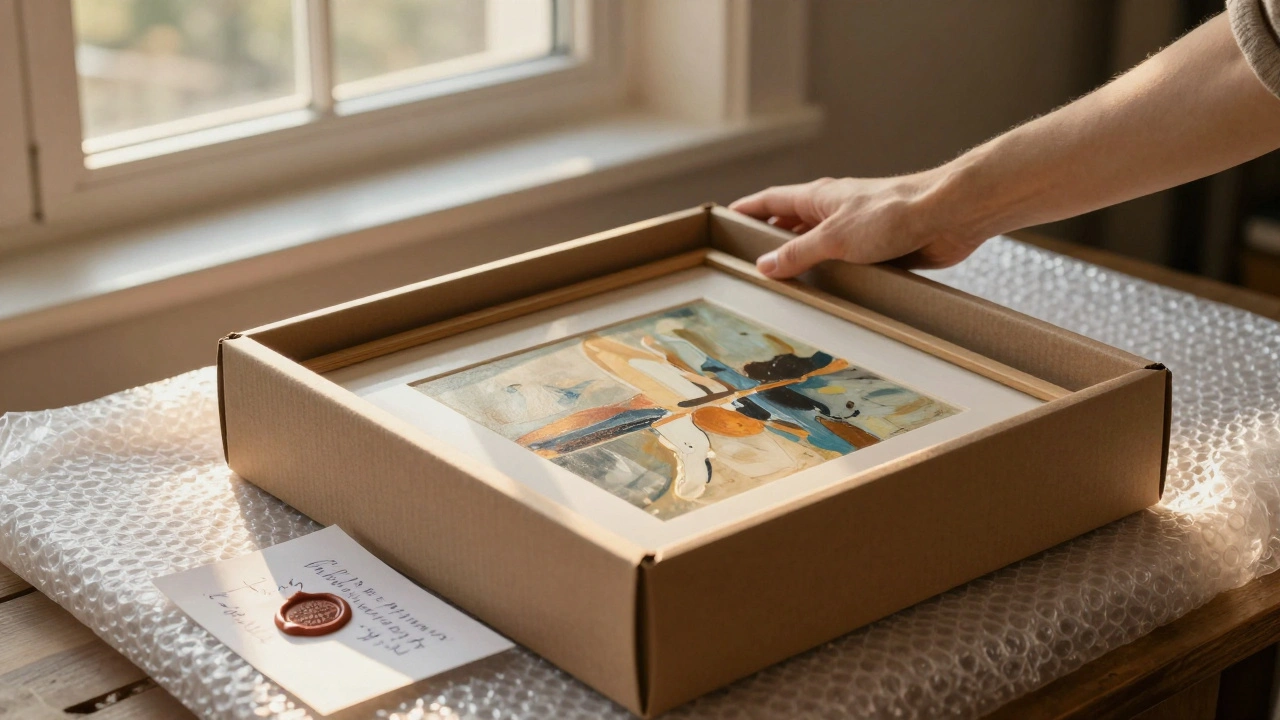
When someone is ready to buy a piece of art online, they’re not just buying a painting or sculpture. They’re buying a feeling, a story, a piece of someone’s soul. But if the checkout process feels cold, confusing, or suspicious, that connection breaks. That’s where microcopy - the tiny bits of text guiding users through every step - makes all the difference. It’s not about fancy design. It’s about trust. And trust is what turns a hesitant browser into a buyer.
Why Art Buyers Hesitate at Checkout
Unlike buying a book or a pair of shoes, art has no standard size, return policy, or universal price tag. Buyers ask themselves: Is this authentic? Will it look good in my space? What if I hate it after it arrives? These aren’t silly questions. They’re deeply personal. And if your checkout doesn’t answer them quietly, politely, and clearly, the buyer leaves - even if they loved the piece.
Studies show that 68% of online art buyers abandon their cart because they lack confidence in the transaction. Not because the price is too high. Not because the site is slow. But because they didn’t feel understood.
What Microcopy Actually Does
Microcopy isn’t just labels or buttons. It’s the voice that reassures, clarifies, and guides - without being pushy. Think of it like a gallery assistant who notices you’re lingering in front of a piece and says, "This one was painted in 1972. The artist traveled to Bali for three months before making it. Many collectors say it changes the energy of a room."
On your checkout page, that voice needs to be baked into every line:
- Instead of "Proceed to Payment," try: "Secure your piece - we’ll handle shipping and framing."
- Instead of "Terms & Conditions," try: "What you’re buying: original artwork, signed, with a certificate of authenticity."
- Instead of a blank "Shipping" field, write: "Delivered in 7-10 days. Fully insured. No signature required."
These aren’t just words. They’re emotional anchors.
Where to Place Microcopy in the Art Checkout Flow
Don’t wait until the last step. Every screen needs quiet support.
1. The "Add to Cart" Button
"Add to Cart" is too robotic. Try: "Hold this piece for 24 hours - no payment needed."
This reduces pressure. It says: "You’re not committing. You’re just reserving a moment."
2. The Shopping Cart Summary
Don’t just list the item. Add context:
- "Midnight Blue #7" by Elena Voss
- Oil on linen, 36" x 48"
- Created in 2023 - one of only 3 in this series
- Includes free museum-quality framing and white-glove delivery
That last line? It’s not a perk. It’s a reassurance. Buyers worry about damage. You’re saying: "We treat this like it’s our own."
3. The Shipping & Handling Section
Art is fragile. Buyers imagine it breaking in transit. Address that fear before it forms.
Instead of: "Shipping: $45"
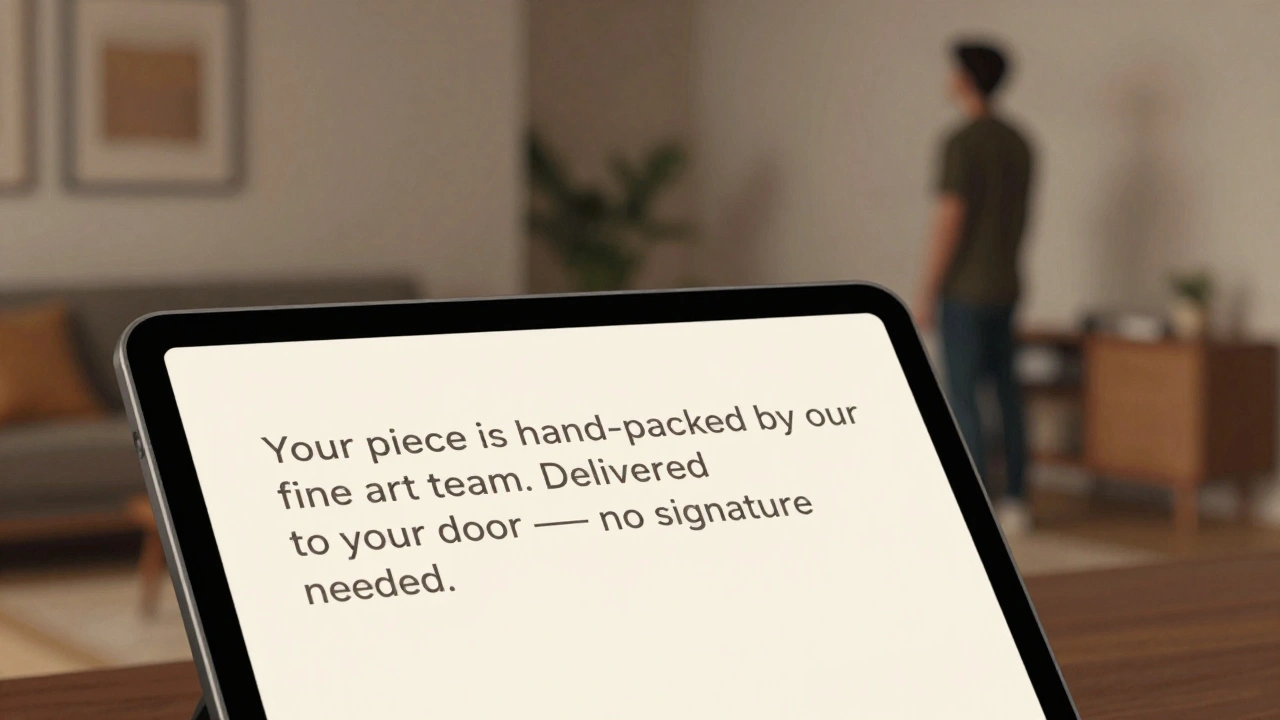
Write: "Your artwork is hand-packed by our fine art team using archival materials. Shipped via insured, climate-controlled courier. Delivered to your door - no need to be home."
Notice how this doesn’t just state a fact - it tells a story. And stories build trust.
4. The Payment Screen
Payment screens are where doubt spikes. Buyers wonder: "Is this secure? Is this legit?"
Replace generic security badges with:
- "All payments encrypted. We never store your card details."
- "Verified by ArtTrust - a trusted network of galleries and collectors."
- "Buy with confidence. 30-day return policy, no questions asked."
The last one is critical. Most art sellers say "no returns." That’s a dealbreaker. A 30-day return policy - even if it’s just for buyer’s remorse - removes 90% of hesitation.
5. The Confirmation Page
This is your last chance to connect. Don’t just say: "Thank you for your order."
Write:
- "Your piece, Midnight Blue #7, is now in our studio being prepared for shipment. You’ll receive a video of it being packed within 24 hours."
- "You’re now part of a small community of collectors who support living artists. Thank you."
That second line? It doesn’t sell. It belongs. And that’s what art buyers crave.
What Not to Do
Microcopy isn’t a place to be clever. It’s not a place to be cute. Avoid:
- "Don’t be a chicken - buy now!" (Too aggressive)
- "Limited stock! Only 1 left!" (Feels manipulative)
- "See our 5-star reviews!" (Too vague - which reviews? From whom?)
Art buyers are sensitive to sales tactics. They want honesty, not hype.
Real Examples That Work
Gallery 23 in Portland uses this microcopy on their checkout:
- "This painting was hand-rolled by the artist in her studio in Portland. No mass production. No prints."
- "Your order includes a handwritten note from the artist. We mail it with the artwork."
- "If it doesn’t move you after 30 days, we’ll take it back. No hassle."
They’ve seen a 41% drop in cart abandonment since adding these lines.
Another gallery in Berlin writes:
- "We ship worldwide. If your country has customs fees, we cover them."
- "You’ll get a QR code on your receipt. Scan it to hear the artist talk about this piece."
They’re not just selling art. They’re selling access.
How to Write Your Own Microcopy
Start with empathy. Ask yourself:
- What’s the buyer afraid of right now?
- What’s the one thing they wish they knew before clicking "Buy"?
- What would make them feel like they’re not alone in this decision?
Then write like you’re speaking to a friend. Not a customer. A friend.
Use simple words. Short sentences. No jargon. No corporate fluff.
Test it. Show your checkout page to five people who’ve never bought art online. Ask: "What do you think this means?" If they pause, frown, or say "I’m not sure," rewrite it.
Final Thought: Trust Is the Real Product
You’re not just selling art. You’re selling the peace of mind that comes with knowing you made the right choice. The right microcopy doesn’t explain the product - it removes the fear around buying it.
When done right, the checkout doesn’t feel like a transaction. It feels like a quiet handshake.
That’s how you turn hesitation into belonging.