Marketing Gallery Artists: Building Individual Brands and Audiences

Most galleries fail because they sell art instead of stories. You have a roster of talented painters and sculptors, but if you treat them as interchangeable inventory, you leave money on the table. The modern art market has shifted. Collectors don't just buy a canvas; they buy into a person. They want to know who held the brush, what keeps them up at night, and why their specific vision matters right now.
If you're running a gallery in Portland or anywhere else, your job isn't just hanging pictures. It's brand management. You need to help each artist build an individual identity that stands apart from the rest of your roster. When you do this well, you create loyal audiences who follow the artist, not just the gallery. This shifts the dynamic from transactional sales to long-term patronage. Let's look at how to actually pull this off without drowning in admin work.
The Shift From Inventory to Identity
Think about the last time you bought something expensive. Did you care more about the specs or the story? In the art world, the story is everything. A generic "contemporary abstract" description does nothing for a buyer. But knowing that an artist spent three years living in rural Oregon, documenting the decay of old timber towns, creates an emotional hook.
This is where most galleries stumble. They group artists by medium or style-"oil paintings," "mixed media." That's fine for cataloging, but it's terrible for marketing. You need to categorize by narrative. Is one artist exploring themes of isolation? Another focusing on urban renewal? These thematic buckets allow you to target specific collector interests. A collector interested in environmental issues will connect with the landscape photographer differently than one interested in political satire.
Building an individual brand means defining the artist's unique value proposition. What makes their work distinct? It’s not just technique; it’s perspective. Your role is to articulate that perspective clearly across all channels. If two artists in your gallery both paint portraits, but one focuses on corporate leaders and the other on street musicians, those are two completely different brands targeting two different audiences.
Crafting the Artist Narrative
You can't just ask an artist to "write a bio." Most artists hate writing about themselves. They’ll give you a dry list of degrees and exhibitions. That’s useless for marketing. You need to dig deeper. Sit down with them. Ask questions that uncover the 'why' behind their work.
- What problem are they solving? Are they trying to capture light in a new way? Or process grief through sculpture?
- Who is their ideal viewer? Not just "collectors," but specific types. Interior designers? Tech entrepreneurs? Traditionalists?
- What is their origin story? How did they get here? Was there a pivotal moment that changed their direction?
Once you have these answers, craft a narrative arc. It doesn’t need to be long. A concise paragraph that captures their essence is enough. This narrative becomes the foundation for every email, social post, and press release. Consistency builds recognition. If the artist talks about "finding beauty in decay" in an interview, their Instagram captions should reflect that same language. If the gallery website says one thing and the artist’s personal site says another, you confuse the audience. Confusion kills conversion.
Leveraging Digital Platforms for Personal Connection
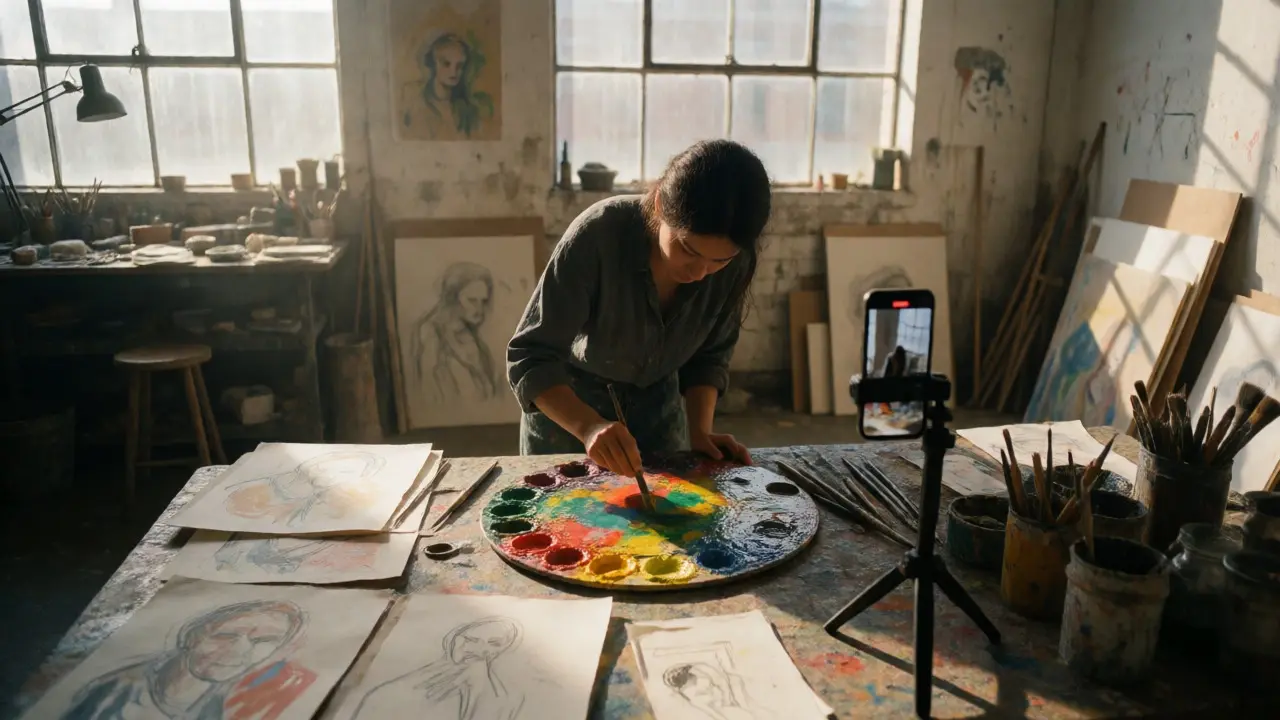
Social media is often misused in the art world. Many artists post finished works only. That’s like a restaurant showing photos of plated food but never letting you see the kitchen. To build an audience, you need to show the process. Show the messy studio. Show the failed sketches. Show the artist thinking.
Instagram remains the primary visual portfolio, but TikTok and YouTube Shorts are gaining traction for educational content. An artist explaining their color theory in a 60-second clip can attract thousands of followers who might never buy a $5,000 painting but will share the content. This expands the top of the funnel. More visibility leads to more credibility, which eventually leads to sales.
Here’s a practical approach: assign each artist a content pillar. One might focus on "Studio Life," another on "Inspiration Sources," and a third on "Technique Tutorials." Rotate these pillars weekly. This keeps the feed fresh and gives followers varied reasons to engage. Don’t worry about perfection. Authenticity beats polish every time. A shaky phone video of an artist mixing paints feels more real than a highly produced drone shot.
Engaging Collectors Beyond the Sale
Collectors want access. They want to feel like insiders. Use your email list to provide exclusive insights. Instead of blasting out "New Works Available," send a note from the artist. Let them hear directly from the creator. Maybe the artist shares a book they’re reading that influenced their latest series. Or perhaps they discuss a challenge they faced in a recent piece.
Create tiered engagement opportunities. High-value collectors might get invited to private studio visits. Mid-tier buyers could receive limited edition prints or early access to new drops. Low-tier followers might join a newsletter that offers behind-the-scenes updates. Segmenting your audience allows you to tailor messages without spamming everyone with irrelevant info.
| Collector Tier | Primary Interest | Engagement Channel | Frequency |
|---|---|---|---|
| High-Net-Worth | Exclusivity & Access | Private Events / Studio Visits | Quarterly |
| Mid-Market | Connection & Story | Email Newsletters / Social DMs | Monthly |
| Emerging Buyers | Affordability & Discovery | Public Exhibitions / Open Studios | Bi-Weekly |
This structure ensures that high-value clients feel special while emerging buyers aren’t overwhelmed by inaccessible prices. It also helps you identify which artists resonate with which segments. If one artist consistently attracts mid-market buyers who love storytelling, double down on content that highlights their narrative.

Collaborative Marketing Campaigns
Galleries often make the mistake of marketing artists in silos. But cross-promotion can amplify reach. Pair artists with complementary themes for joint exhibitions or digital campaigns. For example, if you have a painter focused on nature and a photographer focused on urban green spaces, run a campaign called "Green Spaces: Two Perspectives." This introduces each artist’s audience to the other, doubling potential exposure.
Consider collaborations outside the gallery too. Partner with local businesses that align with an artist’s brand. A ceramicist might collaborate with a specialty coffee shop for a limited-run mug collection. A textile artist might work with a boutique hotel to design lobby installations. These partnerships place the artist’s work in everyday contexts, making it more relatable and accessible to non-traditional collectors.
Press coverage is another lever. Pitch stories to niche publications rather than just major art journals. If an artist uses recycled materials, pitch to sustainability blogs. If they use traditional techniques in a modern context, pitch to craft magazines. Targeted press gets you readers who already care about the subject matter, increasing the likelihood of conversion.
Measuring Success Beyond Sales
It’s tempting to judge success solely by monthly revenue. But brand building takes time. Track metrics that indicate growing interest. Watch follower growth rates, not just total counts. Look at engagement rates-likes, comments, shares-to gauge true connection. Monitor email open rates and click-through rates to see if your narratives are landing.
Ask yourself: Are people tagging us? Are they asking about the artist by name? Are we getting unsolicited inquiries from collectors who found us via social media? These signals suggest that the individual brand is taking root. When an artist starts getting invited to speak at conferences or features in lifestyle magazines independent of your gallery, you’ve succeeded in building their personal brand.
Remember, this is a marathon, not a sprint. Consistency over months yields better results than sporadic bursts of activity. Keep refining the narrative based on what resonates. If a particular type of post drives engagement, lean into it. If a certain collector segment responds poorly to a message, adjust the tone.
How much control should the gallery have over an artist's social media?
Ideally, a collaborative model works best. The gallery sets the overall strategy and provides templates or guidelines to ensure brand consistency, but the artist should handle day-to-day posting to maintain authenticity. Followers can tell when content feels forced or managed by a third party. The gallery’s role is to curate and amplify, not to dictate every caption.
What if an artist is resistant to personal branding?
Many artists fear that branding dilutes their artistic integrity. Address this by framing it as storytelling rather than selling. Explain that collectors connect with humans, not just objects. Start small-perhaps just sharing process videos or studio tours-without requiring self-promotion. Show them data from similar artists who gained visibility through authentic sharing. Over time, resistance often fades as they see tangible benefits like increased inquiries.
How do I differentiate multiple artists in the same style?
Focus on sub-niches and personal narratives. Even if two artists paint minimalist landscapes, one might focus on arid desert environments while the other explores coastal fog. Highlight these specific inspirations and technical differences. Create separate landing pages or social accounts for each artist to prevent audience confusion. Tailor messaging to appeal to slightly different collector psychographics, such as one targeting eco-conscious buyers and the other targeting luxury interior designers.
Is paid advertising necessary for building an artist brand?
Not always, but it can accelerate growth. Organic reach on platforms like Instagram has declined, so targeted ads can help reach specific demographics. However, ads should support strong organic content. If the underlying brand narrative is weak, paid traffic won’t convert. Start with organic efforts to test which messages resonate, then boost successful posts to wider audiences. Retargeting visitors who engaged with an artist’s profile is often more cost-effective than cold prospecting.
How often should we update an artist's brand strategy?
Review quarterly, but evolve gradually. Artistic styles change, and so do market trends. Every three months, analyze performance metrics and gather feedback from collectors and the artist. Adjust content pillars or messaging if needed. Avoid drastic rebrands unless there’s a significant shift in the artist’s work or career stage. Consistency is key to building trust, so minor tweaks are usually better than complete overhauls.