Licensing Exclusivity Windows: Mastering Time-Bound Restrictions

Imagine you spend three years developing a niche software tool. You sign a five-year exclusive licensing deal with a major distributor to get their massive sales force behind your product. Two years in, the distributor’s priorities shift. They bury your product under newer, flashier items from other partners. You’re stuck. You can’t sell directly because of the exclusivity clause, and they aren’t selling enough to justify the lock-in. This is the trap of poorly defined licensing exclusivity windows. It’s not just about who gets to sell; it’s about when, how long, and what happens if things go quiet.
Most founders and IP holders treat exclusivity as a binary switch: on or off. But in reality, it’s a dimmer switch controlled by time. A time-bound restriction defines the specific period during which a licensee has sole rights to exploit an asset. Outside this window, the landscape changes completely. Understanding how to structure these windows is often the difference between a partnership that scales and one that suffocates your growth.
Why Exclusivity Needs an Expiration Date
Perpetual exclusivity is a myth in modern business, even if contracts say otherwise. Markets move too fast. Technology becomes obsolete. Consumer preferences shift overnight. When you grant exclusive rights, you are effectively betting that the partner will outperform every other potential buyer for the duration of the term. If that bet fails, you need an exit ramp.
Time-bound restrictions serve two critical functions. First, they create urgency. A licensee knows they have a limited runway to prove their value before the door opens to competitors. Second, they protect the licensor’s optionality. If a better opportunity arises-a larger distributor, a direct-to-consumer model, or a new technology platform-you want the ability to pivot without paying a penalty to break a contract.
Consider the pharmaceutical industry. Patent cliffs are rigid time-bound exclusivities. Once the patent expires, generics flood the market. In consumer goods, exclusivity might last only six months for a seasonal product launch. The length of the window should match the lifecycle of the asset and the speed of the market. A static brand like Coca-Cola needs different terms than a viral TikTok trend.
Anatomy of the Exclusivity Window
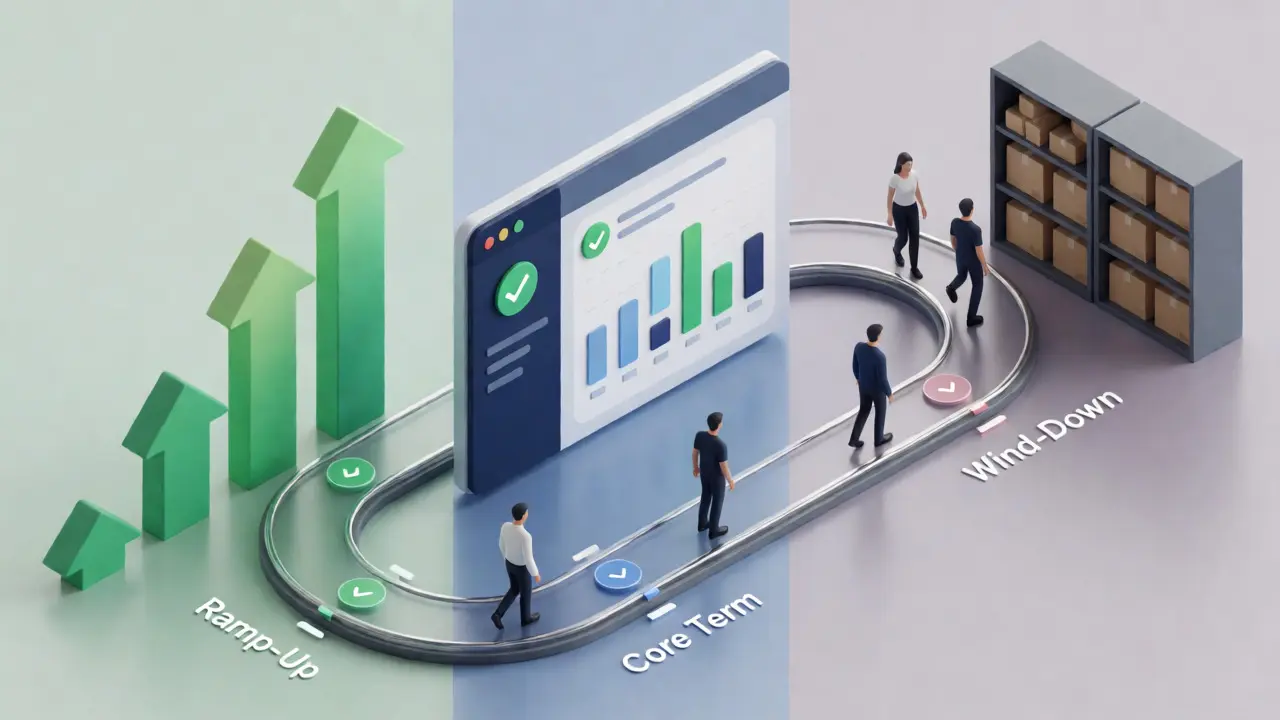
A well-drafted license agreement doesn't just state "Exclusive License." It breaks down the timeline into distinct phases. Think of it as a journey with checkpoints.
- The Ramp-Up Period: Usually the first 6-12 months. During this phase, the licensee is given breathing room. They don’t need to hit peak sales immediately while they integrate the product into their catalog. However, they must meet minimum marketing spend commitments.
- The Core Exclusivity Term: This is the main body of the agreement. Here, performance metrics matter most. Did they hit the agreed-upon revenue targets? If yes, exclusivity continues. If no, the license may automatically convert to non-exclusive.
- The Wind-Down Phase: Often overlooked. This is the final 3-6 months where the licensee can still sell existing inventory but cannot accept new orders. This prevents channel conflict when the next partner takes over.
Without these sub-phases, you risk abrupt transitions. Imagine your distributor stops shipping your product on December 31st, and your new partner starts January 1st. What happens to the stock sitting in warehouses? Who owns the customer data generated during the transition? Defining the wind-down protects both parties.
Performance Clauses vs. Pure Time Limits
Should exclusivity end simply because time ran out, or because performance failed? Relying solely on time limits is risky. A partner could sit on your IP for three years, doing nothing, and then walk away. That’s wasted capital. Conversely, relying solely on performance metrics can lead to disputes over what constitutes "reasonable efforts."
The best approach combines both. Set a hard stop date (e.g., 3 years) but include early termination triggers based on missed milestones. For example, if the licensee fails to achieve $500k in net sales by month 18, the exclusivity clause dissolves, and the licensor gains the right to appoint additional distributors. This keeps the pressure on without requiring a full contract breach lawsuit.
| Structure Type | Duration | Risk to Licensor | Best Use Case |
|---|---|---|---|
| Fixed Term | 1-5 Years | High if partner underperforms | New markets requiring heavy investment |
| Rolling Term | Annual renewals | Low | Mature products with stable demand |
| Performance-Based | Variable | Medium (dispute risk) | High-growth tech or startups |
| Territory-Specific | Varies by region | Medium | Global brands with local partners |
Geographic and Channel Nuances
Exclusivity isn’t always global. Often, it’s segmented by geography or channel. You might grant exclusive distribution rights for retail stores in North America but keep online sales open. Or you might give one partner exclusivity for hardware and another for software integrations.
Time boundaries apply differently here. A geographic window might be shorter in emerging markets where adoption rates are unpredictable. A channel window might be longer if the channel requires significant infrastructure setup, like building a specialized service network.
Be careful with cross-channel conflicts. If your exclusive retail partner sees you launching a direct-to-consumer website halfway through their term, they’ll feel betrayed. Define the channels explicitly. If you plan to expand into new channels, reserve those rights upfront so they don’t fall under the default "all channels" definition of the exclusive license.
Negotiating the Exit Strategy
The moment of truth comes when the window closes. How do you handle the transition? A vague clause like "upon expiration, all rights revert to Licensor" is dangerous. It ignores inventory, branding, and customer relationships.
Include a buy-back option. If the licensee has unsold inventory at the end of the term, the licensor should have the right (or obligation) to repurchase it at a discounted rate. This ensures the old partner isn’t left holding the bag and clears the shelf for the new one.
Also, address digital assets. Who owns the email lists built during the exclusive period? Does the licensee retain access to the CRM data? These details often cause more friction than the initial signing. Clarify that customer data belongs to the licensor, with the licensee getting a one-time export before the window shuts.

Common Pitfalls to Avoid
Don’t assume silence means consent. If your contract doesn’t specify what happens after the exclusivity ends, you might inadvertently create a perpetual non-exclusive license. Always state clearly: "Upon expiration, the Licensee retains non-exclusive rights subject to royalty payments," or "All rights terminate completely." Another mistake is ignoring regulatory changes. In some industries, laws change mid-term. For instance, data privacy regulations might restrict how a licensee uses customer data. Build in a compliance review checkpoint annually. If regulations make the current model unviable, allow for renegotiation rather than automatic breach.
Finally, watch out for "holdover" clauses. Some agreements allow the licensee to continue selling until existing stock is depleted, regardless of the end date. While fair, this can stretch a 3-year deal into a 4-year shadow monopoly. Cap the holdover period strictly-say, 90 days maximum.Practical Checklist for Drafting Your Terms
Before you sign, run through this list to ensure your licensing exclusivity windows are robust.
- Define the Start Trigger: Is it the signing date, the first shipment, or the first sale? Ambiguity here delays the clock.
- Set Minimum Performance Metrics: Include clear KPIs (Key Performance Indicators) tied to revenue, units sold, or marketing spend.
- Specify the End Date Mechanism: Is it calendar-based or event-based? Ensure there’s no ambiguity about when the "last day" occurs.
- Address Inventory Disposition: Who buys back unsold goods? At what price?
- Clarify Post-Term Rights: Does the licensee keep any residual rights? Can they use the brand name for reference?
- Plan for Renewal: Is renewal automatic, optional, or negotiable? Give yourself leverage by making renewal contingent on past performance.
Structuring these windows correctly turns a legal constraint into a strategic tool. It aligns incentives, reduces risk, and keeps your IP agile. Don’t let a bad contract tie up your valuable assets in a dead-end partnership. Keep the clock ticking, and keep your options open.
What happens if a licensee fails to meet sales targets during the exclusivity window?
Typically, failure to meet agreed-upon sales targets triggers a conversion of the license from exclusive to non-exclusive. This allows the licensor to bring in additional partners without terminating the entire agreement. In severe cases, repeated failures may constitute a material breach, allowing the licensor to terminate the contract entirely, depending on the specific cure periods defined in the agreement.
Can exclusivity be extended beyond the original time-bound window?
Yes, but it usually requires a formal amendment or a pre-negotiated renewal option. Most contracts include a clause stating that exclusivity does not automatically renew. To extend it, both parties must agree to new terms, which often include updated performance metrics or adjusted royalty rates. Automatic extensions are rare and generally unfavorable to the licensor unless performance has been exceptional.
How do I handle unsold inventory when the exclusivity window ends?
The standard practice is a "sell-through" period or a buy-back provision. A sell-through period allows the former licensee to continue selling existing stock for a set time (e.g., 90 days) without violating the new exclusivity granted to a successor. Alternatively, the licensor may agree to repurchase unsold inventory at a discount. The specific mechanism should be defined in the termination section of the license agreement to avoid disputes.
Does exclusivity cover all channels or just specific ones?
This depends entirely on the scope defined in the contract. Exclusivity can be broad (covering all possible sales channels) or narrow (limited to brick-and-mortar retail in a specific country). It is crucial to explicitly list included and excluded channels. If the contract is silent, courts often interpret exclusivity narrowly, meaning the licensor retains rights to channels not explicitly mentioned, such as e-commerce or direct sales.
What is a "holdover" clause in licensing?
A holdover clause allows a licensee to continue operating or selling products for a short period after the official expiration date, typically to clear out remaining inventory or complete pending transactions. This prevents immediate disruption to customers. However, holdover periods should be strictly limited (e.g., 30-90 days) and usually require the licensee to pay royalties on any sales made during this time. Without a cap, holdovers can effectively extend exclusivity indefinitely.