Lease Abstracts for Galleries: Key Summaries and Critical Triggers
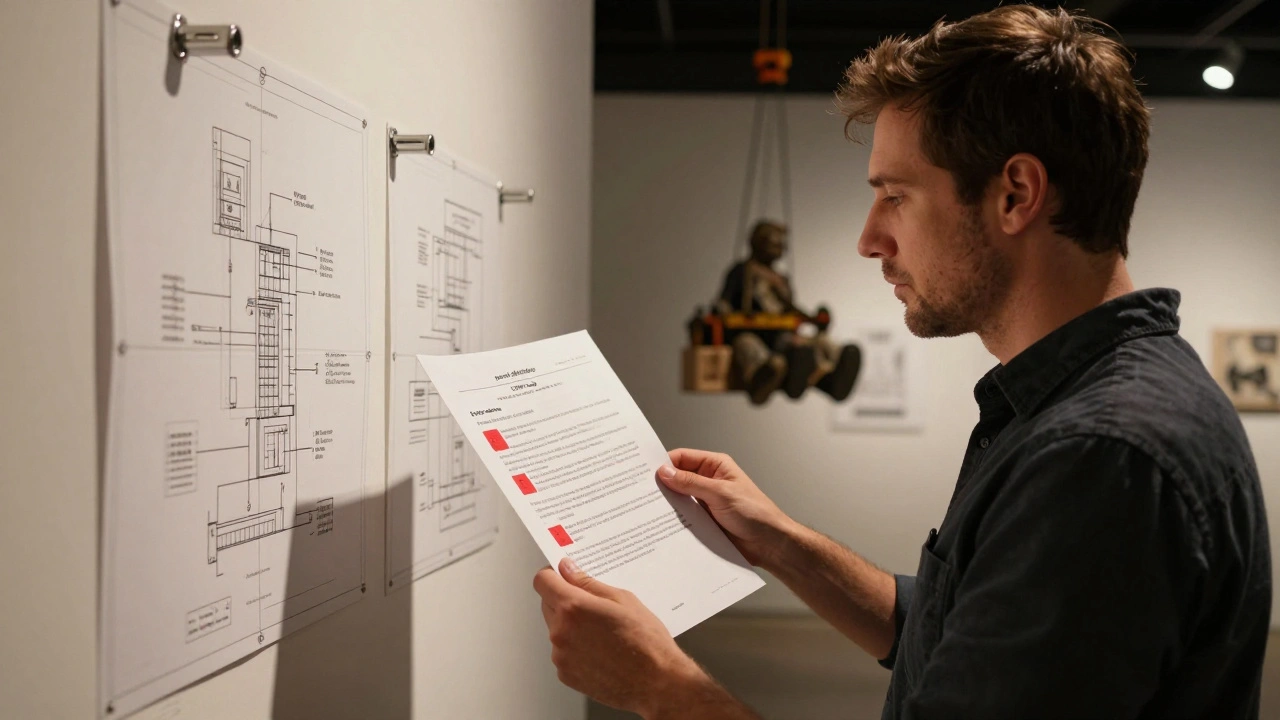
When a gallery signs a lease, it’s not just about rent and square footage. The real deal lives in the lease abstract - a stripped-down, high-stakes summary of the full lease agreement. For gallery owners, this document isn’t paperwork. It’s a roadmap that can make or break how you display art, manage foot traffic, and even stay in business.
What a Lease Abstract Actually Is
A lease abstract for a gallery isn’t a legal document. It’s a cheat sheet. Think of it like a Netflix summary for a 30-page contract. It pulls out the parts that matter most to a gallery owner: rent escalations, build-out allowances, exclusivity clauses, operating hours, and - critically - what you’re allowed to do inside the space.
Most galleries don’t read the full lease. They rely on their broker or lawyer to extract the essentials. But if that abstract is sloppy, missing a single trigger clause, you could be stuck with a 10-year lease and no way to host a pop-up show, install a heavy sculpture, or even change your lighting without violating terms.
Why Galleries Need Better Abstracts Than Other Retailers
Unlike a coffee shop or a boutique, a gallery doesn’t just sell products. It creates experiences. That means the physical space is part of the art itself. A lease abstract for a gallery must account for:
- Weight limits on floors (for large installations or sculptures)
- Electrical capacity (for LED walls, projection systems, or climate-controlled cases)
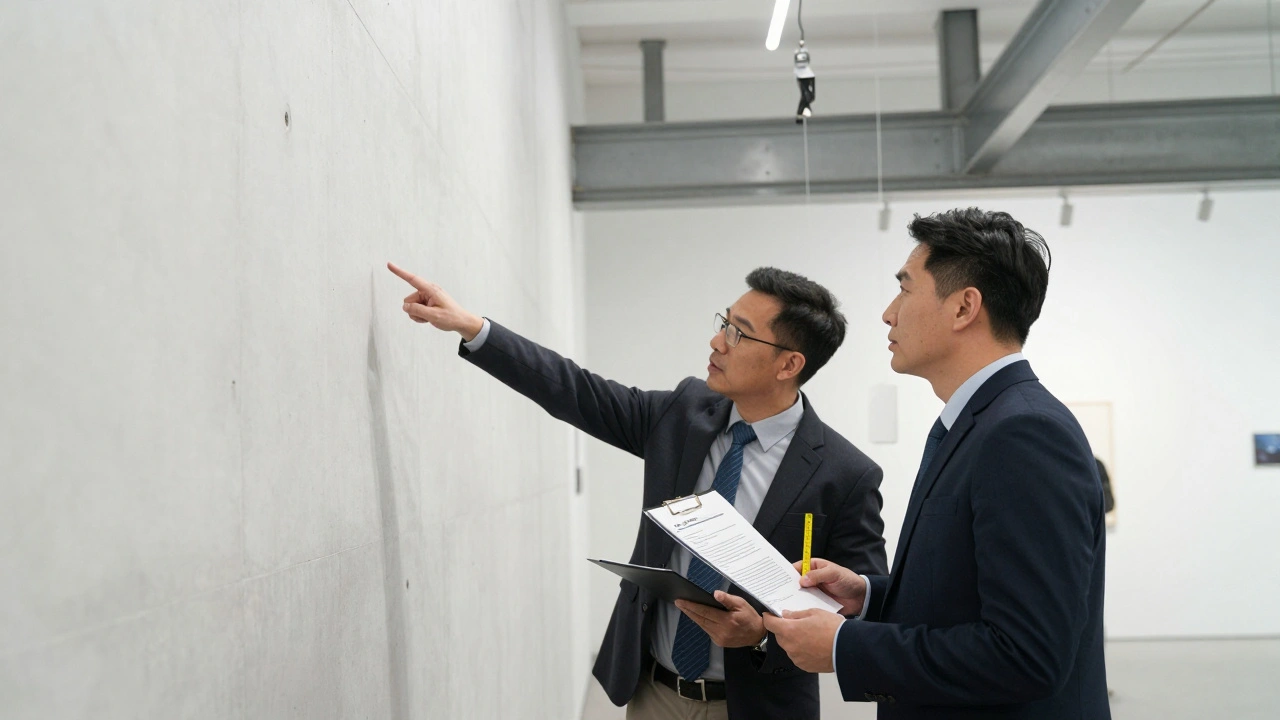
- Wall mounting rules (can you drill into concrete? Are there structural limits?)
- Hours of operation (can you open late for openings? What about Sundays?)
- Signage rights (can you put your name on the building? How big? What lighting?)
- Subleasing or pop-up rights (can you host a partner gallery for a weekend?)
Most commercial lease abstracts focus on rent, term, and renewal. Gallery leases need more. A standard retail abstract might say: "Tenant may use space for retail purposes." That’s useless for a gallery. You need: "Tenant may use space for the exhibition, storage, and sale of fine art, including installation of permanent and temporary fixtures, subject to structural review by landlord."
Top 5 Lease Triggers That Can Kill a Gallery
These are the hidden landmines in gallery leases. If your abstract doesn’t flag them, you’re walking into a trap.
- Exclusive Use Clause - Some landlords promise one gallery per floor. If your abstract says "no competing galleries," but the full lease defines "competing" as any business with art on display, you could be blocked from showing contemporary work if a nearby space has a single painting on the wall.
- Operating Hours - Many leases require 9-to-5 hours. But gallery openings often happen at 6 PM on Thursdays. If your abstract doesn’t say "exceptions for curated events," you could be fined or forced to shut down during peak traffic.
- Alteration Restrictions - Can you remove drywall to expose brick? Install a steel beam for hanging? Some leases require landlord approval for any change, even cosmetic ones. If your abstract doesn’t list "exemptions for art installations," you’re stuck with white walls forever.
- Utility Caps - Climate control for art requires 24/7 HVAC. Some leases cap electricity at 10 kW. A single large LED display can pull 15 kW. If the abstract doesn’t mention "dedicated circuits" or "excess usage fees," you’re looking at surprise bills of $3,000/month.
- Insurance Requirements - Most landlords require $1M in general liability. But galleries often need $5M for high-value works. If your abstract says "standard coverage," you might be denied entry on opening night because your policy doesn’t meet the unspoken requirement.
How to Build a Gallery-Specific Lease Abstract
Here’s what a real gallery lease abstract should include - no fluff, just the facts that keep your space usable.
| Section | What to Look For | Red Flag |
|---|---|---|
| Term & Renewal | Length, auto-renewal triggers, notice period | Auto-renewal with no opt-out window |
| Rent & Escalations | Base rent, % increases, CPI adjustments | Fixed % hikes without cap (e.g., 5% yearly) |
| Build-Out Allowance | Amount, timeline, approval process | "Allowance must be used within 30 days" - too short for custom installations |
| Use Clause | Explicit permission for art display, storage, sales | Vague terms like "commercial use" |
| Alterations | Permitted modifications, approval time, removal rules | "All changes require written consent" - no list of exemptions |
| Utilities | Minimum power, HVAC specs, dedicated lines | "Shared utility system" - no mention of climate control |
| Insurance | Minimum coverage, acceptable providers | "Standard commercial policy" - doesn’t specify art value |
| Signage | Location, size, lighting, duration | "Signage subject to landlord approval" - no criteria given |
| Events & Pop-Ups | Permitted frequency, noise limits, guest count | "No public events without prior written consent" - vague and restrictive |
Use this table as a checklist. If any row says "no" or "unclear," dig into the full lease. Don’t trust your broker to catch it. Go to the source.
Real-World Example: What Went Wrong in Chelsea
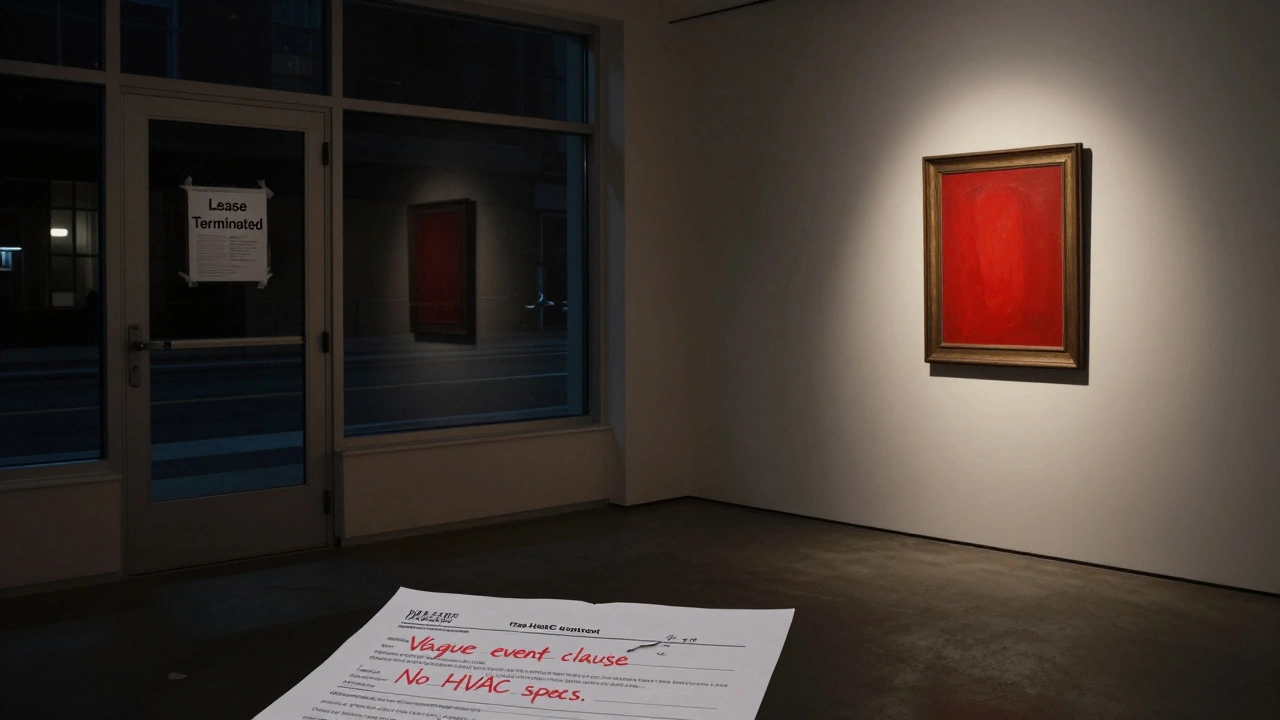
In 2023, a small Chelsea gallery lost its lease after a single event. They hosted a late-night poetry reading with live music. The lease abstract said "events permitted with approval." But the full lease defined "events" as any gathering with more than 10 people and audio above 70 decibels. The landlord hadn’t updated the abstract. The gallery thought they were fine. They weren’t. They got evicted for breach of lease - even though they’d been there for eight years.
That gallery didn’t fail because of bad art. They failed because their lease abstract didn’t define "event."
Who Should Review the Abstract?
You need three people to sign off:
- Your lawyer - They check enforceability and hidden penalties.
- Your architect or installer - They know if the space can handle your art. Can the floor take 2,000 lbs? Can the ceiling support a 12-foot hanging piece? They’ll spot what a lawyer won’t.
- Your accountant - They’ll flag utility caps, hidden fees, and insurance mismatches that could blow up your budget.
Don’t let one person handle this. A gallery lease is too high-stakes for a single review.
What to Do If Your Abstract Is Weak
If you’re already in a lease with a bad abstract, don’t panic. But don’t wait either.
- Request a written addendum that corrects the abstract’s gaps. Use your architect’s notes as evidence.
- For renewals, demand a new abstract before signing. Make it part of the negotiation.
- Keep a copy of the full lease in your office. Update it every time you get a notice. Tenants who don’t track changes get blindsided.
There’s no such thing as "good enough" when it comes to gallery leases. The difference between a thriving space and a shut-down gallery often comes down to one line in a one-page summary.
Final Thought: Your Space Is Your Canvas
A gallery lease isn’t a contract. It’s a collaboration between you and the building. The abstract is the first draft. If it’s vague, rushed, or copied from a retail template, you’re starting with a blank canvas - and no brushes.
Don’t let someone else’s template define how your art lives. Demand clarity. Fight for specificity. The right lease abstract doesn’t just protect you - it gives you the freedom to create.
What’s the difference between a lease abstract and a full lease agreement?
A full lease agreement is the complete legal contract, often 20-40 pages long, covering every possible scenario. A lease abstract is a condensed summary - usually one to three pages - that highlights only the terms most relevant to the tenant. For galleries, that means focusing on space usage, structural limits, utilities, and event rules rather than generic clauses like late fees or insurance minimums.
Can I write my own lease abstract?
Yes - but don’t rely on it alone. A gallery owner can draft an abstract based on their needs, but it must be reviewed by a commercial real estate lawyer and agreed upon by the landlord. Your version serves as a negotiation tool. The final abstract becomes part of the lease or a binding addendum. Never sign a lease based solely on your own summary.
Do all landlords provide lease abstracts?
No. Many landlords only provide the full lease. Some brokers generate abstracts as a service, but they’re often generic. If your landlord doesn’t offer one, ask for it. If they refuse, that’s a red flag. A landlord who won’t summarize key terms may be hiding unfavorable clauses.
How often should I update my gallery’s lease abstract?
Update it every time the lease changes - whether it’s a renewal, an addendum, or a notice of rent increase. Even minor changes, like new signage rules or adjusted operating hours, should trigger a revision. Keep a dated version on file. If you’re in a long-term lease, review it annually. Terms can be reinterpreted, and new landlord policies can sneak in.
What happens if I violate a clause that wasn’t in the abstract?
The full lease still controls. Even if your abstract didn’t mention it, if the original contract bans certain installations, loud events, or after-hours access, you’re in violation. That’s why galleries must cross-check their abstract against the full lease. The abstract is a guide - not a replacement. Ignoring this gap is how many galleries get evicted unexpectedly.