Kill Fees and Cancellations in Licensing Deals: What You Need to Know
When a licensing deal falls apart, it’s not just a missed opportunity-it can cost serious money. That’s where kill fees come in. They’re not penalties. They’re not punishments. They’re insurance. And if you’re signing a licensing agreement without understanding them, you’re leaving cash on the table-or worse, owing it.
What Is a Kill Fee?
A kill fee is a payment made by one party to another when a licensing deal is canceled after work has begun. It’s common in creative industries-think music, film, publishing, and software-but it shows up everywhere. A brand hires a designer to create a logo for a new product line. The designer spends 40 hours on sketches, revisions, and mockups. Then, the brand pulls out. Without a kill fee, the designer gets nothing. With one? They get paid for the work done, even if the project dies.Kill fees aren’t about blame. They’re about fairness. Licensing deals are built on trust and investment. One side invests time, skill, and resources. The other invests money and access. When the deal breaks, someone loses. A kill fee ensures that the person who did the work isn’t the one who loses everything.
Why Kill Fees Exist
Think about how licensing works. You don’t just sign a contract and wait. You start working. A musician composes a custom track for a video game. A tech startup licenses a patent and spends months adapting it to their hardware. A fashion brand commissions a unique print pattern from an artist. All of these require upfront effort. And all of them can be canceled-for reasons beyond control.Maybe the product gets scrapped. Maybe funding falls through. Maybe the market shifts overnight. None of that changes the fact that someone already put in the work. Kill fees exist because the system doesn’t work if creators are left holding the bag every time a client changes their mind.
Without kill fees, you’d see fewer people willing to take on licensing work. Why spend weeks on a custom design if the client can walk away at any point with no consequences? Kill fees keep the pipeline moving. They make licensing deals viable.
How Kill Fees Are Structured
There’s no universal rule. But most kill fees follow one of three models:- Percentage of total fee - Often 25% to 50% of the agreed-upon total payment. If the deal was worth $20,000, a 30% kill fee means $6,000 if canceled after work begins.
- Hourly rate for work completed - You bill for actual time spent. Simple, transparent, but can get messy if timelines aren’t documented.
- Phased milestones - The contract breaks the project into stages: concept, prototype, final delivery. Each stage has its own kill fee. Cancel after concept? You get 20%. Cancel after prototype? 60%.
Some contracts combine them. For example: “Kill fee equals 40% of total fee or payment for hours worked, whichever is higher.” That protects the licensor from being underpaid if hours were low but the work was complex.
What’s rarely included? Full payment. If you’re being offered a kill fee that’s less than 20%, you’re being lowballed. If you’re being asked to pay a kill fee as the licensee, you’re probably in a bad deal.
Who Pays? Who Gets Paid?
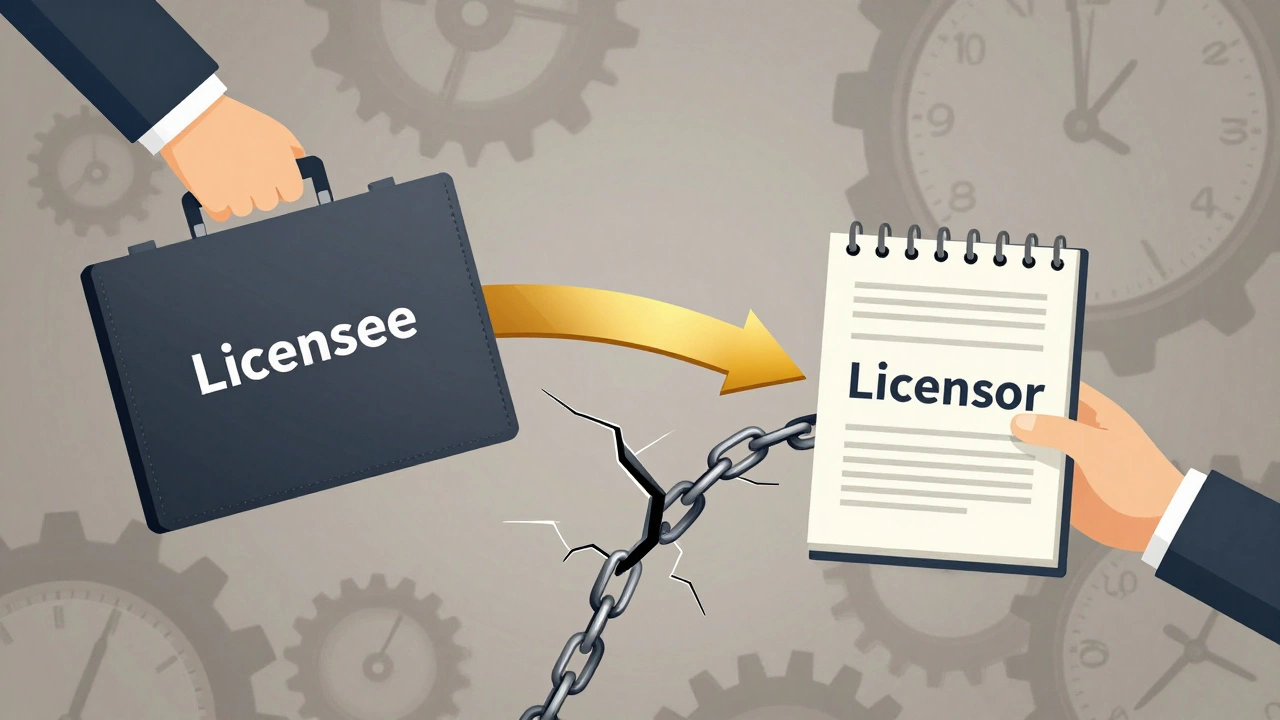
This trips up a lot of people. In most cases, the licensee (the one using the license) pays the kill fee to the licensor (the one granting rights).Example: A software company licenses a proprietary algorithm from a research lab. The lab spends three months adapting it for the company’s system. Then the company cancels because their product failed QA. The lab gets the kill fee. They did the work. The company walked away. Fair.
But sometimes it flips. Say a publisher signs a contract with an author for a book. The author spends six months writing. The publisher cancels because they’re restructuring. The author gets a kill fee. Again, fair.
But what if the licensor backs out? If the artist suddenly refuses to deliver the final files, or the patent holder withdraws the license, then the licensee might be entitled to a refund of fees paid-not a kill fee. Kill fees are for cancellations initiated by the party that didn’t do the work.
What Cancellation Triggers a Kill Fee?
Not every cancellation counts. A kill fee only applies if:- Work has begun under the agreement
- The cancellation is initiated by the licensee (usually)
- The licensor has not breached the contract
Let’s say you’re licensing a song for a commercial. You’ve approved the master recording. Then you decide to change the ad’s tone and cancel. Kill fee applies.
But if the licensor delivers a track that’s off-key, unlicensed, or violates copyright, and you cancel because of that? That’s a breach. You don’t pay a kill fee. You might sue.
Same goes for delays. If the licensor misses deadlines and doesn’t respond to follow-ups, and you cancel? That’s not a kill fee scenario. That’s contract termination for cause.
How to Negotiate a Kill Fee
If you’re the licensor (the one creating the work):- Always include a kill fee clause. Don’t assume it’s standard.
- Push for 30-50% of total fee. Anything under 20% is a red flag.
- Define “work begun.” Does it mean the first draft? The first meeting? The signed contract? Be specific.
- Require written notice of cancellation. No phone calls. No emails saying “we’re thinking about it.”
If you’re the licensee (the one buying the license):
- Don’t agree to a kill fee without a clear scope of work. You don’t want to pay for vague “consultation time.”
- Ask for a cap. “Kill fee will not exceed 40% of total fee, regardless of hours worked.”
- Include a grace period. “No kill fee if cancellation occurs within 14 days of signing.”
- Make sure the fee doesn’t apply if the deal fails due to your company’s internal delays or budget cuts. Those are your risks-not theirs.
Real-World Examples
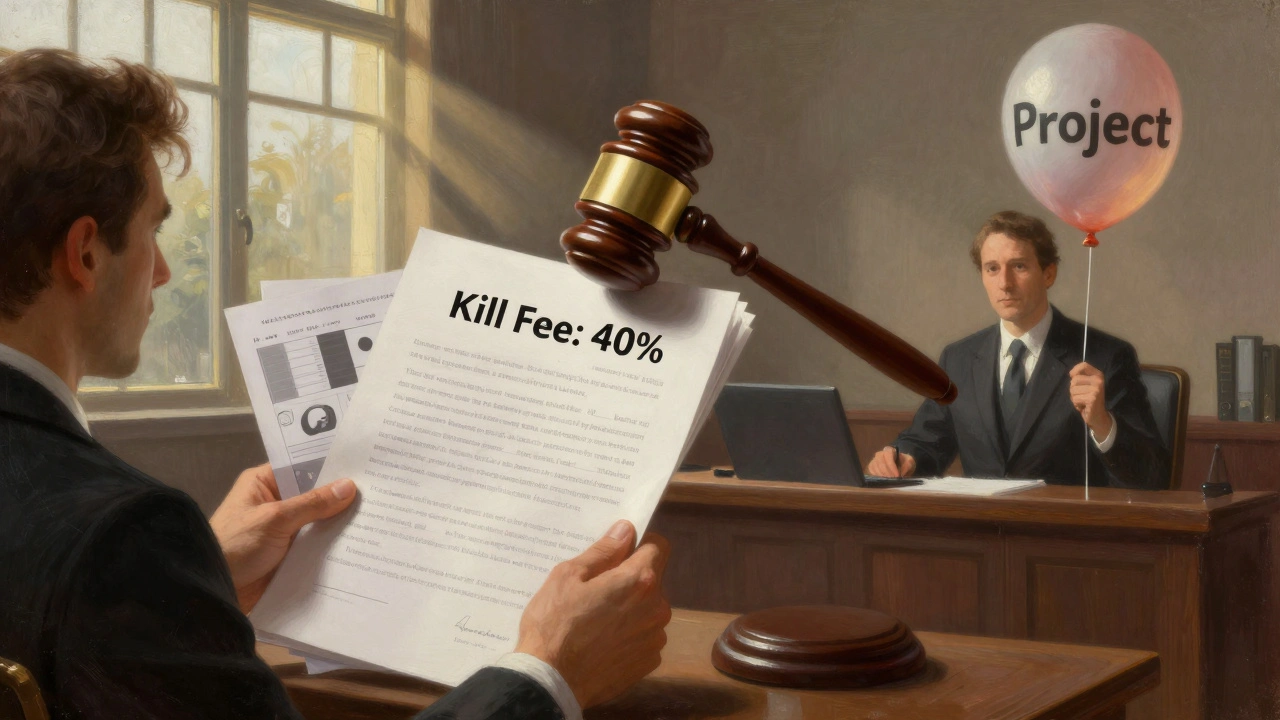
In 2023, a Portland-based indie game studio licensed a custom soundtrack from a local composer. They agreed to a $15,000 fee with a 40% kill fee. After two months of revisions, the studio’s funding fell through. They canceled. The composer received $6,000. Without the kill fee, they got nothing.Meanwhile, a major beverage brand canceled a licensing deal with a street artist after the artist delivered final artwork. The brand claimed the art was “too edgy.” The artist sued. The court ruled the kill fee was enforceable because the brand had approved every version. The brand paid the full 50% kill fee-$12,500-and lost public trust.
These aren’t rare. They happen every week.
What Happens Without a Kill Fee?
You might think, “Why not just cancel and walk away?” Because then you become the company everyone avoids.Creators will stop working with you. Lawyers will add clauses to protect themselves. Insurance companies will raise premiums for licensing contracts without kill fee protections. And you’ll pay more in the long run.
Also, courts often enforce kill fees as reasonable liquidated damages. They’re not penalties. They’re estimates of actual loss. And if you’re the one canceling, you’re the one who caused the loss.
Pro Tips for Licensing Deals
- Always write the kill fee into the contract. Verbal agreements won’t hold up.
- Define “work begun” with a date, deliverable, or milestone-not a vague “after signing.”
- Use a phased approach. It’s easier to track and fairer for both sides.
- Keep time logs. Even if you’re not billing hourly, document what you’ve done.
- Never sign a deal without a cancellation clause. It’s not pessimistic. It’s professional.
If you’re a creator: your time is your currency. Protect it.
If you’re a business: your reputation is your currency. Protect that too.
Are kill fees legally enforceable?
Yes, if they’re clearly written into the contract and not excessive. Courts treat kill fees as liquidated damages-reasonable estimates of loss-not punishments. If the fee is way above actual costs (like 80% of a $5,000 deal), a judge might reduce it. But 25-50% is almost always upheld.
Can a kill fee be negotiated down?
Yes, but don’t accept less than 20%. If the licensor is asking for 10%, they’re either inexperienced or setting you up for trouble. If you’re the licensee and the fee is 60%, push back. Ask for a cap or phased structure. A fair kill fee balances risk, not shifts it entirely to one side.
Do kill fees apply to royalty-based deals?
Not usually. Royalty deals are paid based on sales. If the product never launches, no royalties are owed-and no kill fee applies. But if the licensor spent money on custom design, marketing assets, or development to enable the royalty deal, then a kill fee for those upfront costs is common. It’s separate from royalties.
What if the licensee cancels because the licensor missed a deadline?
Then the kill fee doesn’t apply. That’s a breach of contract. The licensee can cancel without paying-and may be entitled to a refund of any advance payments. Kill fees only apply when the cancellation is due to reasons outside the licensor’s control, like internal strategy changes or funding issues.
Should I use a kill fee even for small deals?
Absolutely. A $2,000 logo design for a startup is still $2,000 of your time. If the client cancels after you’ve sent three versions, you’ve lost hours, not just money. A kill fee of 30% ($600) protects your work. It also shows you’re professional. Small deals are where bad habits form.