Insurance for Traveling Exhibitions: Riders and Certificates Explained
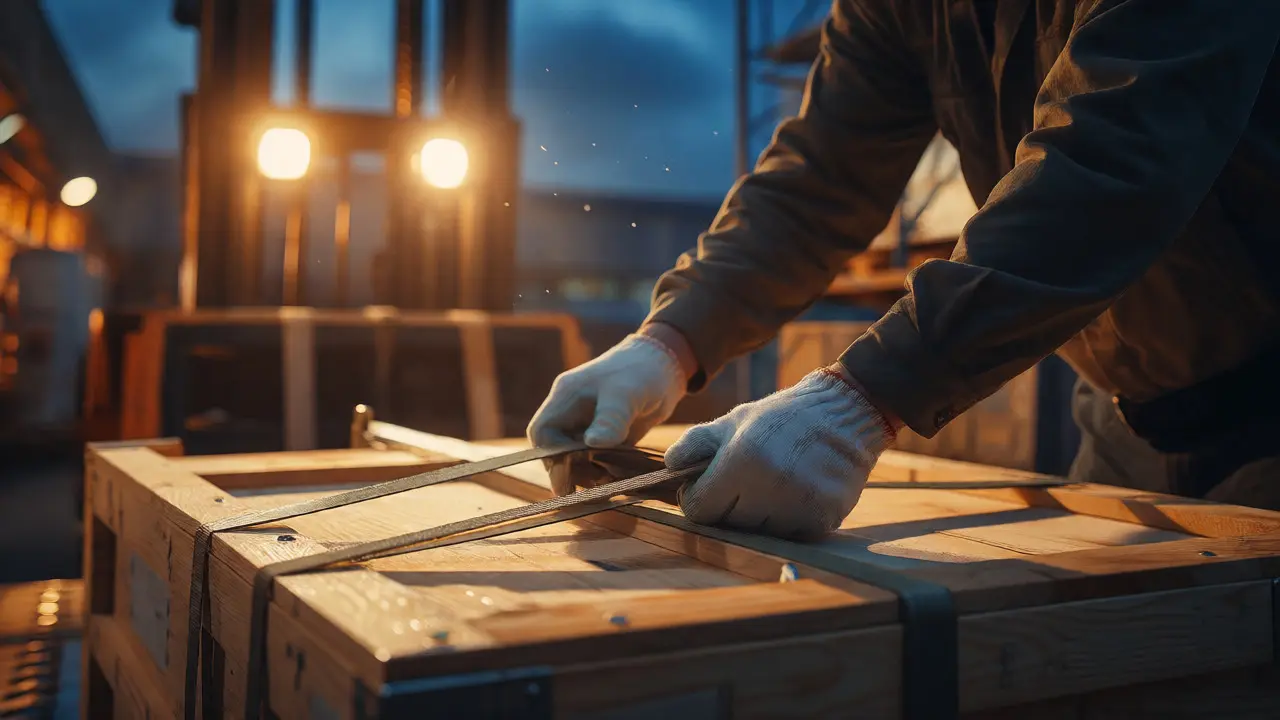
You’ve spent months curating a show. The artwork is packed in climate-controlled crates, the shipping contracts are signed, and the opening night is scheduled. Then, three weeks before the installation, the host museum emails you: "We need a Certificate of Insurance naming us as additional insured." You stare at the email. Your standard homeowner’s policy won’t cut it. Your basic commercial general liability might miss the mark. What exactly do they want? And why does everyone suddenly care about "riders"?
Traveling exhibitions are high-stakes logistical nightmares wrapped in fragile canvas. One dropped crate, one HVAC failure, or one well-meaning volunteer touching an unprotected sculpture can wipe out years of work. Art Insurance is the safety net, but it’s not a one-size-fits-all blanket. For traveling shows, you need specific tools: Riders that extend coverage beyond your home base and Certificates of Insurance (COIs) that prove you’re covered to third parties.
Why Standard Policies Fail on the Road
Most museums and galleries carry a Fine Arts Policy. This covers works while they sit in your collection, usually within a defined geographic radius-say, 50 miles from your facility. But the moment a painting leaves your building for a national tour, you enter "transit." Standard policies often exclude transit risks or cap them at low limits. They also rarely cover "nail-to-nail" exposure, which means from the moment the crate leaves your wall until it returns.
Without the right extensions, you’re exposed to gaps like:
- Transit Exclusions: Damage during trucking, air freight, or rail transport.
- Third-Party Liability: If a visitor trips over a pedestal at the host venue, who pays?
- Valuation Disputes: Host venues may require agreed-value coverage rather than actual cash value.
This is where Riders come in. Think of a rider as an amendment to your existing policy that adds specific coverage for specific situations. It’s not a new policy; it’s a customization.
The Essential Riders for Traveling Shows
You don’t need every rider under the sun. You need the ones that match your risk profile. Here are the big four you’ll likely encounter.
1. Transit Rider
This is non-negotiable. A Transit Rider extends coverage to artworks while in motion. It covers damage from accidents, theft, and handling errors by professional art handlers. Crucially, ensure it covers "all-risk" perils, not just named perils like fire or collision. All-risk covers accidental breakage, water damage from a leaking truck roof, and mysterious disappearance.
2. Off-Premises Coverage
When your art sits at another museum for six months, it’s off-premises. Your home policy might only allow for 30 days of off-site coverage. An Off-Premises Rider removes this time limit or extends it to match the duration of the loan. It also ensures that if the host museum has poor security, your policy still responds to claims.
3. Liability Rider
Host venues will demand proof that you have General Liability coverage. While this isn’t always a "rider" to your art policy, it’s often bundled. Ensure your General Liability includes "completed operations" coverage. This protects you if someone gets hurt by your exhibit two weeks after it closes, perhaps due to a loose fixture left behind.
4. Loss of Use / Business Interruption
If your flagship piece is damaged and pulled from the show, do you lose ticket revenue? Some policies offer a Loss of Use Rider that reimburses lost admission fees or sponsorship dollars tied directly to the missing artwork. This is rare for small galleries but common for major museum tours.
Decoding the Certificate of Insurance (COI)
A COI is not insurance. It’s a snapshot. It’s a document issued by your broker that proves you have active coverage. Host venues use it to verify that you meet their contractual requirements. If you send them the wrong form, the shipment stops.
Here’s what a valid COI must show for a traveling exhibition:
| Element | What It Means | Common Pitfall |
|---|---|---|
| Named Insured | Your organization’s legal name. | Using a DBA (Doing Business As) name instead of the legal entity name. |
| Additional Insured | The host museum added to your policy. | Forgetting to add the host; they remain uninsured under your policy. |
| Waiver of Subrogation | You agree not to sue the host if they cause damage. | Missing this clause leads to contract rejection. |
| Primary and Non-Contributory | Your insurance pays first, not theirs. | Vague language causes disputes over who pays first. |
| Limits of Liability | Maximum payout per occurrence/aggregate. | Limits too low for the value of the art on display. |
The phrase "Additional Insured" is critical. It legally extends your liability protection to the host museum. Without it, if a visitor slips on a wet floor near your exhibit, the museum could be sued alone. With it, your insurer shares the burden. Most loan agreements explicitly state: "Borrower shall provide evidence of insurance naming Lender as Additional Insured." Do not ignore this.

Nail-to-Nail: The Gold Standard of Coverage
In the art world, "Nail-to-Nail" is the benchmark. It means coverage begins when the artwork is removed from its original mount (the nail) and ends only when it is re-hung in its original location. This covers packing, crating, loading, transit, unloading, installation, exhibition, de-installation, return transit, and unpacking.
Not all policies are automatically nail-to-nail. Many start at the point of loading onto the vehicle. Check your Policy Wording carefully. If it says "coverage attaches upon loading," you are uninsured while the art is being packed in your warehouse. A simple slip of a gloved hand during packing could cost thousands. Negotiate a nail-to-nail extension with your broker. It’s worth the premium increase.
Valuation Methods: Agreed Value vs. Actual Cash Value
How much is your art worth? That depends on who asks. For insurance purposes, you generally want Agreed Value coverage. This means you and the insurer agree on the value upfront. If the art is destroyed, they pay that amount. No haggling over depreciation.
Contrast this with Actual Cash Value (ACV), which subtracts depreciation. For contemporary art, ACV is risky because market values fluctuate wildly. A painting bought for $10,000 might be worth $50,000 today, but ACV might only pay out based on historical cost minus wear. Always insist on Agreed Value for traveling exhibitions. It simplifies claims and satisfies host venues who want certainty.
Practical Steps to Secure Coverage
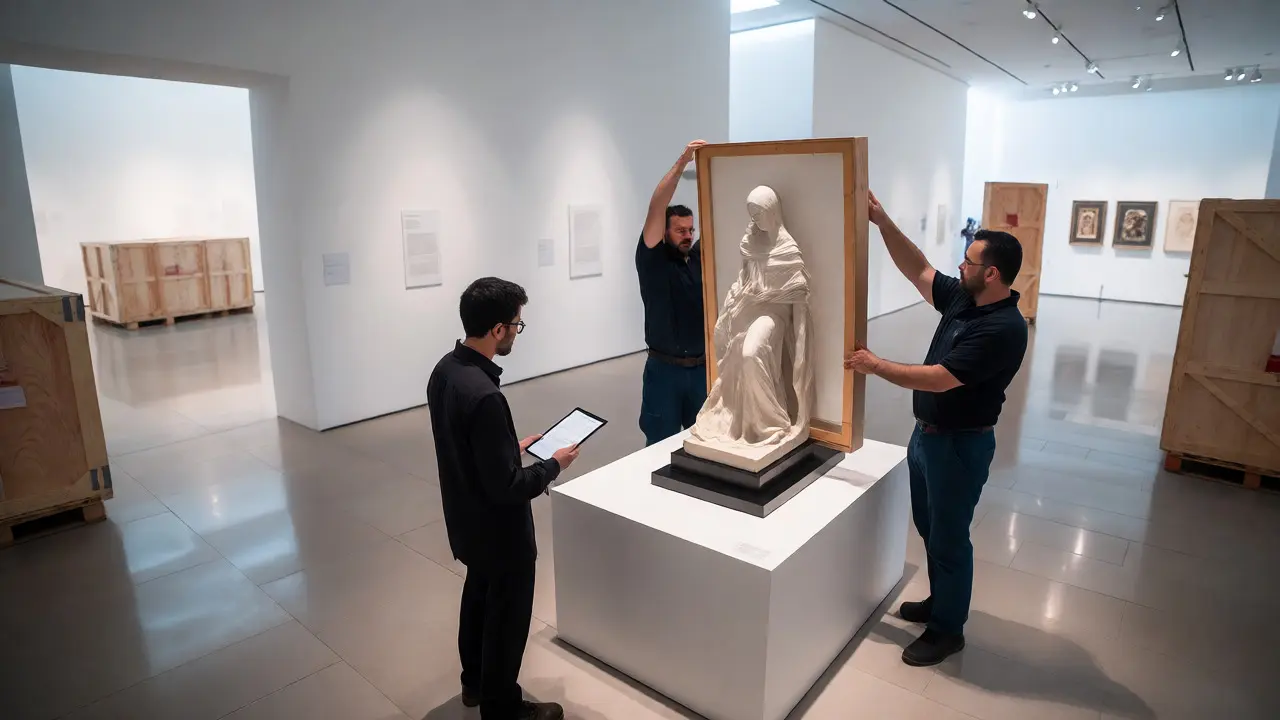
Don’t wait until the truck is idling outside. Start this process 90 days before the opening.
- Audit Your Inventory: List every piece leaving your facility. Note dimensions, materials, and current appraised value.
- Review the Loan Agreement: Highlight every insurance requirement. Look for terms like "All-Risk," "Nail-to-Nail," "Additional Insured," and "Waiver of Subrogation."
- Contact Your Broker: Send them the loan agreement and inventory. Ask specifically: "Do we have a Transit Rider? Is our Liability limit sufficient for this venue's demands?"
- Request the COI Draft: Before signing the final contract, ask your broker for a draft COI. Send it to the host museum’s registrar for approval. Fix errors now, not later.
- Document Condition Reports: Take high-res photos of each piece before it leaves. These serve as baseline evidence for any future claims.
Common Mistakes That Void Claims
Even with the right policy, you can void your coverage through negligence. Insurers look for reasons not to pay. Avoid these traps:
- Unapproved Handlers: Using a generic moving company instead of a specialized art handler. Many policies require "professional art packers."
- Climate Deviations: If your policy requires 70°F ± 5° and the truck hits 85°F, you might be excluded from humidity-related damage claims.
- Failure to Notify: Not telling your insurer about a change in exhibition schedule or location. Mid-tour changes must be reported.
- Expired Appraisals: If your valuation is five years old, the insurer may dispute the claim amount. Update appraisals every 3-5 years.
Cost vs. Risk: Is It Worth It?
Art insurance premiums typically range from 0.1% to 0.5% of the insured value annually. For a $1 million collection, that’s $1,000 to $5,000 a year. Adding transit riders might increase this by 20-30%. Compare that to the cost of a single restoration job for a torn canvas ($5,000+) or a shattered ceramic ($10,000+). The math favors preparation.
Remember, insurance doesn’t prevent damage; it prevents financial ruin. Logistics companies offer limited liability, often capped at $0.50 per pound. If a $50,000 painting weighs 20 pounds, the carrier’s max payout is $10. Who eats the remaining $49,990? You do, unless you have proper transit coverage.
What is the difference between a rider and an endorsement?
In practice, they mean the same thing. An endorsement is the formal term used by insurers for an amendment to a policy. A rider is the colloquial industry term. Both add, remove, or modify coverage provisions.
Does my homeowner's insurance cover art while traveling?
Rarely. Homeowner policies usually have sub-limits for valuable articles (e.g., $5,000 per item) and exclude business activities. If you are lending art professionally, your homeowner policy likely excludes it entirely. You need a commercial fine arts policy.
Who pays for the Certificate of Insurance?
Typically, the borrower (you) pays for the policy and the issuance of the COI. However, some large institutions may reimburse this cost as part of the loan fee. Clarify this in the initial negotiations.
What happens if I forget to add the host as Additional Insured?
The host museum may refuse to accept the shipment. If they do accept it and a claim arises, their own insurer might deny coverage because they weren't listed. This leads to complex litigation between your insurer and theirs to determine who is liable.
Can I insure a traveling exhibition for less than full replacement value?
You can, but it’s risky. Under-insurance means you receive a reduced settlement proportional to the under-insurance percentage. If you insure a $100k piece for $50k, and suffer $10k in damage, the insurer might only pay $5k. Full replacement value (Agreed Value) is safer.