Insurance Certificates for Art Fairs: What You Need to Know About COI Requirements
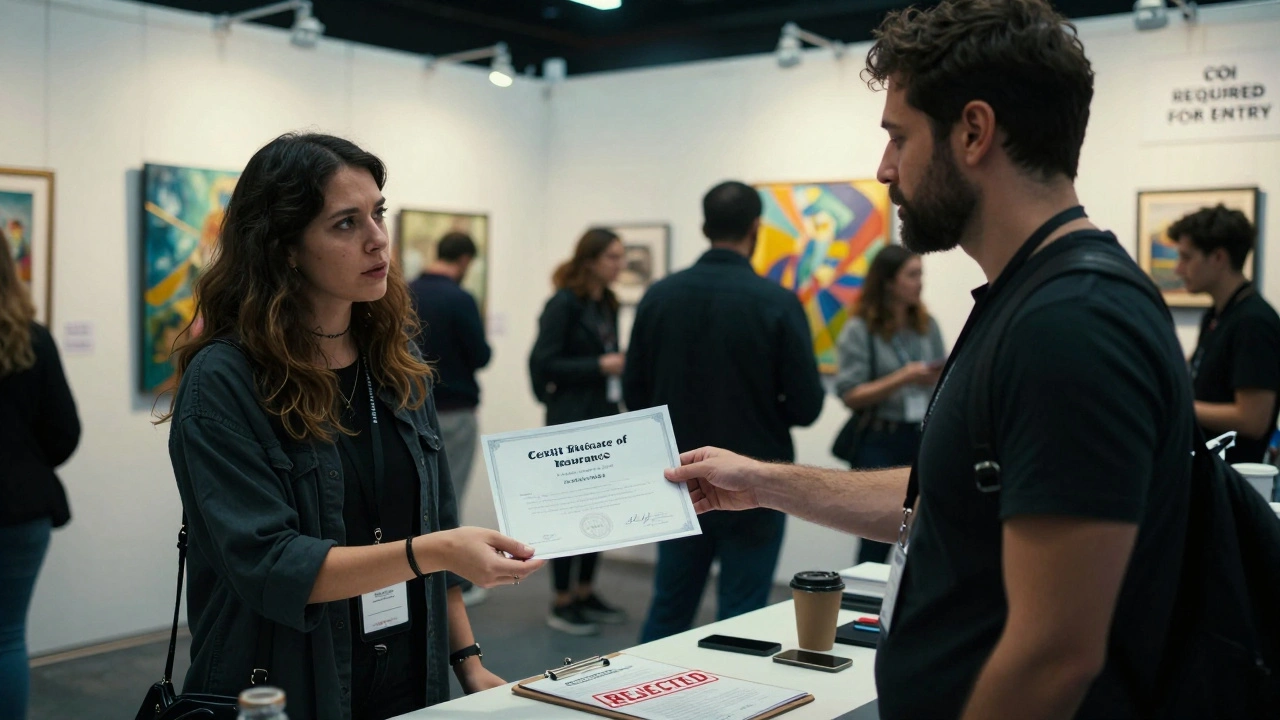
When you're shipping a valuable painting to an art fair, renting a booth, or setting up a sculpture installation, the last thing you want to hear is that your insurance paperwork is missing. Art fairs don't just care about your art-they care about who’s responsible if something goes wrong. That’s where a Certificate of Insurance (COI) comes in. It’s not a formality. It’s a requirement. And if you don’t have one, you won’t get in.
Why Art Fairs Require COIs
Art fairs are high-risk events. A $2 million Monet on loan from a private collector? A glass sculpture that topples during setup? A visitor tripping over a cable and suing the organizer? These aren’t hypotheticals. In 2024, the Art Dealers Association of America reported over 170 insurance claims across major U.S. art fairs, with damages totaling more than $42 million. Organizers don’t want to be on the hook for someone else’s mistake. That’s why they ask for a COI-it proves you’ve got liability coverage that protects them too.A COI isn’t insurance itself. It’s a one-page document issued by your insurer that confirms you have active coverage. It lists your policy number, coverage limits, the insurer’s name, and crucially, that the art fair is named as an additional insured. If a guest slips on your floor and sues the fair, their legal team will check your COI to see if your policy covers them. No COI? No booth.
What a COI Must Include for Art Fairs
Not every insurance certificate will do. Art fairs have strict standards. Your COI must include these five elements:- Additional Insured: The full legal name of the art fair or event organizer (e.g., "Portland Art Fair LLC"). Generic terms like "event" or "organizer" won’t cut it.
- Liability Limits: Minimum $1 million per occurrence, $2 million aggregate. Some high-end fairs like Art Basel Miami require $2 million per occurrence.
- Policy Type: General Liability Insurance (GLI) is mandatory. Some fairs also require Art In Transit coverage if you’re shipping pieces.
- Effective Dates: Must cover the entire event period, including setup and teardown. Many insurers miss this-coverage ending at midnight on the last day of the fair? That’s not enough. It needs to include the day before setup and the day after breakdown.
- Insurer Contact: The insurance company’s phone number and address. No third-party brokers. The fair’s risk manager needs to call the insurer directly to verify.
Missing any of these? Your COI will be rejected. No exceptions.
Who Needs a COI?
You might think only big galleries need this. Think again. If you’re:- A solo artist renting a booth
- A small gallery with five artists
- A sculpture studio bringing in large installations
- A lender supplying artwork on loan
- A vendor selling art supplies or frames at the fair
-you need a COI. Even if you’re not selling anything. Liability doesn’t care about your sales volume. If your equipment causes damage, or someone gets hurt near your display, you’re liable. And the fair will hold you accountable.
Some fairs make exceptions for very small vendors-like a jewelry maker selling under $5,000 in merchandise. But don’t assume. Always ask. And if they say yes, get it in writing.

How to Get a COI
If you already have general liability insurance (say, through a business policy or artist association), request a COI from your insurer. Most companies can email it within 24 hours. Use this template when you ask:- "I need a Certificate of Insurance for the [Name of Art Fair], event dates: [Start Date] to [End Date]."
- "Name the event organizer as an additional insured: [Full Legal Name]."
- "Coverage must include general liability with limits of at least $1M per occurrence, $2M aggregate."
- "Coverage must extend to setup and teardown days."
- "Send it to [fair’s email] and confirm it’s been issued."
If you don’t have insurance yet? You can buy short-term event liability insurance. Companies like Hiscox, Artisanal Insurance, and ArtRisk offer policies specifically for art fairs. You can get coverage for as little as three days, starting at $150. Don’t wait until the week before the fair. Processing takes time. Some insurers require a 72-hour review period.
Common Mistakes and How to Avoid Them
Here’s what goes wrong more often than you’d think:- Using a personal homeowner’s policy. Most don’t cover commercial events. Your COI will be flagged as invalid.
- Forgetting to include setup and teardown. 40% of claims happen during installation or removal. Your policy must cover those days.
- Submitting a COI with outdated dates. Fairs update their calendars. Double-check the event dates on your certificate against the official website.
- Using a broker’s COI instead of the insurer’s. Brokers often send templates that lack insurer contact info. The fair’s legal team will reject it.
- Waiting until the last minute. If you request it three days before the fair, you might not get it in time. Start 30 days out.
Pro tip: Always send your COI as a PDF with the insurer’s letterhead. Screenshots or Word docs? They’ll be tossed.
What Happens If You Don’t Have One?
No COI, no entry. That’s the rule. Some fairs let you pay a $500-$1,500 fee to get coverage through their blanket policy-but that’s not a guarantee. Their policy won’t cover your artwork. If your piece is damaged, you’re out of pocket. If someone sues because of your setup, you’re personally liable. And you’ll be banned from future events.One artist in Chicago missed the deadline last year and tried to pay the fee. The fair’s insurer denied coverage because the artist had a prior claim. He lost $80,000 in artwork and was barred from the fair for two years.

COI vs. Art Transit Insurance
Don’t confuse the two. A COI covers liability-someone getting hurt or property being damaged because of your actions. Art transit insurance covers damage to your artwork while it’s being shipped. They’re not the same. Most fairs only require the COI. But if you’re flying a painting from Tokyo to New York, you need both.Some insurers bundle them. Ask if your policy includes transit coverage. If not, get a separate one from a specialist like Chubb or Hiscox’s Art Transit product.
Where to Find the Fair’s Requirements
Every fair has a vendor or exhibitor handbook. Look for it on their website. It’ll say exactly what coverage they need. If you can’t find it, email their operations team. Don’t guess. A single typo in the additional insured name can void your COI.Example: The Seattle Art Fair requires: "Additional Insured: Seattle Art Fair, Inc., 123 Exhibition Way, Seattle, WA 98101." If you write "Seattle Art Fair" without the "Inc.", they’ll reject it.
Final Checklist Before Submitting
Before you hit send:- Is the art fair’s full legal name on the COI?
- Are the dates inclusive of setup and teardown?
- Is liability coverage at least $1M per occurrence?
- Is the insurer’s phone number and address listed?
- Is the document a PDF with official letterhead?
- Did you send it to the right email?
- Did you follow up to confirm receipt?
Get this right once, and you’ll never miss a fair again.
Do I need a COI if I’m only showing digital art?
Yes. Even if your art is digital, your equipment-monitors, projectors, wiring-can cause damage. If a screen falls and breaks a floor tile, or a power strip overheats and starts a fire, you’re liable. A COI protects the venue from those risks. Digital artists are just as likely to be held responsible as painters or sculptors.
Can I use my home-based business insurance for an art fair?
Almost never. Home-based business policies typically exclude coverage for off-site commercial events. Most explicitly state that liability coverage doesn’t apply at public exhibitions or trade shows. Art fairs will check your policy wording. If it doesn’t cover events, your COI will be rejected.
What if I’m showing artwork on loan from a gallery?
You still need your own COI. The gallery’s insurance covers their ownership, not your responsibility for how the piece is displayed or handled. If a visitor knocks over the piece while you’re installing it, the gallery’s policy won’t cover the damage to the fair’s floor or the gallery’s claim against you. Your COI protects you-and the fair-from that liability.
Can I get a COI for just one day if the fair runs for three?
No. Fairs require coverage for the entire event period, including setup (usually one day before) and teardown (one day after). If your policy only covers the public days, you’ll be denied entry. Some insurers offer 7-day policies that include setup and breakdown. Always confirm the dates match the fair’s official schedule.
I’m an international artist. Can I get a U.S.-based COI?
Yes, but you need a U.S.-licensed insurer. Many international policies don’t meet U.S. legal standards for event liability. You can buy a short-term U.S. policy through providers like Hiscox or ArtRisk. Some U.S. brokers specialize in helping foreign artists. Don’t assume your home country’s policy will work-it won’t.