How to Write Art Reviews: A Step-by-Step Critical Guide

Staring at a blank page after visiting an exhibition is one of the most common paralysis points for aspiring writers. You saw something powerful, or perhaps something confusing, and you want to articulate it. But how do you move from "I liked this" to a structured, insightful piece of art criticism that offers value to readers?
Writing an effective review isn't just about stating your opinion; it's about decoding the work for others. It requires balancing objective observation with subjective interpretation. This guide breaks down the process into actionable steps, helping you build a framework for analyzing visual art, whether it’s a contemporary painting in Portland or a digital installation in New York.
The Preparation Phase: Observation Before Analysis
Before you write a single word, you need to gather raw material. Most amateur reviews fail because they rely on memory alone. Memory is selective and often biased by our initial emotional reaction. To write a credible review, you must engage in active looking.
Start by taking notes. Not just scribbles like "nice colors," but specific observations. What is the medium? Is it oil on canvas, acrylic, mixed media, or code? What are the dimensions? A small intimate sketch demands a different reading than a massive mural. Note the lighting conditions in the gallery. How does the space affect the work? Context matters. If the artist provides a statement, read it, but don't let it dictate your view immediately. Form your own impression first, then compare it to the artist's intent later.
- Document details: Take photos if allowed (flash off) to remember compositional elements.
- Note the environment: Gallery layout, crowd behavior, soundscapes.
- Record immediate reactions: What was your gut feeling? Confusion? Joy? Discomfort?
Step 1: Description - The Objective Foundation
Every strong review begins with description. This is the "what" before the "why." Your reader might not have seen the artwork, so you must paint a verbal picture. Avoid vague adjectives like "beautiful" or "interesting." Instead, use precise language that describes physical reality.
If you are reviewing a portrait, describe the subject's posture, the direction of their gaze, and the texture of the brushstrokes. Are the lines sharp and jagged, or soft and blended? Is the palette dominated by warm ochres or cool blues? This section establishes credibility. It shows you looked closely. It grounds your subsequent arguments in observable facts rather than floating abstractions.
Think of this as the evidence phase in a courtroom. You are laying out the exhibits. Without these concrete details, your interpretations will feel unsupported and arbitrary.
Step 2: Analysis - Decoding Visual Language
Once you’ve described the object, analyze how it works. This involves breaking down the formal elements of art: line, shape, color, texture, space, and form. How do these elements interact?
Consider composition. Where is the focal point? Does the eye move smoothly across the canvas, or is it jarringly interrupted? Analyze the use of contrast. High contrast creates drama and energy; low contrast can evoke calm or ambiguity. Look at the scale. Does the size of the work overwhelm the viewer, or does it invite intimacy?
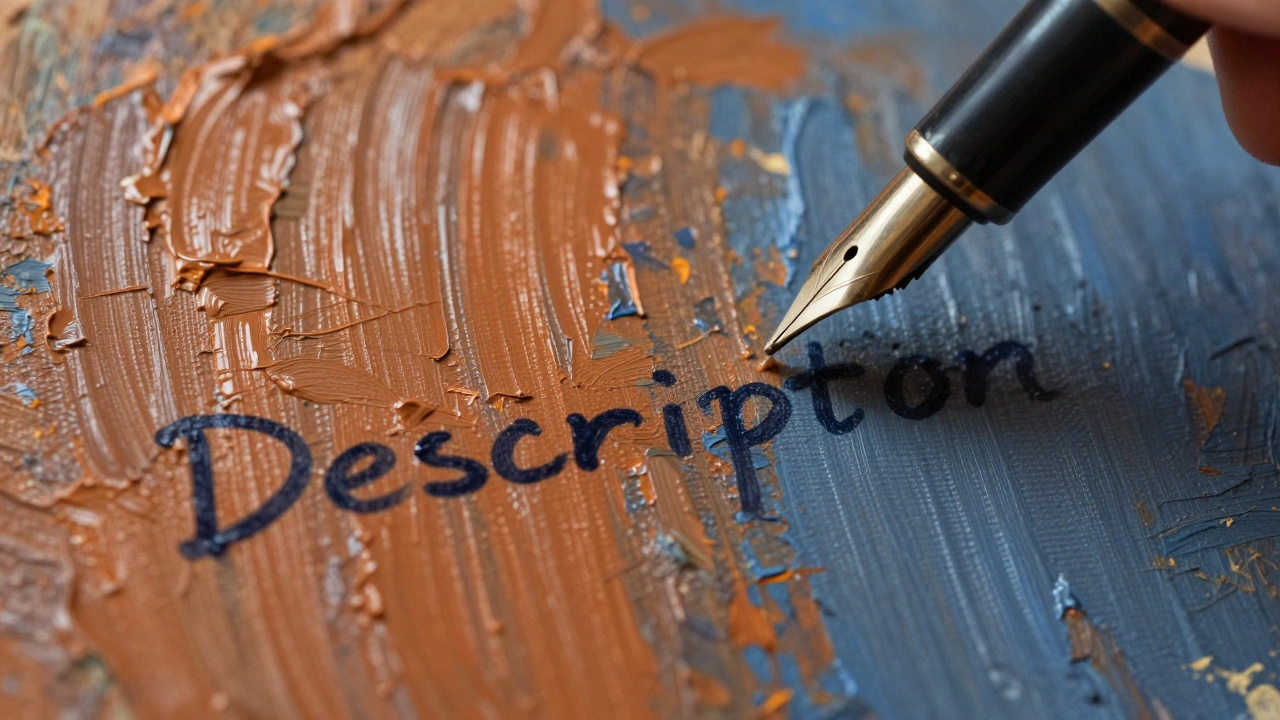
For example, if an artist uses thick impasto (heavy application of paint), the texture becomes part of the meaning. It suggests urgency, physicality, or perhaps chaos. If the lines are geometric and precise, it might suggest order, control, or industrial influence. Connect these formal choices to the effect they create. Why did the artist choose red here instead of blue? What happens to the mood when the background shifts from light to dark?
Step 3: Interpretation - Finding Meaning
This is where many writers struggle. Interpretation is the bridge between what we see and what it means. There is no single "correct" interpretation, but there are stronger and weaker ones. A weak interpretation is a guess disconnected from the visual evidence. A strong interpretation is supported by the analysis you just performed.
Ask yourself: What is the work communicating? Is it political? Personal? Philosophical? Consider the title of the piece. Titles often provide crucial context or irony. If a painting titled "Silence" is filled with chaotic, screaming colors, that tension is central to the meaning.
You can also bring in external context. Who is the artist? What is their background? What historical or social events were happening when this was made? For instance, knowing that an artist grew up in a war zone changes how you read images of destruction. However, be careful not to reduce the art solely to biography. The work should stand on its own merits while being enriched by context.
Step 4: Evaluation - Making a Judgment
Evaluation is the final step, and it’s where you offer your critical judgment. Did the work succeed in achieving its apparent goals? Was it innovative? Was it technically proficient? Was it emotionally resonant?
It’s okay to say you didn’t like a piece, but you must explain why. "It’s bad" is not a review. "The composition feels unbalanced, causing the viewer’s eye to exit the frame prematurely, which undermines the intended focus on the central figure" is a critique. Distinguish between personal taste and artistic merit. You might personally dislike abstract expressionism, but you can still evaluate a Pollock based on its mastery of gesture and rhythm within that style.
Avoid hyperbole. Words like "masterpiece" or "garbage" shut down conversation. Aim for nuanced judgments. Perhaps the technique is flawless, but the concept is derivative. Or maybe the execution is rough, but the emotional impact is profound. These complexities make for compelling writing.

Structuring Your Review for Impact
Now that you have your components, how do you assemble them? A standard five-paragraph essay structure rarely works for art reviews. Instead, try a narrative flow that guides the reader through your experience.
- Hook: Start with a vivid moment, a striking detail, or a provocative question. Don’t start with "This exhibition features..."
- Context: Briefly introduce the artist, the venue, and the theme.
- Deep Dive: Select two or three key works to analyze in depth. Use these as case studies to illustrate broader themes in the show.
- Synthesis: Discuss how the works relate to each other. Does the exhibition tell a coherent story?
- Conclusion: End with a lasting thought. Who is this exhibition for? Why does it matter now?
| Pitfall | Why It Fails | Better Approach |
|---|---|---|
| Jargon Overload | Alienates general readers; sounds pretentious. | Use clear language; explain necessary terms. |
| Plot Summary | Describes only what is visible without deeper insight. | Analyze *how* and *why* elements are arranged. |
| Biographical Fallacy | Assumes the art equals the artist's life. | Focus on the work itself; use bio as context, not explanation. |
| Vague Praise | "It’s beautiful" tells the reader nothing. | Specify what creates the beauty (color harmony, balance). |
Tone and Voice: Finding Your Critical Persona
Your voice should be authoritative yet accessible. You are a guide, not a gatekeeper. Avoid academic stiffness unless you are writing for a specialized journal. For most publications, a conversational but informed tone works best. Use the active voice. Instead of "The viewer is confronted by..." write "The artist confronts us with..."
Be honest. If a work confused you, say so. Readers appreciate intellectual honesty. It builds trust. You don’t need to pretend to understand everything. In fact, exploring confusion can lead to deeper insights. Ask questions openly. "What is this object trying to achieve?" invites the reader to think along with you.
Also, consider your audience. Are you writing for fellow artists, collectors, or the general public? Adjust your vocabulary accordingly. If writing for a local newspaper, assume less prior knowledge of art history. If writing for a niche magazine, you can reference more obscure movements or theorists.
Editing for Clarity and Precision
First drafts are rarely perfect. When editing, look for clarity. Cut unnecessary words. Replace weak verbs with strong ones. Check your transitions. Does each paragraph flow logically to the next? Ensure that every claim you make is backed by evidence from the artwork.
Read your review aloud. This helps catch awkward phrasing and rhythmic issues. Art writing should have a rhythm that mirrors the art itself-sometimes slow and contemplative, sometimes fast and urgent. Finally, verify all facts: names, dates, titles, and mediums. Errors undermine your credibility instantly.
How long should an art review be?
Length depends on the publication. Online blogs often feature shorter pieces (500-800 words), while magazines may allow 1,000-2,000 words. Focus on quality over quantity. Cover the key works thoroughly rather than skimming every piece in the exhibition.
Do I need an art degree to write reviews?
No. While formal education helps with historical context, keen observation and clear writing are more important. Many successful critics are self-taught. Read widely, visit galleries frequently, and practice analyzing what you see.
Can I include my personal feelings in a review?
Yes, but ground them in analysis. Personal reaction is valid, but it should serve as a starting point for deeper discussion. Explain *why* you felt a certain way based on the artwork’s elements.
What if I hate the art?
You can write a negative review, but remain professional. Critique the work’s execution, concept, or relevance rather than attacking the artist. Explain specifically what didn’t work and why.
Should I mention the artist’s statement?
Yes, if it adds value. Use it to contrast with your interpretation or to highlight tensions between intent and outcome. Don’t just repeat it; engage with it critically.