How to Write About Specific Artworks: A Practical Guide
Staring at a canvas in a gallery and feeling completely blank is a universal experience. You see the colors, you feel the mood, but when asked to write about it, the words just won't come. This is where art criticism stops being an abstract academic exercise and becomes a practical skill for anyone who wants to articulate what they see. Whether you are writing a museum label, a blog post, or just trying to explain why a piece moved you to a friend, the process is the same: you need a structured way to look before you speak.
The biggest mistake writers make is jumping straight to interpretation. They try to figure out what the artist "meant" before they have even described what is actually on the surface. This leads to vague, subjective fluff that doesn't hold up under scrutiny. Instead, effective art description follows a logical path from the concrete to the abstract. You start with the physical facts, move to the formal elements, and only then tackle the meaning. This approach ensures your writing is grounded in evidence rather than guesswork.
Start with the Physical Facts
Before you analyze anything, you must establish the baseline. What exactly is the object? This sounds simple, but many writers skip it, assuming the reader knows. In professional contexts, such as cataloging or auction listings, precision is non-negotiable. You need to identify the medium, the dimensions, and the date if known.
- Medium: Is it oil on canvas, watercolor on paper, bronze sculpture, or digital print? The material affects how light interacts with the work. Oil paints have depth and texture; watercolors have transparency and fluidity.
- Dimensions: Scale matters. A small sketch feels intimate; a massive mural feels immersive. Mentioning size helps the reader visualize the impact of the piece in space.
- Date and Artist: Context is king. Knowing the year helps place the work in historical trends. If the artist is unknown, note that fact, as anonymity can change how we perceive the intent.
For example, instead of saying "It's a painting of a tree," specify: "This 1950s oil on linen depicts a solitary oak tree." That single sentence provides the reader with three distinct data points that shape their viewing experience.
Analyze the Formal Elements
Once you've identified the object, break down its visual components. These are the building blocks of visual art, often referred to as the elements of art. When writing, don't just list them; explain how they function together. Each element contributes to the overall effect of the piece.
| Element | What to Look For | Writing Tip |
|---|---|---|
| Color | Hue, value (lightness/darkness), saturation (intensity) | Describe the temperature (warm vs. cool) and how colors interact. |
| Line | Direction, weight, quality (rough, smooth, jagged) | Note how lines guide the eye or create movement. |
| Shape/Form | Geometric vs. organic, positive vs. negative space | Explain how shapes create balance or tension. |
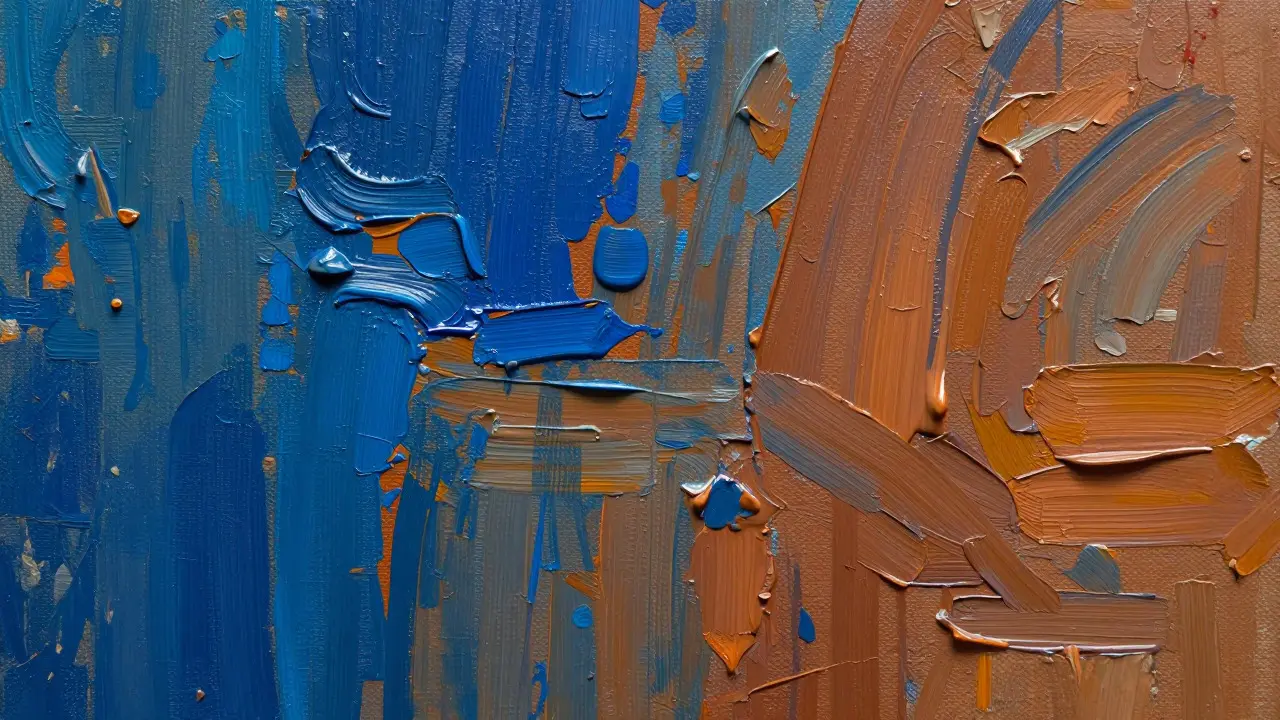
| Texture | Tactile (actual surface) vs. Visual (implied surface) | Distinguish between what you can touch and what looks rough. |
| Space | Depth, perspective, foreground/background | Describe how the artist creates a sense of depth or flatness. |
When describing color, avoid generic terms like "nice" or "pretty." Instead, be specific. Is the blue a muted slate or a vibrant cerulean? Does the red pop against a neutral background or blend into the shadows? Specificity adds credibility to your writing. Similarly, when discussing line, consider its direction. Diagonal lines often suggest action or instability, while horizontal lines convey calm and stability. Vertical lines imply growth or strength. By connecting these formal choices to their psychological effects, you bridge the gap between observation and interpretation.
Discuss Composition and Structure
Composition is how the artist arranges the elements within the frame. It’s the architecture of the piece. A chaotic arrangement might feel energetic or anxious, while a symmetrical one might feel balanced and serene. When writing about composition, focus on the focal point. Where does your eye go first? Is it centered, off-center, or hidden?
Consider the rule of thirds. Many artists place key subjects along imaginary lines that divide the canvas into nine equal parts. This creates natural interest. If a subject is placed dead center, ask yourself why. Is it to emphasize importance, or to create a sense of isolation? Also, look at the use of negative space. Empty areas aren't just empty; they provide breathing room for the viewer. A tight composition with little negative space can feel claustrophobic, while an open one can feel expansive.
Light and shadow play a crucial role in composition too. Chiaroscuro, the contrast between light and dark, can dramatically alter the mood. A scene lit by soft, diffused light feels different from one illuminated by harsh, directional beams. Describe how the light falls on the subjects. Does it highlight textures? Does it cast long shadows that stretch across the floor? These details help the reader reconstruct the image in their mind.
Move from Observation to Interpretation
Now that you’ve covered the physical and formal aspects, you can begin to interpret. This is where you connect the dots. How do the formal elements contribute to the meaning of the work? Remember, interpretation is not guessing the artist's secret diary entry. It’s analyzing how the visual choices evoke specific emotions or ideas in the viewer.
Use evidence-based language. Instead of saying "The artist was sad," say "The muted palette and downward-slanting lines suggest a mood of melancholy." This distinction is vital. It keeps your writing objective while still allowing for personal response. You are analyzing the mechanics of emotion, not diagnosing the artist's psyche.
Context also plays a role here. If you know the historical period, reference it. Was this piece created during a time of war? Does the imagery reflect social unrest? Connecting the visual evidence to broader cultural themes enriches the description. However, keep the connection tight. Don’t wander into unrelated history. Every historical fact you include should support your visual analysis.
Common Pitfalls to Avoid
Even experienced writers fall into traps when describing art. Here are a few common mistakes and how to fix them.
- Using Vague Adjectives: Words like "interesting," "cool," or "weird" tell the reader nothing. Replace them with specific descriptors. Instead of "weird," describe the distortion of the face or the unnatural angle of the limbs.
- Over-Interpreting: Assuming every symbol has a deep meaning can lead to over-analysis. Sometimes a flower is just a flower. Let the visual evidence guide you. If there’s no clear symbolic tradition associated with the object, stick to its formal qualities.
- Ignoring the Medium: Writing about a digital print as if it were an oil painting misses key nuances. Digital works have different textural possibilities and production methods. Acknowledge the technology involved.
- Passive Voice Overuse: Active voice makes your writing stronger. Instead of "The colors are used to create a mood," write "The artist uses muted colors to create a somber mood."
Another subtle error is neglecting the viewer's position. In three-dimensional art, the angle changes the perception. If you’re writing about a sculpture, mention how it looks from different vantage points. A statue may appear powerful from the front but fragile from the side. This multi-perspective approach adds depth to your description.
Practical Examples
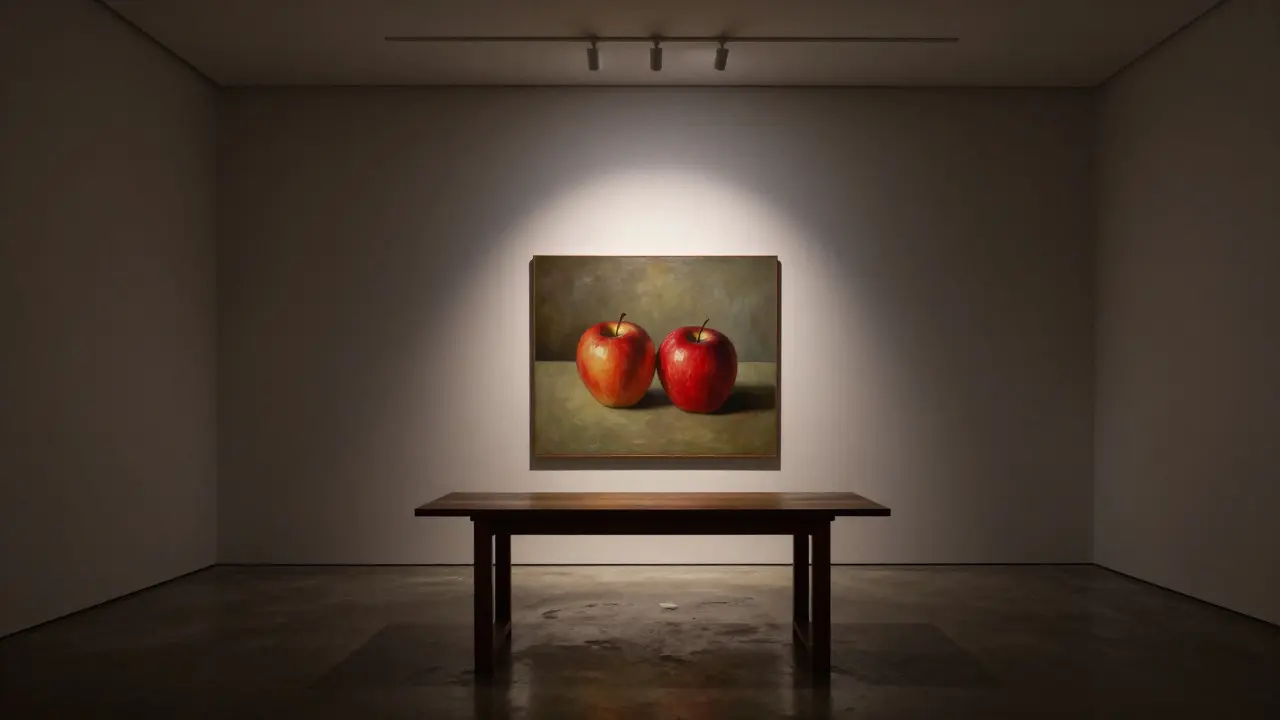
To see how this works in practice, let’s compare two approaches to describing the same hypothetical artwork: a still life of apples on a wooden table.
Weak Description: "This is a nice painting of some apples. The colors look good and the lighting is pretty. It feels peaceful."
Strong Description: "This oil on canvas depicts three red apples resting on a weathered wooden surface. The artist employs a warm, low-key lighting scheme, casting long shadows that stretch toward the bottom left corner. The brushwork is visible, with thick impasto strokes highlighting the texture of the apple skins. The composition places the apples slightly off-center, creating a dynamic tension with the empty space on the right. The muted earth tones of the background allow the vibrant reds of the fruit to dominate the visual field, evoking a sense of quiet abundance."
Notice the difference. The strong description uses specific terminology (impasto, low-key lighting, off-center composition) and connects formal choices to emotional effects (quiet abundance). It gives the reader a clear mental image and invites them to engage with the work more deeply.
Frequently Asked Questions
Do I need to be an art historian to write about art?
No. While knowledge of art history helps, the core skill is observation. Anyone can learn to describe what they see using basic formal elements. History adds context, but visual analysis stands on its own.
How long should an art description be?
It depends on the purpose. A museum label might be 50-100 words. A blog post could be 500-1,000 words. An academic essay might be several pages. Focus on clarity and completeness rather than length.
What is the difference between description and interpretation?
Description focuses on what is physically present (colors, shapes, materials). Interpretation focuses on what those elements mean or how they affect the viewer. Good writing balances both, starting with description and moving to interpretation.
Should I mention the artist's biography in my description?
Only if it directly relates to the visual content of the work. Biographical details can provide context, but they shouldn't overshadow the analysis of the artwork itself. Keep the focus on the piece, not the person.
How do I describe abstract art?
Abstract art relies heavily on formal elements since there are no recognizable objects. Focus intensely on color relationships, line dynamics, texture, and spatial depth. Describe the energy and movement within the piece rather than trying to find representational meanings.