How to Train Household Staff in Professional Art Care Procedures
Key Takeaways for Your Staff
- Never use commercial cleaning sprays or cloths on any artwork.
- Maintain a strict "no-touch" policy for frames and canvases.
- Report any changes in color, flaking, or pests immediately.
- Environmental control (light and humidity) is as important as physical cleaning.
The Foundation of Preventative Conservation
Before your staff picks up a duster, they need to understand the concept of Preventative Conservation is the strategy of minimizing future deterioration by controlling the environment and handling of objects. This isn't about fixing a painting that is already damaged; it is about ensuring the damage never happens in the first place. The goal is to create a stable environment where the art can exist without stress.
Start by explaining the "enemies" of art. High humidity leads to mold; low humidity makes oil paintings crack. Direct sunlight causes pigments to fade-a process known as photo-oxidation. When your staff understands that a simple act like opening a heavy curtain at 10 AM can actually strip color from a textile, they stop seeing it as a chore and start seeing it as a preservation effort.
Establishing a Strict "No-Touch" Cleaning Protocol
The most dangerous tool in a household is the multipurpose spray bottle. Most commercial cleaners contain ammonia or bleach, which can strip varnish or eat through delicate glazes. You must establish a hard rule: Art Care Procedures mean that no liquid ever touches the artwork. Period.
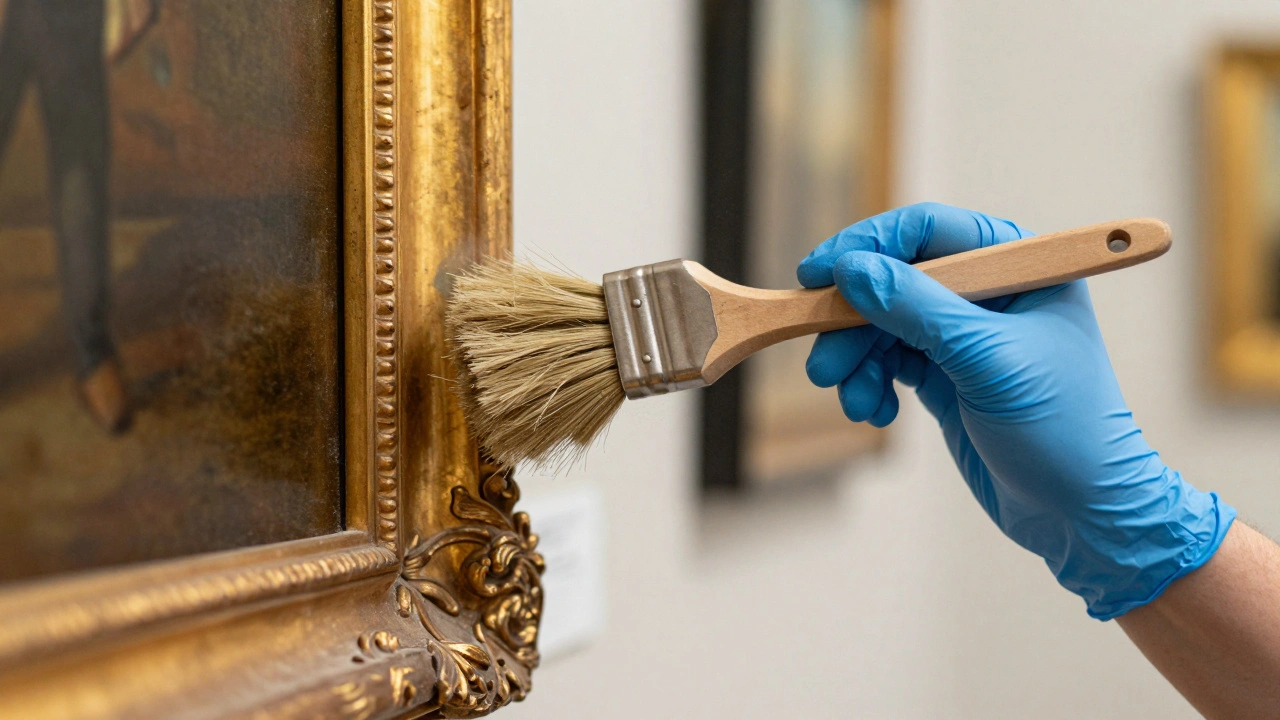
Instead, train your staff on the safe way to remove surface dust. The only acceptable tool for a frame or a canvas is a soft, natural-hair brush or a high-quality Goat Hair Brush. They should gently flick dust away from the surface, rather than wiping it across, which can push grit into the paint layer and cause micro-scratches.
| Tool/Material | Safe for Art? | Why? |
|---|---|---|
| Microfiber Cloths | No | Can snag delicate paint or leave lint. |
| Feather Dusters | No | Often just move dust around and can scratch. |
| Natural Hair Brushes | Yes | Soft bristles remove dust without friction. |
| Glass Cleaner/Windex | Extreme Danger | Ammonia dissolves many art binders. |
| Distilled Water (Sponge) | Only with Pro Supervision | Can cause swelling or tide lines if used wrong. |
Safe Handling and Moving Techniques
Accidents rarely happen when art is hanging; they happen when it is being moved. Whether it is to clean behind a sculpture or to prep for a gallery visit, your staff needs to know how to move objects without causing structural stress. Teach them the "two-person rule" for anything larger than a handheld object. Even if a piece seems light, the risk of a slip or a sudden shift in grip is too high.
Introduce them to Nitrile Gloves. Skin oils, sweat, and salts from fingerprints can permanently etch into the surface of a bronze sculpture or a charcoal drawing. When they handle a piece, they should never touch the "face" of the work. For paintings, they should only grip the outer edges of the heavy frame, never the canvas itself. If the art is unframed, it must be handled by the edges of the support (the wood or board) using gloves.
Monitoring the Environment
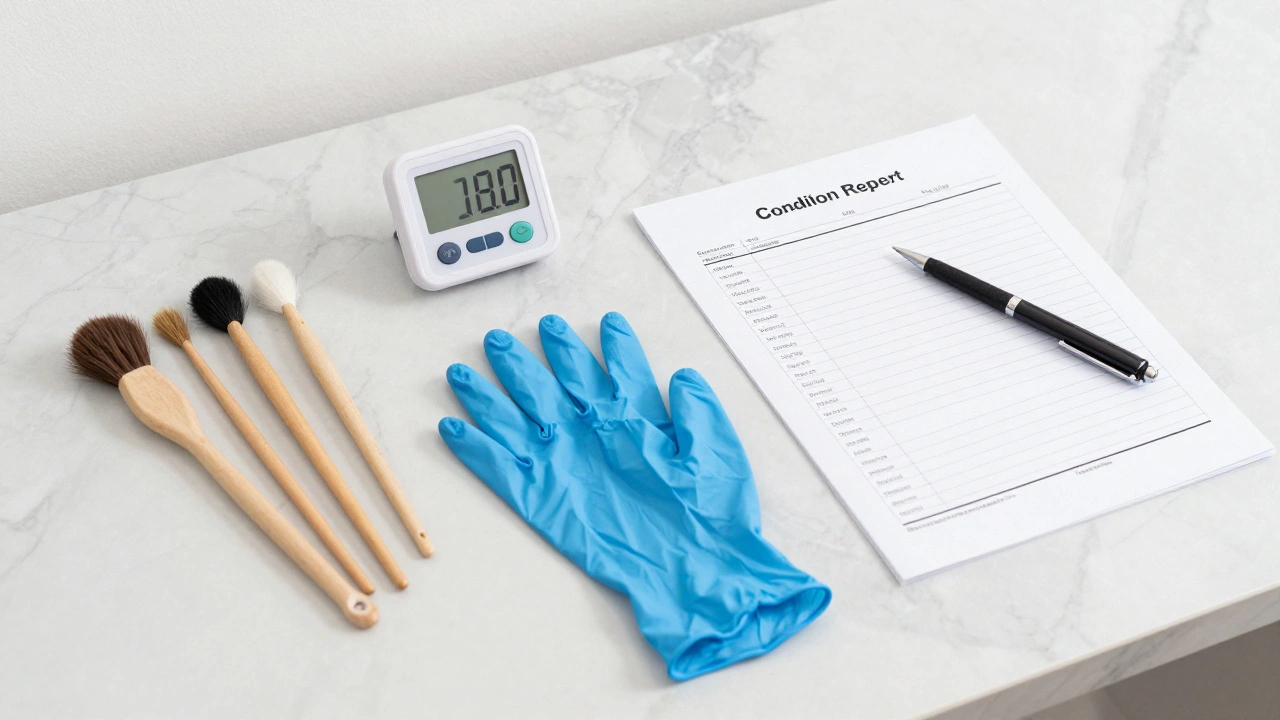
Your staff are your eyes and ears on the ground. They spend more time in the rooms than you do, making them perfect for monitoring Ambient Humidity and temperature. Teach them to use a Hygrometer-a simple device that measures moisture in the air. If the humidity spikes above 60% or drops below 40%, they should know to notify you or your conservator immediately.
Watch out for "micro-climates." For example, a painting hanging on an exterior wall during a Portland winter might experience condensation behind the canvas, leading to mold. Your staff should be trained to look for signs of distress: bubbling paint, a white powdery residue (efflorescence) on stone, or tiny holes in paper and fabric that might indicate an insect infestation. Detecting a pest problem early can be the difference between losing one piece and losing an entire collection.
Creating a Maintenance Log and Documentation
Professional art care relies on data. You shouldn't just tell your staff to "keep an eye on things"; give them a formal Condition Report log. This is a simple checklist they complete monthly. They don't need to be art historians, but they should check for the following:
- Are there any new cracks or "craquelure" in the paint?
- Is the frame securely attached to the wall?
- Are there any new insects or webs around the base of sculptures?
- Is the lighting system functioning correctly (no flickering bulbs)?
By documenting these observations, you create a history of the object's health. If you ever need to call in a professional Art Conservator-a specialist trained in the chemistry and physics of art repair-they will find this log invaluable. It tells them exactly when a problem started, which helps them choose the right treatment method.
Dealing with Emergencies
When a spill happens, the instinct is to scrub. In the art world, scrubbing is the enemy. If a liquid splashes onto a piece of art, the staff's only job is to stop the spread and call the expert. If it is a water-based spill on a sturdy surface, they can gently blot (never rub) the excess with a clean, white lint-free cloth, but they should not attempt to "clean" the stain.
For fire or smoke damage, the priority is air circulation and stabilization. Training your staff on where the fire extinguishers are-and specifically that they should never use a powder-based extinguisher on a painting because the chemicals can be as damaging as the fire-is a critical safety step. Specialized extinguishers or simple evacuation are often the better choices for the art, even if it means a slightly larger fire risk to the room.
Can I let my staff use a vacuum cleaner near my art?
Yes, but with caution. Vacuums should be used for the floors and perimeter of the room, but never directly against a frame or canvas. The vibration from a vacuum can shake loose fragile paint flakes, and the nozzle can easily bump into a piece of art, causing a chip. Keep the vacuum at least two feet away from any artwork.
What is the best way to train a new housekeeper who has no art experience?
Start with a "walk-through" of the home. Point out every piece of art and explicitly categorize them as "No Touch" or "Handle with Care." Give them a physical kit (gloves, brushes, logbook) so they associate the tools with the task. Most importantly, create a culture where they feel safe reporting a mistake immediately. It is much easier for a professional to fix a fresh smudge than a dried, chemically-bonded stain.
Should I buy specialized art insurance for my staff's mistakes?
Absolutely. Standard homeowner's insurance often doesn't cover high-value art or accidental damage caused by employees. A specialized fine art policy (often called a "scheduled' policy") provides specific coverage for each piece. Ensure your policy covers "accidental damage" and check if it requires a professional appraisal every few years to maintain current value coverage.
Is it okay to use a damp cloth on a gilded frame?
No. Gilded frames use thin layers of gold leaf over a base of gesso (plaster). Water can soften the gesso and cause the gold leaf to peel or flake off. Dusting with a soft brush is the only safe way to clean gold leaf. If the frame is truly dirty, it requires a professional conservator to clean it with specific solvents.
How often should art care procedures be reviewed with staff?
A full review should happen quarterly, or whenever a new piece is added to the collection. Art care is a habit; if staff aren't reminded of the "no-touch" rules, they may slip back into general cleaning habits. Use the quarterly review to check the condition logs and adjust environmental settings for the upcoming season (e.g., switching to humidifiers in winter).
Next Steps for Homeowners
If you are just starting this process, your first move should be to audit your current cleaning supplies. Toss out any abrasive sponges or ammonia-based sprays in the rooms where art is displayed. Next, purchase a set of nitrile gloves and a few high-quality goat hair brushes for your staff. Finally, schedule a one-hour training session where you demonstrate exactly how to dust a piece and how to fill out the condition report.
For those with museums-grade collections, consider hiring a professional conservator to create a formal "Estate Care Manual." This document acts as the definitive guide for all current and future staff, ensuring that your collection remains pristine regardless of who is managing your home.