How to Review Exhibitions: A Guide to Analyzing Group and Solo Shows
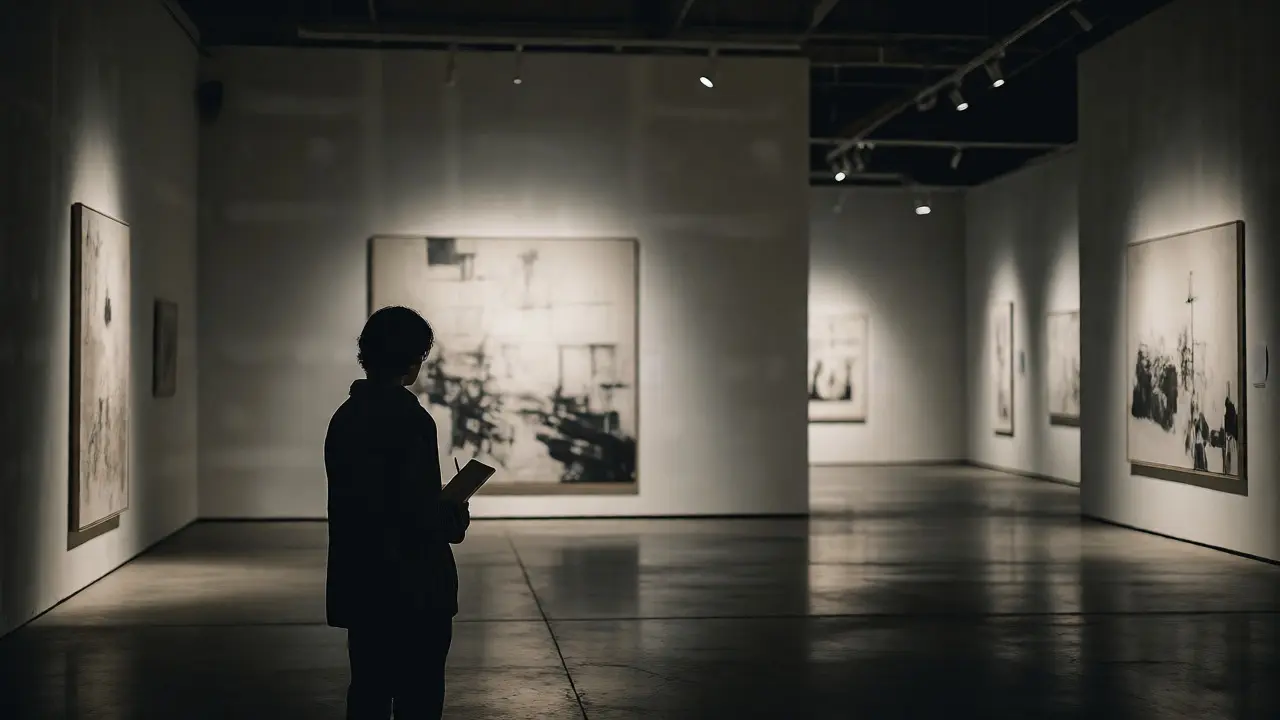
You walk into a gallery, the lights are dimmed just right, and there’s that specific smell of fresh drywall and old varnish. You’re supposed to be writing a reviewing exhibitions piece, but your mind goes blank. Do you talk about the brushstrokes? The politics? The fact that the coffee in the lobby was terrible? Writing about art is hard because it’s subjective, but analyzing an exhibition doesn’t have to be. Whether you’re standing before a single artist’s life work or navigating a chaotic mix of twelve different creators, the goal is the same: help your reader understand what they missed and why it matters.
The Difference Between Solo and Group Dynamics
Before you write a single word, you need to identify what kind of beast you’re dealing with. A Solo Exhibition is a deep dive into one mind. It’s intimate, often chronological, and reveals the evolution of a single voice. Think of it like reading a novel by one author; you’re looking for consistency, development, and the unique fingerprint of that creator. If you’re reviewing a solo show at a major institution like the Museum of Modern Art, you’re tracking how this specific body of work fits into the artist’s broader career arc.
A Group Exhibition is entirely different. It’s less of a novel and more of a curated playlist or a dinner party where everyone has something to prove. Here, the curator is the author, not the artists. Your job shifts from analyzing individual genius to evaluating the conversation between works. Did the juxtapositions create new meaning? Or did the pieces just sit next to each other awkwardly? When analyzing group shows, look for the connective tissue. Is there a theme holding them together, or is it just a collection of friends?
| Feature | Solo Show | Group Show |
|---|---|---|
| Primary Subject | The Artist | The Curator/Theme |
| Critical Lens | Evolution, Consistency, Mastery | Cohesion, Dialogue, Curation |
| Common Pitfall | Ignoring context outside the room | Focusing on only one favorite piece |
| Best For | Retrospectives, Debut Shows | Thematic Surveys, Emerging Talent |
Decoding the Curatorial Voice
In every exhibition, someone made choices. Why is this painting here? Why is that sculpture three feet away? This is the curatorial voice, and it’s arguably the most important entity in the room. In a solo show, the curator might be arranging works to highlight a shift in style-say, moving from monochrome canvases to vibrant color fields. In a group show, the curator is building a narrative. Maybe they’re pairing a brutalist concrete sculpture with a delicate silk tapestry to explore tension.
Ask yourself: Does the arrangement make sense? Sometimes galleries hang works chronologically, which can feel like a history lesson. Other times, they use thematic clusters, grouping pieces by subject matter like "body," "landscape," or "technology." If you’re writing a review, don’t just describe the layout; evaluate its effectiveness. Did the flow keep you engaged, or did it feel disjointed? A good critic notices when a curator forces a connection that isn’t there, trying too hard to make disparate works seem related.
Analyzing Individual Works Within the Context
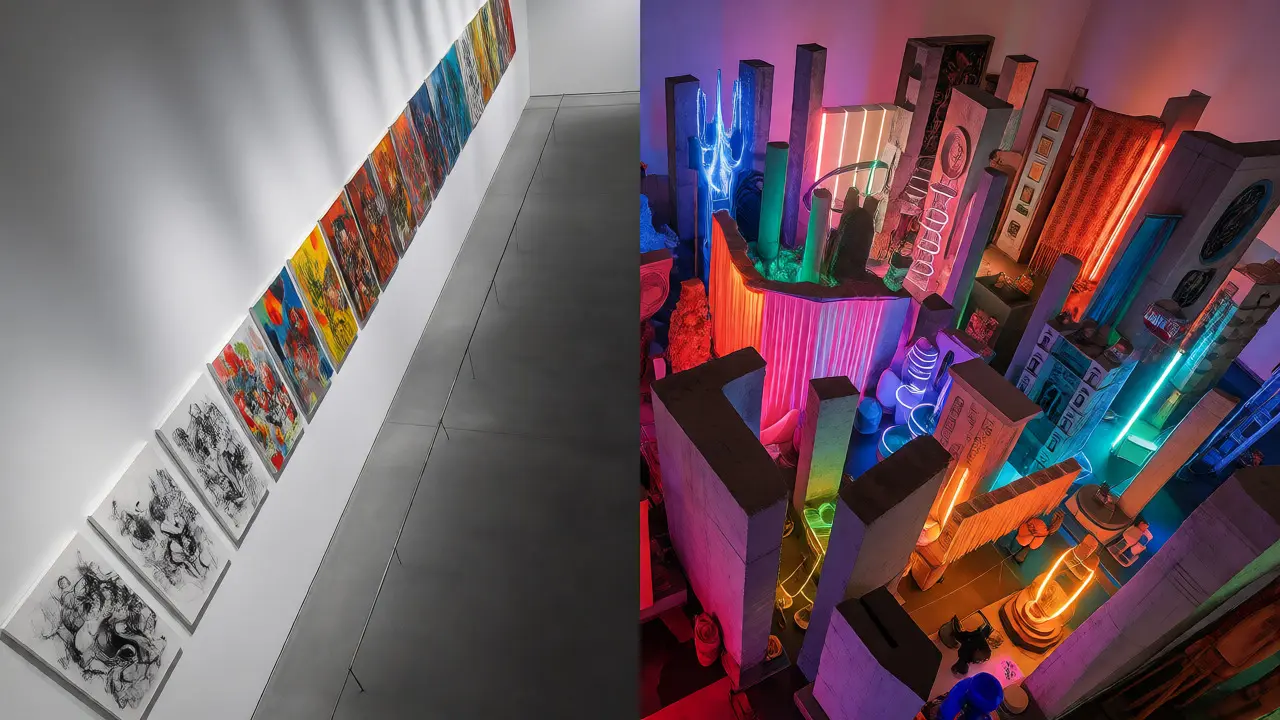
Even in a group show, individual pieces shine. But here’s the trick: never analyze a work in isolation if you can help it. Look at how it interacts with its neighbors. If you see a stark, black-and-white photograph next to a loud, neon installation, ask yourself what that contrast does. Does the photo gain weight because of the noise around it? Does the neon feel cheap because it’s next to a classical oil portrait?
Use the EAV Model (Entity-Attribute-Value) to break down what you see. The Entity is the artwork. The Attributes are its medium, size, color palette, and technique. The Values are the specific details-like "oil on canvas," "six feet tall," or "monochromatic blue." By grounding your observations in these concrete attributes, you avoid vague praise like "it’s beautiful." Instead, you say, "The rough texture of the impasto paint contrasts sharply with the smooth glass of the adjacent case." This specificity builds trust with your reader.
The Role of Space and Lighting
We forget that art exists in physical space. The architecture of the gallery is an active participant in the experience. High ceilings can make small paintings feel lost, while cramped corners might make large installations feel claustrophobic. Lighting is equally critical. Is the light warm or cool? Does it cast shadows that distract from the work? In Portland’s many converted warehouse galleries, natural light often plays a huge role. If you’re reviewing a show in a space with skylights, note how the changing daylight affects the colors throughout the day.
Consider the flow of foot traffic. Were you forced to bump into strangers to see a key piece? Was there enough breathing room between works? A crowded gallery can ruin the intimacy of a delicate watercolor series. Conversely, a sparse room might make a powerful political statement feel underwhelming. Mentioning these spatial elements adds a layer of practical advice for readers who plan to visit.

Contextualizing the Work
No art exists in a vacuum. To write a compelling review, you need to place the exhibition within a larger framework. Who is the audience? Is this a commercial gallery trying to sell high-end abstracts, or a non-profit museum focusing on social justice? The intent behind the show shapes how you judge its success.
Look at the wall texts. Are they helpful guides or pretentious riddles? Good wall text provides context without dictating interpretation. Bad wall text uses jargon like "liminal spaces" or "post-ironic gaze" to confuse viewers. If the text is dense, try ignoring it for the first pass through the room. See what you feel naturally. Then, read the text. Did it change your mind? Or did it confirm what you already sensed? This process helps you distinguish between your own reaction and the curator’s imposed narrative.
Writing the Review: Structure and Tone
Once you’ve walked the floor, taken notes, and maybe bought a catalog, it’s time to write. Start with a hook. Don’t begin with "This exhibition features ten artists." That’s boring. Start with a moment. "The first thing you notice isn’t the painting, but the silence required to hear the ticking clock inside the glass box." Draw the reader into the sensory experience.
Structure your argument clearly. If it’s a solo show, trace the artistic journey. If it’s a group show, discuss the central theme and how well the artists delivered on it. Use active verbs. Avoid passive constructions like "It was felt that..." Say "The artist created..." or "The curator placed..." Keep your tone conversational but informed. You’re sharing an experience, not delivering a lecture.
End with a verdict. Should people go? Who is this show for? Is it worth the ticket price? Be honest. If the show was confusing, say so. If it was transformative, explain why. Readers rely on critics to save them time and money. Give them a clear reason to book their visit-or skip it.
How do I start an art exhibition review?
Start with a vivid description of a specific moment or piece that captured your attention. Avoid generic introductions. Hook the reader by describing the atmosphere, a striking visual detail, or a surprising interaction between two artworks. This sets the tone and gives the reader a reason to care about the rest of your analysis.
What is the main difference between reviewing a solo show and a group show?
In a solo show, you focus on the artist's personal evolution, consistency, and technical mastery over time. In a group show, you evaluate the curator's ability to create dialogue between different artists and themes. The solo review looks inward at one voice; the group review looks outward at the relationships between multiple voices.
How important is the lighting in an art exhibition review?
Lighting is crucial because it directly impacts how colors, textures, and shadows are perceived. Poor lighting can wash out details or create distracting glare, while strategic lighting can enhance the mood and highlight key elements. Always mention if the lighting helped or hindered your viewing experience.
Should I include my personal opinion in an art review?
Yes, but back it up with evidence. Personal opinion is the core of criticism, but it needs to be grounded in observation. Explain *why* you liked or disliked something using specific attributes like composition, color, or scale. This turns subjective feelings into credible analysis.
What are common mistakes beginners make when reviewing exhibitions?
Common mistakes include focusing only on whether they "liked" the art without explaining why, ignoring the curatorial arrangement, and relying too heavily on wall text instead of their own observation. Beginners also tend to list every piece rather than selecting key works to illustrate their points.