How to Read Auction Catalogue Notes for Authentication
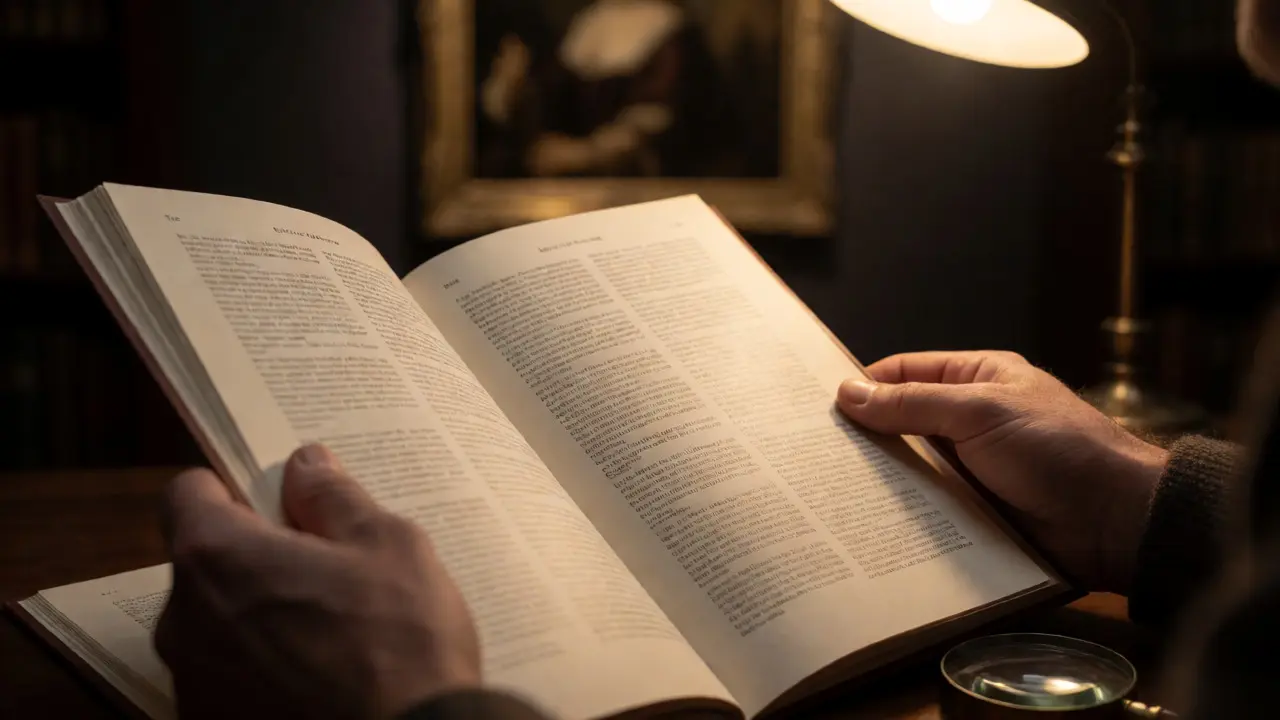
You just found a painting that looks like the real deal. The colors pop, the brushwork feels right, and the price is surprisingly reasonable. But before you raise your paddle or click "bid," there is one document standing between you and a potential fortune: the auction catalogue a printed or digital publication listing items for sale at an auction, containing detailed descriptions, estimates, and provenance information. Most bidders skim it for pretty pictures and final prices. Experts read the fine print. If you want to avoid buying a fake or a damaged piece, you need to learn how to decode those tiny footnotes and dense paragraphs.
Why the Catalogue Is Your First Line of Defense
Auction houses are not charities. They are businesses with reputations on the line, but they also have legal protections. In many jurisdictions, including under the Uniform Commercial Code in the United States, auctioneers often sell items "as is." This means if you buy a vase and later discover it is a modern reproduction, you might not get your money back unless you can prove the house made a specific, negligent error. The catalogue is where they define what they are selling. If the text says "attributed to" rather than "by," they are protecting themselves from liability regarding authorship. Reading these notes isn't just about curiosity; it is about understanding exactly what risk you are taking.
| Term | Meaning | Authentication Implication |
|---|---|---|
| By | The house believes the artist created the work. | Highest confidence level; usually backed by expert opinion or documentation. |
| Attributed to | Believed to be by the artist, but lacking definitive proof. | Moderate confidence; significant discount expected compared to "by" lots. |
| Circle of | Work by someone in the artist's immediate circle or workshop. | Low attribution value; stylistically similar but different hand. |
| School of | Work in the style of the artist, possibly decades later. | Very low attribution value; useful for decorative purposes only. |
| Follower of | Work by a later artist influenced by the master. | Indicates derivative work; check for period authenticity separately. |
Decoding Provenance Chains
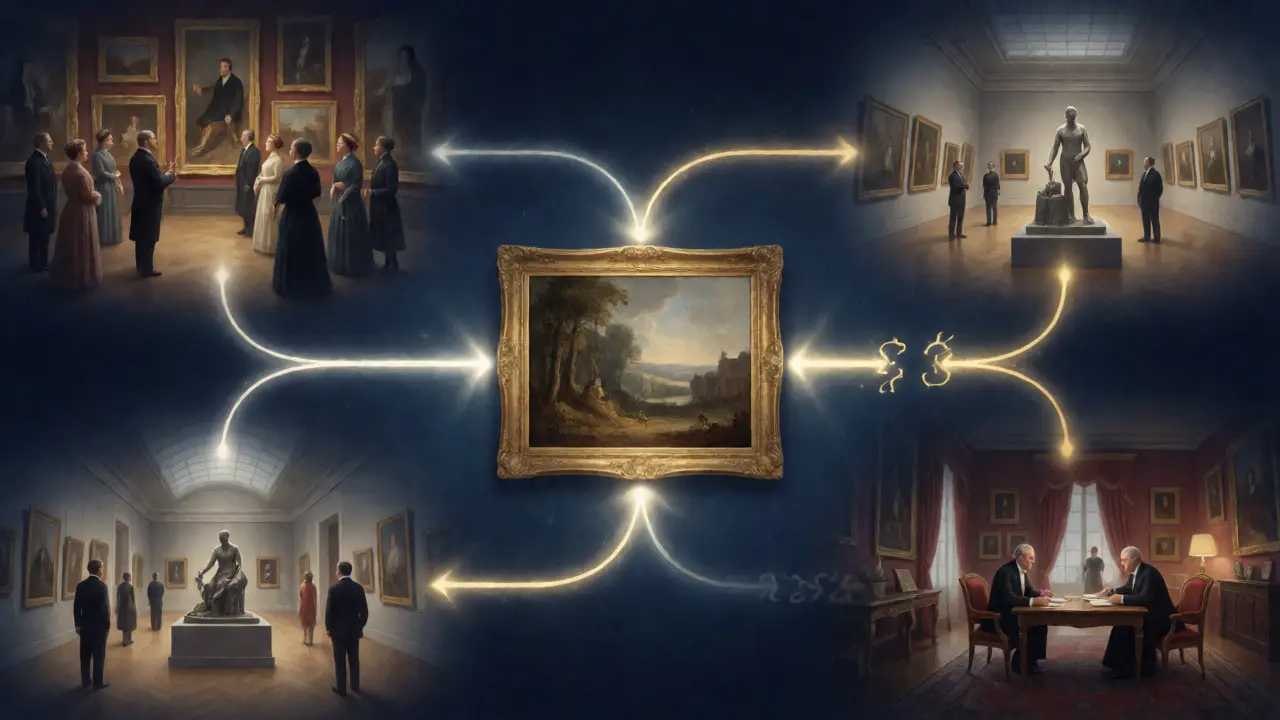
Provenance is the history of ownership. It answers the question: "Who owned this before me?" A strong provenance chain acts as a fingerprint for authenticity. When reading the notes, look for gaps. If a painting was sold in Paris in 1920 and then suddenly appears in a private collection in Ohio in 1950, that thirty-year gap needs explanation. Was it lost? Hidden during World War II? Or did it simply sit in a basement?
Be wary of vague phrases like "Private European Collection." That tells you almost nothing. Compare that to "Acquired from Galerie Bernheim-Jeune, Paris, 1912." The latter names a specific institution and date. You can verify that gallery existed, check their sales records, and see if the transaction matches. Specificity equals credibility. If the provenance lists a famous collector, such as Peggy Guggenheim an American art collector who founded the Peggy Guggenheim Collection in Venice, demand to see the invoice or letter confirming the sale. Without documentation, celebrity provenance is just marketing fluff.
Condition Reports vs. Catalogue Descriptions
Here is a trap many beginners fall into: assuming the catalogue describes the physical state accurately. It rarely does. Catalogues focus on aesthetics and historical significance. Condition reports (CRs) focus on damage. You must request a separate CR. However, the catalogue notes often contain subtle hints about condition. Look for words like "restored," "cleaned," "lined," or "re-stretched." These indicate intervention. A painting described as "in original frame" suggests the canvas hasn't been tampered with recently, which can be a good sign for structural integrity.
If the note mentions "minor losses" or "surface abrasion," ask for photos. "Minor" is subjective. To a restorer, minor might mean a pinhole. To a seller, it might mean a visible scratch across the face. Never bid based solely on the catalogue image. Lighting can hide cracks, and angles can disguise warping. Treat the catalogue image as a teaser trailer, not the movie.
Literature and Exhibition History
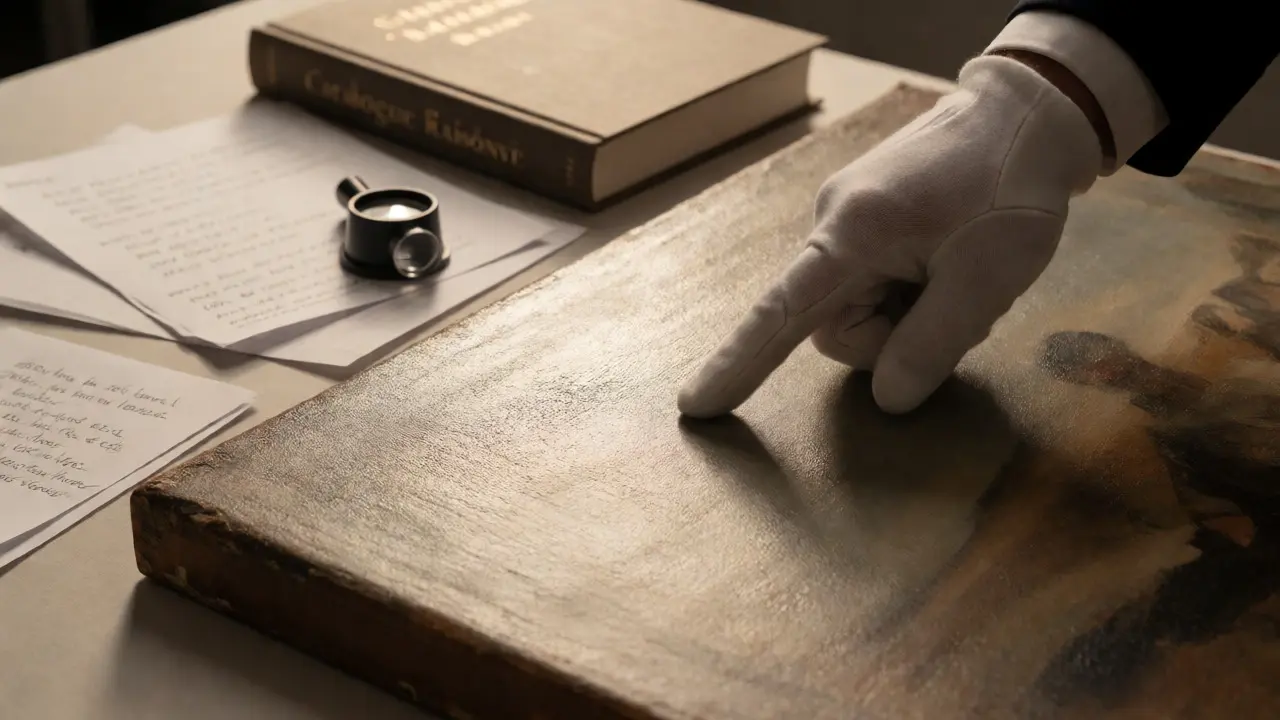
Has this item been written about? Has it hung in a museum? These are powerful indicators of authenticity. Look for citations in the notes. Does it reference a catalogue raisonné? A catalogue raisonné is a comprehensive list of all known works by an artist, compiled by scholars. If your item is listed in Volume II, page 45, number 123 of the standard reference book for that artist, its authenticity is much harder to dispute. Conversely, if it is missing from the catalogue raisonné, that doesn't mean it's fake-it might just be newly discovered-but it requires extra scrutiny.
Exhibition history adds weight too. If a piece was shown at the Metropolitan Museum of Art in 1985, curators vetted it. They checked the materials, the style, and the paper or canvas age. While not infallible, institutional exhibition history provides a layer of third-party validation. Note the dates carefully. An exhibition in 1970 proves the item existed then, but it doesn't prove it was authentic *then*. Still, it helps rule out modern fakes created after that date.
Identifying Red Flags in the Fine Print
Some phrases should make your pulse quicken. "Guaranteed Authentic" is rare in major auctions because houses avoid guarantees. Instead, they use disclaimers. Watch for language shifting from factual to speculative. Phrases like "we believe," "it appears," or "possibly" signal uncertainty. If the description spends more time talking about the artist's biography than the object itself, the house might be padding thin evidence.
Another red flag is inconsistent dating. If the title says "19th Century" but the notes mention materials invented in 1920, something is wrong. Cross-reference technical details. Does the ink type match the era? Does the wood panel show wormholes consistent with age? Sometimes, experts slip up, but often, inconsistencies hint at a hurried appraisal or a questionable origin. Trust your gut if the story doesn't add up.
Practical Steps Before Bidding
Don't rely on memory. Create a checklist for every lot you consider. First, identify the attribution status using the terminology table above. Second, map out the provenance timeline and spot gaps. Third, request the condition report immediately-don't wait until bidding starts. Fourth, search for the item in online databases like Artnet or Mutual Art to see past sales data. Finally, if possible, view the item in person. Seeing the texture of the paint or the grain of the wood in natural light reveals details photographs miss.
Remember, authentication is rarely black and white. It is a spectrum of probability. Your job as a bidder is to determine if the probability matches the price. If the catalogue notes are vague, the risk is high. If the notes are detailed, cited, and transparent, the risk is lower. Use the catalogue as a detective's case file, not a brochure.
What does "Attributed to" really mean in an auction catalogue?
It means the auction house experts believe the work was likely created by the named artist, but they lack conclusive documentary or scientific proof. It indicates moderate confidence. Items attributed to an artist typically sell for significantly less than those catalogued as "by" the artist, reflecting the higher risk of misattribution.
Is a provenance gap always a bad sign?
Not necessarily. Gaps occur for valid reasons, such as inheritance, private sales without public records, or storage during wars. However, large unexplained gaps require caution. You should investigate whether the gap coincides with periods of looting or forgery booms. Always ask the auction house if they have any internal records filling the gap.
Can I trust the condition report provided by the auction house?
Treat it as a helpful guide, not a warranty. Auction houses provide condition reports for convenience, but they explicitly state that buyers should inspect items personally. Restorers may catch nuances the auction staff missed. For high-value items, hiring an independent conservator to review the condition report is a wise investment.
What is a catalogue raisonné?
A catalogue raisonné is a comprehensive, annotated listing of all known works by a particular artist, compiled by recognized scholars. It serves as the authoritative reference for authentication. If an artwork is included in the current edition of the catalogue raisonné, its authenticity is generally accepted by the market. Absence from it raises questions but does not automatically mean the work is fake.
Why do some lots say "Property of a Gentleman" or "Private Collection"?
These are anonymity clauses. Sellers often pay to keep their identity private for security or privacy reasons. While this limits your ability to trace the exact previous owner, it doesn't inherently affect authenticity. However, knowing the general geographic region (e.g., "European Private Collection") can help assess likelihood of certain types of provenance issues.