How to Plan a Museum Road Trip: The Best Routes and Museum Passes
Quick Tips for Your Trip
- Mix your stops: Pair a massive art gallery with a niche, quirky local museum.
- Buy regional passes: They often pay for themselves after just three visits.
- Check the calendars: Many museums have "Free Tuesdays" or special late-night events.
- Plan for "brain breaks": Schedule outdoor walks or nature stops between exhibits.
Picking Your Route Based on Interest
You can't see everything, so picking a theme keeps your trip from feeling like a random scramble. If you love high art, the East Coast corridor is unbeatable. You can start in Boston, hit the Museum of Fine Arts, and head down to New York City for the Metropolitan Museum of Art. It's a dense cluster of world-class galleries where you can travel by train or car with minimal gaps between sights.
If you're more into history and the outdoors, the American Southwest offers a completely different energy. Think about a loop starting in Santa Fe, visiting the Museum of International Folk Art, and winding through Arizona to see indigenous pottery and geological wonders. The landscapes here act as a palate cleanser between the indoor exhibits.
For those who love the weird and wonderful, a Midwest loop is the way to go. You can find everything from the Field Museum in Chicago to smaller, idiosyncratic collections in rural Ohio or Indiana. These "roadside" museums often provide the most memorable stories because they are usually run by passionate collectors rather than corporate boards.
Hacking the Cost with Museum Passes
Paying individual entry fees at every stop is a quick way to drain your wallet. The secret to a budget-friendly museum road trip is leveraging regional or membership-based passes. Many major cities offer a "Culture Pass" or a city-wide tourism card that grants entry to 10 or 20 different sites for one flat fee. These are usually a steal if you plan on visiting more than three museums in a single city.
Another pro move is the ASTC Passport (Association of Science and Technology Centers). If you have a membership at one accredited science museum, you often get free or discounted admission at hundreds of other science centers across North America. It’s a massive loophole that turns a single local membership into a national travel permit.
| Option | Best For | Typical Cost | Key Benefit |
|---|---|---|---|
| City Tourist Pass | Urban clusters | $50 - $150 | All-in-one entry & transport |
| ASTC Passport | Science/Tech fans | Membership fee | Reciprocal free entry |
| Annual Membership | Frequent visitors | $75 - $200 | Guest passes & member events |
| Free Museum Days | Budget travelers | $0 | No cost, but long lines |
Avoiding Museum Fatigue
Museum fatigue is real. It happens when your brain gets overwhelmed by too much visual information, and you find yourself walking through a gallery without actually seeing anything. To fight this, stop trying to see every single piece in a collection. Even the Louvre is too big for one person in one day. Instead, pick three "must-sees" per museum and let the rest be a bonus.
I always suggest the "sandwich method": one heavy academic museum, one light/interactive exhibit, and one outdoor stop. For example, spend your morning at a dense history museum, your afternoon at a quirky neon-sign gallery, and your evening walking through a botanical garden. This keeps your dopamine levels steady and prevents you from crashing by 3 PM.
Timing is also everything. Most museums are loudest and most crowded between 11 AM and 2 PM. If you can, aim for the "golden hours"-right when they open or the two hours before they close. You'll have more room to breathe and a much more intimate experience with the art.
Logistics and Road Trip Gear
Packing for a cultural road trip is different from a camping trip. You need a balance of comfort and "smart-casual." Museums often have strict temperature controls-it can be freezing in the galleries even if it's 90 degrees outside. A lightweight cardigan or a denim jacket is non-negotiable.
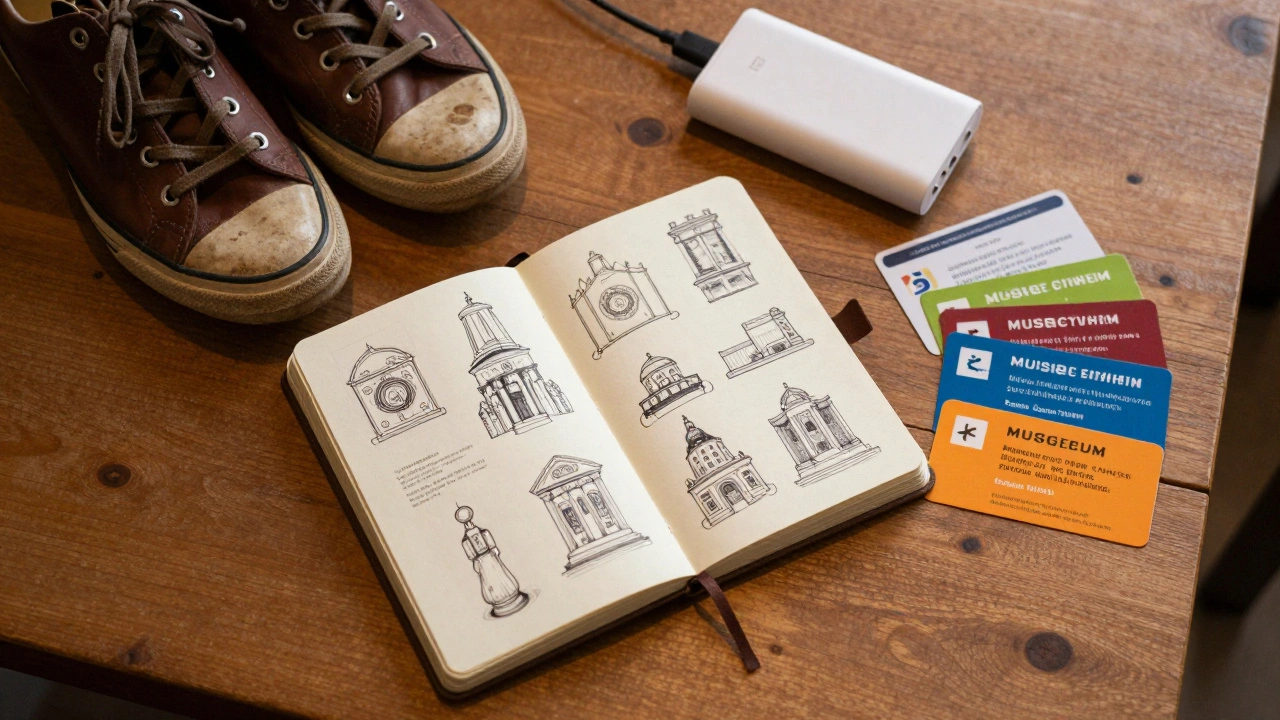
Footwear is the most important piece of gear. You will be walking on hard marble or concrete floors for hours. Avoid brand-new shoes; stick to broken-in sneakers with good arch support. If you're doing a multi-city tour, bring a portable power bank. Using GPS and taking photos of exhibits drains a phone battery faster than almost anything else.
Don't forget a physical notebook. While digital notes are great, sketching a quick detail or jotting down a feeling about a piece of art creates a more lasting memory. It also gives you something to do during those long stretches of highway between cities.
Designing Your Daily Itinerary
A common mistake is over-scheduling. If you put four museums in one day, you'll end up hating them all by the end. A sustainable pace is one "anchor" museum in the morning and one smaller, specialized gallery in the late afternoon. This leaves room for spontaneous discoveries, like a local bookstore or a weird antique shop that feels like a museum in itself.
When planning your route, use a map tool to mark "secondary targets." These are smaller museums that aren't famous but are on your path. If you're feeling energetic, you stop in. If you're tired, you skip them without feeling like you missed a primary goal. This flexibility removes the stress of the schedule and makes the trip feel like an adventure rather than a checklist.
What is the best time of year for a museum road trip?
The "shoulder seasons"-spring (March to May) and fall (September to November)-are ideal. The weather is mild for driving, and the crowds are significantly thinner than during the summer peak or the winter holiday rush. This makes getting tickets easier and the galleries much quieter.
How do I find small, off-the-beaten-path museums?
Avoid relying solely on top-10 lists. Instead, check the "Local History" sections of city websites or use community forums. Often, the best museums are the ones that are barely advertised but have an incredibly specific focus, like a museum dedicated entirely to clocks or vintage fire trucks.
Are museum passes worth it for short trips?
It depends on the density of the area. In cities like New York, London, or DC, they are almost always worth it because the admission fees are high. However, if you're visiting a few scattered museums in the rural Midwest, individual tickets are usually cheaper since the entry fees are lower to begin with.
How do I handle parking at major city museums?
Parking at major museums can be a nightmare and expensive. Your best bet is to park your car at your hotel or a long-term garage and use rideshare apps or public transit to get to the museum. This saves you from circling the block for 40 minutes and allows you to enjoy a drink at the museum cafe without worrying about driving.
What if I have kids on a museum road trip?
The key is interaction. Look for museums with "hands-on" galleries or scavenger hunt worksheets. Limit the time spent in "look-but-don't-touch" galleries to 60-90 minutes, then head to a park or an interactive science center to let them burn off energy.
Next Steps for Your Journey
If you're just starting out, begin by picking one city you've always wanted to visit and find its most famous museum. Then, look at a map and see what other interesting stops lie between your home and that city. Start small-maybe a three-day weekend-before committing to a cross-country trek.
If you encounter a closed exhibit or a surprising detour, embrace it. Some of the best parts of a road trip are the unplanned stops at a local diner or a weird roadside attraction that wasn't in any guide. The goal isn't to see every artifact in the world; it's to experience the world through a few curated lenses.