How to Overcome Collector Objections in Gallery Sales: A CRM Guide

You’ve spent weeks curating the perfect show. The lighting is right. The walls are balanced. Then a serious collector walks in, looks at a piece you know will sell for $15,000, and says, "I’ll think about it." Or worse, they say nothing, check their phone, and walk out. It happens to every gallery owner. The difference between a stagnant inventory and a thriving business isn’t just great art; it’s how you handle that moment of hesitation.
Most galleries treat art sales as a transactional exchange of money for canvas or sculpture. But high-end collecting is emotional, relational, and deeply psychological. When a collector raises an objection, they aren’t usually saying "no" to the art. They’re signaling uncertainty about value, timing, or trust. If you don’t have a system to capture these signals, you lose the sale-and the relationship. This is where modern CRM software meets fine art dealership strategy.
The Psychology Behind the "No"
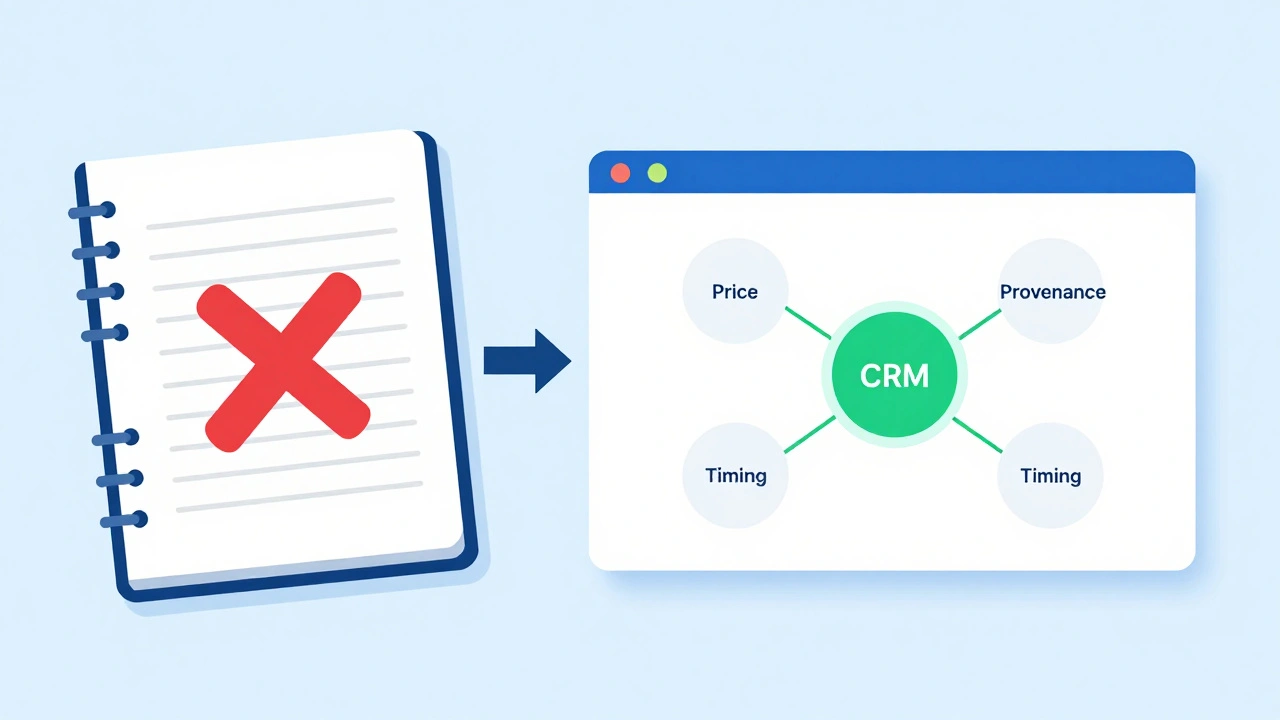
Before you can overcome an objection, you need to understand what’s really happening in the collector’s mind. In my experience working with galleries across the Pacific Northwest, I’ve found that objections fall into three buckets: Price, Provenance, and Timing.
Price objections are rarely about affordability. A collector who asks, "Is this negotiable?" or "That seems steep," is often asking, "Do I understand the long-term value?" They want reassurance that this asset will hold or increase its worth. If you just drop the price, you devalue the artist and your own expertise. Instead, you need to articulate the investment thesis.
Provenance objections stem from fear. Is this authentic? Will it be accepted by museums? Has it been stolen? Collectors are terrified of buying a fake or a piece with a dark history. An objection here-"Can you guarantee the origin?"-is a request for documentation and story, not just a certificate.
Timing objections are the most common. "I’m waiting for the market to cool," or "I’m renovating my space." These are polite ways of saying, "I’m not ready to commit today." Without a follow-up system, these collectors vanish into the void. You need a way to stay top-of-mind without being annoying.
Why Your Notebook Isn’t Enough
Many gallery owners still rely on memory or a simple spreadsheet to track conversations. Maybe you write down that Mr. Henderson liked the blue abstracts but was worried about the frame. Two months later, when that series sells out, you forget to call him. Or worse, you call him and ask, "Did you decide?" He feels pressured and hangs up.
This is where Customer Relationship Management (CRM) becomes essential infrastructure for art dealerships. A CRM isn’t just a digital address book. It’s a repository for context. It allows you to log specific objections, set reminders for nuanced follow-ups, and track the lifecycle of a collector’s interest.
Think of it this way: if a collector mentions they are interested in mid-century modern furniture, your CRM should flag that. Next time you acquire a rare Eames chair, you don’t blast your entire list. You send a personal note to those five people who specifically asked about that style. That’s not spam; that’s service.
Mapping Objections to Actionable Data
To effectively use a CRM for overcoming objections, you need to structure your data correctly. Most generic CRMs are built for selling software or insurance, not fine art. You need to customize fields to capture the unique nuances of art collecting.
| Standard CRM Field | Art-Specific Adaptation | Why It Matters for Objections |
|---|---|---|
| Notes | Objection Type (Price, Provenance, Timing, Style) | Allows you to filter leads by specific hesitation points. If 40% of your leads cite "price," you know your pricing strategy or communication needs work. |
| Tags | Collection Focus (e.g., Contemporary, Impressionist, Local Artists) | Helps you match new acquisitions to past interests, bypassing the "not my style" objection before it starts. |
| Next Step | Follow-up Trigger (e.g., Artist Award, Market Report, New Exhibition) | Ensures you contact them with relevant news, not just a sales pitch. This builds trust and overcomes timing objections. |
| Status | Collector Tier (Emerging, Established, Institutional) | Different tiers require different levels of provenance documentation and payment terms. Tailoring your approach prevents friction. |
Strategies for Handling Specific Objections
Once you have the data, you need the script. Here is how to turn common objections into closed sales using the insights stored in your CRM.
1. The "It’s Too Expensive" Objection
Never apologize for the price. Apologizing signals that you doubt your own valuation. Instead, pivot to value. Use your CRM to recall what the collector said they valued. Did they mention investing? Talk about the artist’s recent auction results. Did they mention decor? Talk about the size and impact in their living room.
If the CRM shows this collector bought a smaller piece last year for $2,000, you can say, "We’ve seen similar works by this artist appreciate by 15% annually since your last purchase. This larger scale offers better liquidity in the secondary market." You’re not arguing price; you’re providing financial context.
2. The "I Need to Think About It" Objection
This is the killer. Most galleries lose 80% of sales here because they don’t follow up correctly. When someone says this, log it in your CRM as a "Timing" objection. Set a reminder for three days later-not to ask if they bought it, but to provide value.
Send an email with a link to a recent interview with the artist discussing the inspiration behind the piece. Or share a photo of the work installed in another client’s home. You’re removing the friction of imagination. You’re showing them what it looks like in real life. This keeps the conversation alive without pressure.
3. The "I Don’t Know the Artist" Objection
Collectors love discovery, but they hate risk. If they don’t know the name, they feel vulnerable. Use your CRM to pull up any press, exhibitions, or collections that feature this artist. Send a one-page PDF summary. "While [Artist Name] is emerging, their work has been featured in [Gallery/Museum] and collected by [Name]." Social proof reduces anxiety.

Building Trust Through Consistency
Selling art is a marathon, not a sprint. A collector might look at ten pieces before buying one. Your CRM should allow you to track every interaction. Did they visit the gallery? Did they open your emails? Did they click on a specific artist’s page?
In Portland, we have a tight-knit community. Word travels fast. If you treat a collector poorly, they won’t just leave; they’ll tell others. Using a CRM ensures you never forget a birthday, an anniversary, or a previous purchase. Sending a handwritten card on the anniversary of their first purchase costs pennies but builds immense loyalty. That loyalty turns one-time buyers into repeat collectors who advocate for your gallery.
Implementing Your System Today
You don’t need expensive enterprise software to start. Many affordable platforms offer robust features for small businesses. The key is consistency. Spend five minutes after every client interaction logging notes. What did they like? What made them hesitate? What are their other interests?
Start small. Create a field for "Primary Objection." Review it weekly. Look for patterns. Are you losing too many sales to price? Maybe you need to educate more on value. Are you losing to timing? Maybe your follow-up cadence is too aggressive or too passive. Data drives decisions. Intuition gets you started; data keeps you growing.
Overcoming collector objections isn’t about winning an argument. It’s about understanding the human behind the purchase. By combining empathy with the structured power of a CRM, you transform hesitation into confidence, and confidence into sales.
What is the most common objection in art gallery sales?
The most common objection is timing, often phrased as "I'll think about it" or "I'm waiting for the right moment." This is rarely about the art itself but rather a lack of immediate urgency or confidence in the decision. Effective follow-up strategies are crucial to overcome this.
How can a CRM help with art sales?
A CRM helps art galleries by tracking collector preferences, logging specific objections, and automating personalized follow-ups. It ensures no lead falls through the cracks and allows dealers to tailor their communication based on past interactions and interests, building stronger relationships.
Should I lower the price if a collector objects to cost?
Generally, no. Lowering the price can devalue the artist and signal uncertainty. Instead, focus on articulating the value, such as the artist's provenance, future potential, and uniqueness. If necessary, discuss payment plans or financing options rather than discounting the artwork.
What information should I record in my CRM for each collector?
Record basic contact info, purchase history, preferred styles, specific objections raised, and personal details like birthdays or renovation timelines. This data allows for highly personalized communication that addresses their specific concerns and interests.
How often should I follow up with a hesitant collector?
Frequency depends on the context, but a good rule of thumb is every 2-4 weeks with valuable content, not just sales pitches. Share new exhibitions, artist interviews, or market insights. The goal is to stay top-of-mind without being intrusive.