How to Create Art Video Essays: Editing and Narrative Secrets
The Core Logic of Art Narrative
Before you touch a timeline, you need a hook that isn't just "I'm going to talk about Picasso." You need a central tension. A great art essay functions like a detective story. Instead of presenting a conclusion, start with a mystery. Why did this specific shade of blue become a symbol of sadness in the 19th century? Why does this sculpture feel oppressive despite its small size?To build this, you need to move away from the chronological approach. Nobody wants a Wikipedia entry in video form. Instead, organize your thoughts by themes or contradictions. If you're analyzing Abstract Expressionism is a post-World War II art movement characterized by spontaneous, non-representational brushwork, don't start with the date it began. Start with the chaos of the post-war era and how that anxiety manifested as a drip of paint on a canvas. This creates a narrative arc where the viewer is discovering the answer alongside you.
Visual Pacing and the 'Breath' of a Cut
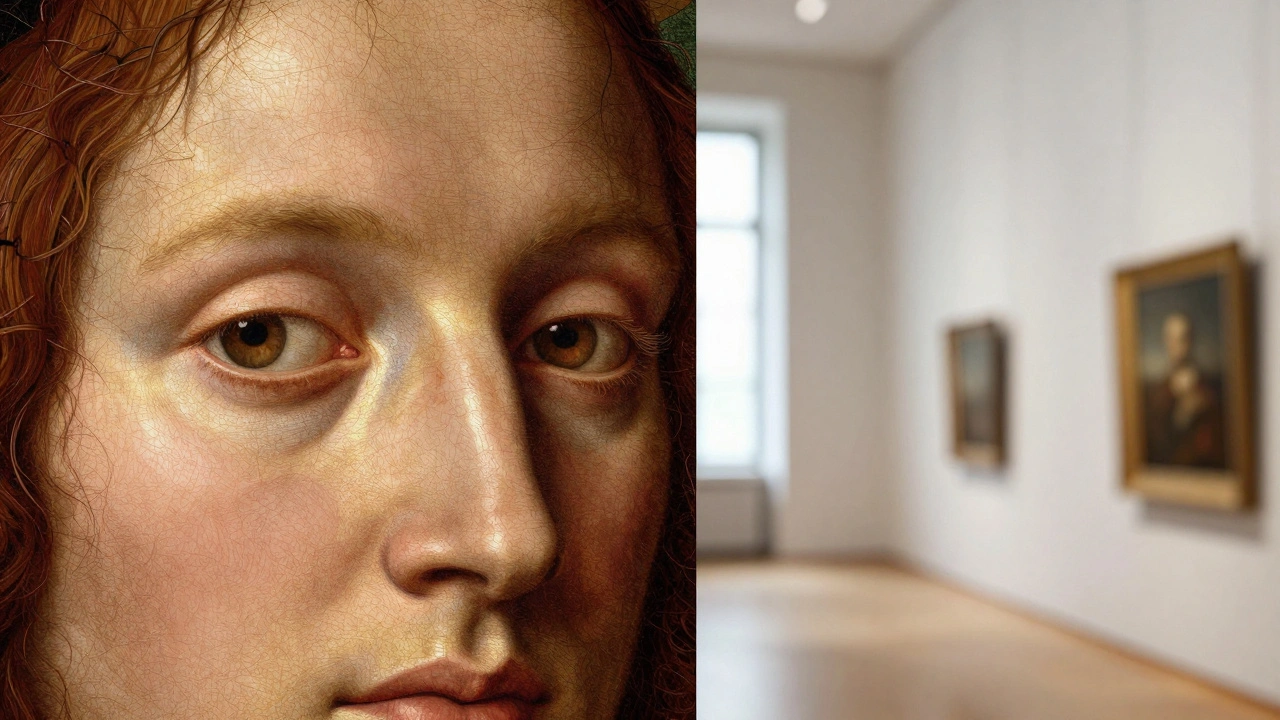
In art criticism, timing is everything. You cannot rush the viewer's eye. If you're discussing a complex piece of Renaissance Art is the great European art movement of the 14th to 16th centuries characterized by a revival of classical learning and a focus on humanism, you need to give the audience time to actually look at the detail you're mentioning.A common mistake is cutting to a new image the second you mention a new detail. Instead, use a slow pan or a digital zoom. This mimics the way a human eye actually explores a gallery. If you mention the gaze of a subject in a portrait, linger on the eyes for two seconds before the voiceover even finishes the sentence. This is called "letting the image breathe." It builds a subconscious connection between the audio and the visual, making the art video essays feel more immersive and less like a lecture.
| Technique | Purpose | When to Use |
|---|---|---|
| The Jump Cut | Creates urgency or irony | Comparing two contrasting styles quickly |
| Slow Ken Burns | Guides the eye to specific details | Analyzing brushwork or hidden symbols |
| B-Roll Overlay | Provides conceptual context | Talking about the artist's life or era |
| The Hard Cut to Black | Adds dramatic emphasis | Ending a major point or transition |
Soundscapes and the Psychology of Audio
Your voice is the guide, but the soundscape is the atmosphere. Many creators ignore audio until the end, but in an art essay, audio does 50% of the heavy lifting. If you're talking about a sterile, minimalist gallery space, your audio should be crisp and perhaps slightly echoing. If you're diving into the visceral horror of Goya's Black Paintings, the audio should feel heavy, maybe with a low-frequency drone.Use Foley Sound is the reproduction of everyday sound effects that are added to film in post-production to enhance quality to make the art feel tangible. When showing a close-up of an oil painting, a subtle sound of a brush scratching canvas can trigger a sensory response in the viewer. It bridges the gap between the digital screen and the physical object. Avoid generic "corporate' background music. Instead, look for tracks that match the emotional temperature of the art you're criticizing. If the art is subversive, the music should feel slightly off-kilter.
The Art of the Visual Argument
Your editing should prove your point. If you argue that an artist's work is repetitive, use a rhythmic loop of images that feels almost tedious to the viewer. If you argue that a piece is overwhelming, use a montage of fast-paced cuts and overlapping audio. This is called "formalist editing," where the structure of the video itself becomes part of the criticism.Consider the use of Juxtaposition is the act or an instance of placing two things close together or side by side, especially for contrasting effect. Instead of showing the painting and then showing a photo of the artist, show them at the same time. Use a split-screen to compare a sketch with the final masterpiece. This allows the viewer to synthesize the information instantly without having to remember what they saw ten seconds ago. It transforms the video from a series of facts into a visual argument.
Avoiding the 'Essay Trap'
The biggest pitfall in this genre is the "talking head" trap. While seeing the creator can build trust, too much of it kills the momentum. You aren't the star; the art is. Only appear on screen when you need to shift the tone or provide a personal, human reaction to a piece.Another trap is the over-reliance on stock footage. Using a generic clip of "someone painting" whenever you mention an artist feels lazy and breaks the immersion. If you can't find specific footage, use creative alternatives: a simple animation, a high-quality photo of a similar tool, or even a blank screen with a bold piece of text. Authenticity is more valuable than a high-production look that feels hollow. Your audience can tell when you've spent an hour looking for the perfect image versus when you've just used the first result on a stock site.
Structuring Your Final Polish
Once the rough cut is done, go back and look for "dead air." In a video essay, every second must serve the narrative. If a clip lingers for five seconds but the point was made in three, cut the last two. Conversely, if a transition feels abrupt, add a "buffer' shot-a wide angle of a museum or a neutral architectural detail-to reset the viewer's mental state before the next big idea.Finally, think about your color grading. You aren't just correcting the image; you're setting a mood. A slightly desaturated look can make a historical analysis feel more academic, while high contrast and saturation can make a contemporary art critique feel more energetic. The goal is to make the video feel like a cohesive piece of art itself, not just a container for information.
What software is best for art video essays?
For most creators, Adobe Premiere Pro or DaVinci Resolve are the gold standards because they offer precise control over pacing and color grading. If you're a beginner, CapCut is surprisingly capable for basic narrative structure, but you'll eventually want the layering capabilities of a professional NLE (Non-Linear Editor) to handle complex visual arguments.
How do I handle copyright for images of art?
Fair Use is the primary defense for art criticism, as you are transforming the original work into a new educational or critical piece. However, it's safest to use public domain images from sources like the Met Museum or the Art Institute of Chicago. Always credit the artist and the institution to maintain credibility and professional standards.
How long should an art video essay be?
There is no fixed length, but the rule is: it should be exactly as long as it needs to be to prove your thesis. If you can make your point in 12 minutes, don't stretch it to 20. Attention spans are short, and the impact of a concise, punchy argument is always stronger than a rambling one.
Where can I find high-quality B-roll for art videos?
Beyond stock sites, look into archival footage from the Prelinger Archives or museum-provided press kits. If you're talking about a specific technique, filming your own close-ups of paint or charcoal can add an authentic, tactile quality that stock footage simply cannot replicate.
How do I write a script that doesn't sound like a textbook?
Write for the ear, not the eye. Read your script out loud. If you find yourself stumbling over a sentence or running out of breath, the sentence is too long. Use contractions, ask rhetorical questions, and don't be afraid to use personal pronouns. You're guiding a friend through a gallery, not lecturing a classroom.