How to Build Successful Collaborations With Schools and Universities for Events
Planning an event that truly connects with people? One of the most underused resources is right outside your door: local schools and universities. These aren’t just places for lectures and exams-they’re hubs of energy, creativity, and fresh talent. Partnering with them can turn your event from ordinary into unforgettable.
Why Schools and Universities Make Great Event Partners
Colleges and high schools have something you can’t buy: motivated students, accessible spaces, and built-in audiences. Think about it-universities host hundreds of events every year. They know how to manage crowds, secure permits, handle logistics, and promote to thousands of people. Schools have PTAs, student councils, and clubs that are eager to get involved.
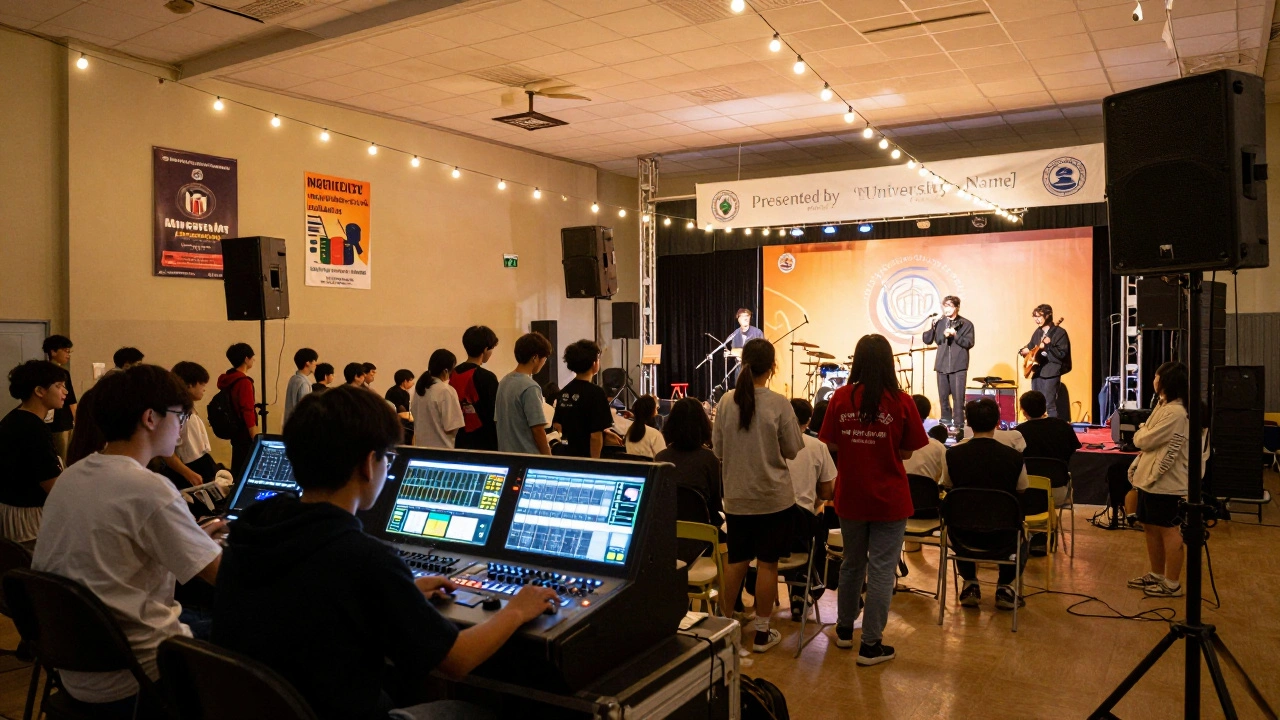
Take a music festival, for example. Instead of renting a downtown venue and paying for security, lighting, and ticketing staff, you team up with a local university. Their student union hall is already equipped with sound systems. Their audio engineering students run the mix. Their theater club handles stage design. Their marketing students create social media campaigns. You save money, they gain experience, and the event feels more authentic.
It’s not just about cost savings. It’s about credibility. When a respected school backs your event, parents, local businesses, and city officials take notice. A partnership with a public university or well-known high school signals that your event is organized, safe, and community-focused.
What You Need to Offer in Return
Don’t walk in asking for free space and free labor. That doesn’t work. Schools want value too. What can you give them?
- Real-world experience - Students want to build their resumes. Offer internships, volunteer hours, or project credits that count toward their coursework.
- Exposure - Let them promote their club, program, or department through your event. A student theater group gets their name in front of 500 people? That’s marketing gold.
- Resources - Do you have equipment they can borrow? Sound systems, projectors, lighting rigs? Loan them out. It’s a win-win.
- Networking - Invite faculty to be guest speakers or panelists. Connect students with professionals in your field. This builds long-term relationships beyond one event.
One community arts group in Portland started a yearly street fair with Oregon State University’s art department. Every year, 30+ students display their work. The school gets student exposure. The group gets a steady stream of fresh, high-quality art. And attendees? They’re thrilled. No corporate vendors. Just real creativity.
How to Find the Right Contact
You won’t find the right person by emailing the president’s office. You need to go lower. Here’s where to look:
- Student Activities Office - This is the go-to for campus events. They coordinate everything from poetry slams to food drives.
- Department Chairs - If your event ties into a field (music, theater, environmental science), contact the chair of that department. They have direct access to faculty and student groups.
- Community Outreach Coordinators - Many universities have staff whose job is to connect with local organizations. Ask for them by name.
- High School Clubs - For K-12, start with the principal, then ask for the advisor of the most active club. Debate team? Robotics? Choir? They’re all looking for opportunities.
Pro tip: Call during late afternoon, Tuesday through Thursday. That’s when student staff are still around and faculty aren’t in back-to-back meetings.

What to Propose: Real Examples
Generic requests like “Can we use your space?” get ignored. Specific proposals get signed.
Example 1: Film Screening
“We’re hosting a free outdoor screening of student-made short films on June 14. We’ll provide the projector, sound system, and popcorn. We need: a grassy field, permission to set up tents, and 3 student volunteers to help with crowd flow. In return, we’ll feature your film program in all marketing materials and invite your students to submit their work next year.”
Example 2: Science Fair
“We’re organizing a city-wide youth science fair. We need lab space for 50 student projects, access to lab equipment (microscopes, Bunsen burners), and 4 science professors to judge. We’ll supply: printed certificates, refreshments, and a press release naming your university as the official host.”
Example 3: Poetry Slam
“We’re launching a monthly poetry night at your student center. We’ll handle promotion, sound, and seating. You provide: the space, a faculty moderator, and one student assistant per night. We’ll feature your creative writing program on our website and social media.”
These aren’t vague asks. They’re clear, reciprocal, and easy to say yes to.
Pitfalls to Avoid
Not every partnership works. Here’s what usually goes wrong-and how to fix it.
- Overpromising - Saying “We’ll get you 100 volunteers!” when you’ve never done this before? Don’t. Be honest about capacity.
- Ignoring deadlines - Universities plan academic calendars months ahead. If you want to use their space in September, ask in April. Don’t wait until August.
- Not following rules - Some schools require insurance, background checks, or permit applications. Ask early. Don’t assume.
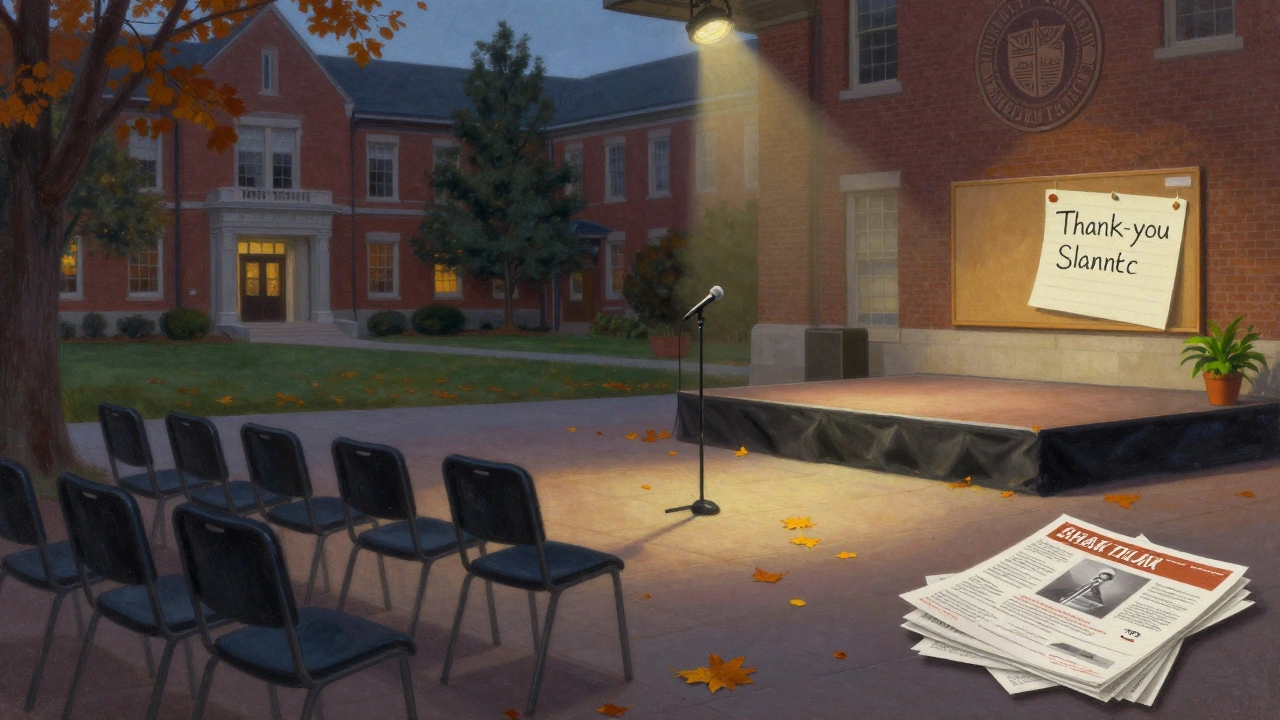
- Forgetting to thank them - A handwritten note from your team? A public shout-out on social media? A small gift from your event (like signed posters or event merch)? These go a long way.
Last year, a nonprofit in Austin canceled their annual youth art show because they didn’t submit the required insurance paperwork on time. The school pulled out. The event got scrapped. They lost trust. And next year? No one wanted to work with them.
Keeping the Partnership Alive
One-time events are nice. Sustainable partnerships are gold.
After your first event, send a short report: how many people attended, what feedback you got, and what went well. Include photos. Send it to the same people you worked with. Say: “We’d love to do this again next year. What would make it even better?”
Some schools now have formalized programs for community partnerships. The University of Michigan’s “Engaged Scholarship Initiative” even gives faculty credit for working with local organizations. If you build trust, you might become part of their official network.
And here’s the real secret: students remember who gave them a chance. One former student from Ohio State now runs a major arts nonprofit. She says her first real job came from helping organize a school festival three years ago. She didn’t get paid. She got experience. And that changed everything.
Start Small. Think Long-Term.
You don’t need a 1,000-person gala to begin. Try a 50-person book reading at the local high school library. A weekend craft fair in the university courtyard. A student-led panel on sustainability at the community college.
Each small win builds momentum. Each connection becomes a bridge. And over time, your event stops being something you organize-it becomes something the community owns.
Schools and universities aren’t just venues. They’re partners. And when you treat them that way, your events don’t just happen-they grow.