How Social Media Research Helps Art Authentication Investigations
Imagine you are staring at a painting that supposedly hung in a private collector's living room for thirty years. The paperwork looks clean. The brushwork feels right. But something nags at you. Maybe it is the way the frame sits against a wall that doesn't match the photo on the certificate of authenticity. Or maybe it is the fact that this "rare" piece has never appeared in a single Instagram post from the owner who claims to have bought it in 2015. In today's world, silence on social media is loud. It screams that the story might be fabricated.
We used to rely solely on physical evidence: canvas threads, pigment analysis, and dusty archives. Now, investigators and authenticators have a new, powerful tool in their kit: Social Media Research. This isn't just about scrolling through feeds; it is about digging into the digital footprint left by collectors, dealers, and artists themselves. If you are trying to verify if a piece is real or a clever forgery, ignoring these platforms is like solving a mystery while wearing blindfolds. Let's break down how this modern detective work actually happens and why your next authentication check should start with a search bar, not a microscope.
The Digital Provenance Trail
Provenance is the history of ownership. Traditionally, this meant paper receipts, auction catalogs, and gallery invoices. Today, social media creates a parallel, often more immediate, record of where an artwork lives. When a collector buys a major piece, they rarely keep it a secret. They post it. They tag the artist. They mention the gallery. This creates a timestamped public record that is incredibly hard to forge convincingly over time.
Consider the case of a high-value contemporary sculpture appearing in a dealer's inventory. The dealer claims it was purchased directly from the artist's studio in Berlin five years ago. A quick search on Instagram using the artist's handle and location tags reveals hundreds of posts from fans visiting the studio during that period. None of them show the specific sculpture in question. More importantly, the artist's own stories from that week don't feature the sale. This absence of digital chatter raises a red flag. Did the transaction really happen? Or did the piece appear out of nowhere?
This method relies on the concept of Digital Footprint. Every interaction leaves a trace. Forgers can fake a receipt. They can even fake a photograph by manipulating EXIF data. But faking a consistent narrative across multiple users, timelines, and platforms over several years is exponentially harder. Social media provides a crowd-sourced validation system that fraudsters struggle to hack.
Cross-Referencing Visual Evidence
One of the most effective techniques in Art Authentication involves visual cross-referencing. You aren't just looking for the image of the art; you are looking for the context. Investigators use reverse image search tools and platform-specific algorithms to find earlier appearances of the same object.
- Timeline Consistency: Does the artwork appear in photos before the claimed acquisition date? If a "vintage" print shows up in a user's feed in 2018, but the seller claims it was lost for decades until 2023, the math doesn't add up.
- Condition Tracking: Look closely at images posted over time. Has the condition changed? If a collector posted a pristine version of a painting in 2019, and the current piece has a visible crack that wasn't there before, either the piece was damaged (which affects value) or it is a different copy.
- Location Verification: Background details matter. Is the artwork hanging on a wall color that matches the room shown in other posts from the same house? Do the lighting conditions match the window placement described in previous interior design posts?
This level of scrutiny turns casual users into unwitting witnesses. A random influencer posting a selfie in front of a painting provides metadata: the date, the geolocation, and the angle. Authenticators aggregate these fragments to build a solid chain of custody. If the chain breaks, the authentication fails.
Detecting Fabricated Histories
Forgers are getting smarter. They know people check Instagram. So, some create fake accounts to simulate a history for a new fake piece. They backdate posts or use stock photos of interiors to make it look like the art has been in a home for years. However, detecting these fabrications requires understanding how social media algorithms and human behavior work.
Real engagement grows organically. Fake accounts often have abrupt spikes in activity or generic comments. Look for patterns in Social Proof. Did friends and family react to the purchase when it happened? Or did all the likes come in a batch months later, suggesting a staged campaign? Genuine owners usually share excitement in real-time. They ask for advice on framing. They complain about shipping costs. These mundane details are hard to script convincingly for a long-term cover story.
| Feature | Traditional Forensics | Social Media Research |
|---|---|---|
| Speed | Slow (weeks/months) | Fast (hours/days) |
| Cost | High (lab fees) | Low (time-intensive) |
| Evidence Type | Physical/Material | Contextual/Behavioral |
| Vulnerability | Material degradation/forgery | Data manipulation/bot farms |
| Best For | Old Masters/Scientific doubt | Contemporary/Recent provenance |
The Role of Artist Accounts and Studios
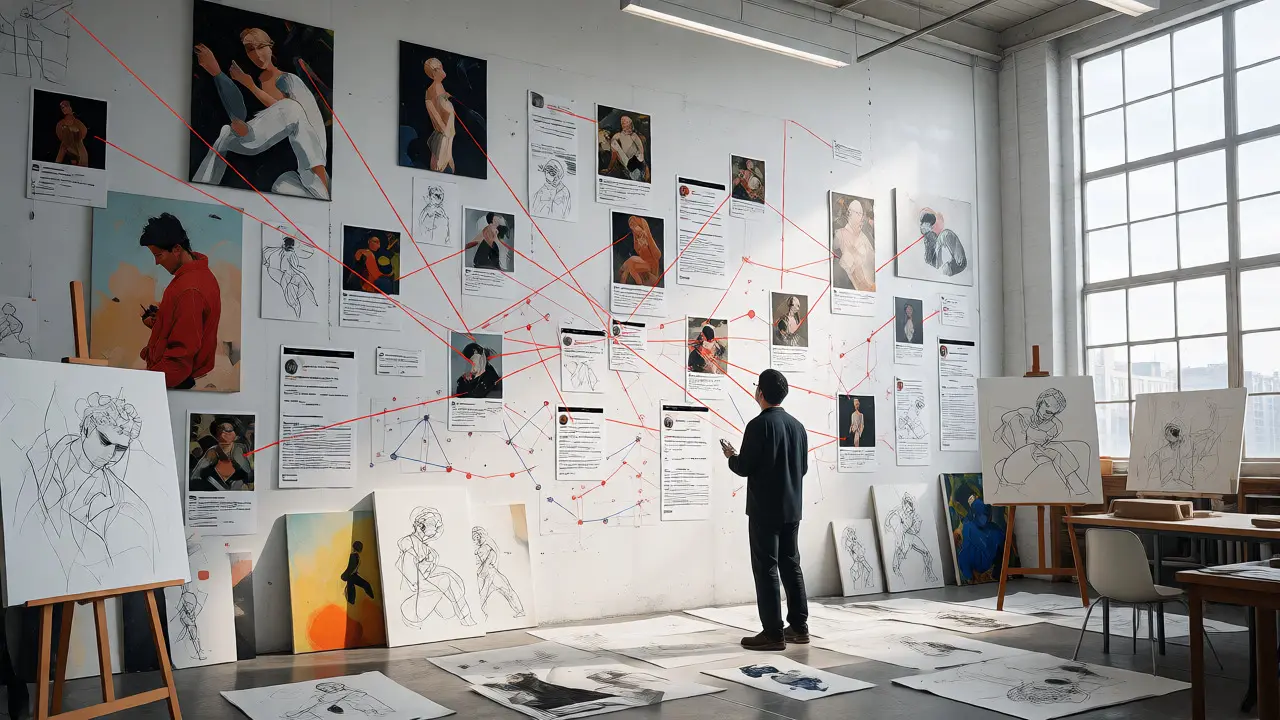
Artists themselves are primary sources. Many maintain active profiles where they document their creative process. Sketches, works-in-progress, and final pieces often get posted before they hit the market. An investigator can compare the finished artwork in question against these developmental stages. Does the final product match the evolution shown in the artist's stories? If a "finished" masterpiece appears without any prior glimpses of its creation phase, it warrants deeper scrutiny.
Studio assistants and curators also contribute to this ecosystem. They might tag the artist in posts showing the installation of a new exhibition. If a piece is claimed to be part of a specific show, but no one involved in the setup mentions it, the claim is shaky. Network Analysis helps here. Who interacted with whom? Did the gallery director comment on the post? Did the curator share it? These interactions validate the presence of the artwork in professional circles.
Pitfalls and Limitations
While powerful, social media research isn't foolproof. Privacy settings hide many posts. A collector might buy a piece and never post about it. Or they might delete old accounts, erasing the trail. Furthermore, bots and AI-generated images are becoming common. A fake account could generate realistic-looking photos of a non-existent painting hanging in a non-existent room.
To mitigate this, experts combine social data with other forms of verification. They don't rely on it as the sole source of truth. Instead, they use it to identify anomalies that justify expensive lab tests. If the social media story falls apart, you save money on carbon dating because you already know the piece is likely a fake. If the story holds up, you proceed with confidence.
Practical Steps for Investigators
If you are handling an authentication case, here is how to structure your digital investigation:
- Identify Key Players: List the artist, previous owners, galleries, and auction houses. Find their official and personal handles.
- Search Specific Keywords: Use the title of the work, unique identifiers, and the year of creation. Search within specific date ranges corresponding to the claimed ownership history.
- Analyze Metadata: Check upload dates versus content dates. Look for inconsistencies in file properties if possible.
- Engage the Community: Sometimes, asking a direct question in relevant groups or tagging known collectors can yield surprising responses. People love to correct errors or share obscure memories.
- Document Everything: Take screenshots of every relevant post, including timestamps and URLs. Social media content can disappear quickly.
This approach transforms passive browsing into active forensic inquiry. It demands patience and a critical eye, but the payoff is significant. You uncover layers of truth that physical inspection alone cannot reveal.
Why This Matters for Buyers and Sellers
For buyers, understanding this landscape protects your investment. Before wiring six figures for a contemporary piece, spend an hour doing a deep-dive search. Look for the digital echoes of the artwork's life. For sellers, maintaining a transparent online presence adds value. A well-documented social history enhances provenance, making the piece more attractive to cautious collectors.
The art market is shifting. Trust is no longer just about who signed the paper; it is about what the public record says. As our lives move further online, so does the evidence we need to prove what is real. Embracing Social Media Research isn't just a trend; it is the new standard for due diligence in the art world.
Can social media posts be forged for art authentication?
Yes, they can be manipulated. Fraudsters may create fake accounts, backdate posts, or use edited images. However, creating a consistent, multi-user narrative over several years is difficult and costly. Experts look for organic engagement patterns and cross-reference multiple independent sources to detect fabrication.
What if the owner never posted about the artwork?
Absence of evidence is not evidence of absence, but it does weaken the digital provenance trail. In such cases, investigators must rely more heavily on traditional documentation, physical forensics, and interviews with the owner. Private collectors often do not share purchases publicly, so this scenario requires careful vetting of private records.
How do privacy settings affect this type of research?
Privacy settings limit visibility. If a profile is private, investigators may miss key posts. Strategies include checking tagged photos from other users, looking for shared stories that remain public briefly, and using mutual connections to request access. Public figures and galleries usually maintain open profiles, which aids transparency.
Is social media research accepted in legal disputes?
Increasingly, yes. Screenshots and archived web pages can serve as admissible evidence in civil court, provided their integrity is verified. Legal teams often hire digital forensics experts to authenticate the metadata and ensure the content hasn't been tampered with, giving weight to the social media findings.
Which platforms are most useful for art authentication?
Instagram remains the primary platform due to its visual nature and widespread use by artists and collectors. Twitter/X is useful for real-time news and announcements from galleries. LinkedIn can help verify professional relationships between dealers and curators. TikTok is emerging for behind-the-scenes studio tours, adding another layer of contextual evidence.