Handling Artwork Safely: Moving and Display Techniques
When you own a piece of artwork-whether it’s a vintage oil painting, a delicate watercolor, or a modern sculpture-you’re not just keeping something beautiful. You’re holding onto history, emotion, and often, significant value. But art doesn’t stay safe on its own. One wrong move, one too-bright light, one humid room, and you could damage something irreplaceable. Handling artwork safely isn’t about being overly cautious-it’s about understanding how fragile these objects really are.
Why Artwork Is More Fragile Than It Looks
Most people think of paintings as solid, permanent things. But canvas stretches and contracts with temperature changes. Paint layers crack when they dry out. Paper yellows under UV light. Even the frame can warp over time. A 19th-century oil painting might look sturdy, but its paint layer could be thinner than a human hair in places. A charcoal drawing? One breath too hard, and the pigment smudges forever.
Conservators at the Portland Art Museum have documented over 200 cases of damage from improper handling between 2018 and 2023. The most common cause? People touching the surface with bare hands. Skin oils leave invisible residues that attract dust and accelerate deterioration. Even gloves, if not cotton or nitrile, can leave fibers or static that pulls pigment loose.
How to Move Artwork Without Damaging It
Moving art requires a plan-not just strength. Here’s how to do it right:
- Work with a partner. Never move a large piece alone. Even if it seems light, the weight distribution can shift unexpectedly.
- Remove everything from the surface. Take off hanging wires, hooks, or anything attached. Don’t just untie them-use a small flathead screwdriver to gently lift staples or nails.
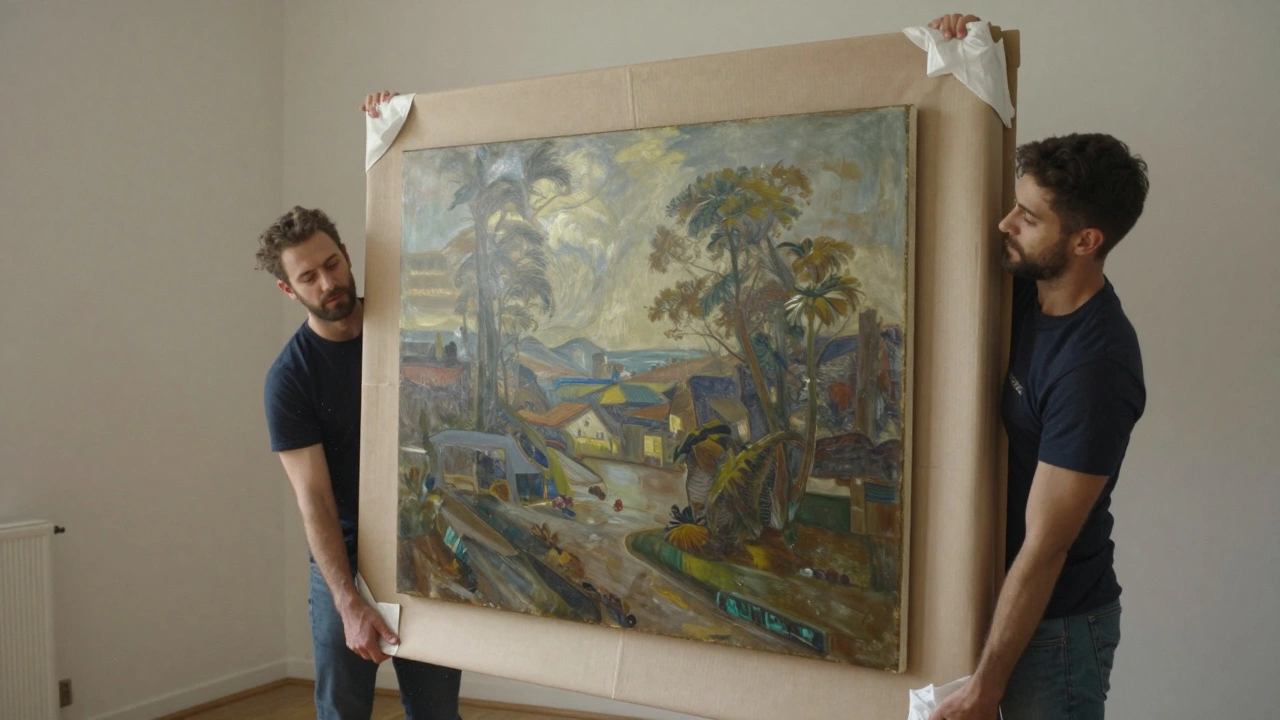
- Cover it properly. Use acid-free paper (like Japanese tissue or conservation-grade kraft paper) to wrap the front. Then, slide a rigid board (like foam-core or corrugated plastic) between the artwork and the backing. This prevents bending.
- Use two people to carry. One holds the top edge, the other the bottom. Keep the piece vertical at all times. Never lay it flat unless it’s on a rigid, padded surface.
- Transport in a climate-controlled space. If you’re driving, keep the art inside the cabin-not the trunk. Avoid leaving it in a hot car or near a heater. Temperature swings above 10°F in a day can cause cracking.
For framed glass artwork, wrap the frame in bubble wrap first, then secure with tape. Never tape directly to the glass or the frame’s surface. Use painter’s tape on the edges only.
Displaying Artwork the Right Way
Where you hang your art matters as much as how you move it. Here’s what most homeowners get wrong:
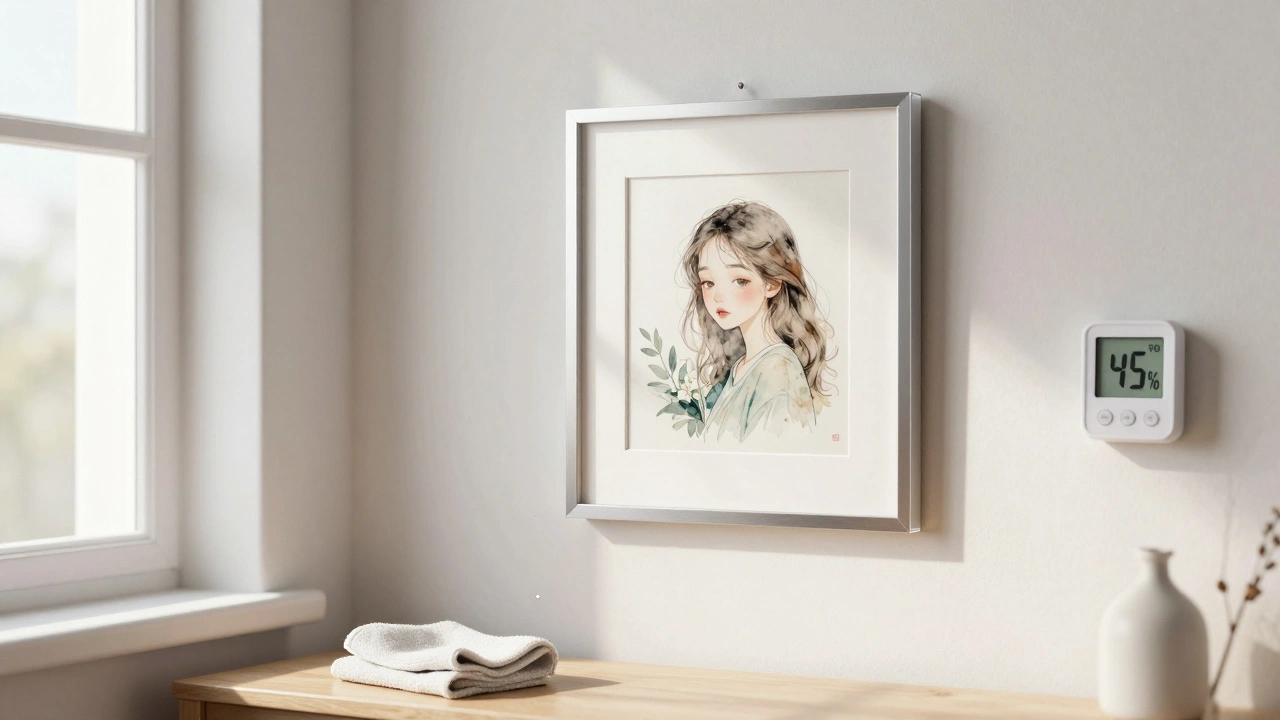
- Avoid direct sunlight. UV rays fade pigments faster than anything else. Even indirect light from a north-facing window can cause damage over 5-10 years. Use UV-filtering glass or acrylic if you can’t move the piece.
- Keep humidity between 40-50%. Too dry? Canvas shrinks and paint cracks. Too wet? Mold grows on paper and wood. A simple hygrometer (under $15) can help you monitor this. Use a dehumidifier or humidifier if needed.
- Don’t hang art above radiators or vents. Heat rises. That means the top of your painting gets hotter than the rest. This causes uneven expansion and warping.
- Use proper hanging hardware. A 20-pound painting needs two D-rings and a wire rated for at least 50 pounds. Drywall anchors are not enough. For heavy pieces, find a stud or use a toggle bolt.
- Leave space between art and walls. Airflow prevents moisture buildup. Hang artwork at least 1 inch away from the wall if possible.
What Not to Do
Here are the top five mistakes people make-every single one has caused permanent damage:
- Using regular tape or glue. Even "removable" double-sided tape leaves residue that stains paper and canvas. Conservators spend hours removing it-and sometimes can’t fully restore the surface.
- Cleaning with household products. Windex, vinegar, or baby wipes? Don’t. They contain chemicals that dissolve varnish or lift pigments. Only use a soft, dry brush to remove dust.
- Stacking artwork. Never lay one painting on top of another. Even a thin layer of dust between them can scratch the surface over time.
- Leaving art in basements or attics. These spaces fluctuate wildly in temperature and humidity. They’re also prone to leaks and pests. If it’s not climate-controlled, it’s not safe.
- Touching the surface. Seriously. Wash your hands before even approaching the piece. If you must handle it, wear clean cotton gloves. Nitrile works too, but avoid latex-it can stick to varnish.
Special Cases: Paper, Sculpture, and Mixed Media
Not all art is the same. Each type needs special care:
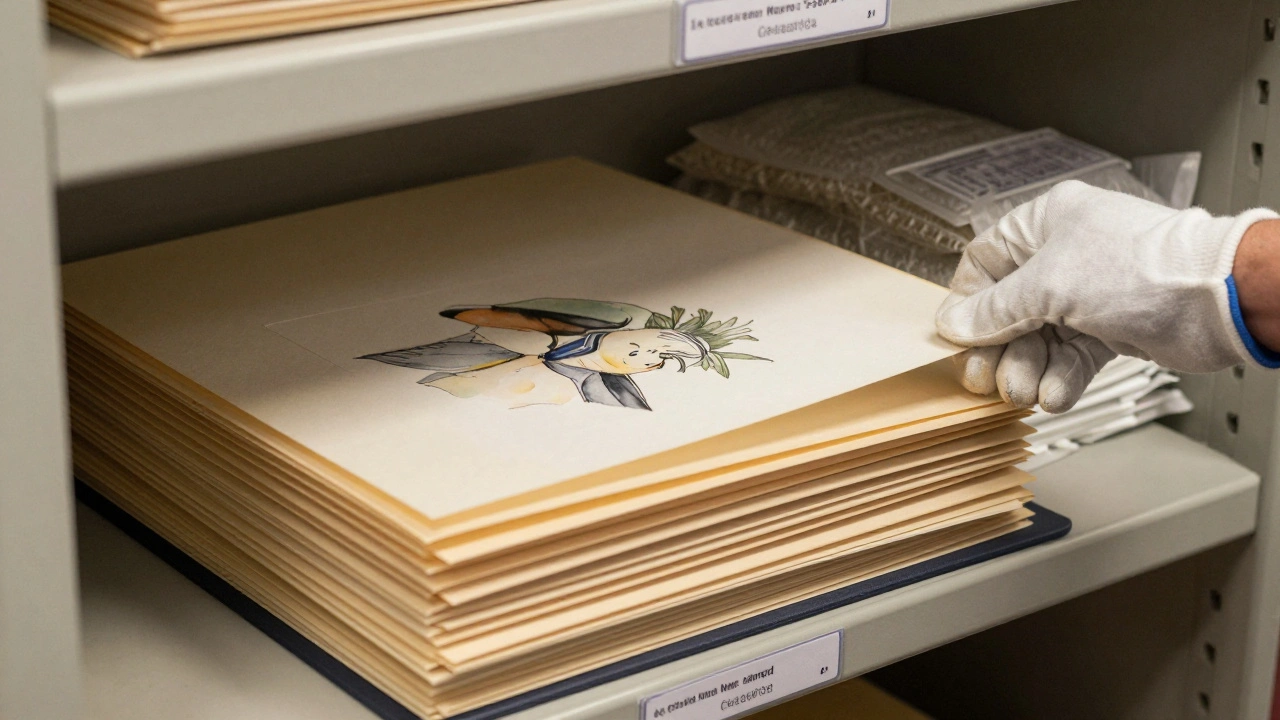
- Works on paper (drawings, prints, watercolors): These are the most vulnerable. Always store them flat in acid-free folders. Never roll them. Use matting with 100% cotton rag board when framing. Keep them away from windows-even if they’re behind curtains.
- Three-dimensional sculpture: Dust with a soft brush. Never use a feather duster-it can snag delicate surfaces. For bronze or metal pieces, avoid polishes. A microfiber cloth is enough. Store away from direct sunlight to prevent uneven patina changes.
- Mixed media (collage, assemblage): These often include fabric, wood, or organic materials. These can attract insects. Check for signs of beetles or moth holes every six months. If you find any, isolate the piece and contact a conservator immediately.
When to Call a Professional
You don’t need to be a conservator to care for art-but you should know when to call one. Here’s when:
- There’s visible cracking, flaking, or lifting paint.
- Water damage or mold is present.
- The frame is warped or separating from the canvas.
- You notice insects or signs of pest activity.
- You’re unsure how to move or hang a large or valuable piece.
Professional conservators don’t just fix damage-they prevent it. Many offer free consultations. Look for members of the American Institute for Conservation (AIC). They follow strict ethical standards and use reversible techniques.
| Art Type | Handling | Display | Storage |
|---|---|---|---|
| Oil Painting | Use rigid backing, carry vertically | Keep 6-12 inches from heat sources | Store flat on padded racks, climate-controlled |
| Watercolor / Drawing | Never touch surface, use cotton gloves | UV-filtered glass, low light | Flat in acid-free folder, away from humidity |
| Prints & Photographs | Handle by edges only | Mat with cotton rag board | Store in dark, dry drawer with silica gel |
| Three-Dimensional Sculpture | Support base, avoid lifting by protrusions | Keep away from direct sunlight | Wrap in unbleached muslin, store on padded shelf |
Long-Term Care: The Little Things That Matter
Art lasts longer when you pay attention to small habits:
- Check your art every three months. Look for new cracks, discoloration, or dust buildup.
- Dust frames with a microfiber cloth. Don’t spray cleaner on them-dust can get trapped under the frame.
- Rotate displayed pieces every 6-12 months. This gives them a break from light and reduces fading.
- Keep pets and kids away from hanging art. A tail swipe or a hand reaching out can do more damage than you think.
- Keep a photo record of your collection. Note the condition, location, and date. If something changes later, you’ll know exactly when.
Can I use regular glass when framing artwork?
Regular glass offers almost no UV protection. Over time, even indirect light will fade colors and yellow paper. Use UV-filtering acrylic or glass instead. It blocks up to 97% of UV rays and is lighter, making it safer for large pieces. Many framing shops offer it for under $20 extra.
Is it safe to hang artwork in a bathroom?
Generally, no. Bathrooms have high humidity from showers and steam, which can cause mold, warping, and adhesive failure. Even with ventilation, humidity levels spike above 70% after use. If you must hang art there, choose waterproof materials like metal prints or sealed acrylics-and keep it far from the shower.
How often should I clean my artwork?
You don’t need to clean it often. Dust gently once a year with a soft brush-like a clean, dry makeup brush or a sable brush used for watercolors. Never wipe or rub. If dust builds up quickly, check for air leaks or poor ventilation. Cleaning more often increases the risk of damage.
What’s the best way to store artwork long-term?
Store flat in acid-free boxes or folders, with no pressure on the surface. Use silica gel packets to control humidity. Keep storage areas between 65-70°F with 45% humidity. Avoid basements, attics, and garages. If possible, use a climate-controlled storage unit designed for art.
Can I move artwork myself during a move?
Yes, if you follow the right steps. But for valuable, large, or fragile pieces, hiring a fine art mover is worth it. These professionals use custom crates, climate-controlled trucks, and padding designed for art. They also carry insurance. For pieces worth over $1,000, it’s not a luxury-it’s protection.
Final Thought: Art Is Temporary-Your Care Makes It Last
No piece of art is meant to last forever. But with careful handling, you can extend its life by decades-or even centuries. It’s not about perfection. It’s about awareness. Every time you move a painting, check its frame, or wipe away dust, you’re not just cleaning-you’re preserving history.