Gallery Profiles: How Art Galleries Present Artists to Collectors
Key Takeaways
- Gallery profiles focus on marketability and prestige rather than just life history.
- The 'Artist Bio' and 'Artist Statement' serve two completely different purposes.
- Curation is about framing the artist's narrative to fit the gallery's brand.
- Verification through exhibitions and press is more valuable than self-proclaimed talent.
The Psychology of the Gallery Profile
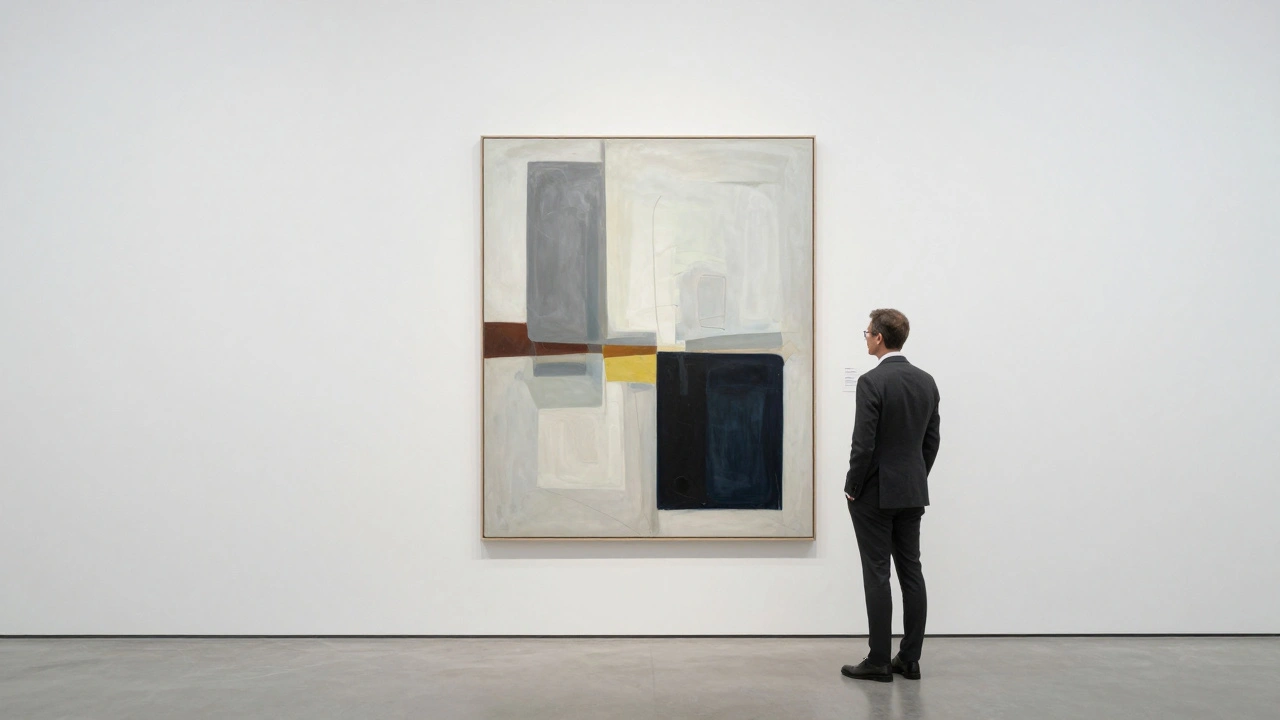
When a gallery presents an artist, they aren't just sharing facts; they are building a value proposition. In the art market, value is often derived from provenance and narrative. A Gallery Profile is a curated presentation of an artist's professional identity, designed to establish authority and attract collectors. It transforms a person who makes art into a "brand" that can be invested in.
Why does this matter? Because collectors rarely buy just an object; they buy into a trajectory. If a profile shows a steady climb-from a small local show to a residency at a place like the Rhode Island School of Design (RISD) or a feature in a recognized journal-the collector feels safer spending thousands of dollars. The profile acts as a seal of approval, telling the buyer, "We have vetted this person, and their career is moving upward."
Bio vs. Statement: Clearing Up the Confusion
One of the biggest mistakes artists make is treating their biography and their statement as the same thing. In a professional gallery setting, these are distinct tools. If you mix them up, you risk sounding like you don't understand how the industry works.
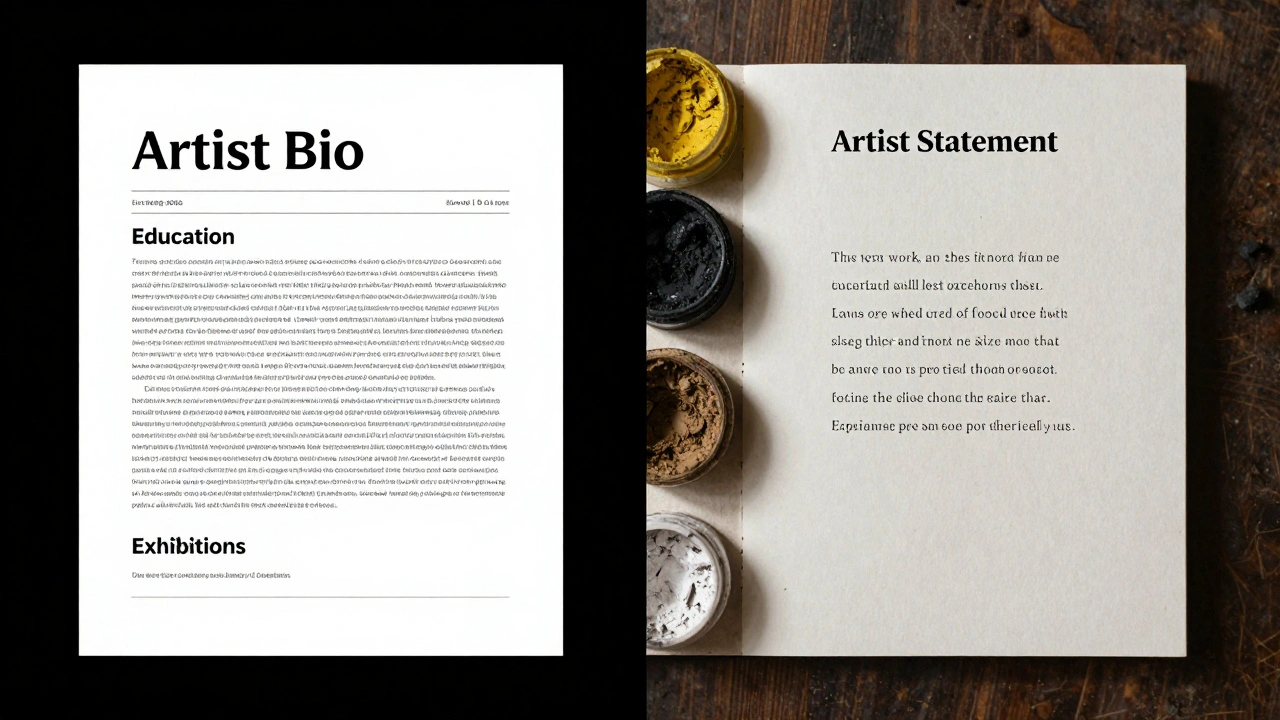
The Artist Bio is a third-person account of your professional history. It's your resume in narrative form. It focuses on the who, where, and when. It lists your education, major awards, and the galleries that have shown your work. It's objective and factual. If you've won a grant from the National Endowment for the Arts, that goes in the bio.
The Artist Statement, on the other hand, is a first-person explanation of the why and how. It's where you talk about your obsession with urban decay or your use of sustainable pigments. While the bio proves you are a professional, the statement proves you are a thinker. Galleries use the statement to give the collector a "hook"-a way to talk about the art at a dinner party.
| Feature | Artist Bio | Artist Statement |
|---|---|---|
| Perspective | Third-person ("Jane Doe is...") | First-person ("I explore...") |
| Goal | Establish credibility/prestige | Explain conceptual intent |
| Key Content | Education, Exhibitions, Awards | Materials, Themes, Philosophy |
| Tone | Objective and Formal | Subjective and Introspective |
How Galleries Frame the Narrative
A gallery doesn't just copy and paste the bio you send them. They edit it to fit the "vibe" of the gallery. This is called curation. If a gallery specializes in Contemporary Art, they will emphasize your experimental techniques and your challenges to social norms. If they are a traditional blue-chip gallery, they will lean heavily on your academic credentials and the prestige of the museums that have acquired your work.
They also use "social proof" to bolster the profile. This might include mentioning a Curator's praise or a positive review in a publication like Artforum. By linking the artist to other established entities in the art world, the gallery creates a web of legitimacy. For example, saying an artist is "influenced by the minimalism of Donald Judd" isn't just a stylistic note; it's a way of placing the artist within a known, valuable lineage of art history.
The Essential Components of a High-Converting Profile
If you look at the profiles of artists represented by top-tier galleries in New York or London, you'll notice a pattern. They don't use fluff. They don't say the artist is "passionate" or "talented"-those words are meaningless in a professional context. Instead, they use concrete markers of success. Here is what actually moves the needle for a artist bios strategy:
- The Pedigree: Where did they study? A degree from a recognized institution acts as a shorthand for a certain level of technical skill.
- The Exhibition Record: A list of solo and group shows. Solo shows are the gold standard; group shows prove the artist can play well with others in a curated environment.
- Institutional Validation: Mention of works held in public collections. If a museum owns one of your pieces, the gallery can justify a higher price point.
- The Press Hook: Citations from critics. A quote from a respected art critic provides an external validation that the gallery's own praise cannot.
Imagine two profiles. One says, "Sarah is a talented painter who loves nature." The other says, "Sarah's work, which explores the intersection of botany and industrialization, has been exhibited at the Whitney Museum and featured in The New York Times." Which one are you more likely to buy from? The second one provides evidence, while the first one provides an opinion.

Common Pitfalls in Artist Presentation
Many artists struggle because they treat their profile like a diary. They talk about their childhood dreams or their personal struggles. While a bit of human interest can be a nice touch, too much of it can actually hurt your professional standing. In the commercial art world, over-sharing can come across as amateur.
Another common mistake is the "everything and the kitchen sink" approach. Trying to be a painter, a sculptor, a digital artist, and a poet all in one profile confuses the collector. Galleries prefer a focused identity. They want to be able to say, "This is the artist you go to for provocative charcoal portraits." When the profile is too broad, the brand becomes diluted, and the market value often drops because the artist lacks a clear "signature."
The Digital Shift: Profiles in the Age of Instagram
The way galleries present artists has shifted drastically with the rise of social media. In the past, the gallery was the sole gatekeeper. Now, a collector might find an artist on Instagram before they ever see the gallery profile. This means the gallery profile now has to complement the digital presence rather than just replace it.
Modern gallery websites now integrate Digital Portfolios directly with the bio. They use high-resolution imagery and often include "installation shots"-photos of the art hanging in a real room. This helps the collector visualize the scale and the impact of the work. The profile has evolved from a static page of text into a multimedia experience that blends professional credentials with visual storytelling.
Should I write my own bio or let the gallery do it?
You should always provide a strong, factual draft. However, expect the gallery to edit it. They know their specific client base and know which keywords or achievements will resonate most with the people walking through their doors. Collaborative editing is the best approach.
How long should a gallery artist bio be?
Short and punchy is usually better. Aim for 150 to 300 words. If a collector has to scroll for five minutes to find your education and exhibition history, you've lost them. Use a concise paragraph for the narrative and a bulleted list for the CV (Curriculum Vitae).
What if I don't have any major exhibitions yet?
Focus on your process, your education, and any smaller wins. Mention local fairs, curated Instagram features, or community projects. Be honest but emphasize your trajectory-where you are heading is often as important as where you've been.
Is a CV the same as a Bio?
No. A CV is a comprehensive, chronological list of everything you've done professionally. A Bio is a curated, narrative summary of the most important parts of that CV. The Bio sells the story; the CV provides the proof.
Does the order of information in a profile matter?
Absolutely. Lead with your biggest achievement. If you have a piece in a major museum, that should be in the first two sentences. Don't hide your best credential at the bottom of the page.
Next Steps for Artists and Curators
If you're an artist, start by auditing your current materials. Read your bio aloud. Does it sound like a professional description of an artist, or does it sound like a college application essay? Strip out the adjectives and replace them with nouns and verbs. Instead of saying you are "deeply committed to social justice," list the specific projects you've completed that address social issues.
For curators, the goal is to find the "golden thread" that connects the artist's work to the gallery's identity. Your job is to translate the artist's internal world into a language that a collector understands. Focus on creating a sense of inevitability-make the collector feel that this artist is a rising star and that now is the exact right moment to acquire their work.