Flexible Hanging Systems: Rails, Cables, and Micro-Adjustments for Space Design

Imagine walking into a gallery where the artwork isn't just placed on walls but floats in space, ready to shift position with a simple twist. That is the power of flexible hanging systems. These setups move beyond static mounting hardware to offer dynamic control over how objects interact with their environment. Whether you are curating a commercial exhibition or organizing a home studio, the ability to adjust height, angle, and spacing without drilling new holes changes everything.
Traditional framing often locks pieces into rigid positions. If you want to change the layout, you need tools, time, and potentially wall repair. Flexible systems eliminate that friction. They rely on three core components: linear rails, tensioned cables, and precision adjustment mechanisms. Together, they create a grid that supports weight while allowing infinite reconfiguration. This approach is particularly valuable in spaces where content changes frequently, such as retail displays, corporate lobbies, or artist studios.
The Role of Linear Rails in Spatial Layout
Linear Rails are metal or aluminum tracks mounted horizontally or vertically on walls or ceilings that guide hanging brackets along a fixed path. Think of them as the backbone of any modular display system. Unlike standard picture hooks, which are fixed points, rails provide a continuous line of attachment options. This means you can slide a bracket from one end of a ten-foot wall to the other in seconds.
The material choice matters here. Aluminum rails are lightweight and resistant to corrosion, making them ideal for indoor environments where humidity might fluctuate. Steel rails offer higher load-bearing capacity, suitable for heavy sculptures or large framed installations. When installing these, precision is key. A rail that is even slightly off-level will make every object attached to it look tilted, no matter how carefully you hang it. Laser levels are essential tools for this stage, ensuring that the visual plane remains consistent across the entire installation area.
- Wall-Mounted Rails: Best for vertical galleries and retail shelving. They allow for staggered heights and easy access for cleaning behind the frame.
- Ceiling-Mounted Rails: Ideal for suspended installations where floor space needs to remain clear. They support heavier loads due to direct structural connection.
- Corner Junctions: Special connectors that allow rails to turn 90 degrees, enabling L-shaped or U-shaped layouts around architectural features.
Cable Suspension and Tension Control
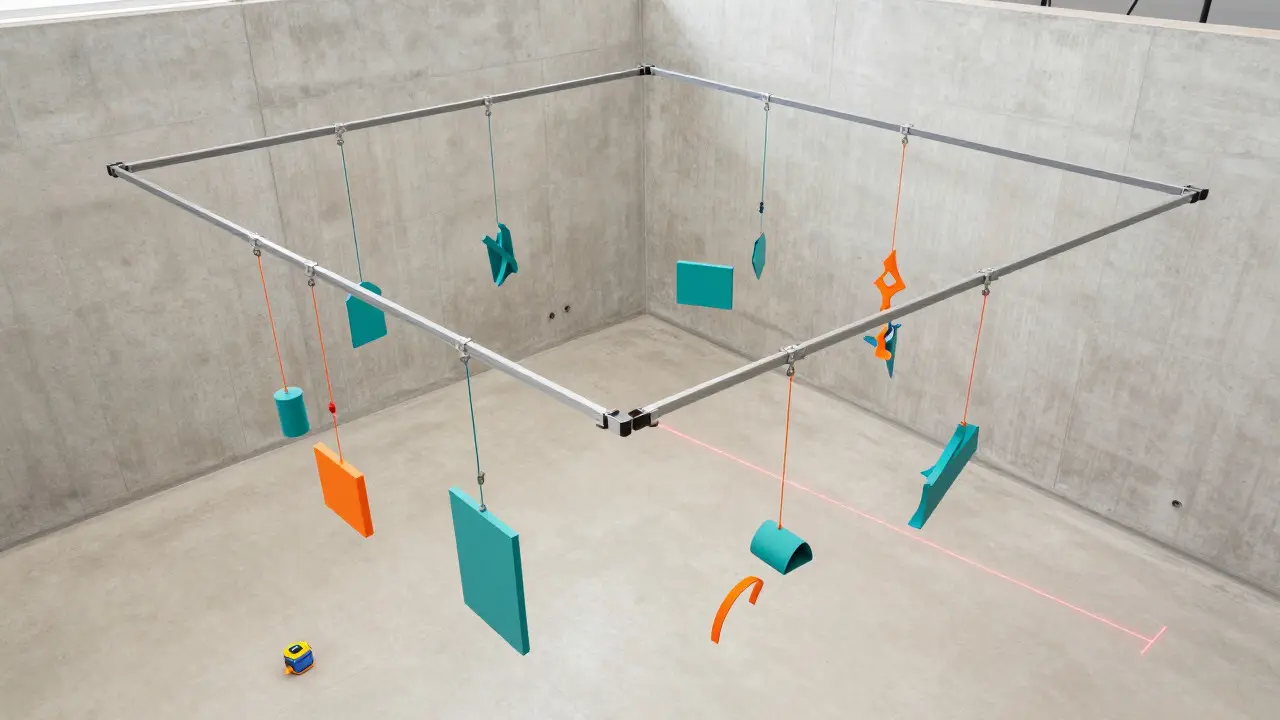
While rails handle horizontal movement, Cable Suspension Systems are rigging setups using steel wire or synthetic ropes to hold objects at specific distances from a ceiling or beam. This method is crucial for creating a sense of weightlessness. Objects appear to float, drawing the eye upward and expanding the perceived volume of the room. However, cables introduce a variable that rails do not: tension.
If a cable is too loose, the object sways unpredictably. If it is too tight, it may stress the mounting point or cause the object to tilt. Professional installers use turnbuckles-mechanical devices that allow for fine-tuning of length-to achieve perfect tension. For smaller projects, adjustable hooks with built-in ratchets serve a similar purpose. The goal is always stability. You want the object to stay exactly where you place it, resisting air currents or accidental bumps.
Synthetic cables, like Dyneema or Spectra, are gaining popularity because they are lighter than steel and have high strength-to-weight ratios. They also come in various colors, allowing designers to match the rigging to the aesthetic of the space. Steel cables, however, remain the standard for heavy-duty applications due to their durability and resistance to UV degradation over long periods.
The Power of Micro-Adjustments
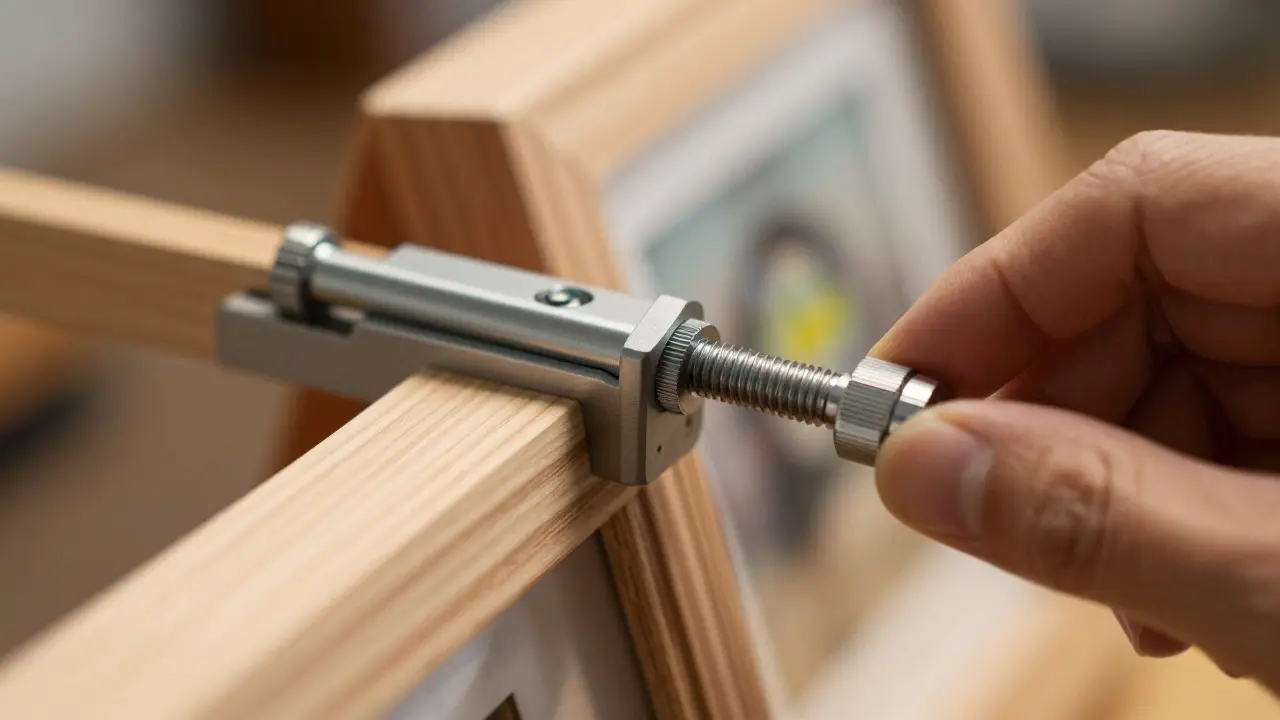
This is where the term "flexible" truly earns its name. Micro-Adjustment Mechanisms are precision hardware components that allow for incremental changes in position, typically measured in millimeters. Standard screws require multiple turns to move an object by an inch. Micro-adjusters, often found in high-end museum mounts, allow you to nudge a piece by a fraction of a centimeter. This level of control is vital when aligning multiple pieces into a cohesive group.
Consider a scenario where you are hanging five frames in a row. With standard hooks, getting all five perfectly aligned at the same height is a tedious process of measuring, marking, and re-measuring. With micro-adjustment brackets, you can hang them roughly, then fine-tune each one individually until the top edges form a perfect straight line. Some systems even include bubble levels integrated into the bracket itself, giving you real-time feedback during the adjustment process.
These mechanisms usually involve a threaded rod with a locking nut. You loosen the nut, adjust the position, and tighten the nut to lock it in place. It sounds simple, but the engineering behind the thread pitch determines the smoothness of the operation. High-quality systems use fine-pitch threads that provide precise control without requiring excessive force. This reduces the risk of stripping the threads or damaging the artwork's backing board.
Comparing System Types for Different Needs
Choosing the right combination of rails, cables, and adjusters depends on your specific constraints. Below is a comparison of the primary approaches to help you decide which setup fits your project best.
| Component Type | Best Use Case | Load Capacity | Adjustment Precision | Installation Complexity |
|---|---|---|---|---|
| Aluminum Wall Rails | Retail displays, photo galleries | Medium (up to 50 lbs per bracket) | Low (sliding only) | Low |
| Steel Ceiling Cables | Sculptures, large installations | High (up to 500 lbs per point) | Medium (tension based) | High |
| Micro-Adjust Brackets | Museum-grade art, precise alignment | Medium (up to 30 lbs per bracket) | High (millimeter level) | Medium |
| Hybrid Rail-Cable Systems | Complex multi-level displays | Variable | High | Very High |
Notice that no single component solves all problems. A hybrid approach often yields the best results. For example, you might use ceiling cables to suspend a main platform, then attach wall-mounted rails to that platform for secondary items. This creates layers of flexibility within a single installation.
Practical Tips for Installation and Maintenance
Even the best hardware fails if installed poorly. Start by assessing the structural integrity of your walls or ceiling. Drywall anchors can fail under sustained lateral loads, so always locate studs or concrete anchors when possible. For ceiling suspensions, verify the joist location using a stud finder and ensure the anchor is rated for the dynamic load, not just the static weight of the object.
When setting up micro-adjustments, work from the center outwards. Align the central piece first, then adjust the adjacent pieces relative to it. This prevents cumulative errors from building up across the display. Use a laser level to project a reference line onto the wall, providing a constant guide for your adjustments.
Maintenance is often overlooked but critical for longevity. Check cable tension regularly, especially in high-traffic areas where vibrations might loosen connections. Lubricate moving parts of micro-adjusters with a dry silicone spray to prevent stiffness. Avoid using oil-based lubricants, as they attract dust and can degrade rubber gaskets over time. Keep a spare set of brackets and cables on hand, as hardware failures are rare but disruptive when they happen.
Designing for Future Changes
The true value of flexible hanging systems lies in their adaptability. Design your initial layout with future modifications in mind. Leave extra length on cables and avoid cutting rails shorter than necessary. This allows you to expand the display area later without replacing the entire infrastructure. Modular thinking applies here: treat each hanging point as an independent node that can be added, removed, or repositioned without affecting the rest of the system.
Document your setup. Take photos of the final arrangement and note the positions of each bracket or cable anchor. This creates a baseline that makes it easier to return to a previous configuration or replicate the layout in a different location. In professional settings, this documentation is part of the cataloging process, ensuring that every object can be accounted for and reinstalled correctly after transport or storage.
By combining the structural stability of rails, the spatial freedom of cables, and the precision of micro-adjustments, you create a hanging system that serves both aesthetic and functional needs. It transforms static walls into dynamic canvases, ready to evolve with your creative vision.
What is the maximum weight capacity of standard flexible hanging rails?
Standard aluminum wall rails typically support between 20 to 50 pounds per bracket, depending on the brand and mounting method. Heavy-duty steel rails can support significantly more, often exceeding 100 pounds per point. Always check the manufacturer's load rating for specific hardware, as this varies based on the anchor type used in the wall.
How do I align multiple frames using micro-adjustment brackets?
Start by hanging the central frame and using a laser level to establish a horizontal reference line. Then, hang the adjacent frames and use the micro-adjustment knobs to align their top edges with the reference line. Work outward from the center to minimize cumulative error. Check the alignment from multiple angles to ensure consistency.
Are cable suspension systems safe for heavy sculptures?
Yes, provided the ceiling structure is properly assessed and rated for the load. Use steel cables with a safety factor of at least four times the weight of the sculpture. Install turnbuckles for tension control and regular inspection points. For very heavy objects, consider using multiple cable points to distribute the load evenly and reduce stress on any single anchor.
Can I install flexible hanging systems in rented apartments?
It depends on the lease agreement and the type of hardware used. Lightweight rail systems that use adhesive anchors or command strips may be acceptable for temporary setups. However, permanent fixtures like drilled rails or ceiling cables usually require landlord permission. Always consult your lease before making any structural modifications to the property.
What is the difference between static and dynamic load ratings in hanging systems?
Static load refers to the weight of the object when it is stationary. Dynamic load accounts for additional forces caused by movement, vibration, or impact. Flexible hanging systems should be rated for dynamic loads, especially in high-traffic areas. A system rated for 50 pounds static load may only support 30 pounds under dynamic conditions, so it is safer to choose hardware with a higher rated capacity than strictly necessary.